2026 Vol. 50, No. 6
Display Method: |


2026, 50(6): 061001. doi: 10.1088/1674-1137/ae5d27
Abstract:
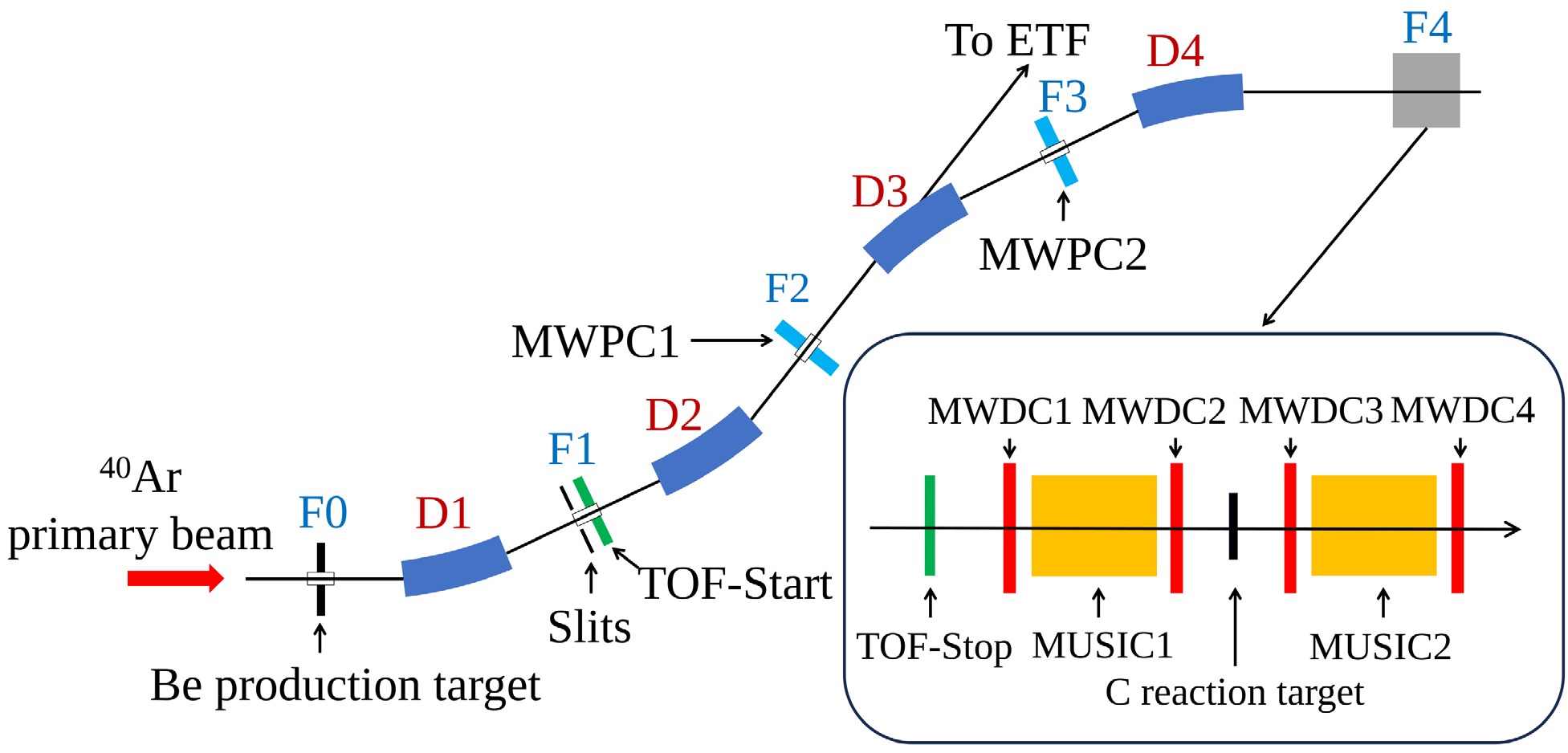
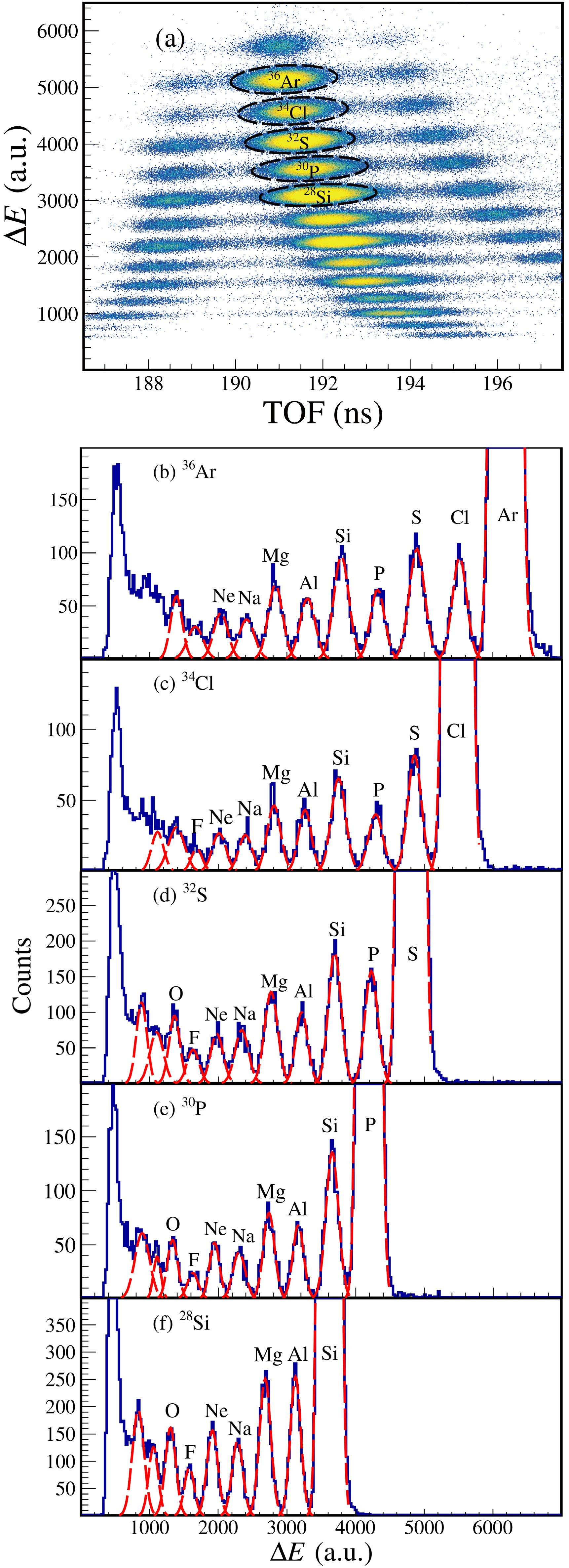
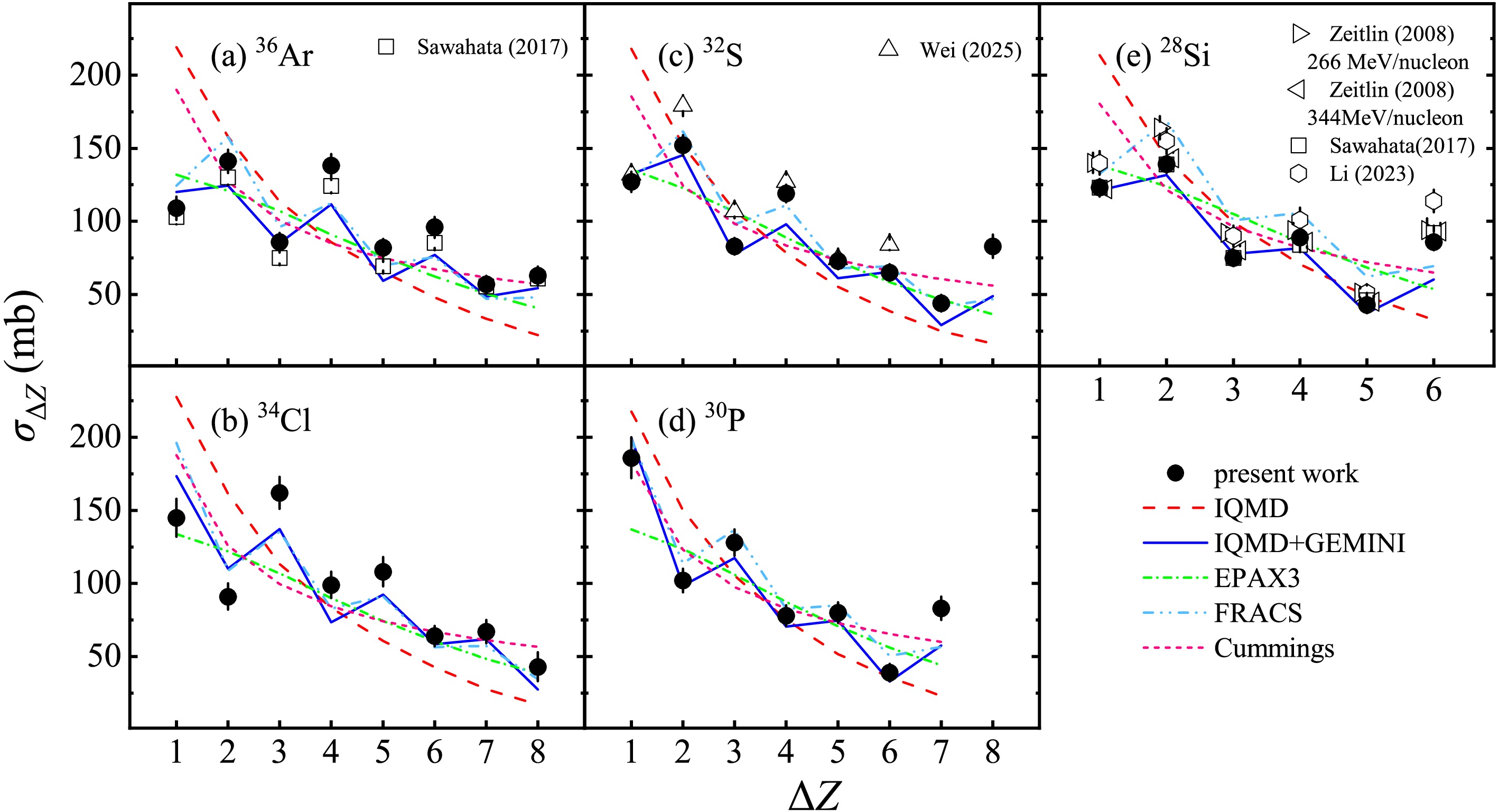
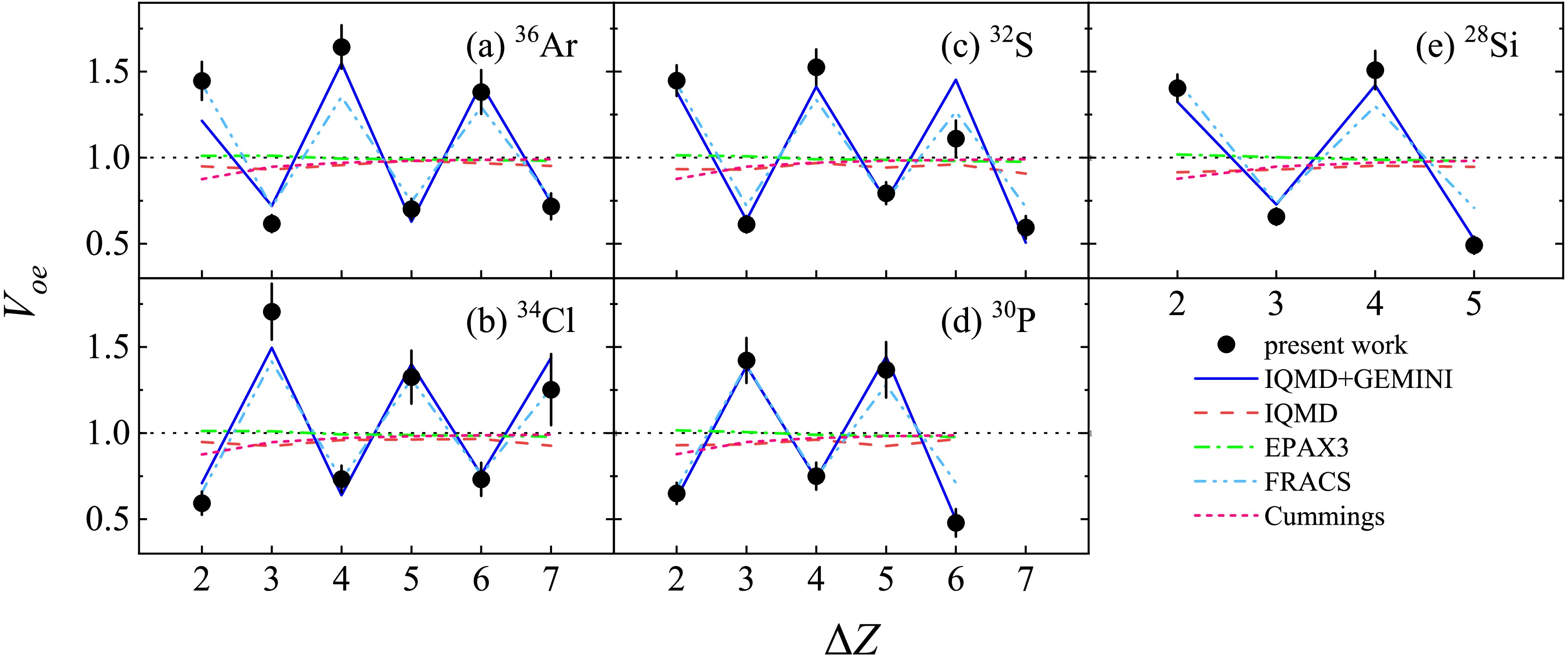
Elemental fragmentation cross sections (EFCSs) of the\begin{document}$N=Z$\end{document} \begin{document}$^{36}$\end{document} \begin{document}$^{34}$\end{document} \begin{document}$^{32}$\end{document} \begin{document}$^{30}$\end{document} \begin{document}$^{28}$\end{document} \begin{document}$^{34}$\end{document} \begin{document}$^{30}$\end{document} \begin{document}$N=Z$\end{document} \begin{document}$\Delta Z$\end{document} \begin{document}$N=Z$\end{document}
Elemental fragmentation cross sections (EFCSs) of the
2026, 50(6): 062001. doi: 10.1088/1674-1137/ae4e15
Abstract:
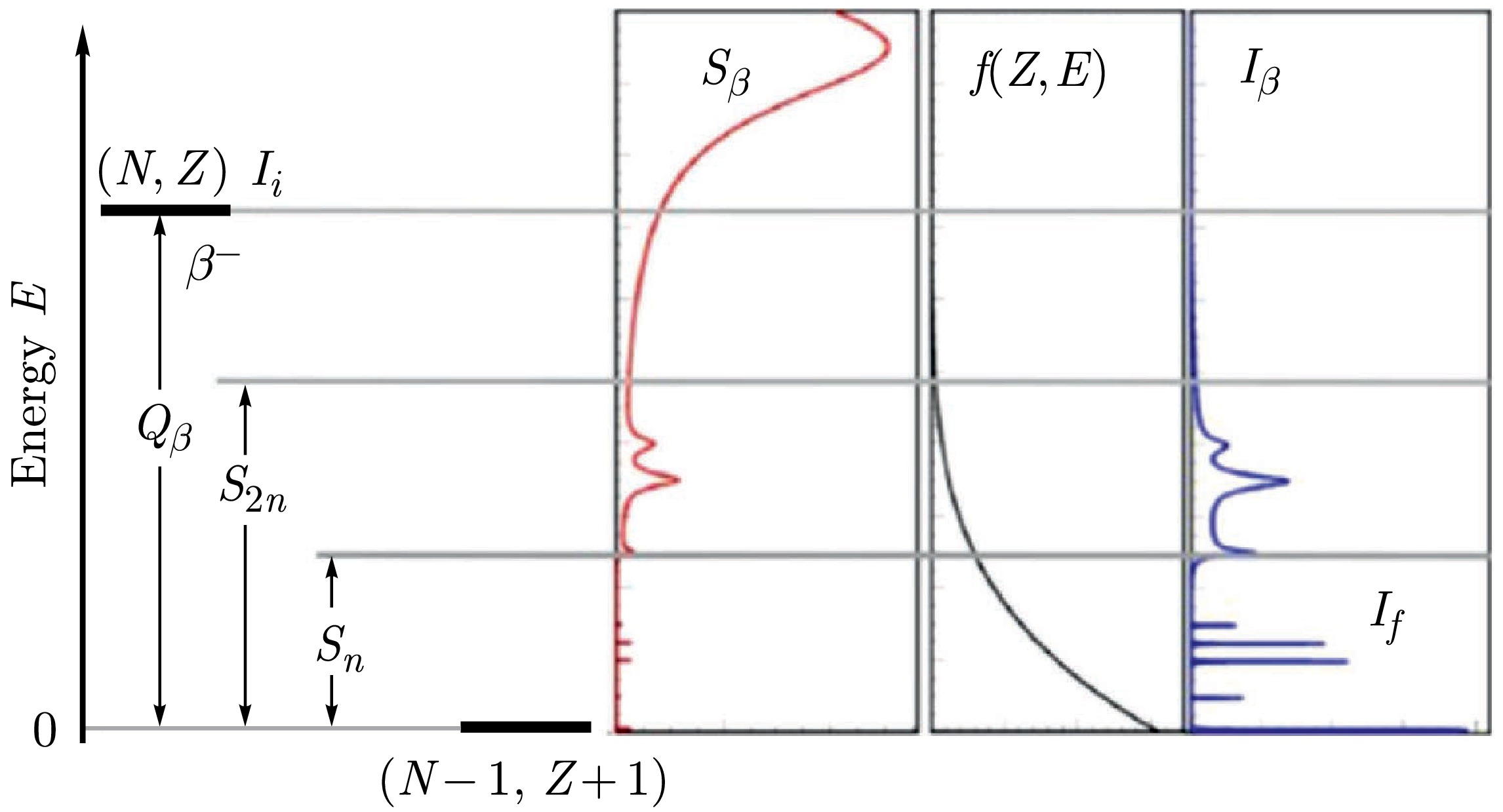
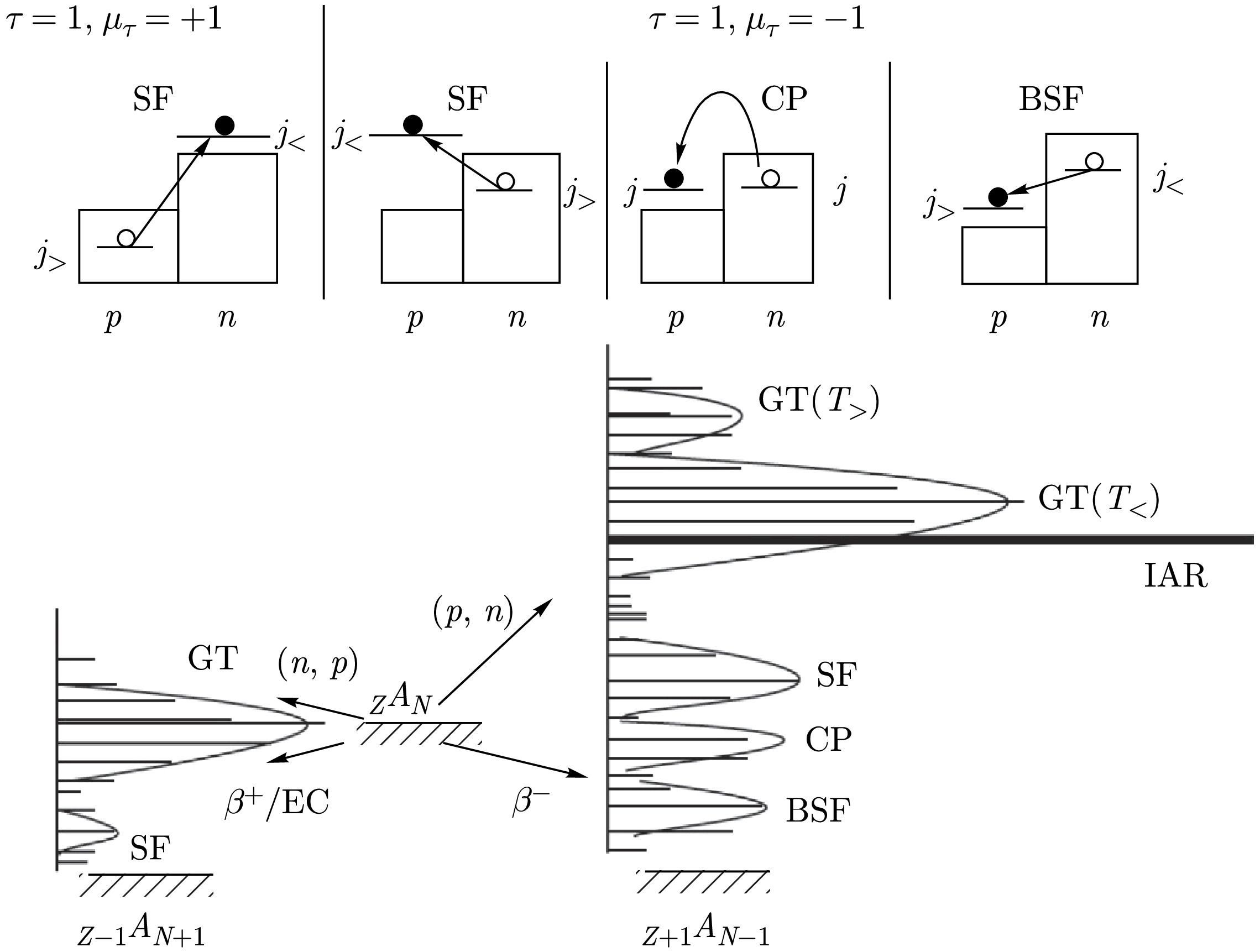
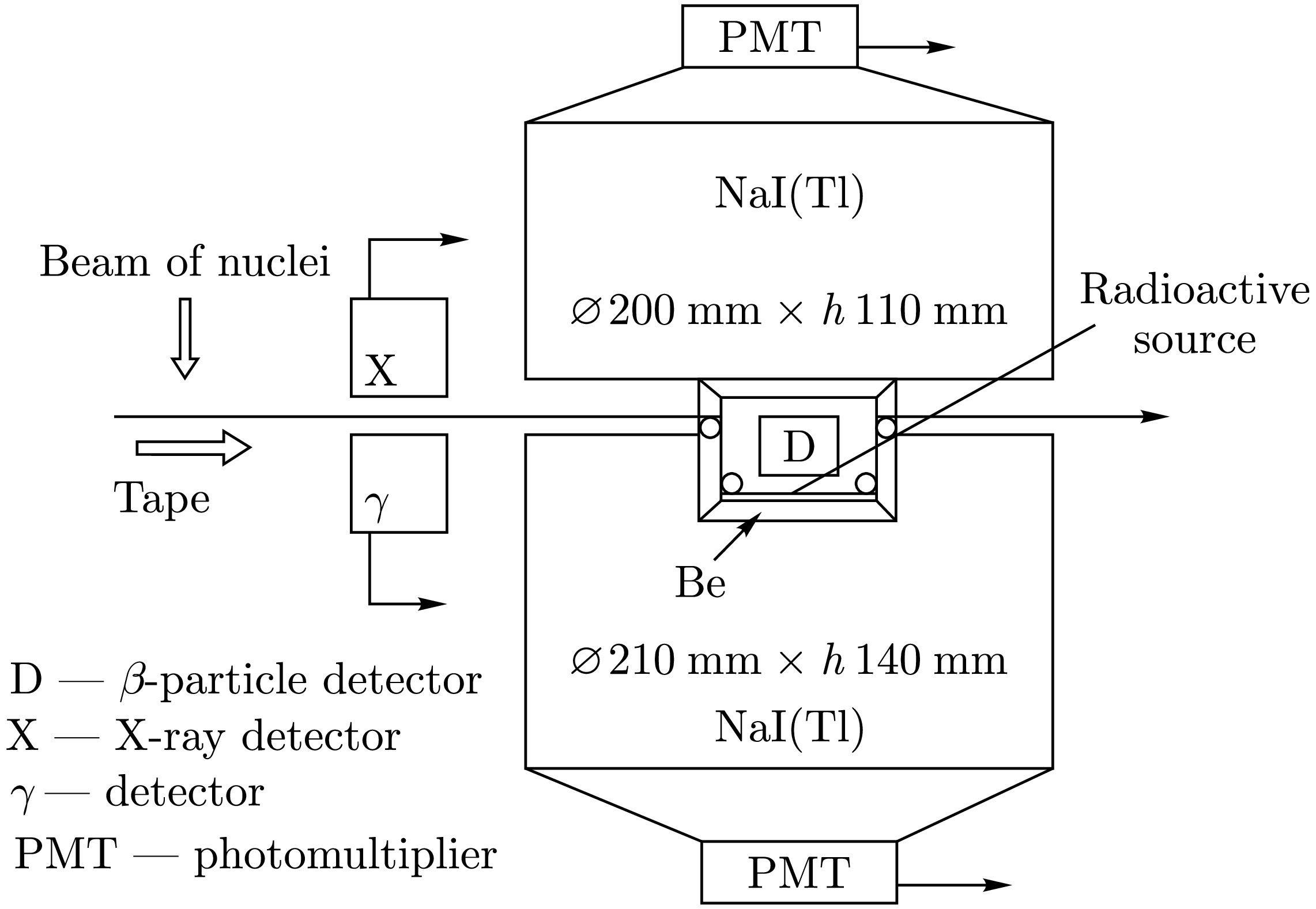
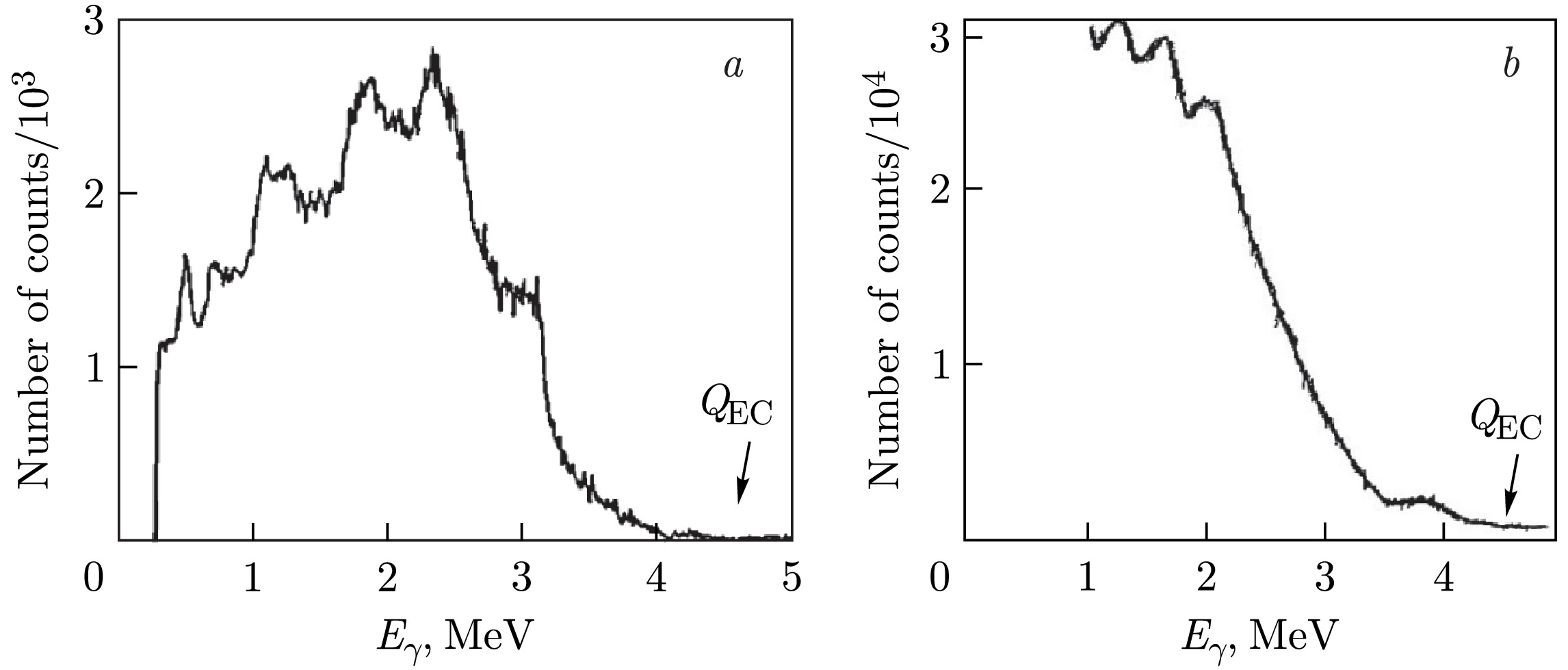
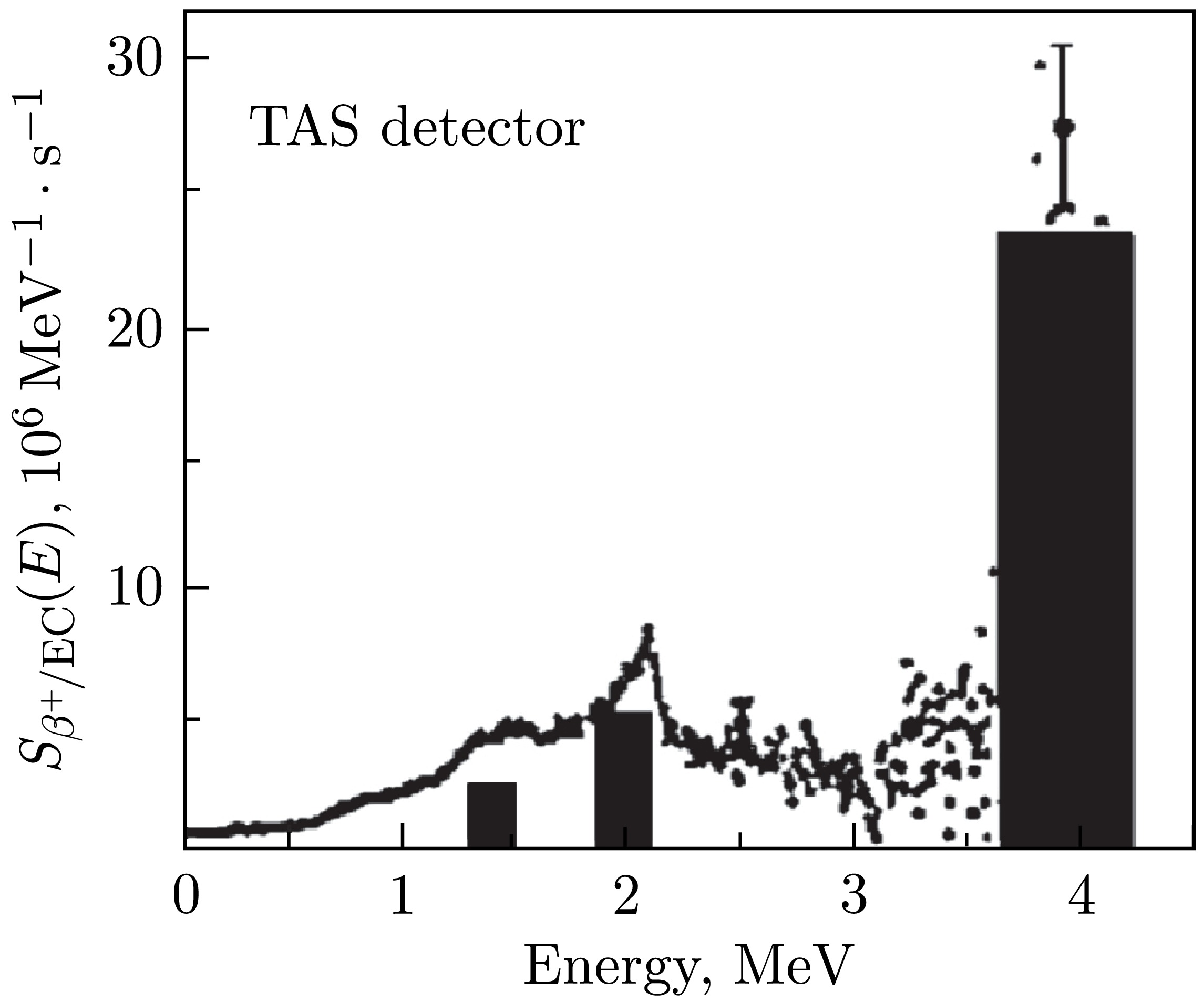
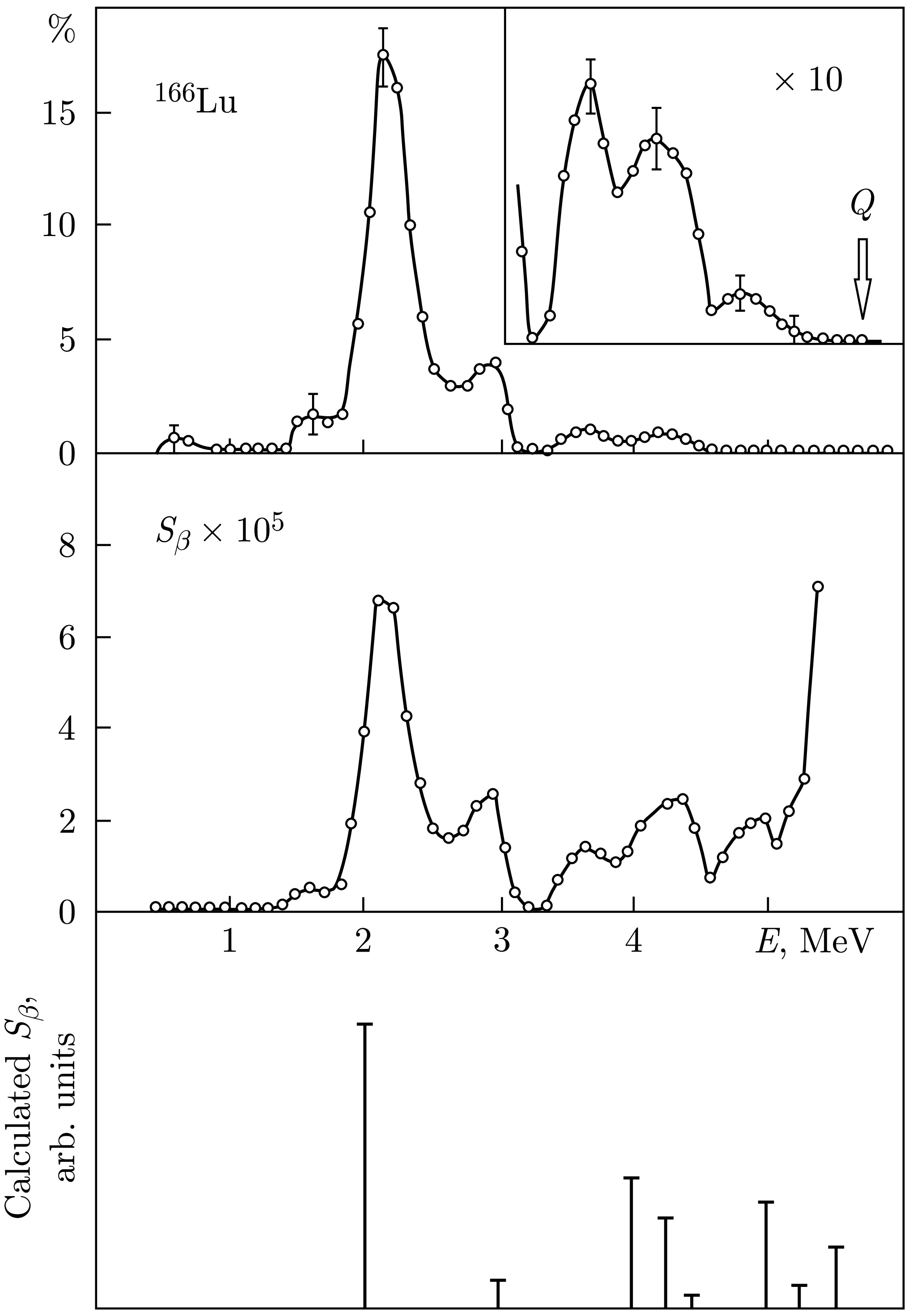
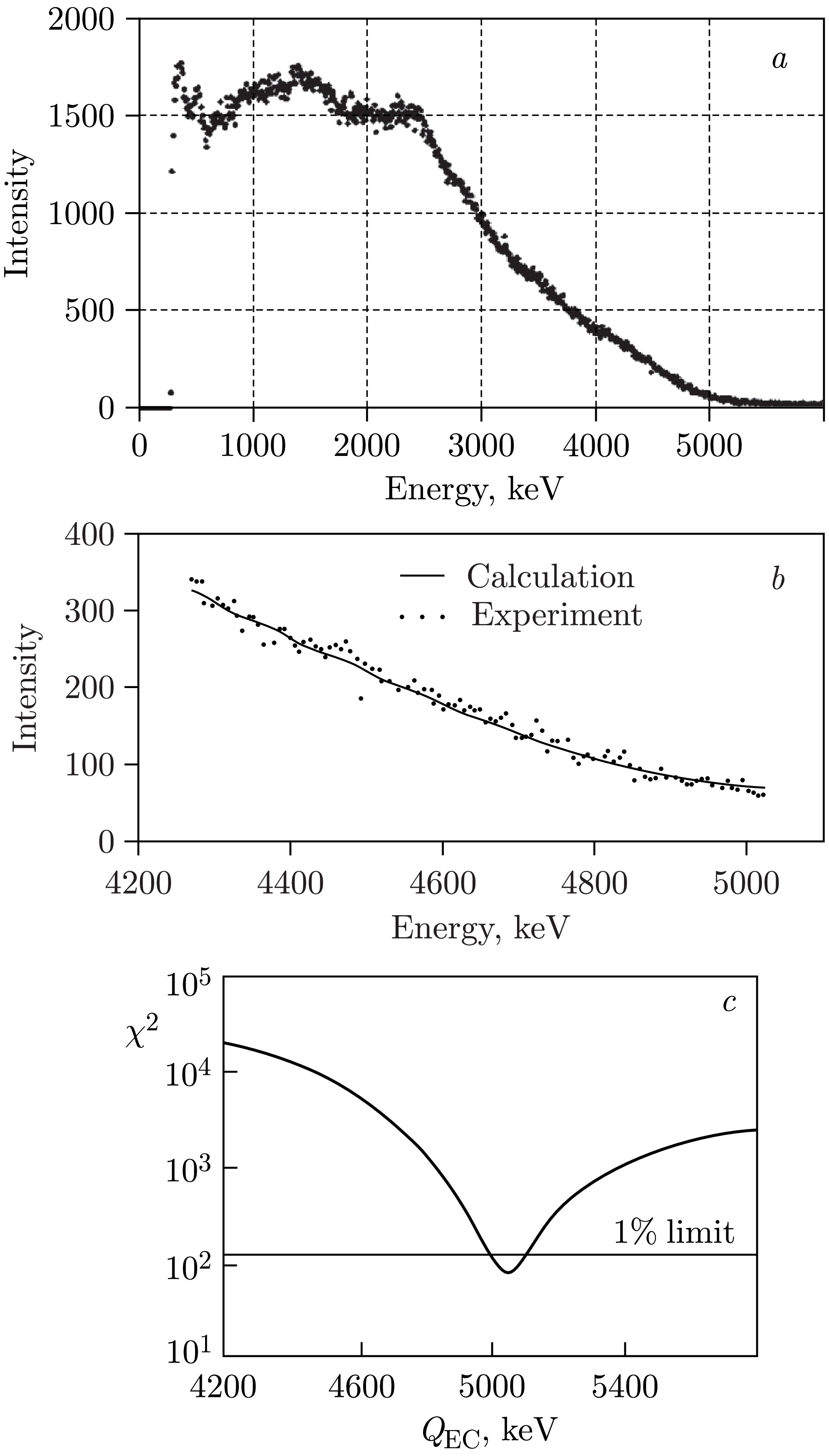
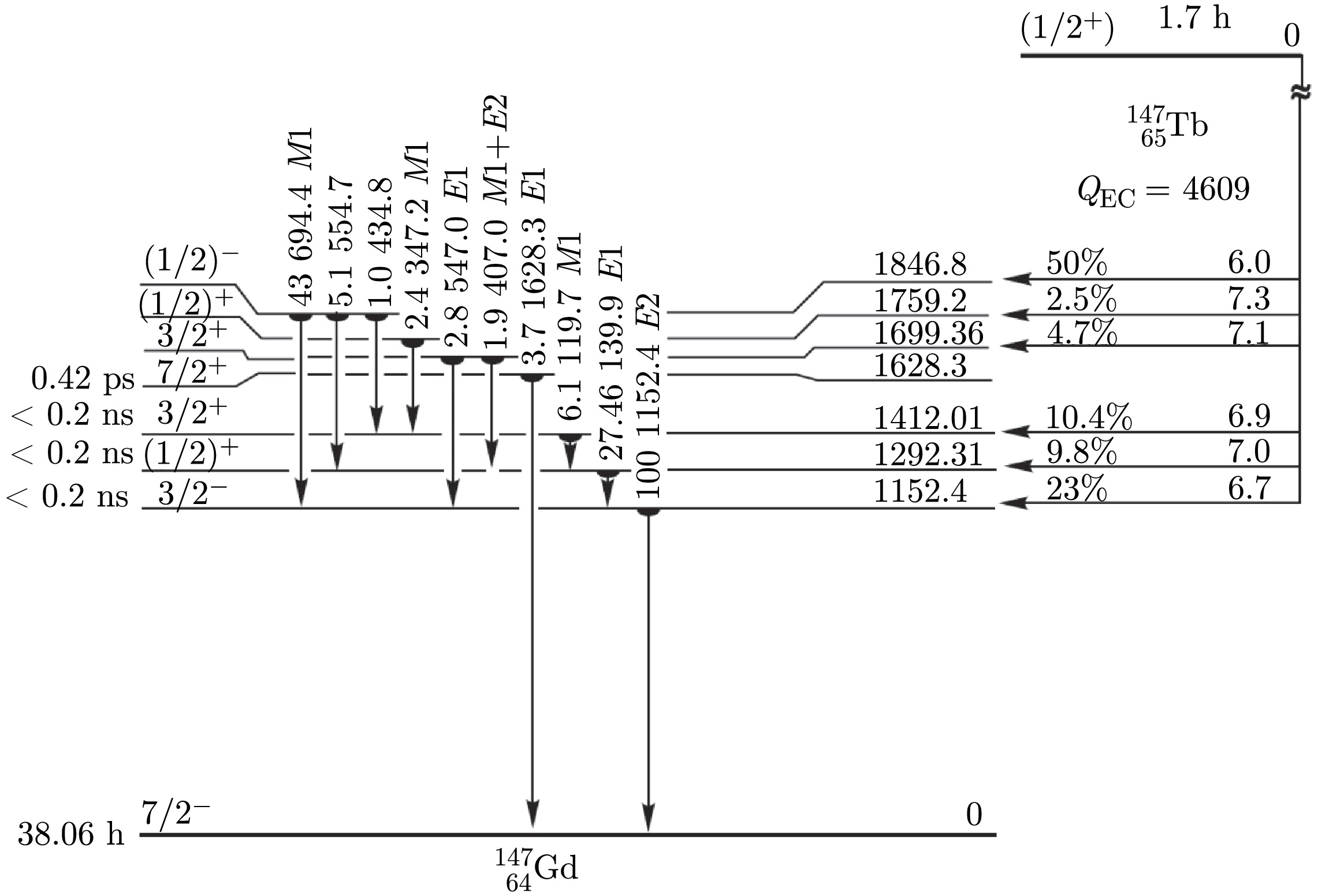
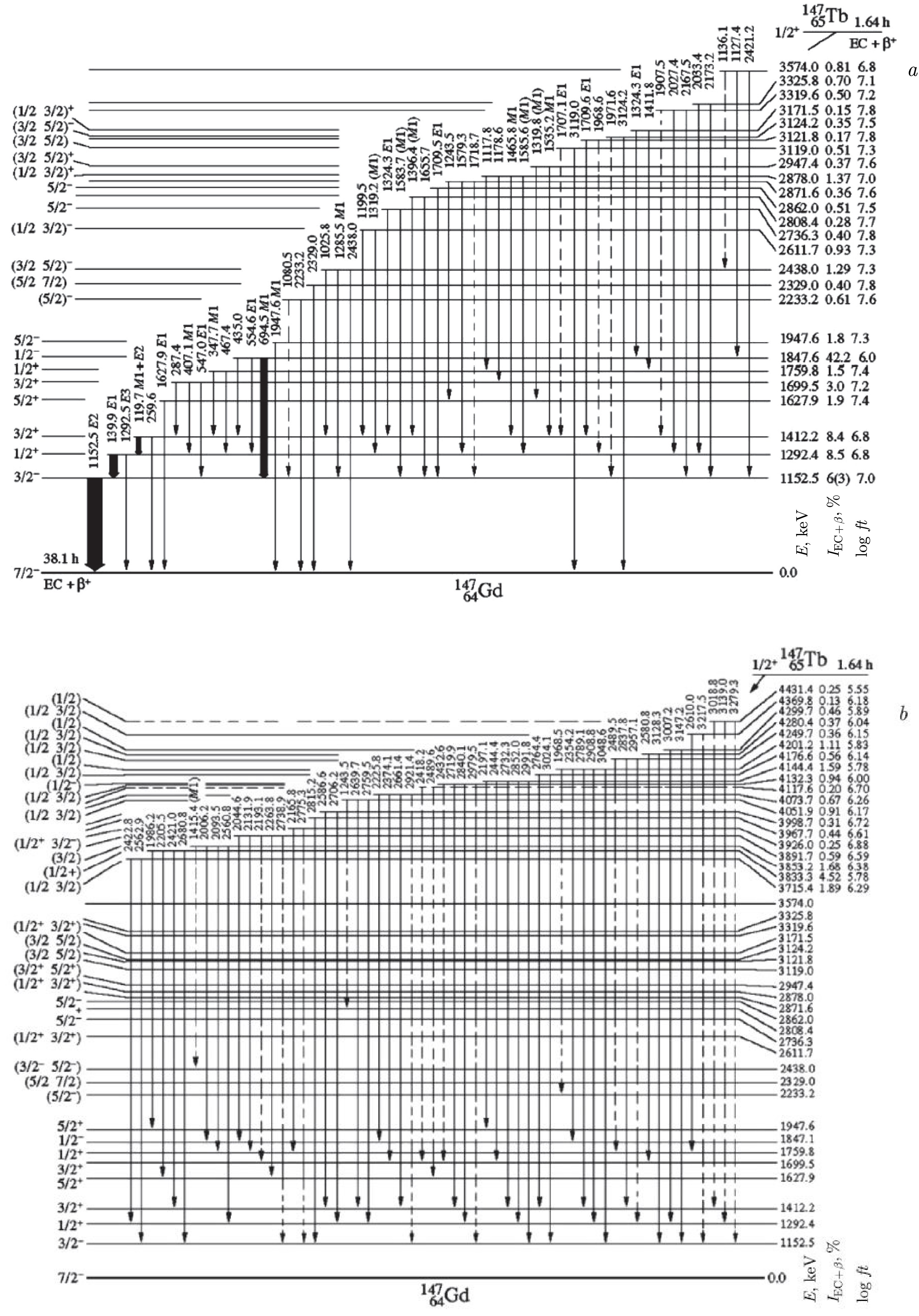
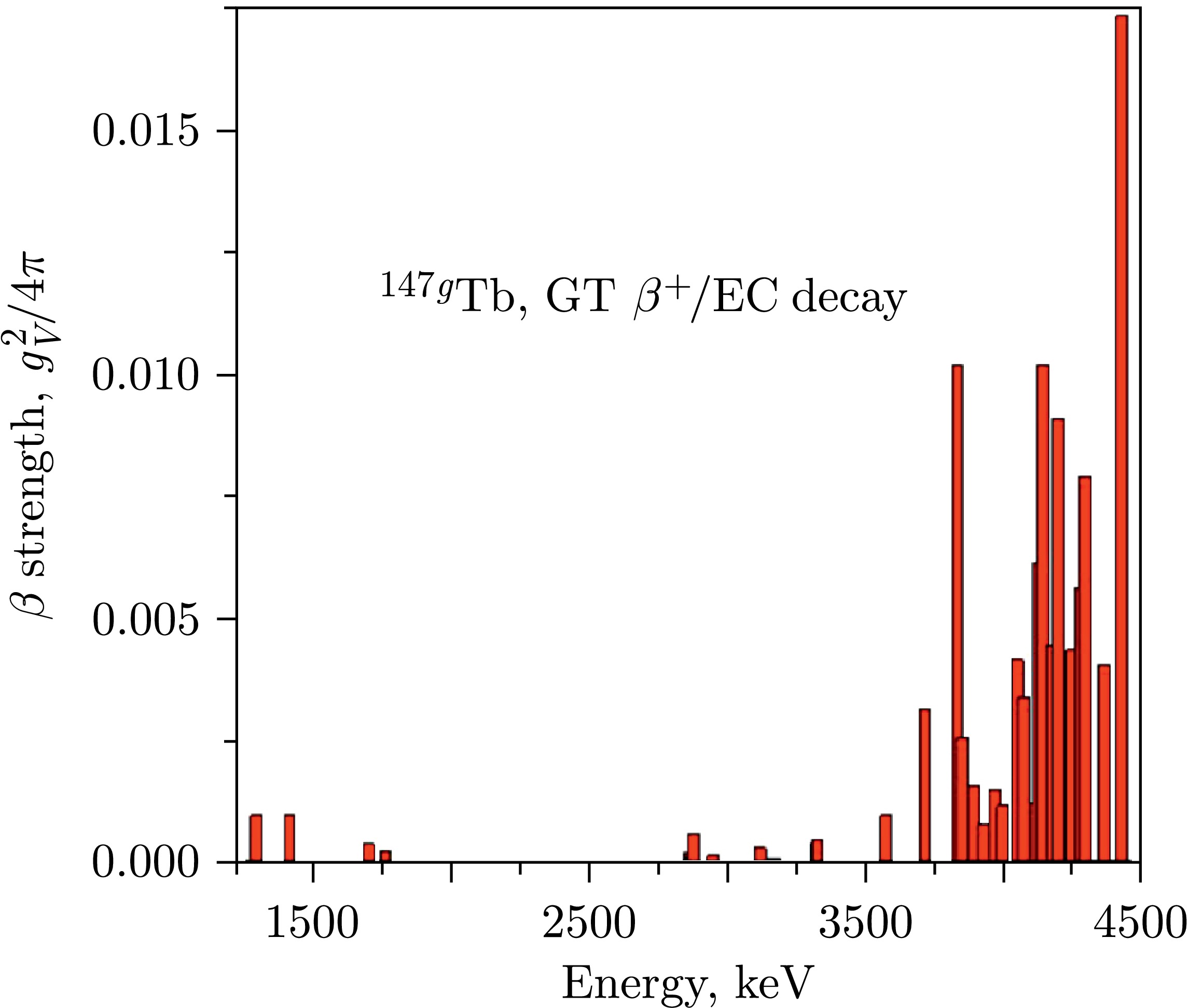
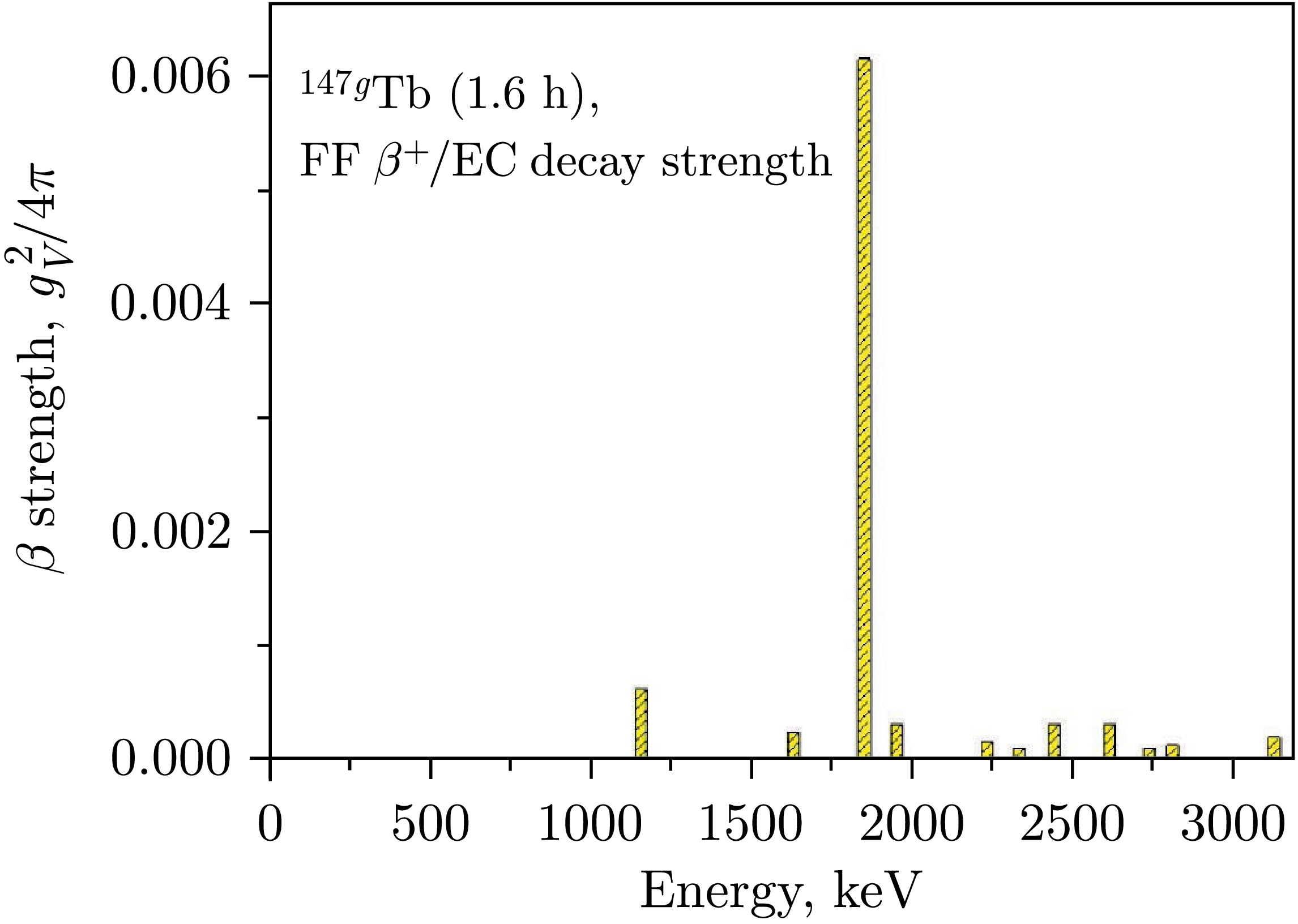
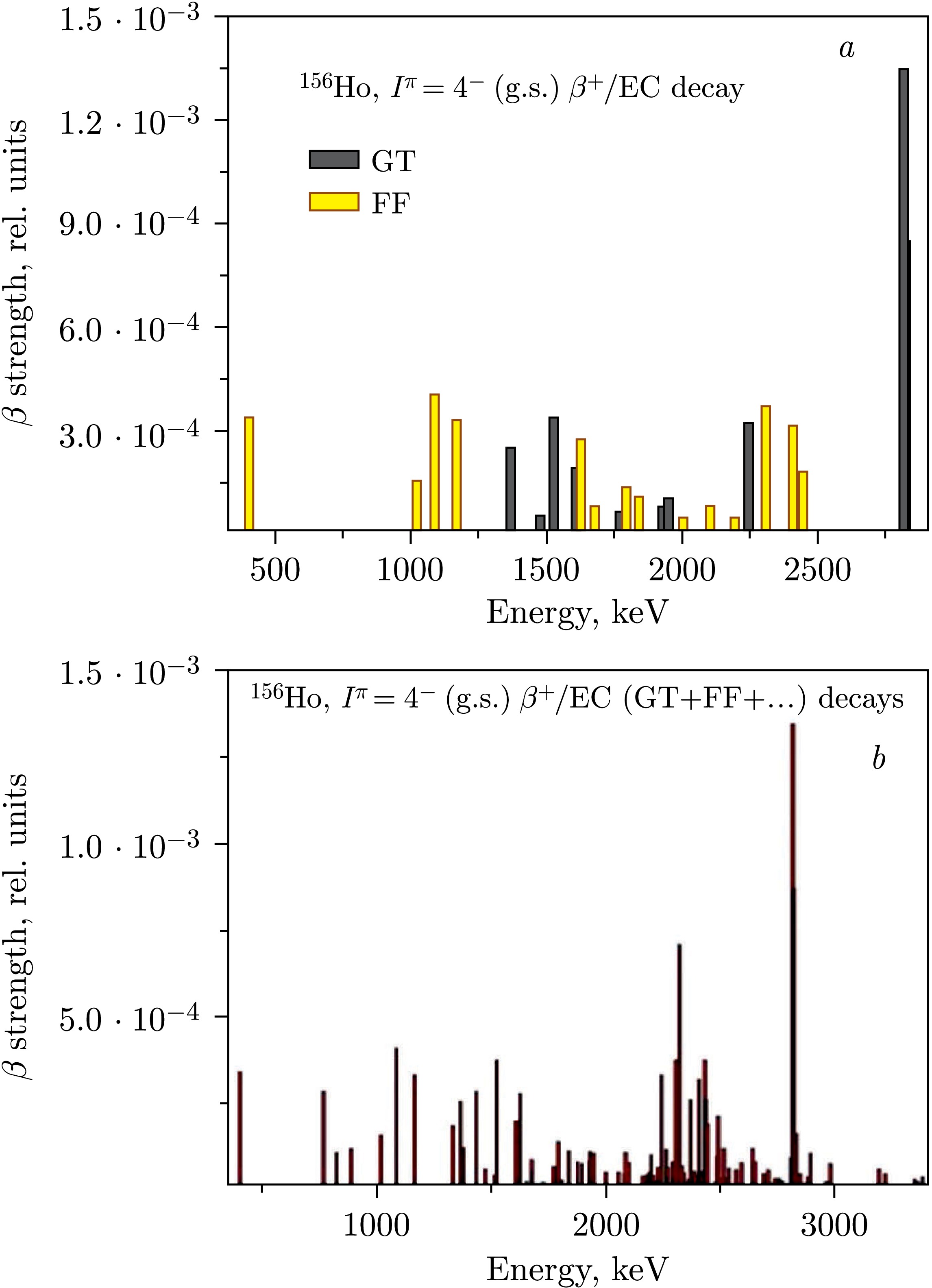
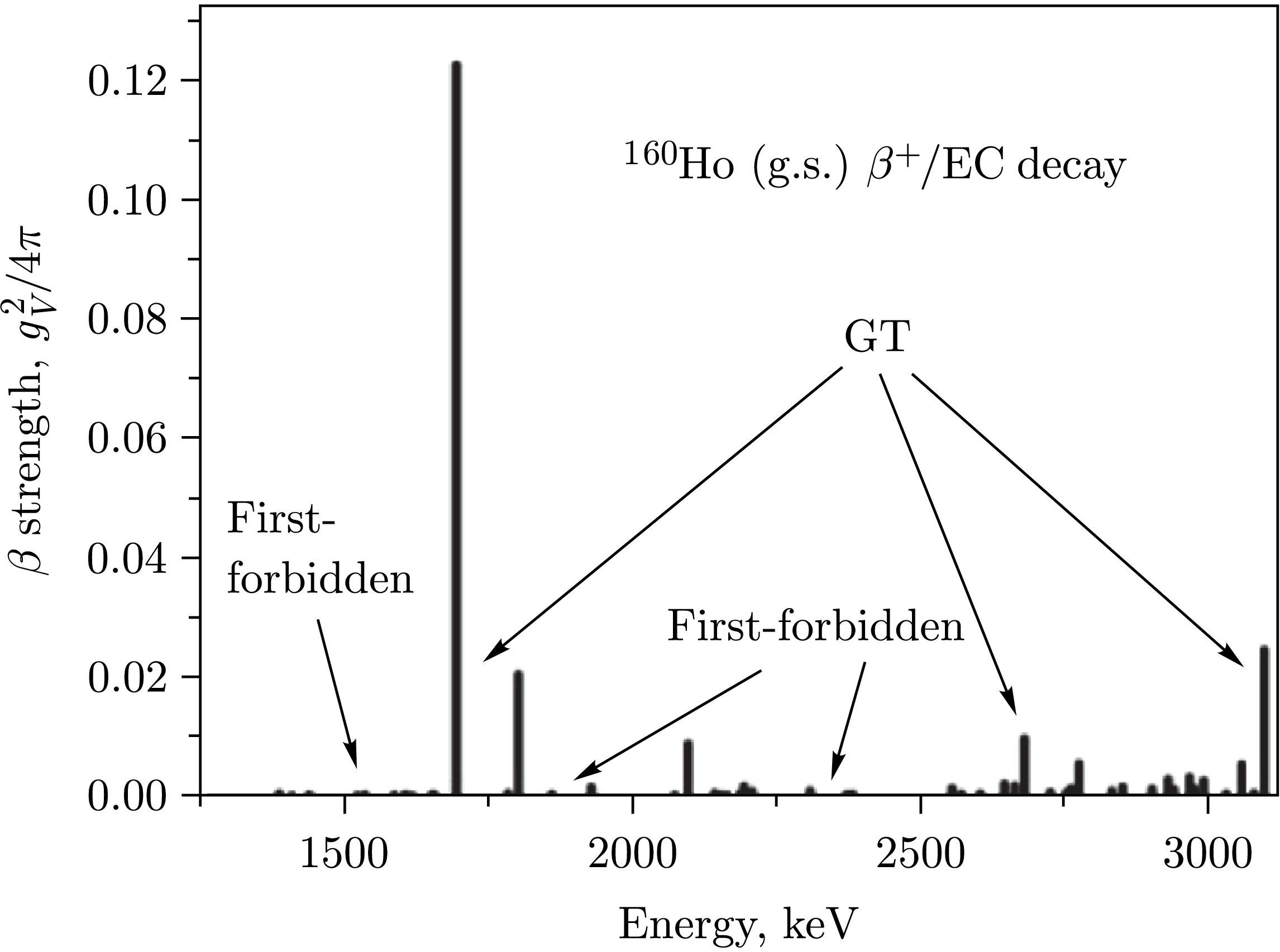
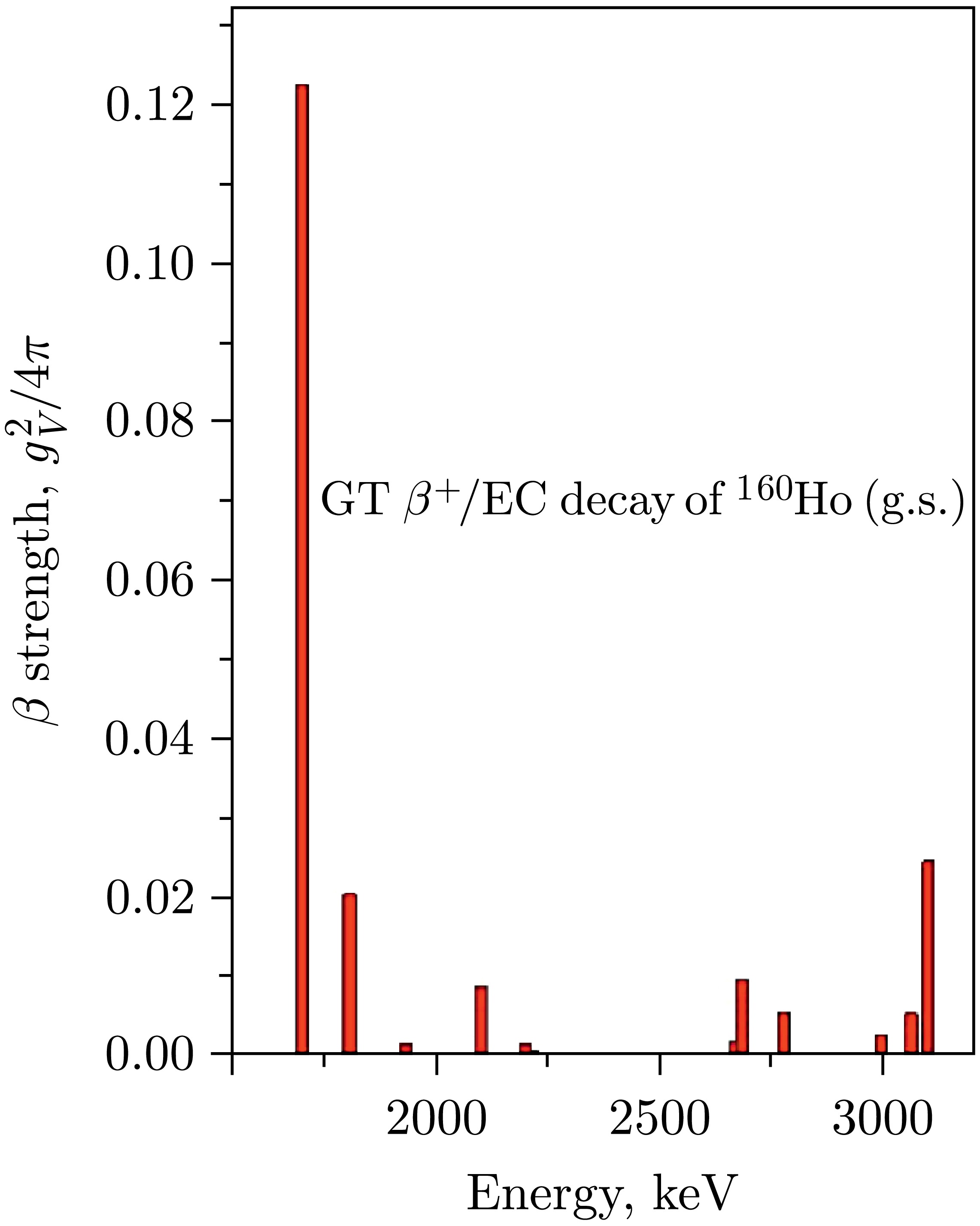
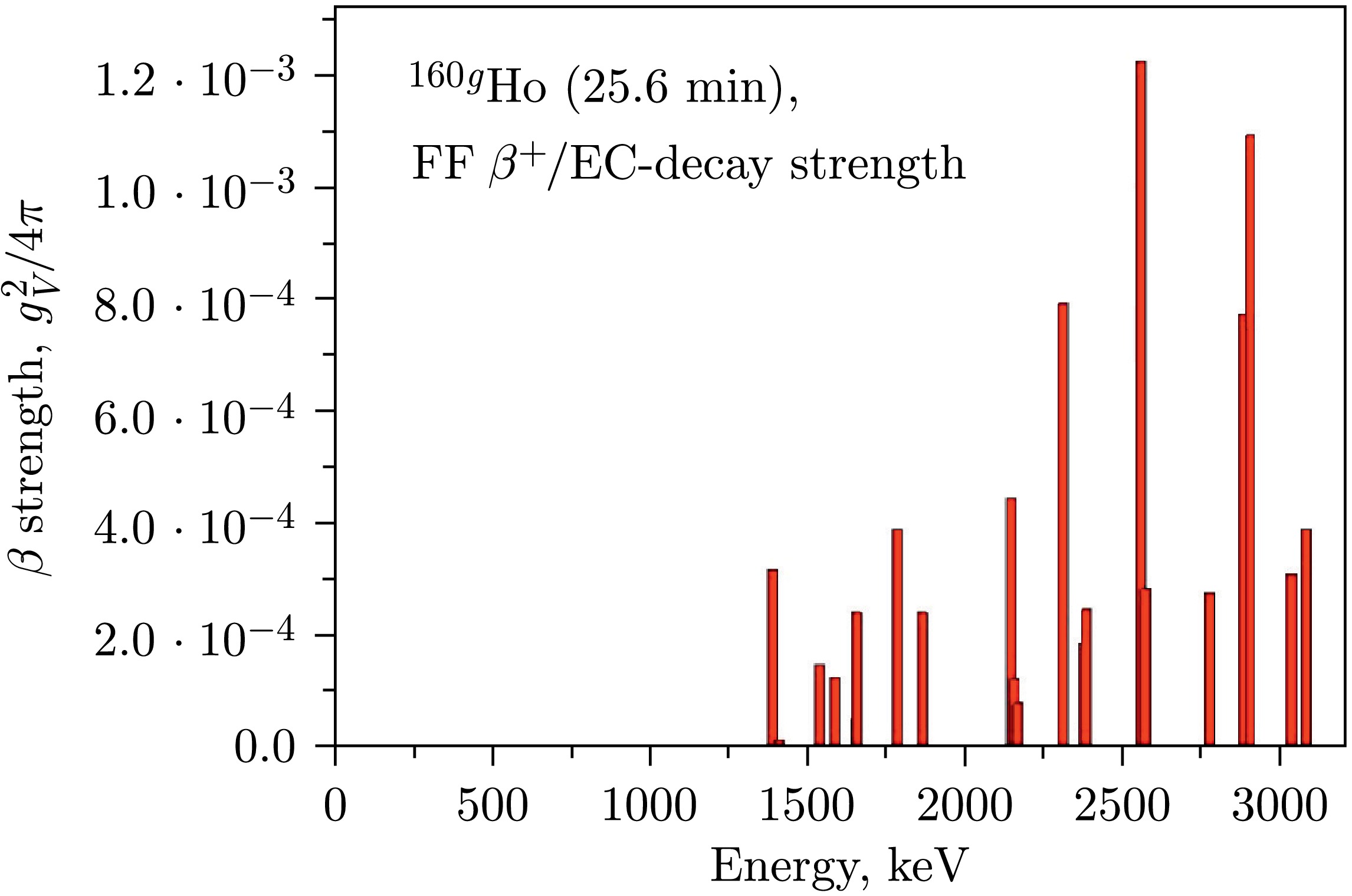
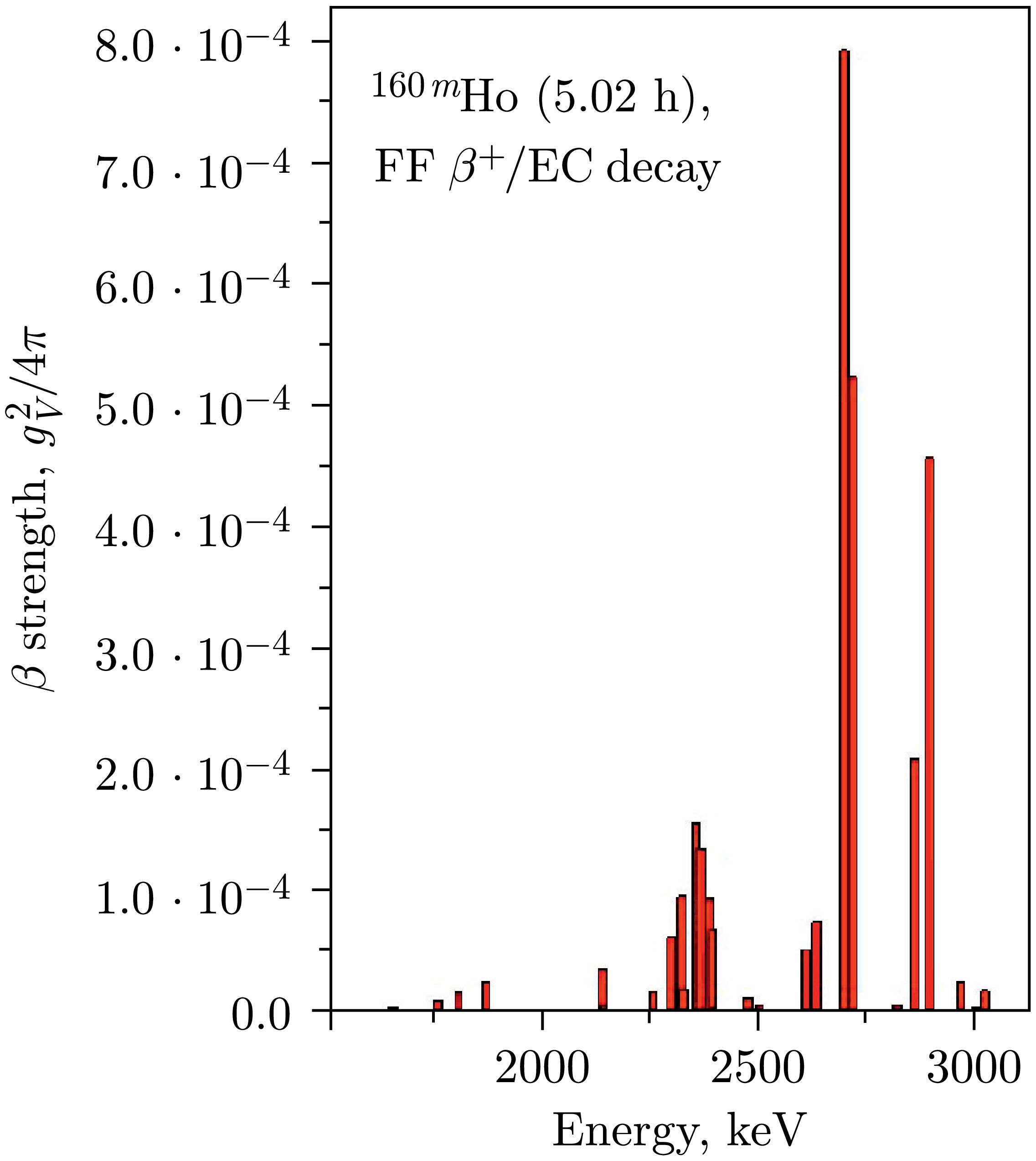
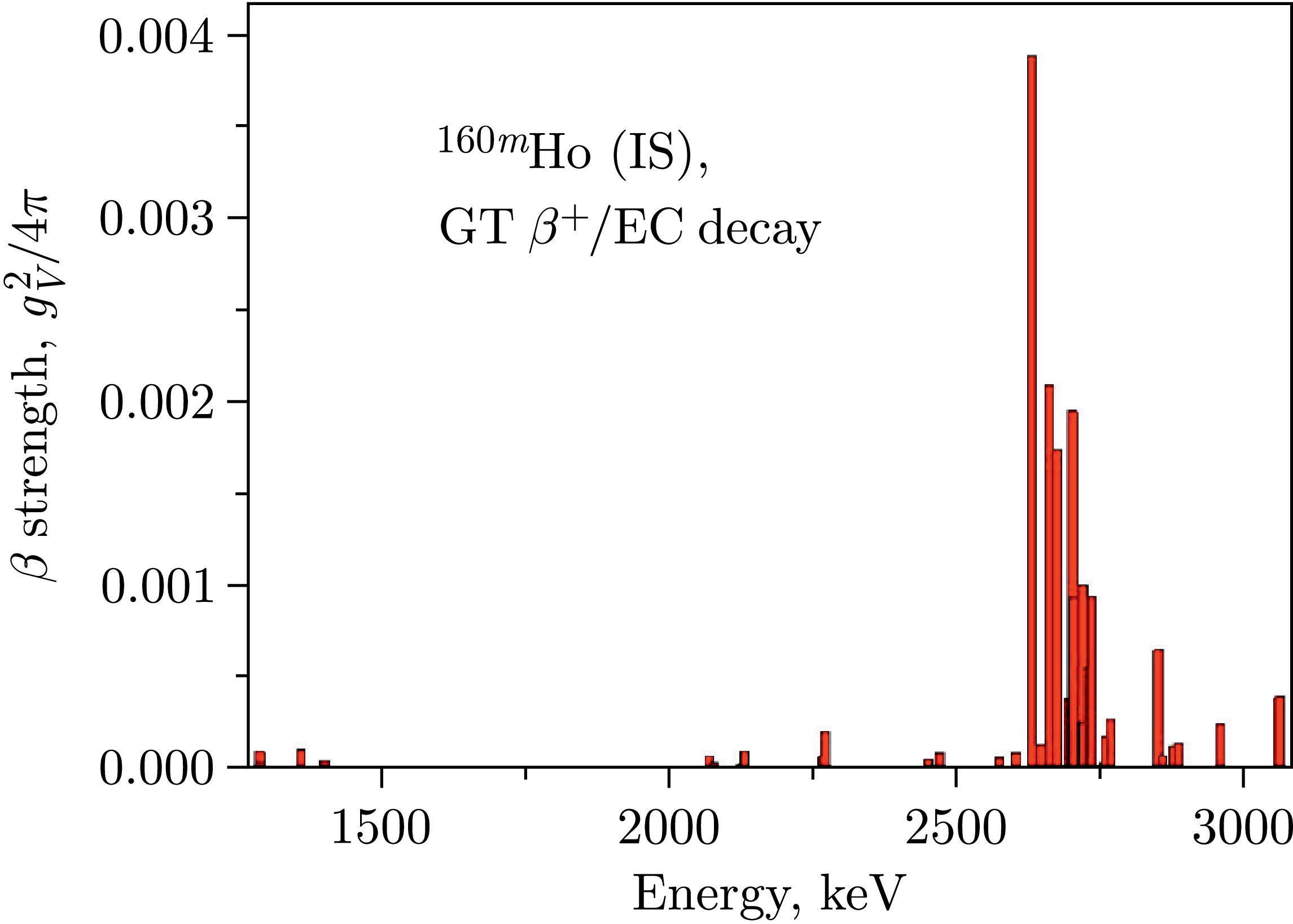
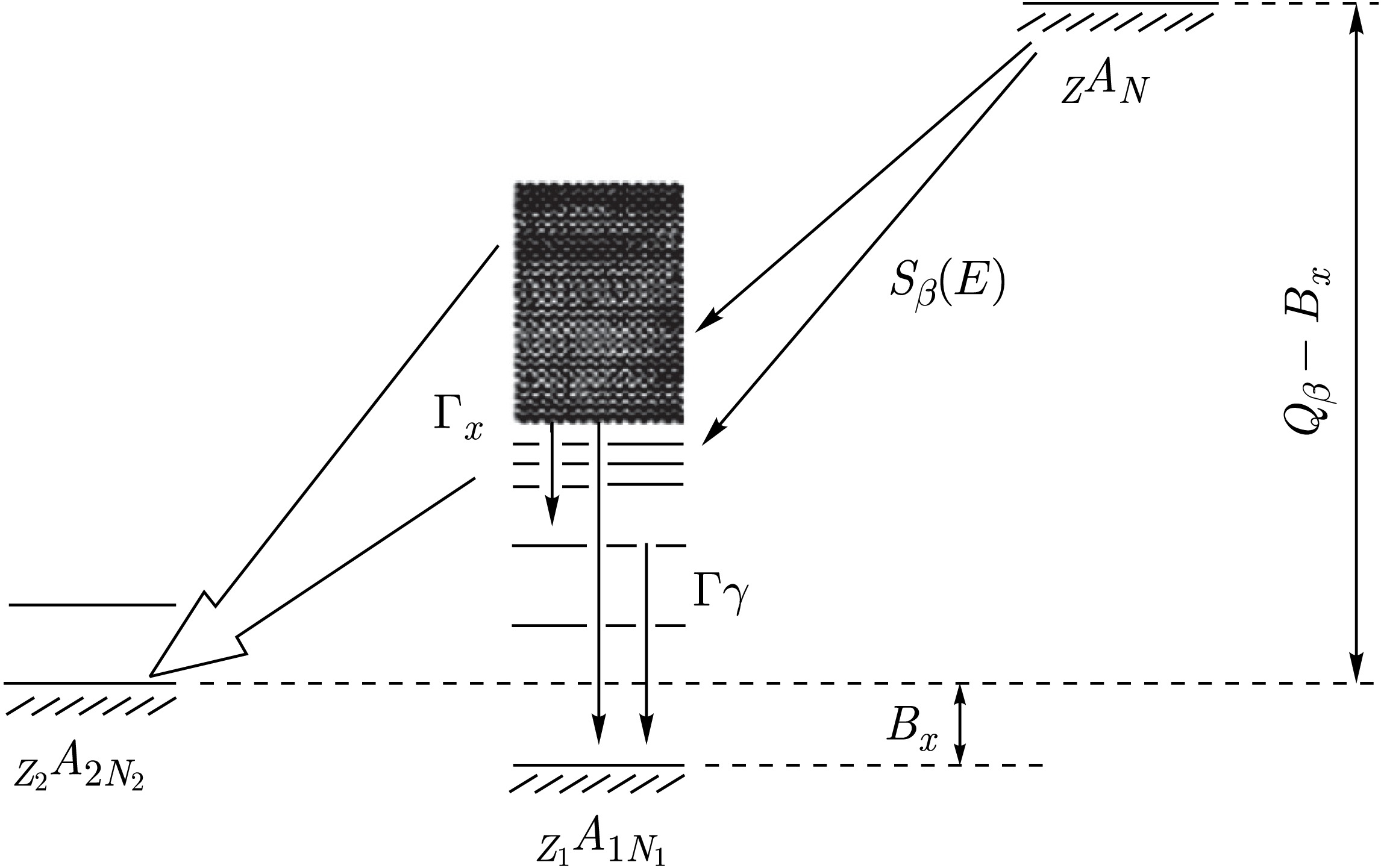
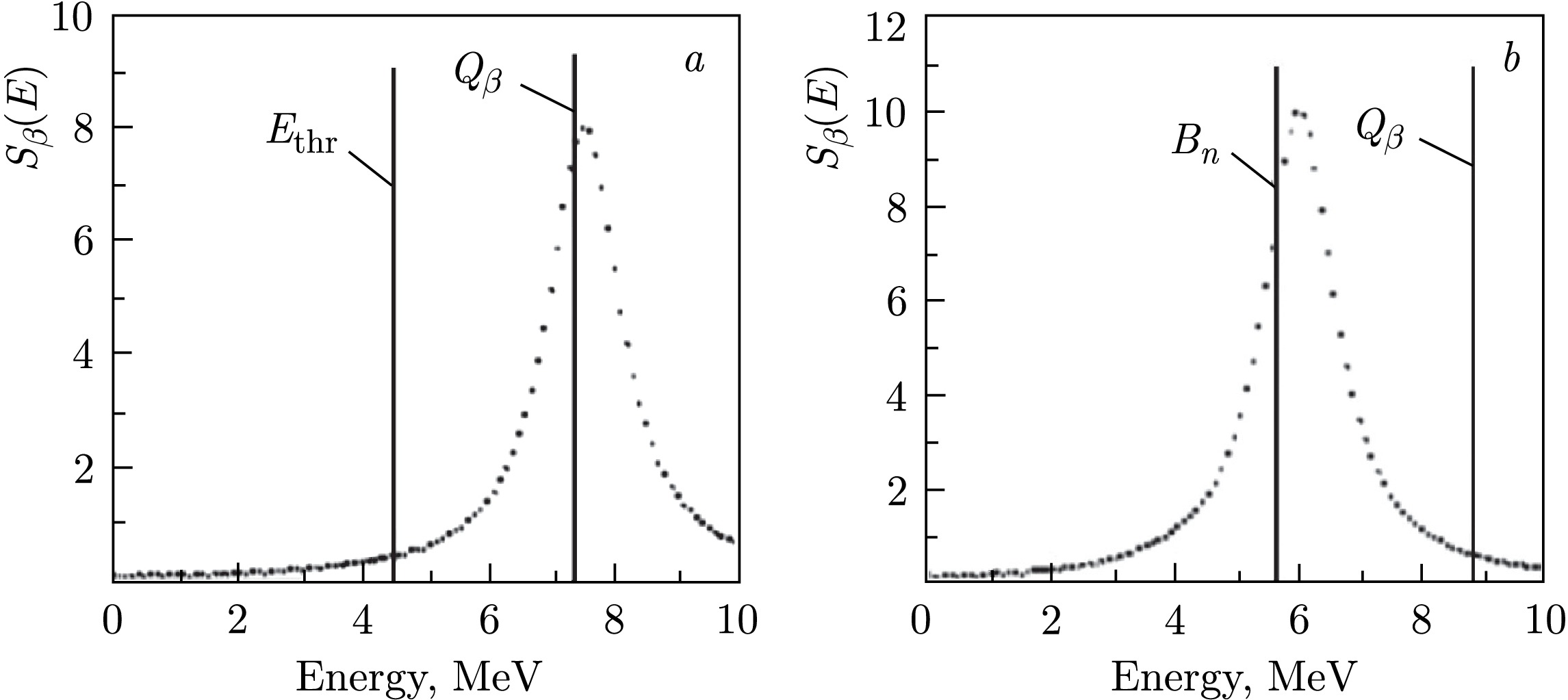
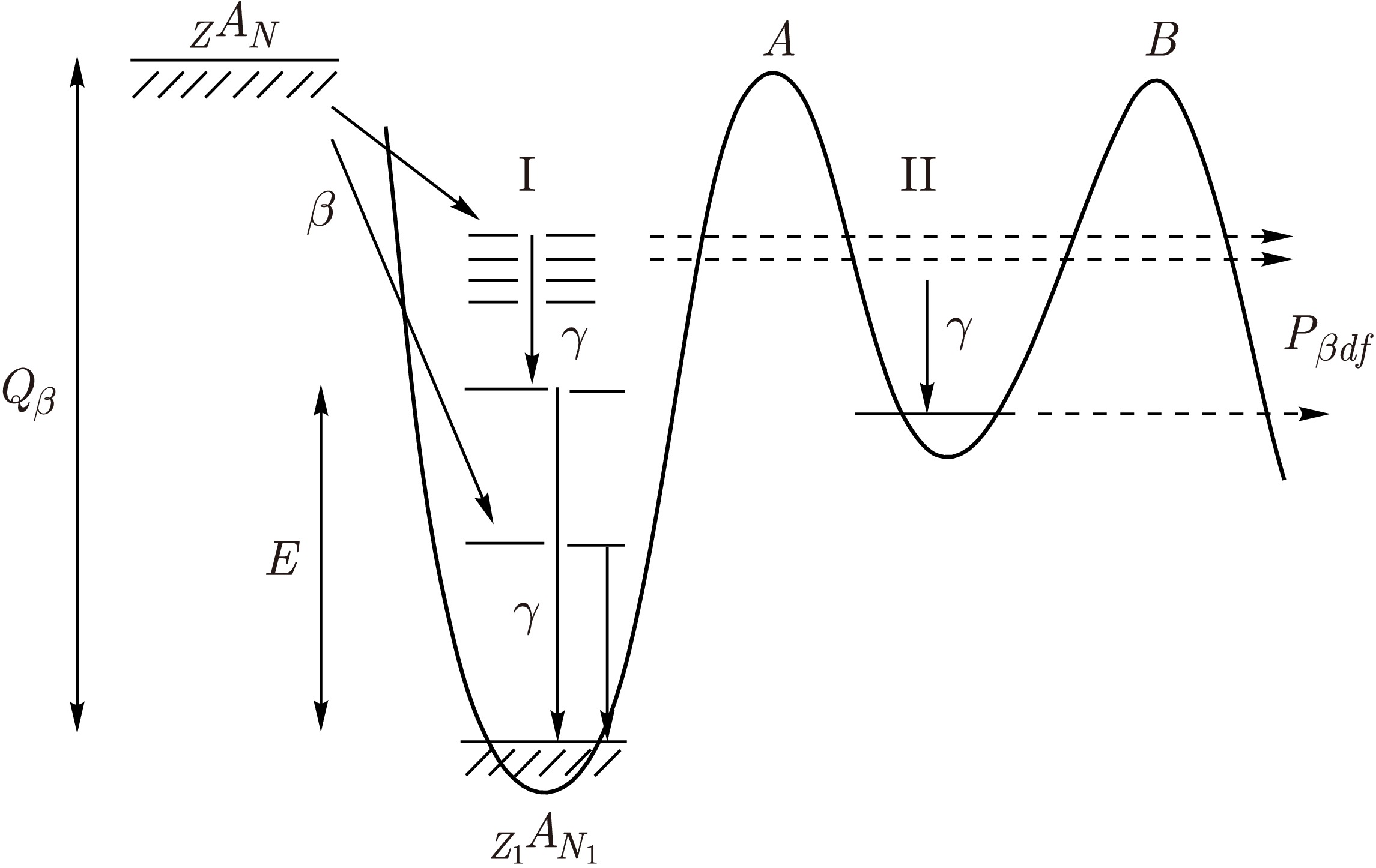
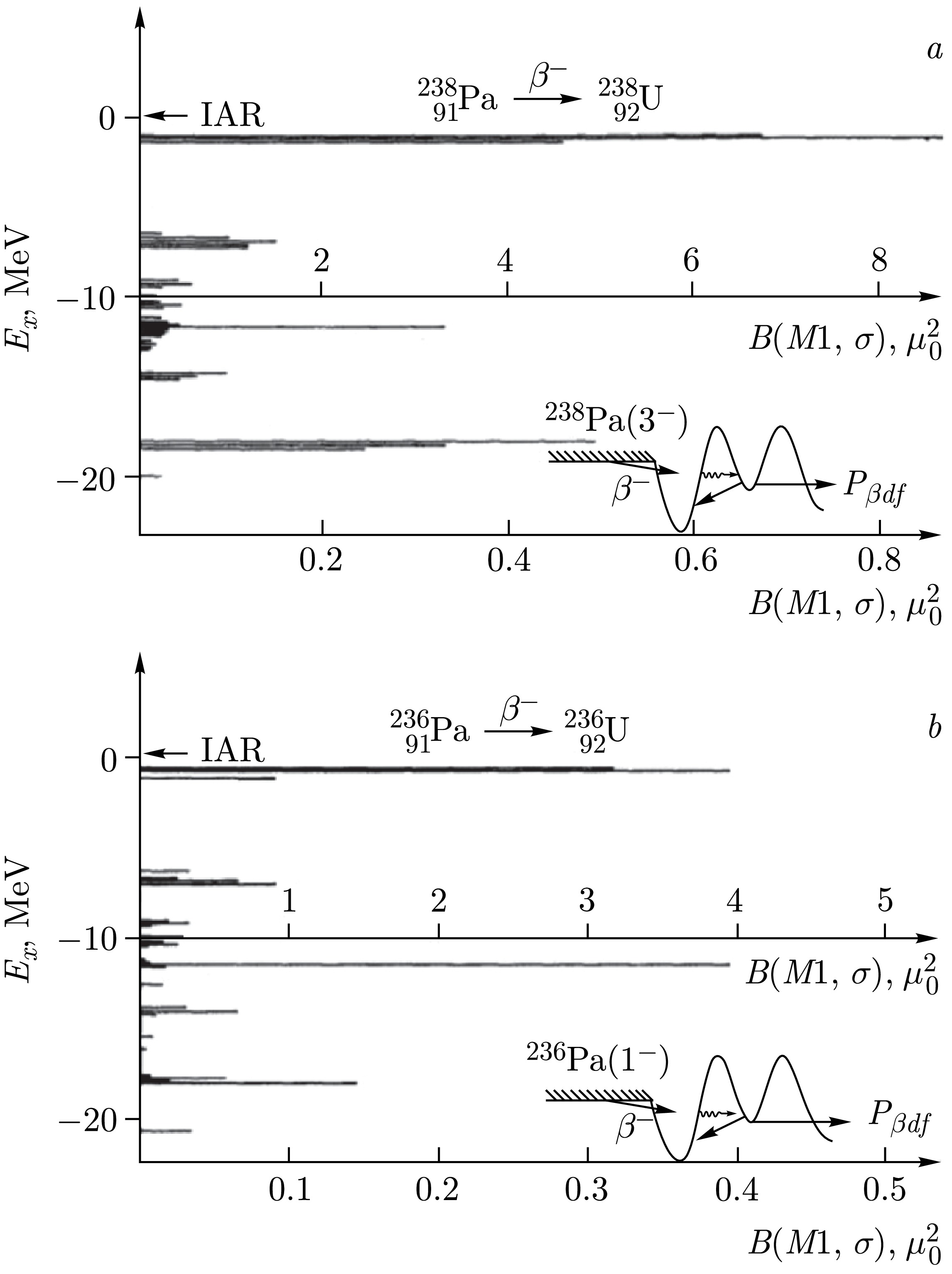
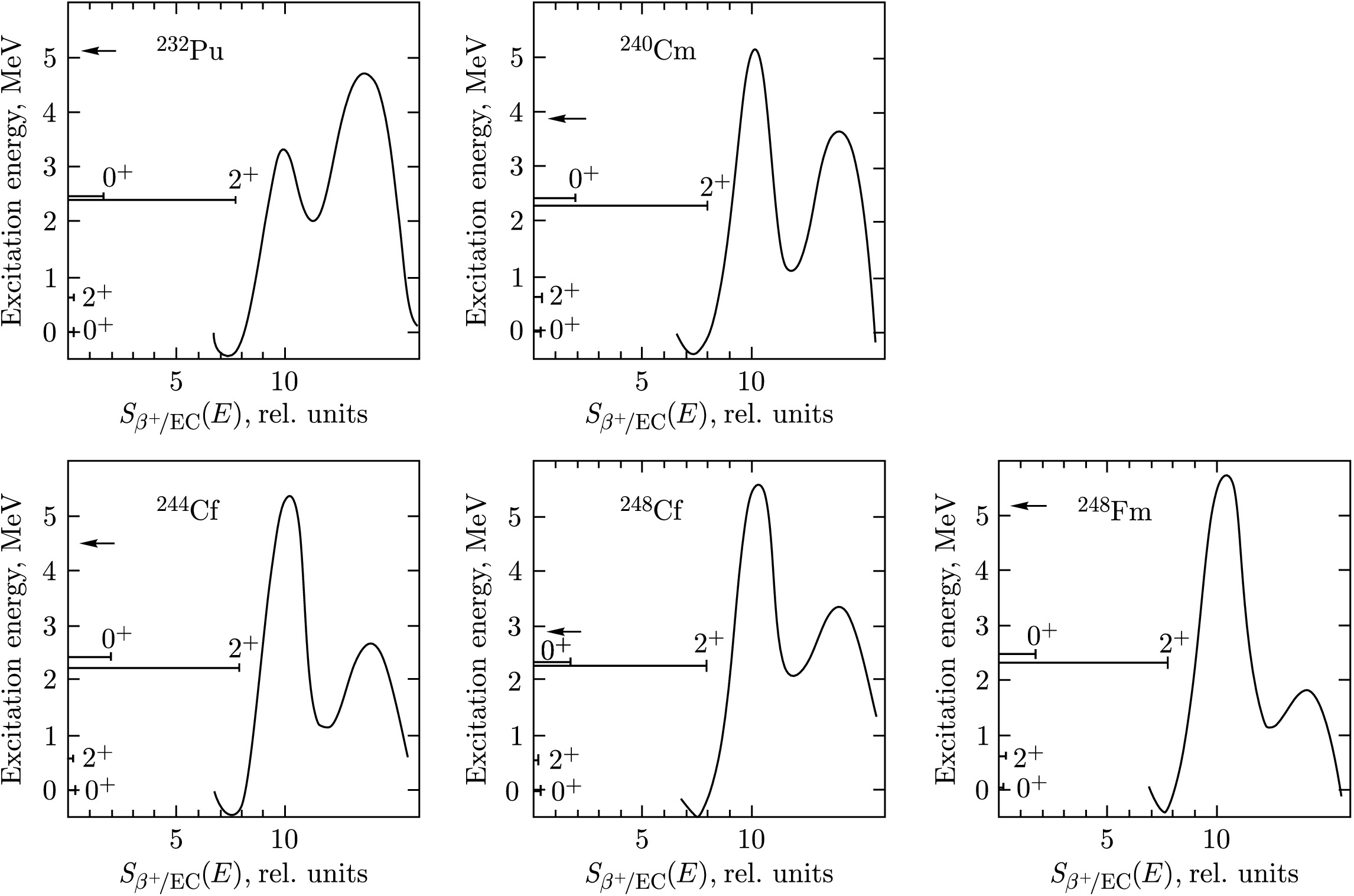
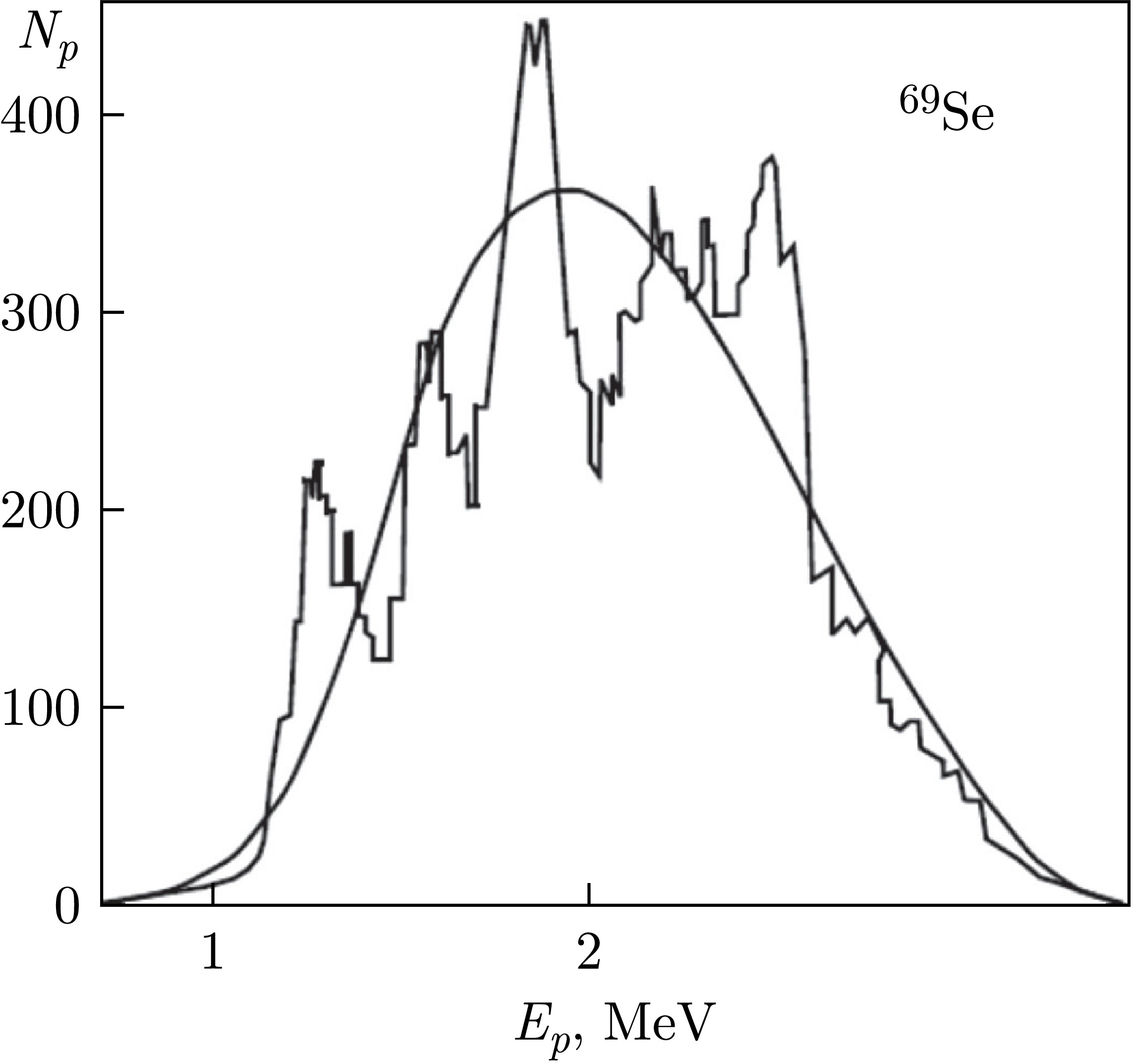
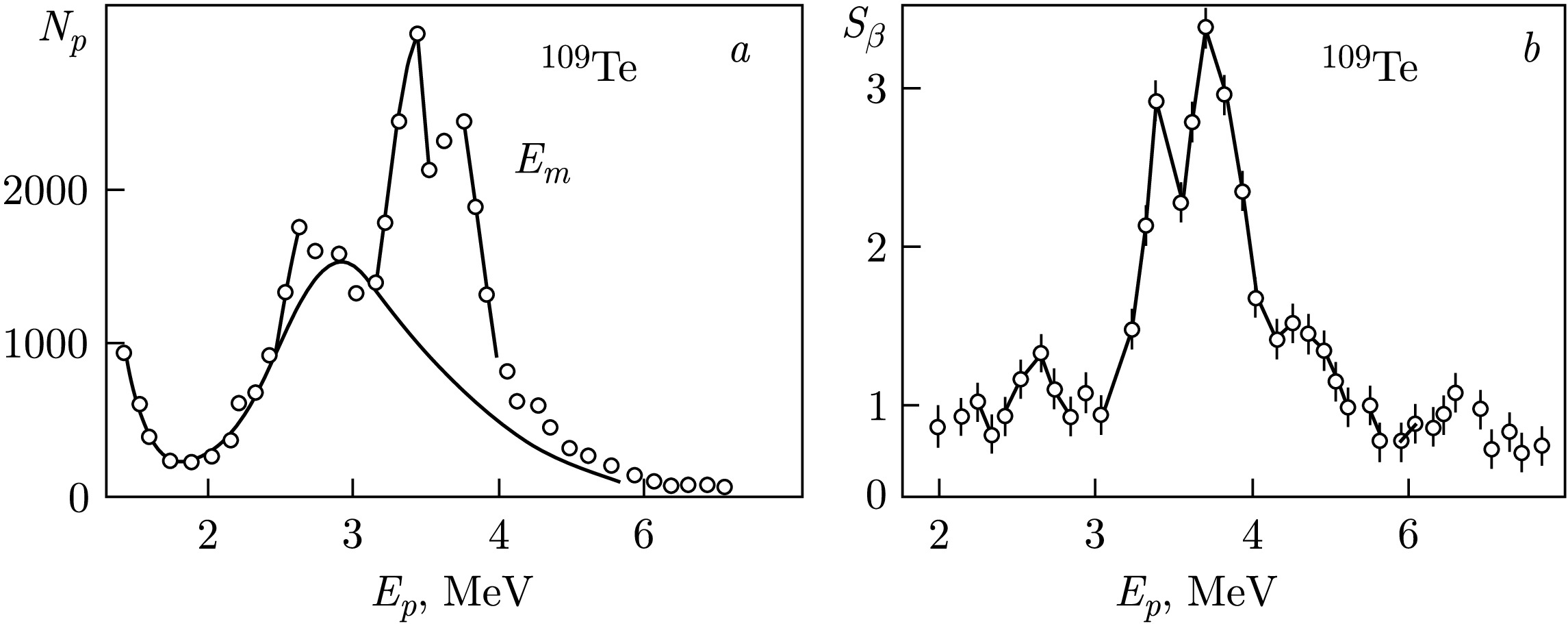
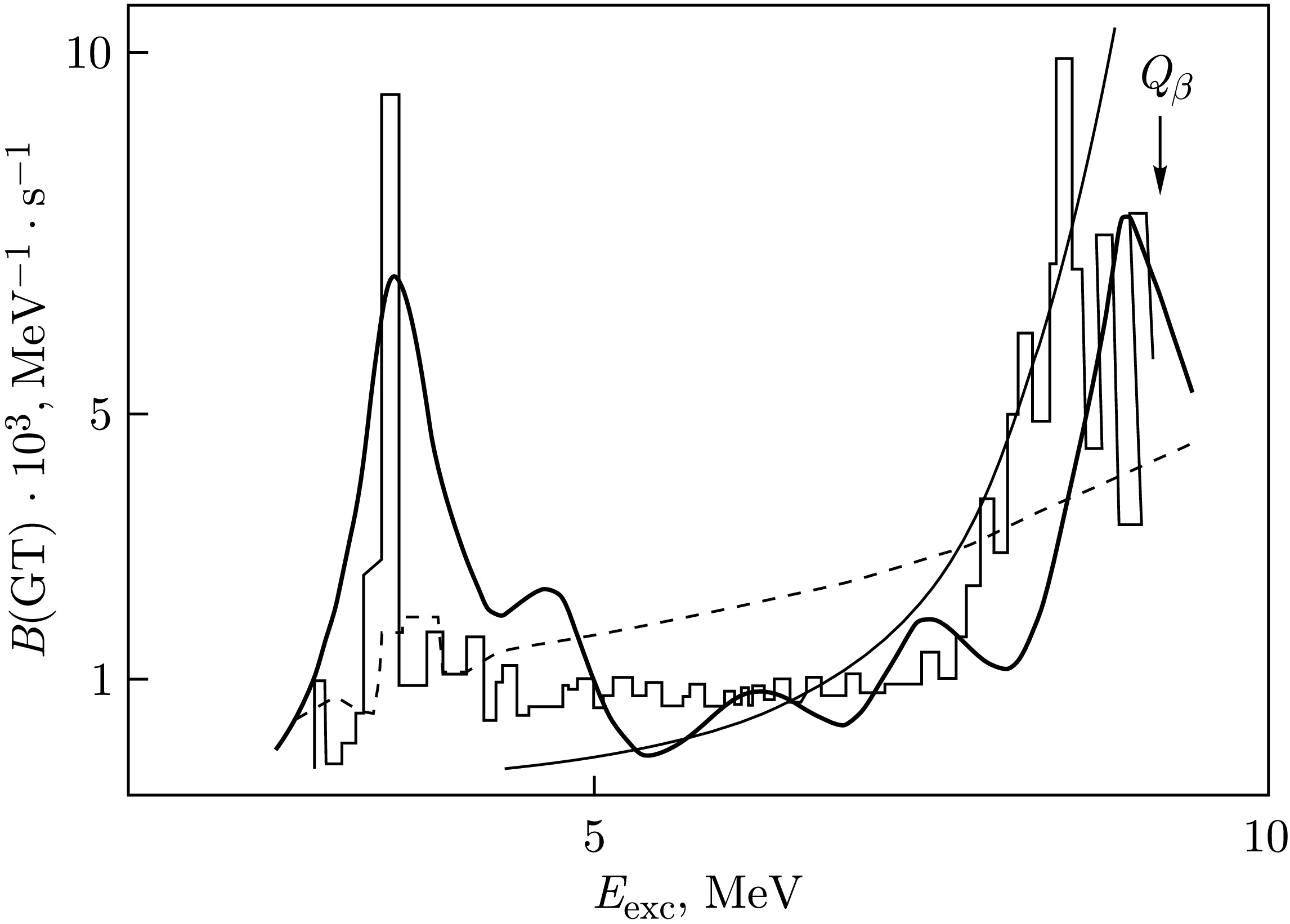
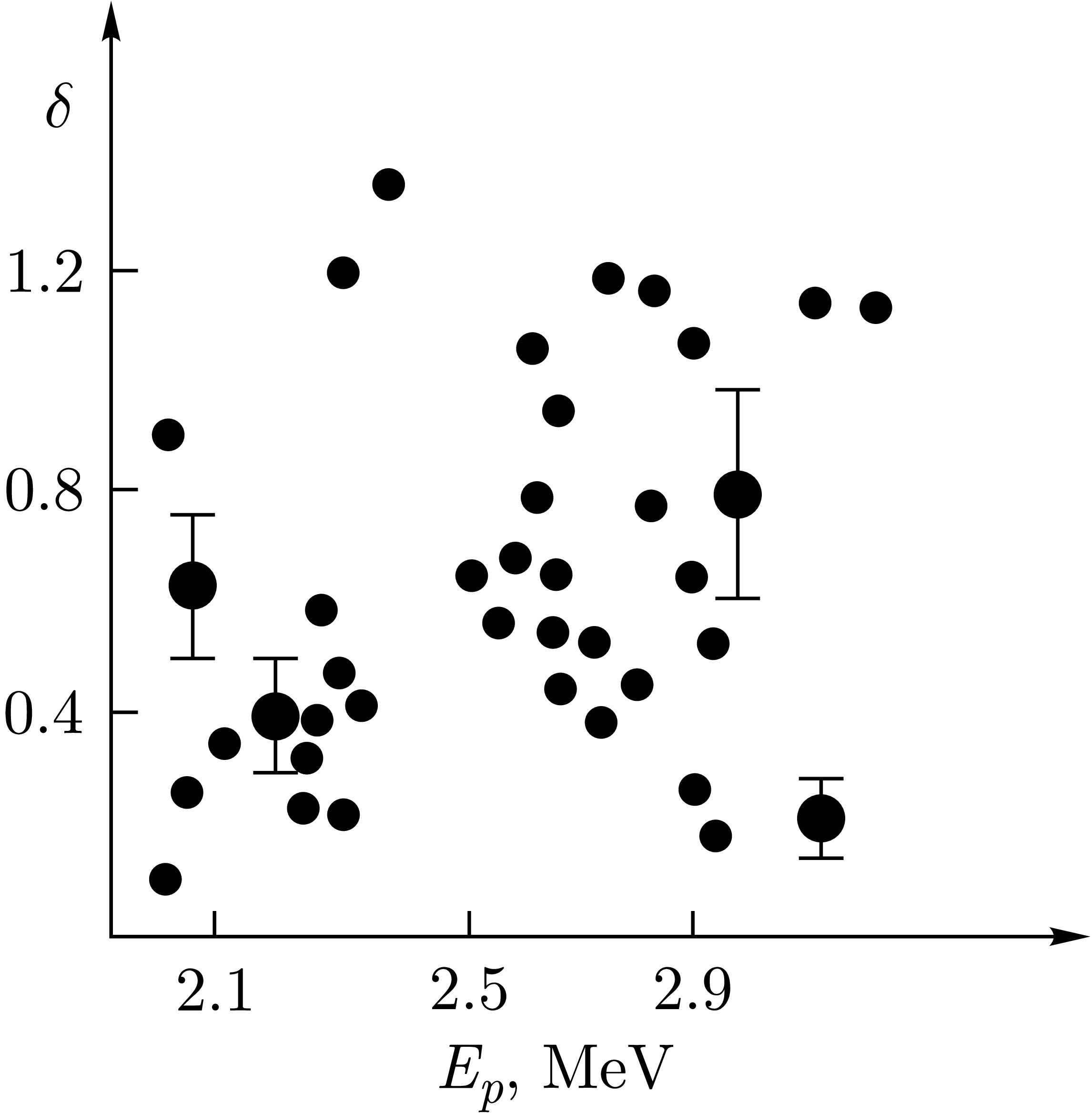
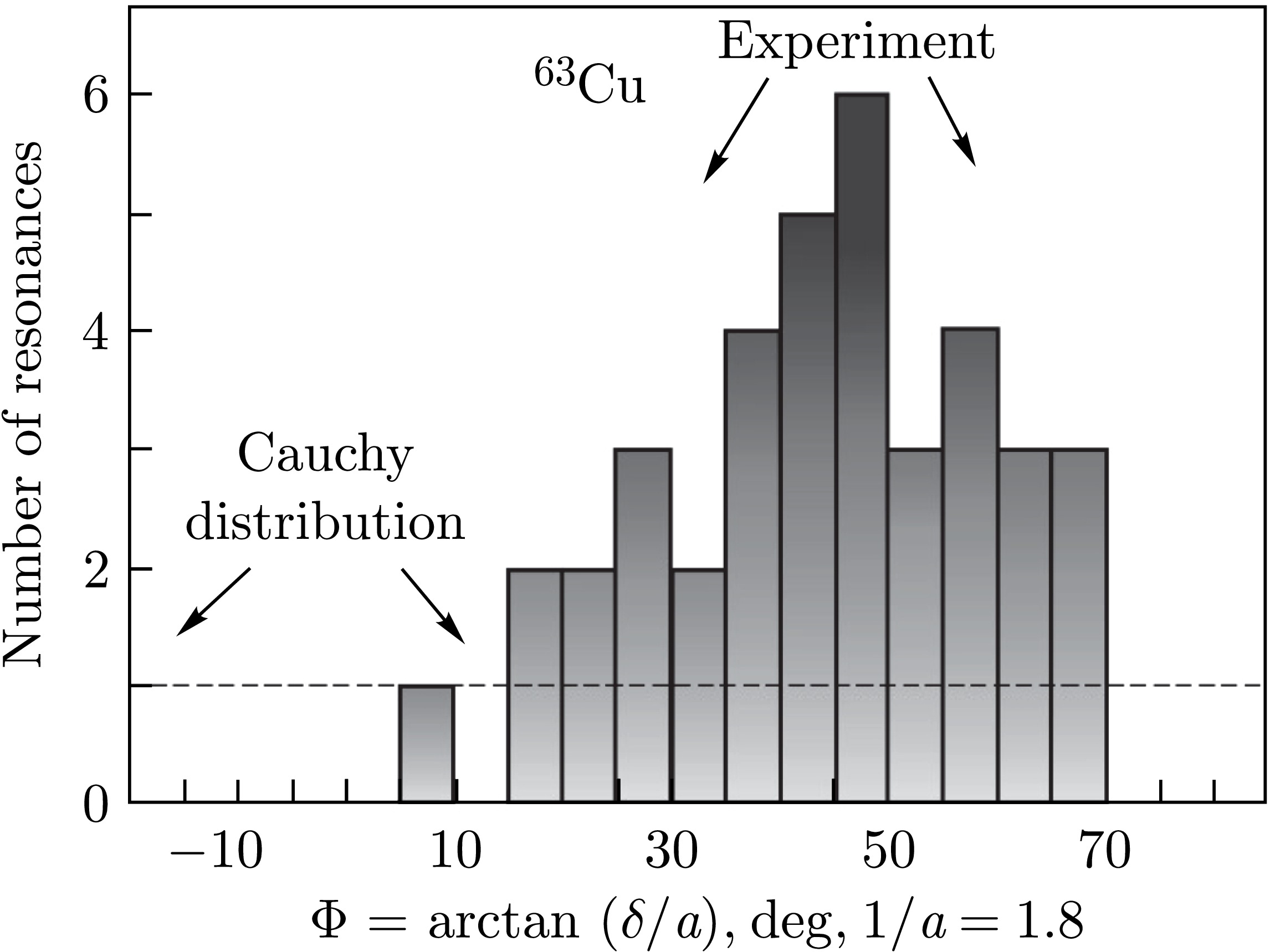
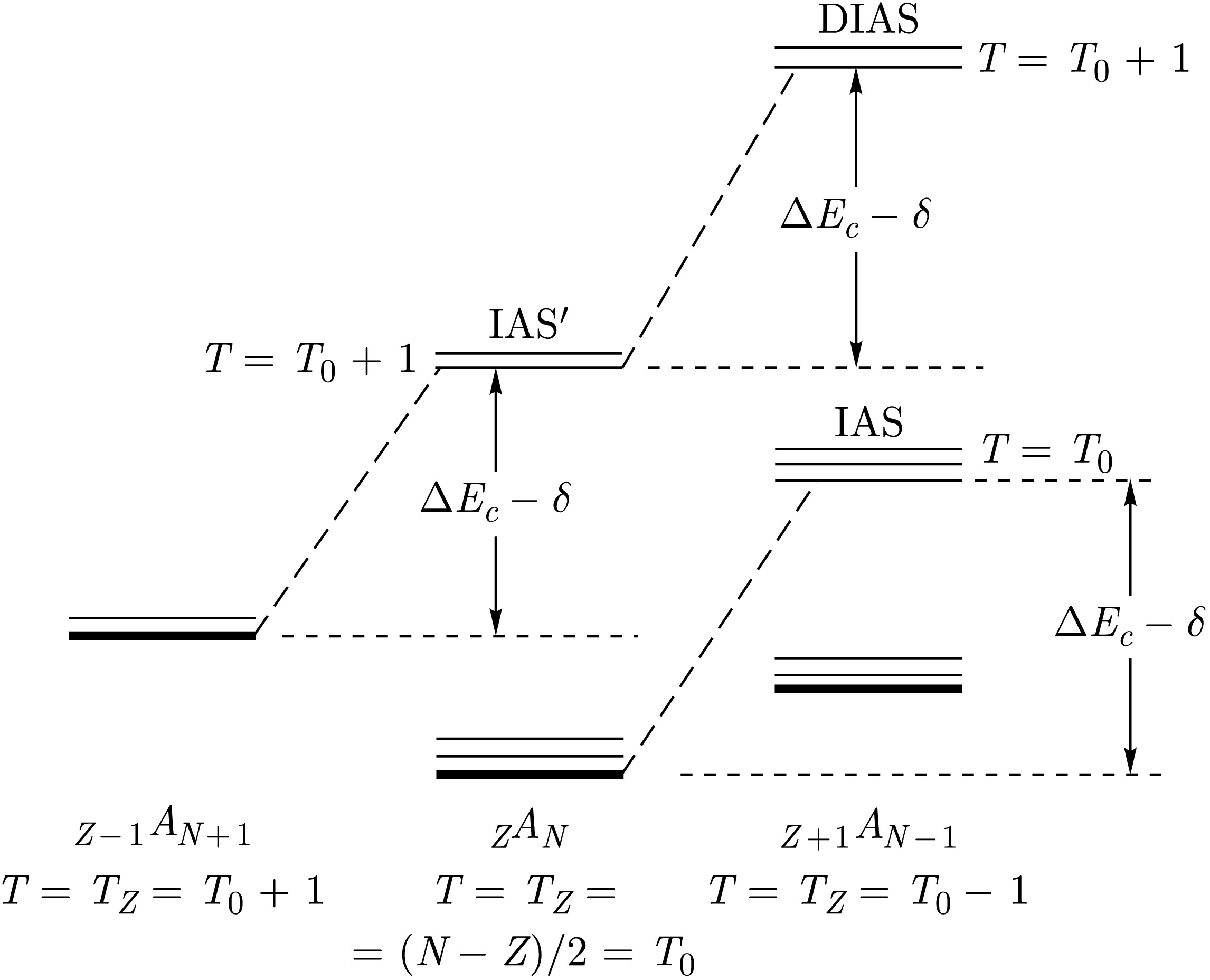
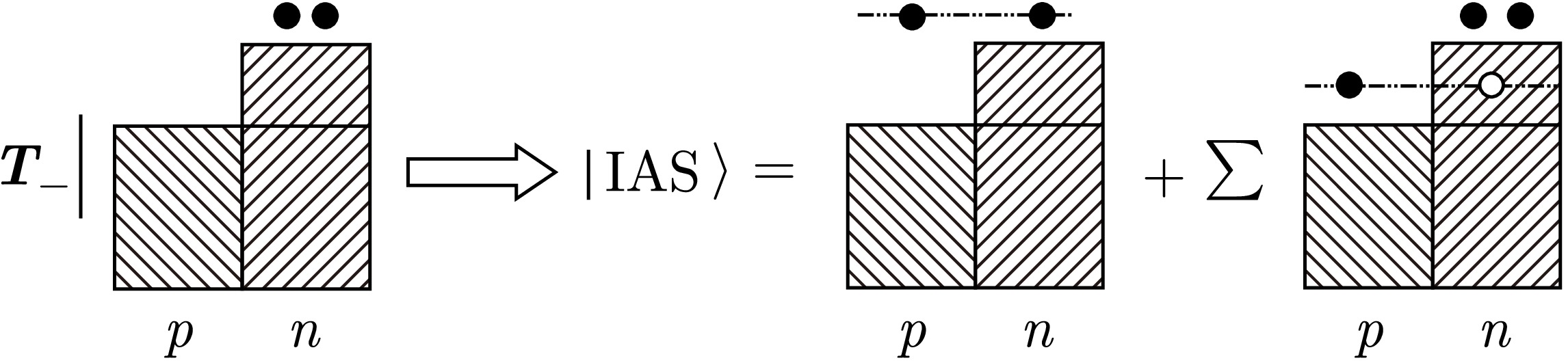
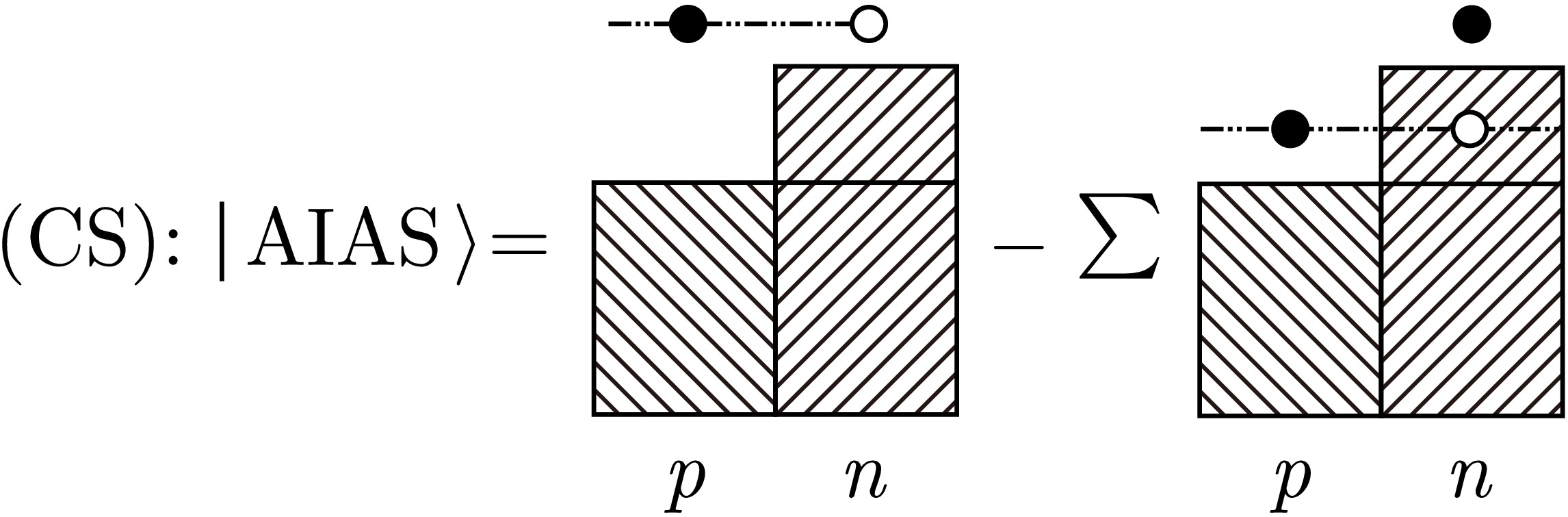
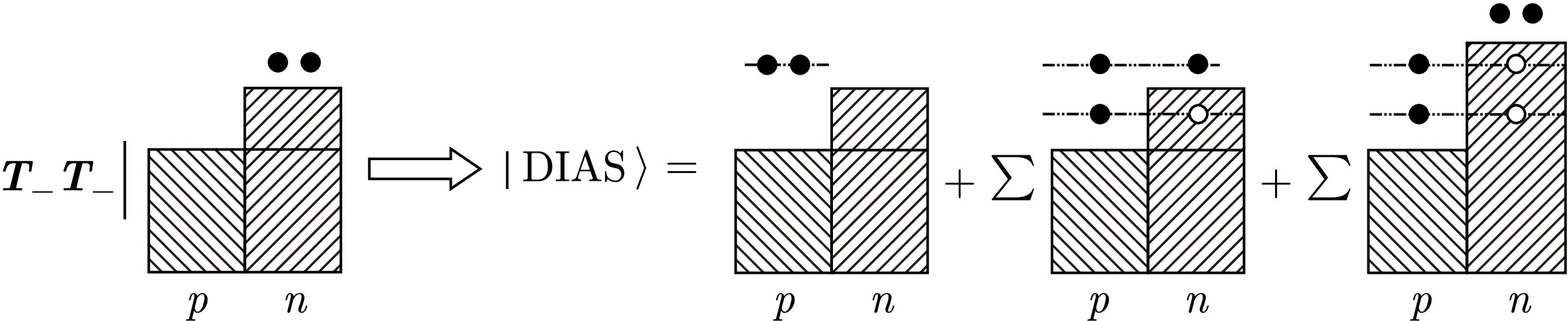
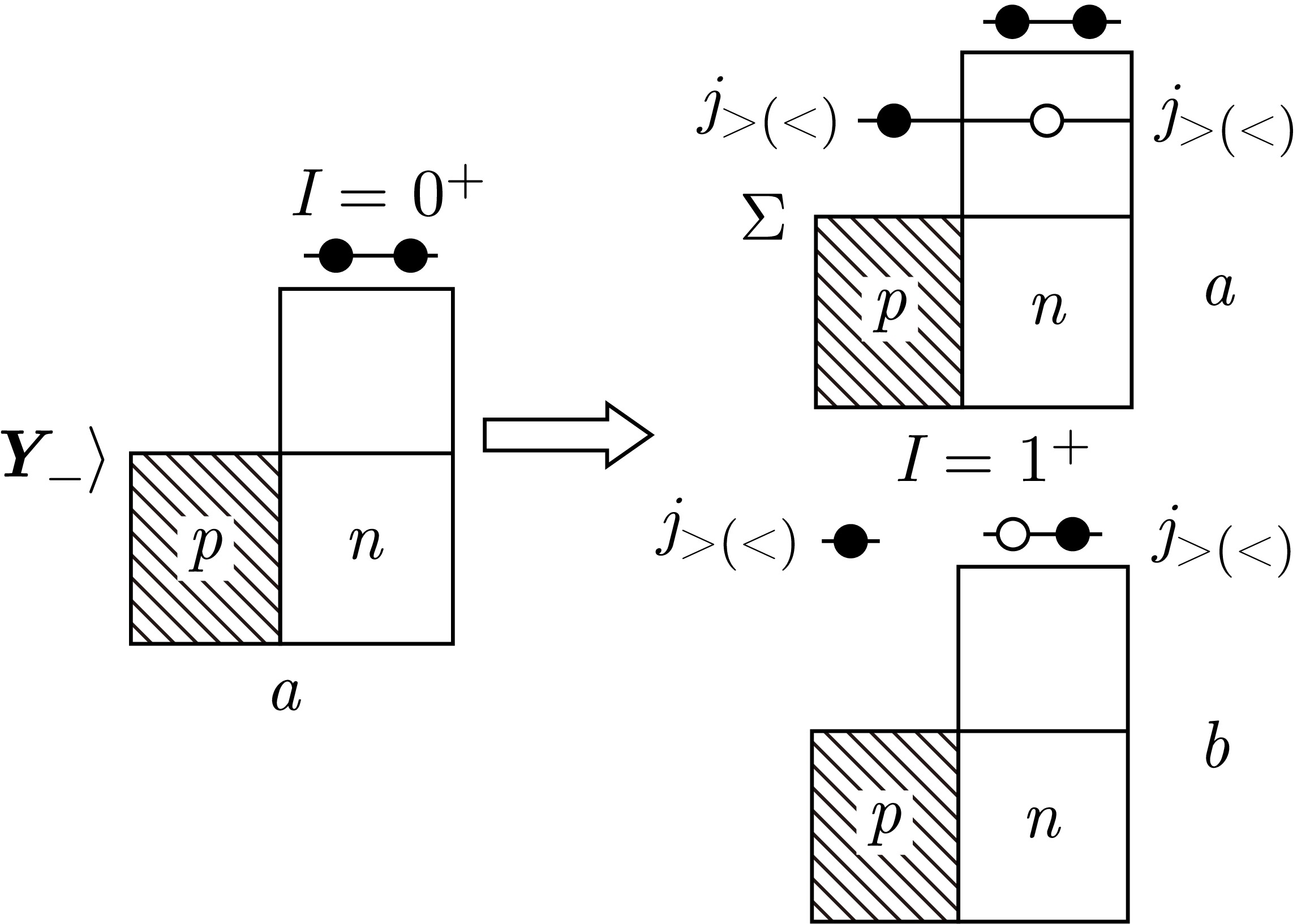
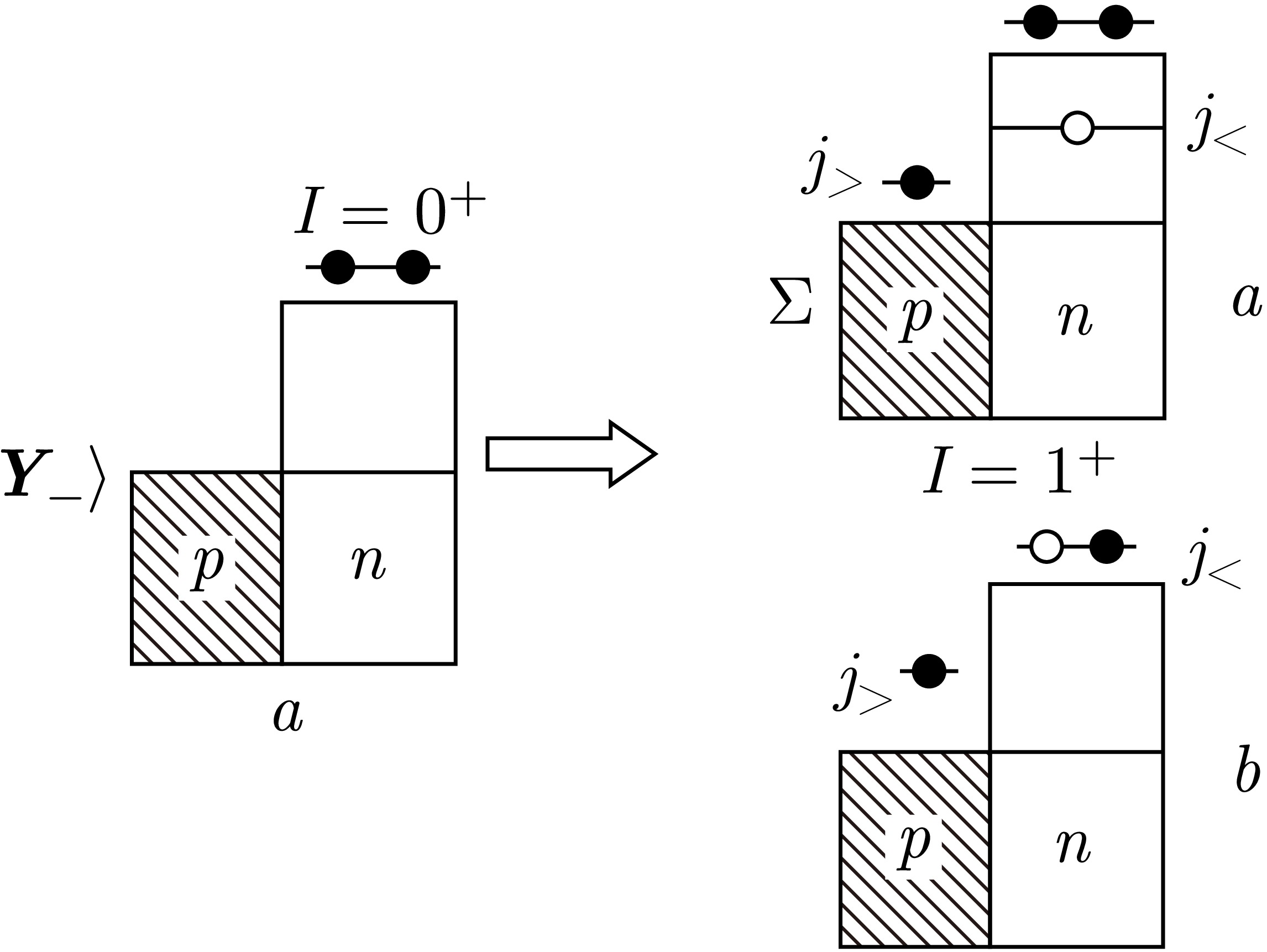
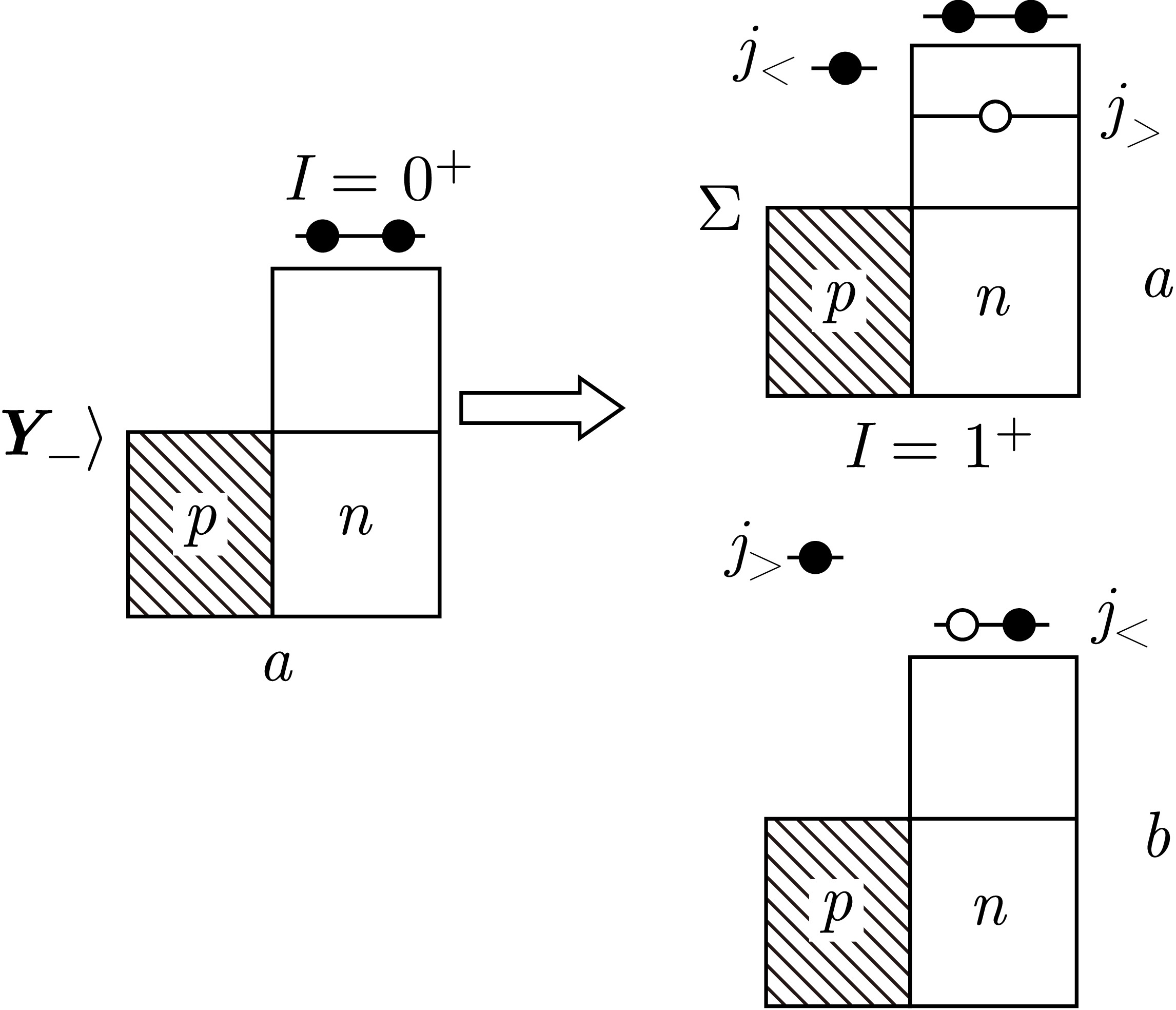
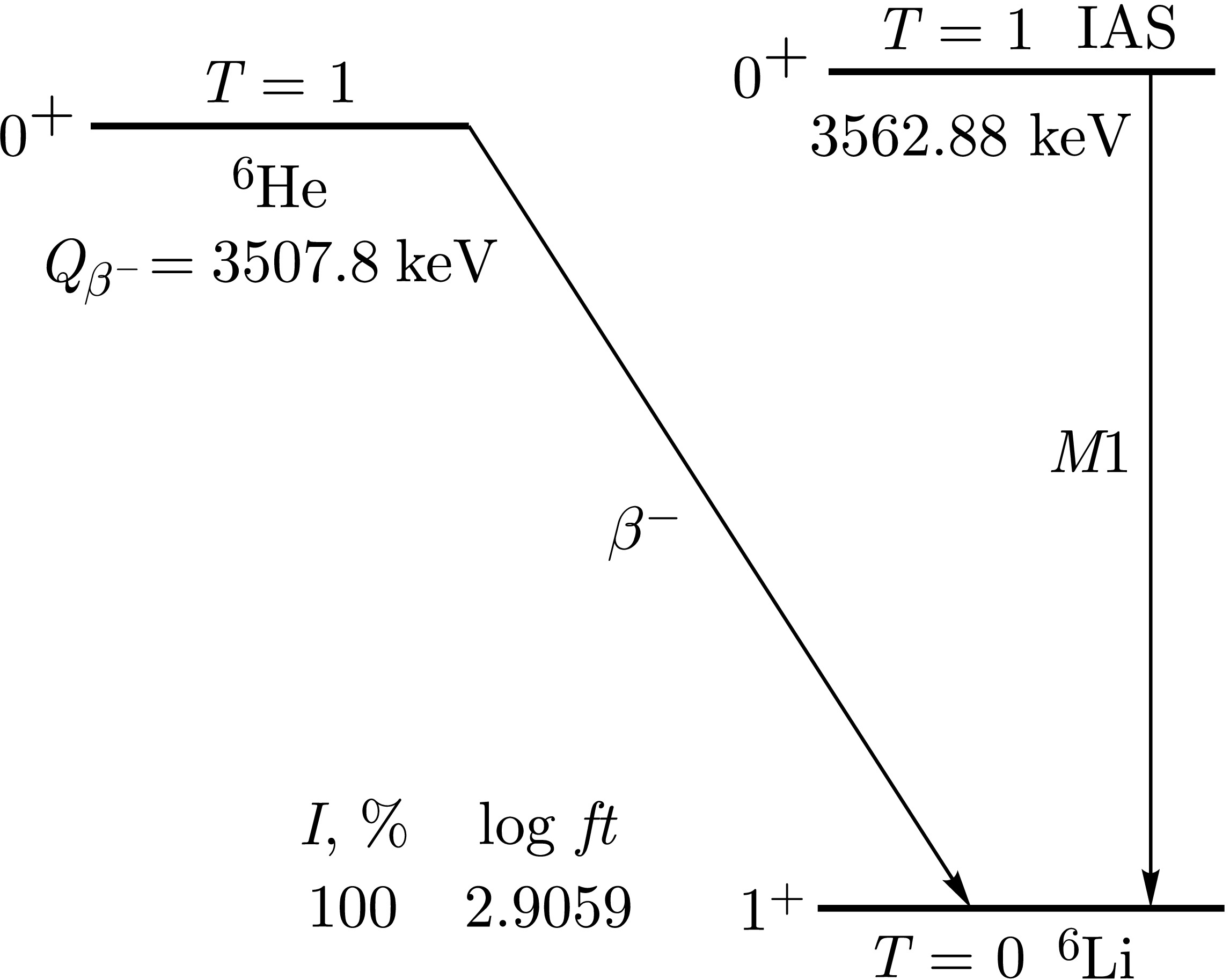
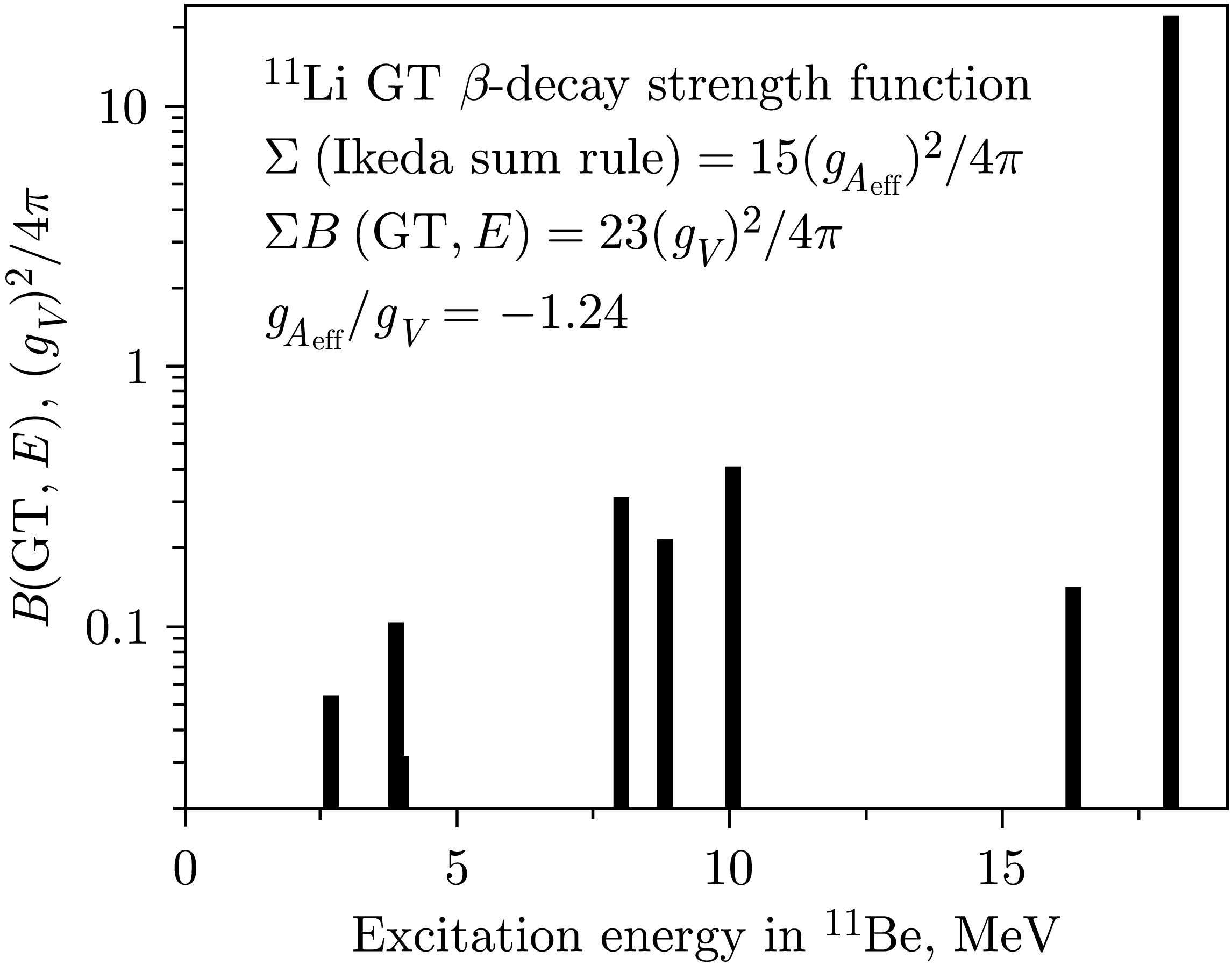
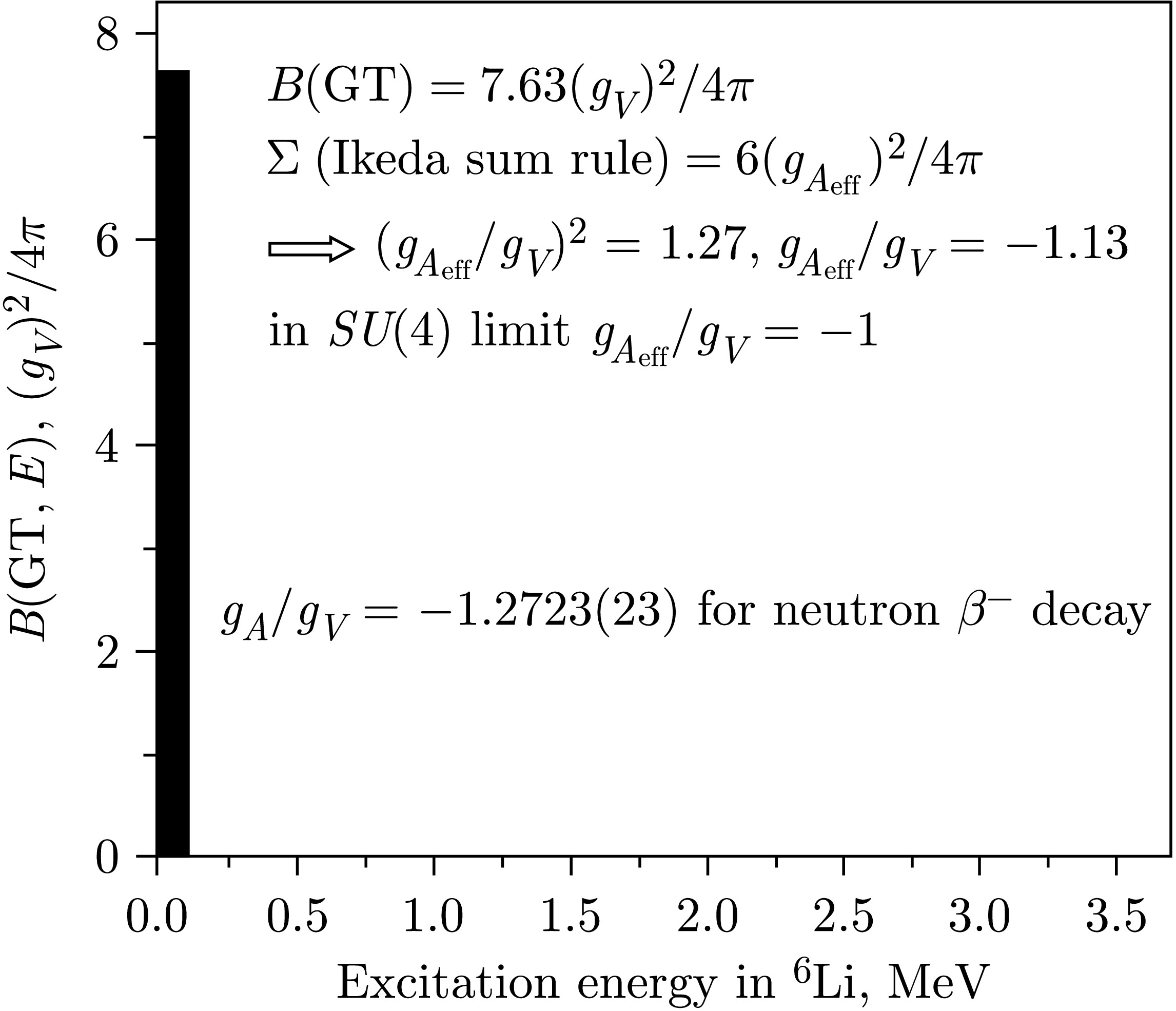
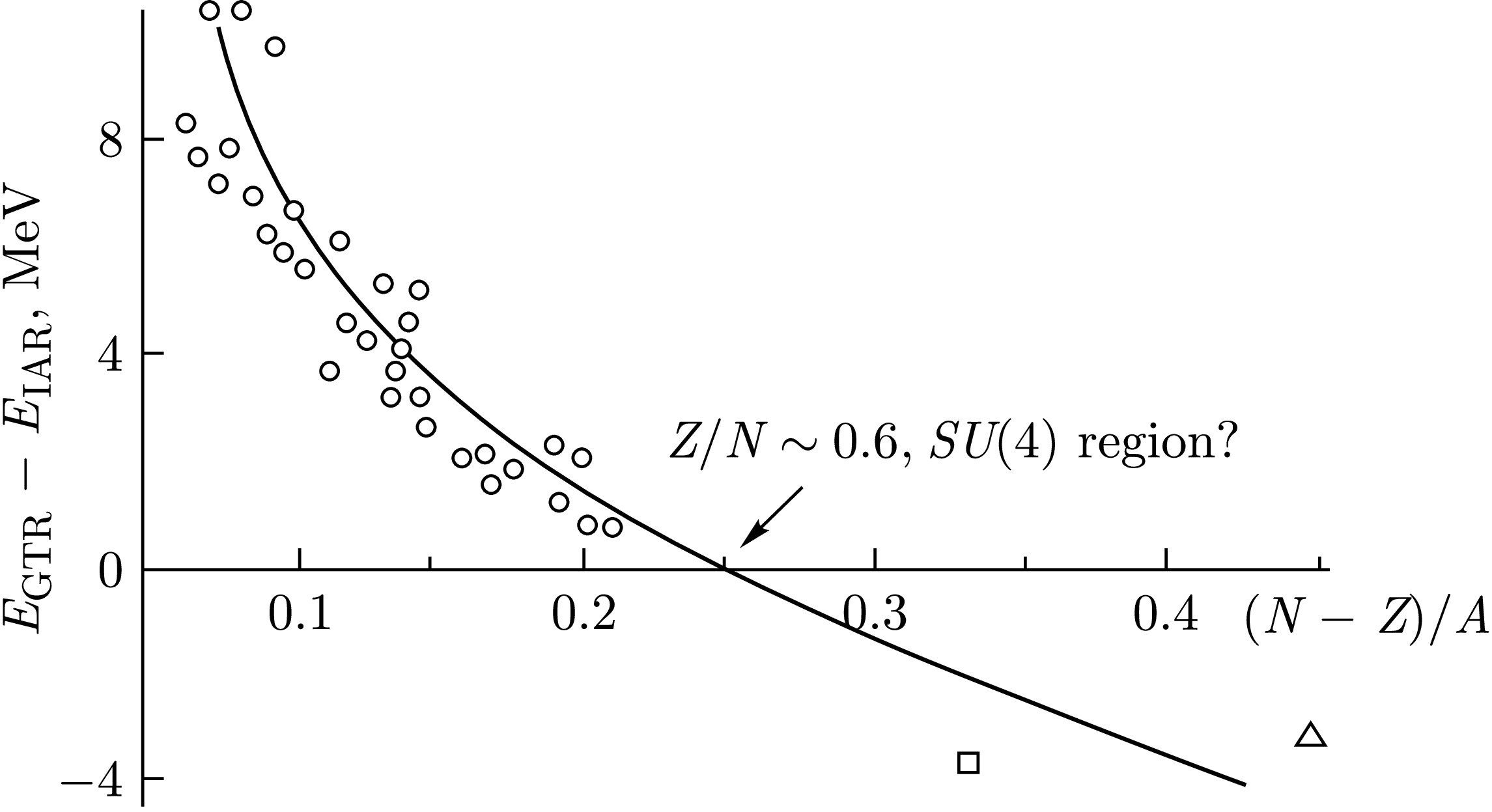
An analysis of experimental data on measurements of the resonant and fine structure of the β-decay strength function\begin{document}$S_{\beta}(E)$\end{document} \begin{document}$S_{\beta}(E)$\end{document} \begin{document}$S_{\beta}(E)$\end{document} \begin{document}$E_{\text {GTR}}{-}E_{\text {IAR}})$\end{document} \begin{document}$SU(4)$\end{document}
An analysis of experimental data on measurements of the resonant and fine structure of the β-decay strength function
2026, 50(6): 063001. doi: 10.1088/1674-1137/ae4a09
Abstract:
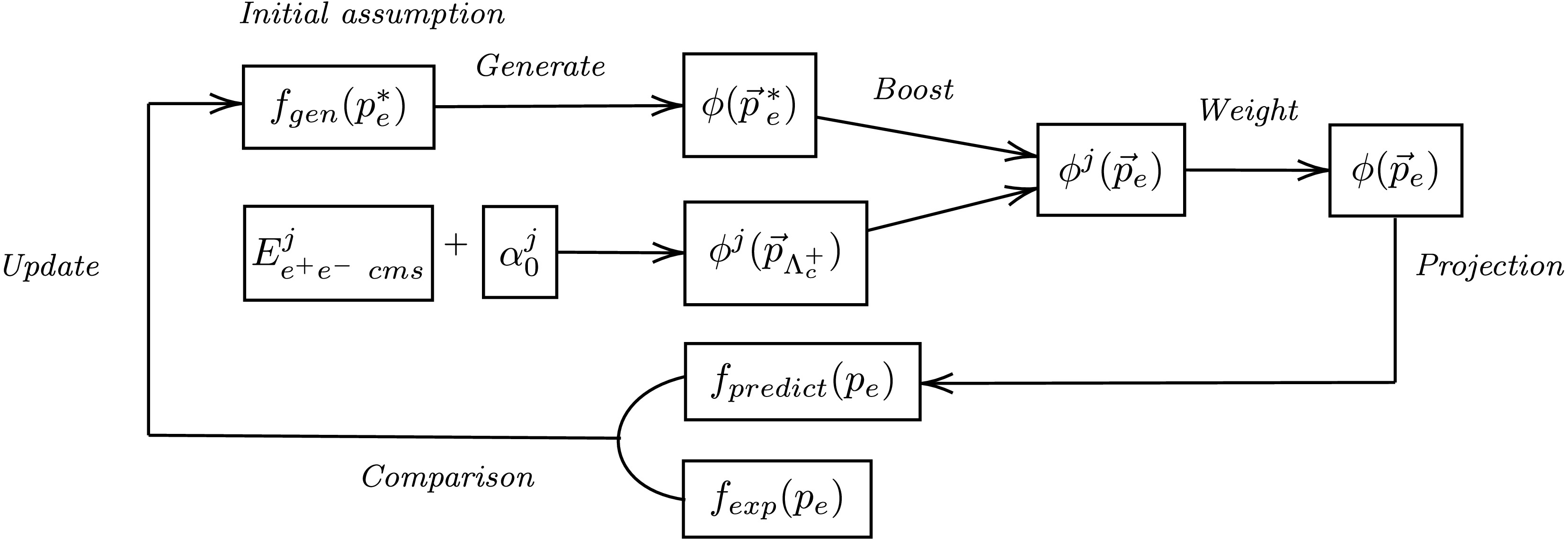
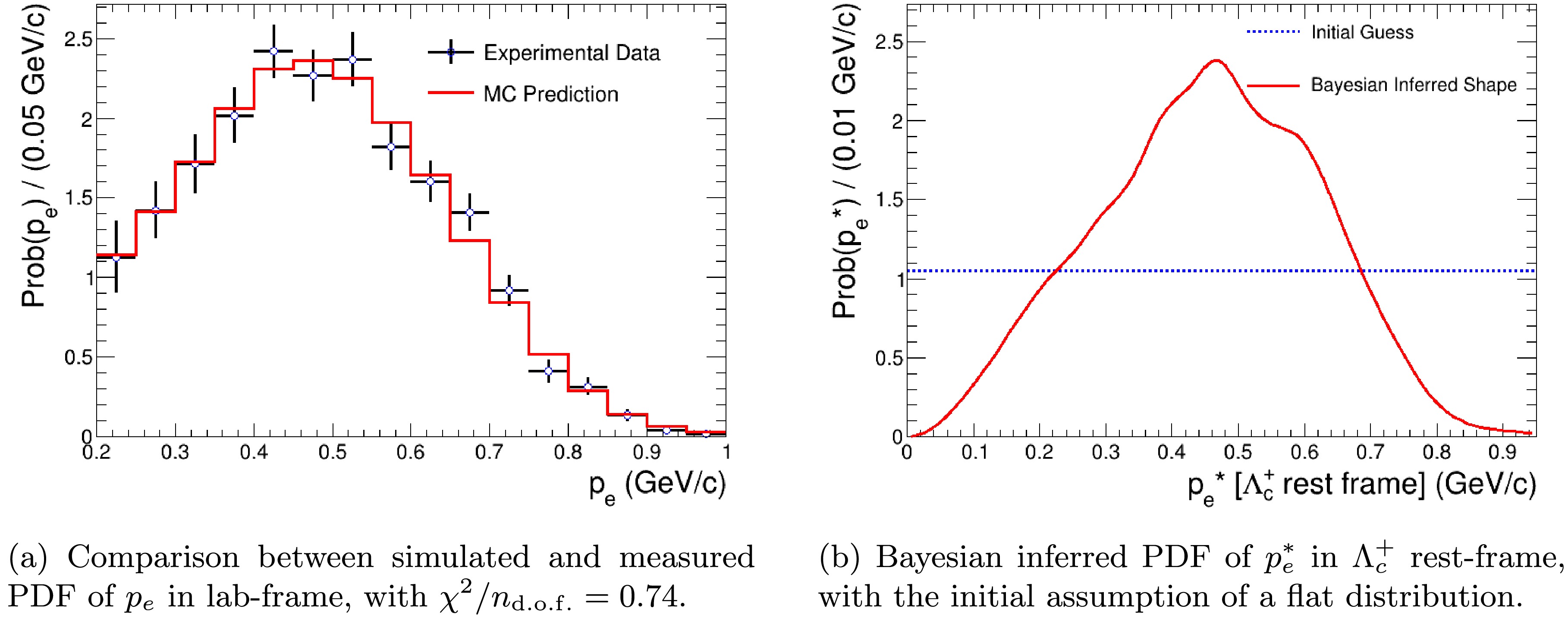
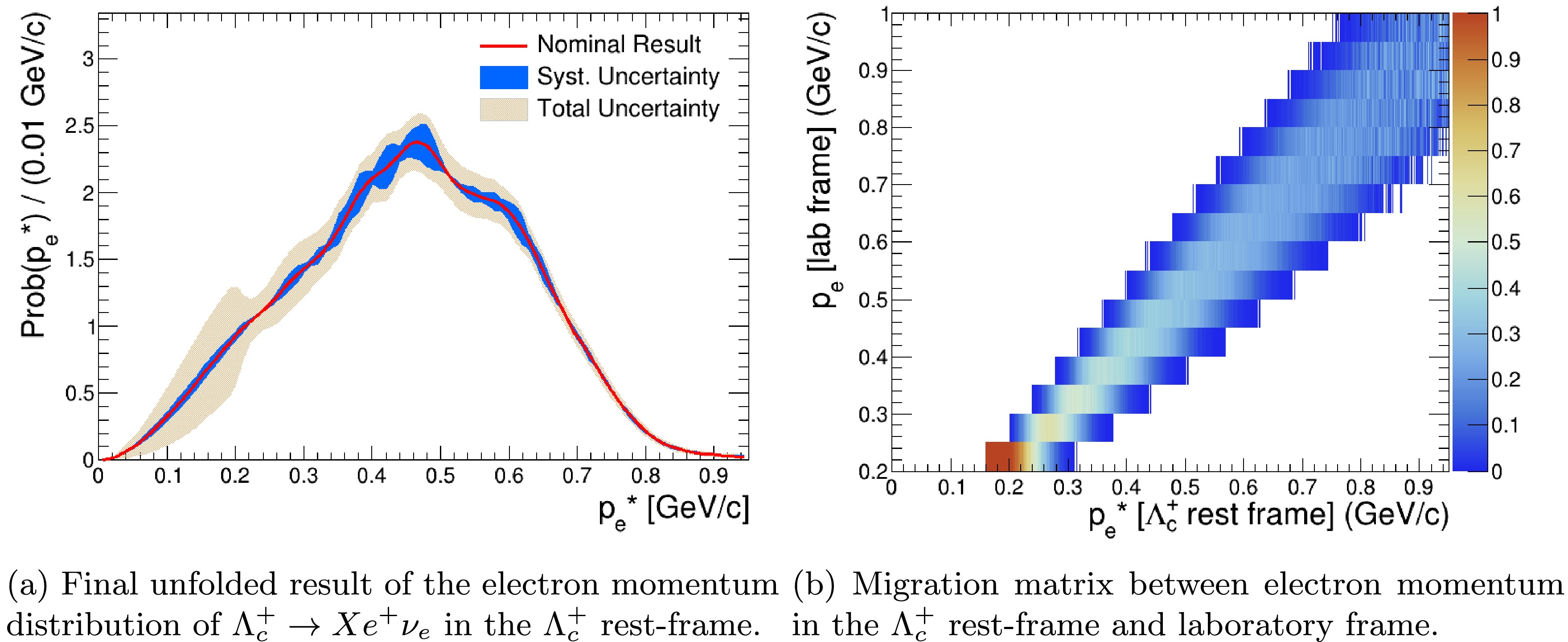
We extract the non-perturbative heavy quark effective theory (HQET) parameters from the inclusive semi-leptonic decay\begin{document}$ \Lambda_c^+ \to X e^+ \nu_e $\end{document} \begin{document}$ \Lambda_c^+ $\end{document} \begin{document}$ e^+e^- $\end{document} \begin{document}$ \Lambda_c^+ $\end{document} \begin{document}$ \Lambda_c^+ $\end{document} \begin{document}$ \mu_\pi^2(\Lambda_c^+) $\end{document} \begin{document}$ \rho_D^3(\Lambda_c^+) $\end{document}
We extract the non-perturbative heavy quark effective theory (HQET) parameters from the inclusive semi-leptonic decay
2026, 50(6): 063002. doi: 10.1088/1674-1137/ae4a0c
Abstract:
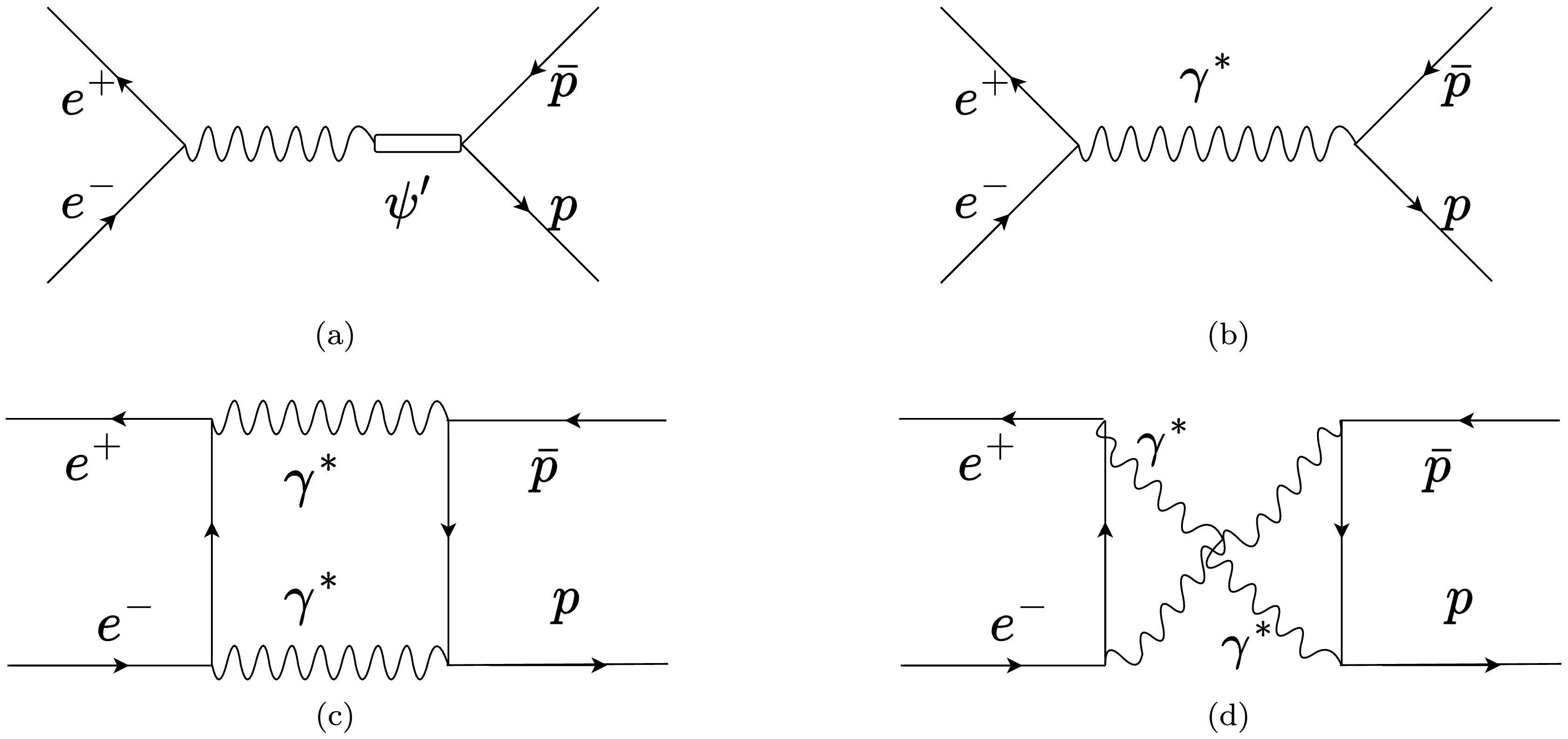
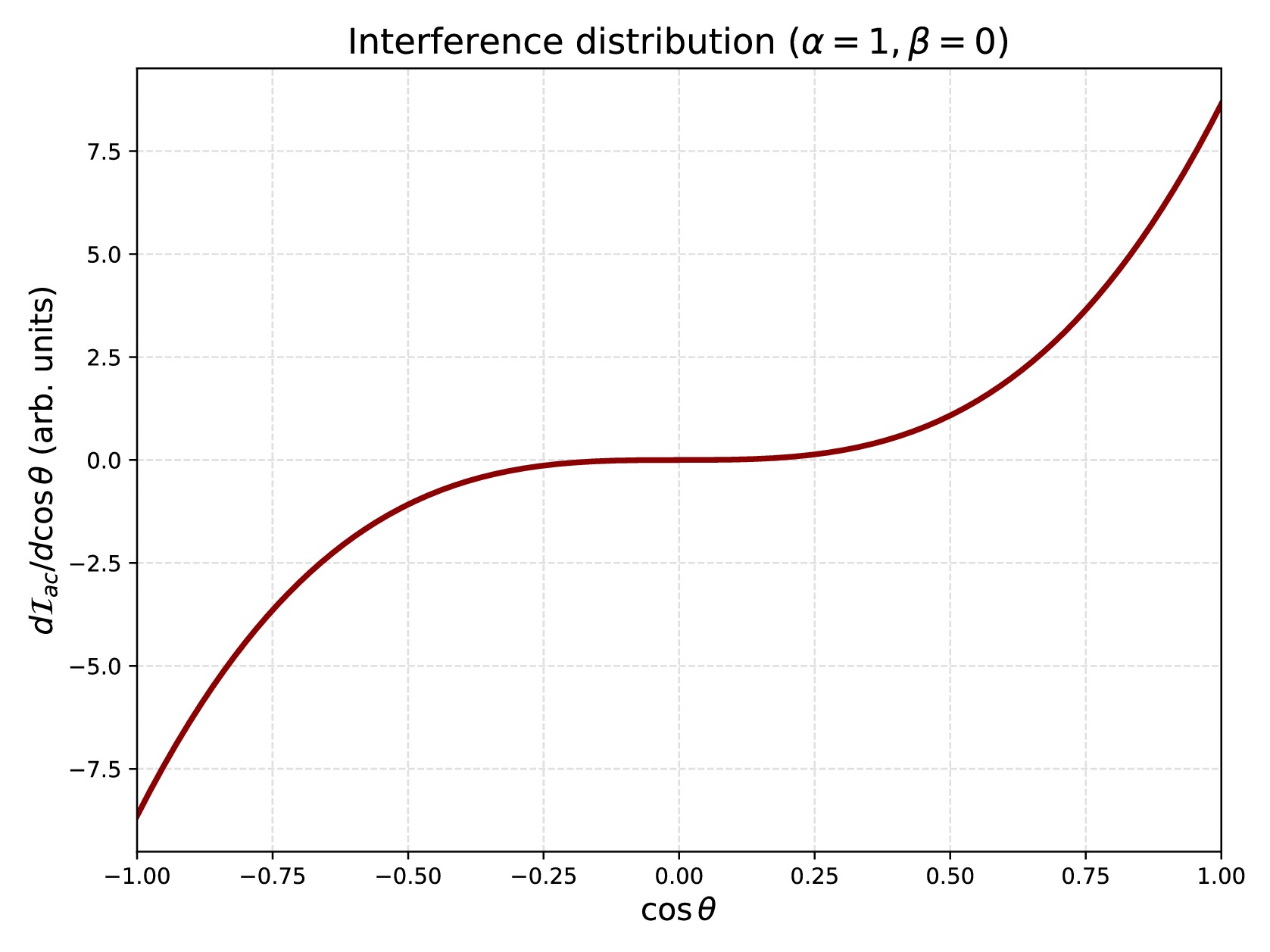
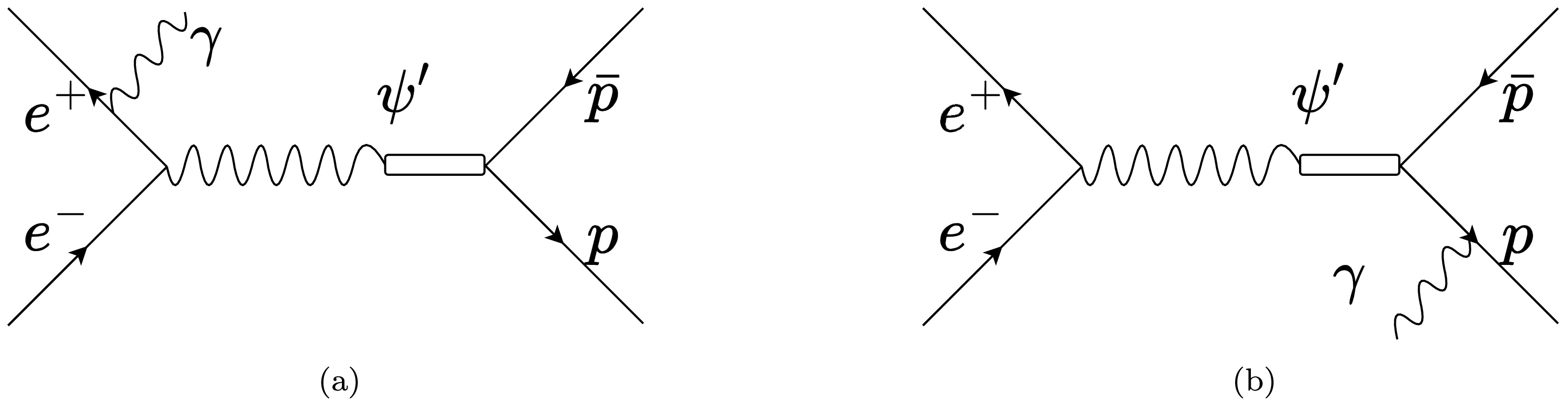
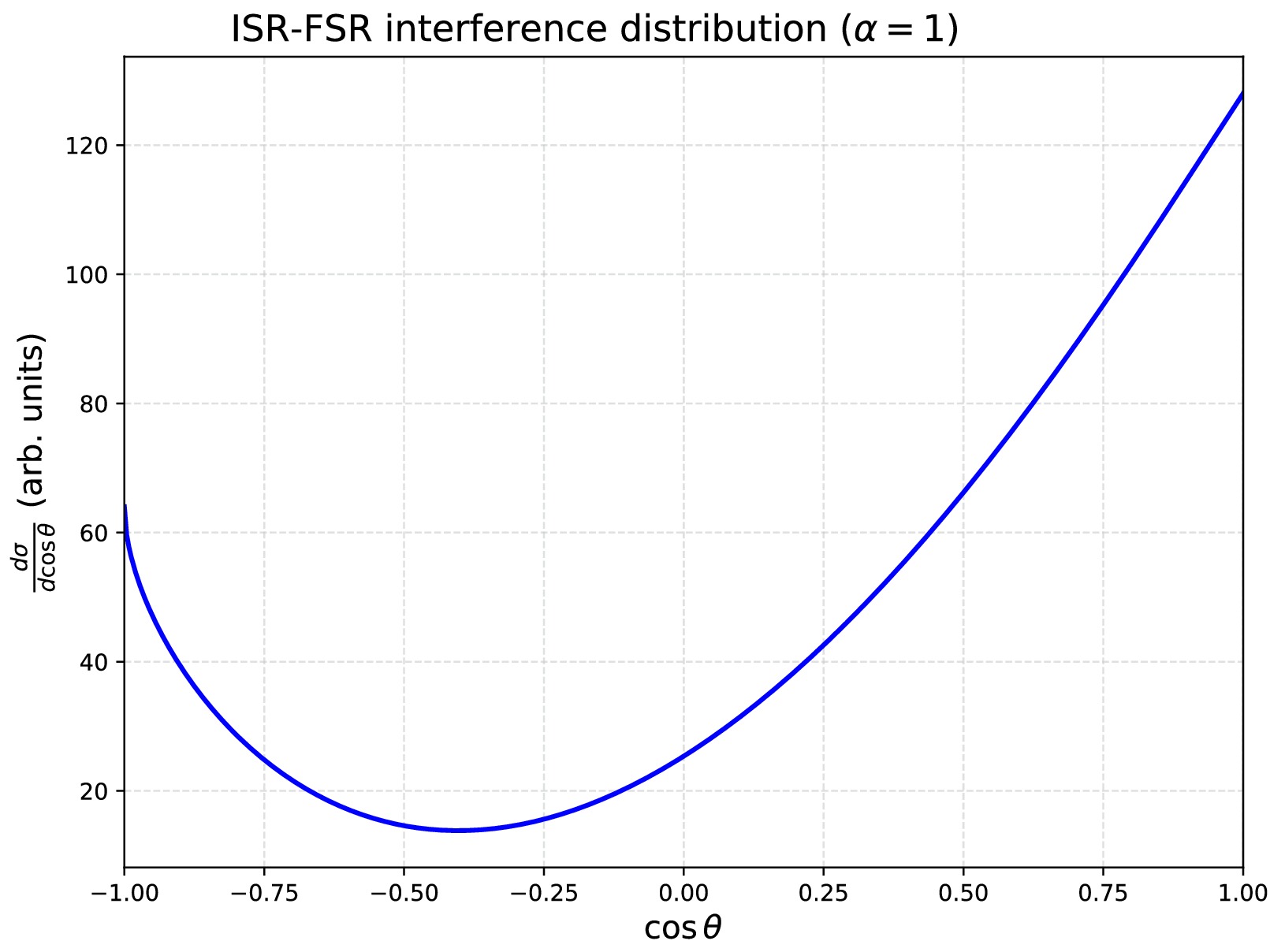
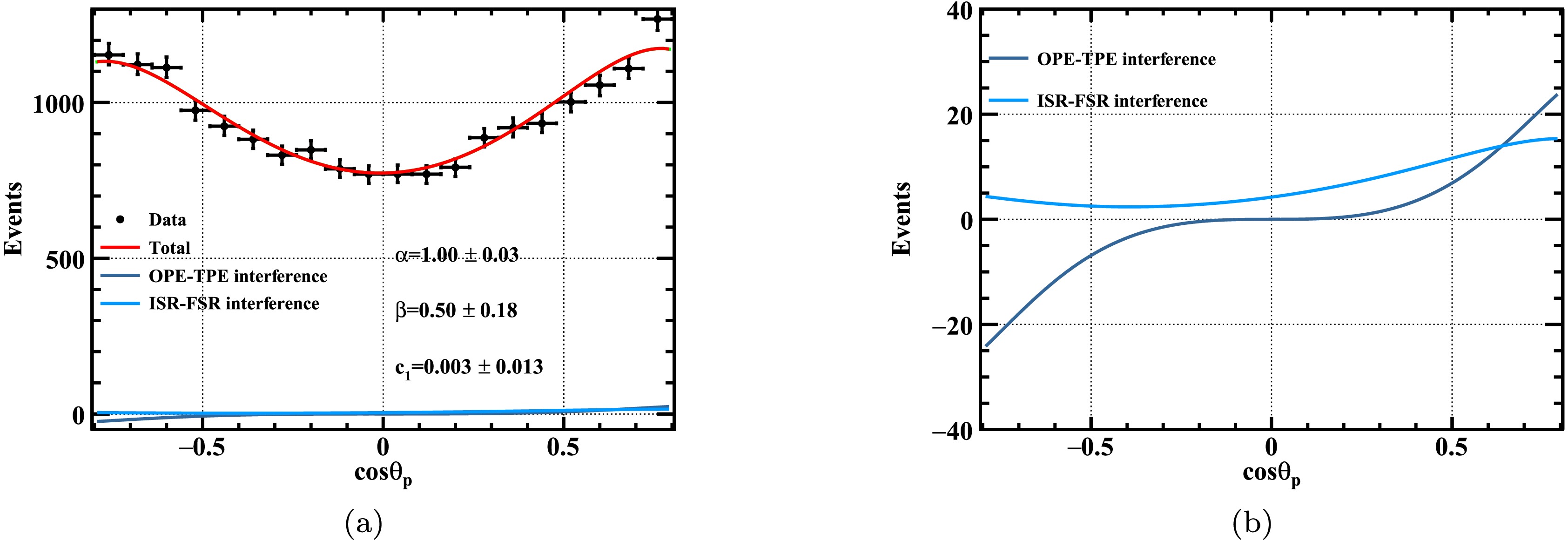
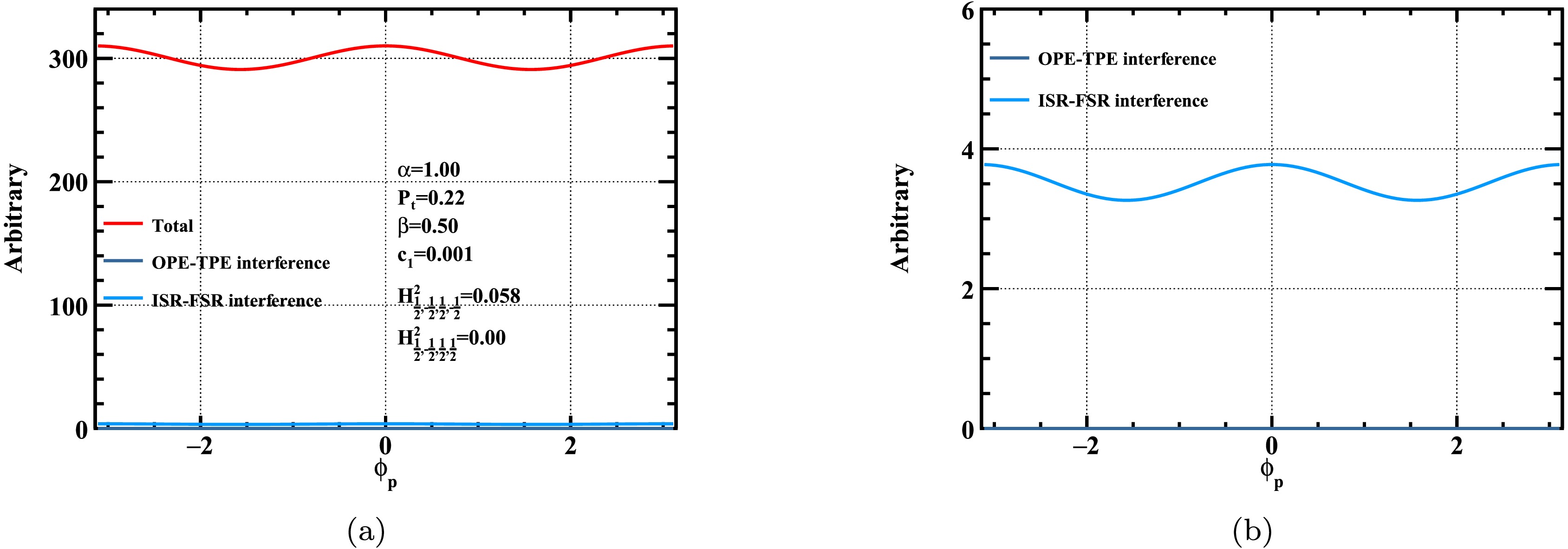
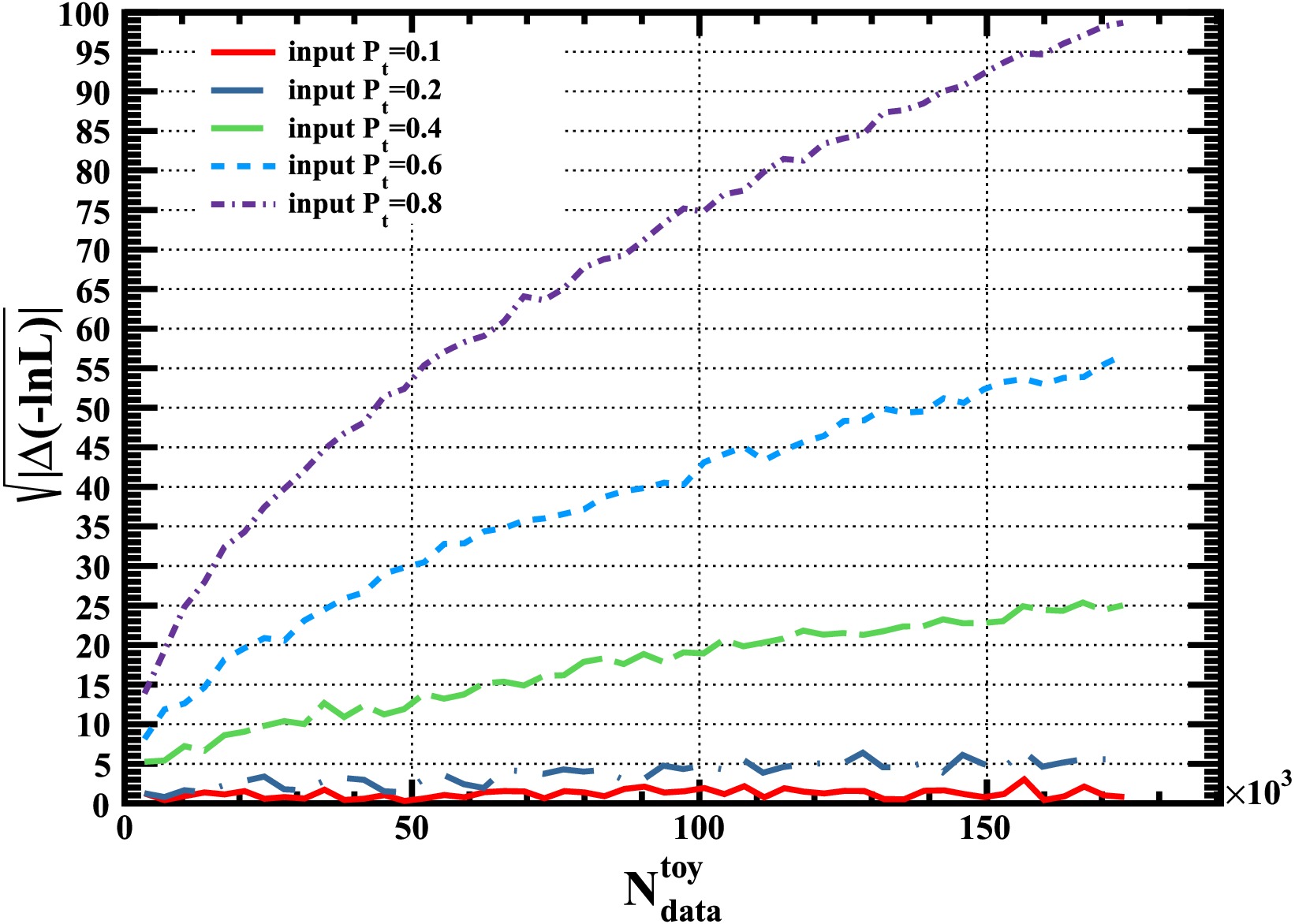
We have performed an updated analysis of the angular distribution of the\begin{document}$ \psi(3686) \to p\bar{p} $\end{document} \begin{document}$ 1+\alpha\cos^2\theta $\end{document} \begin{document}$ \psi(3686) $\end{document} \begin{document}$ \cos\theta $\end{document} \begin{document}$ \psi(3686)\to p\bar{p} $\end{document} \begin{document}$ \alpha = 1.00 \pm 0.03 $\end{document} \begin{document}$ \sin(2\phi) $\end{document}
We have performed an updated analysis of the angular distribution of the
2026, 50(6): 063101. doi: 10.1088/1674-1137/ae4a08
Abstract:
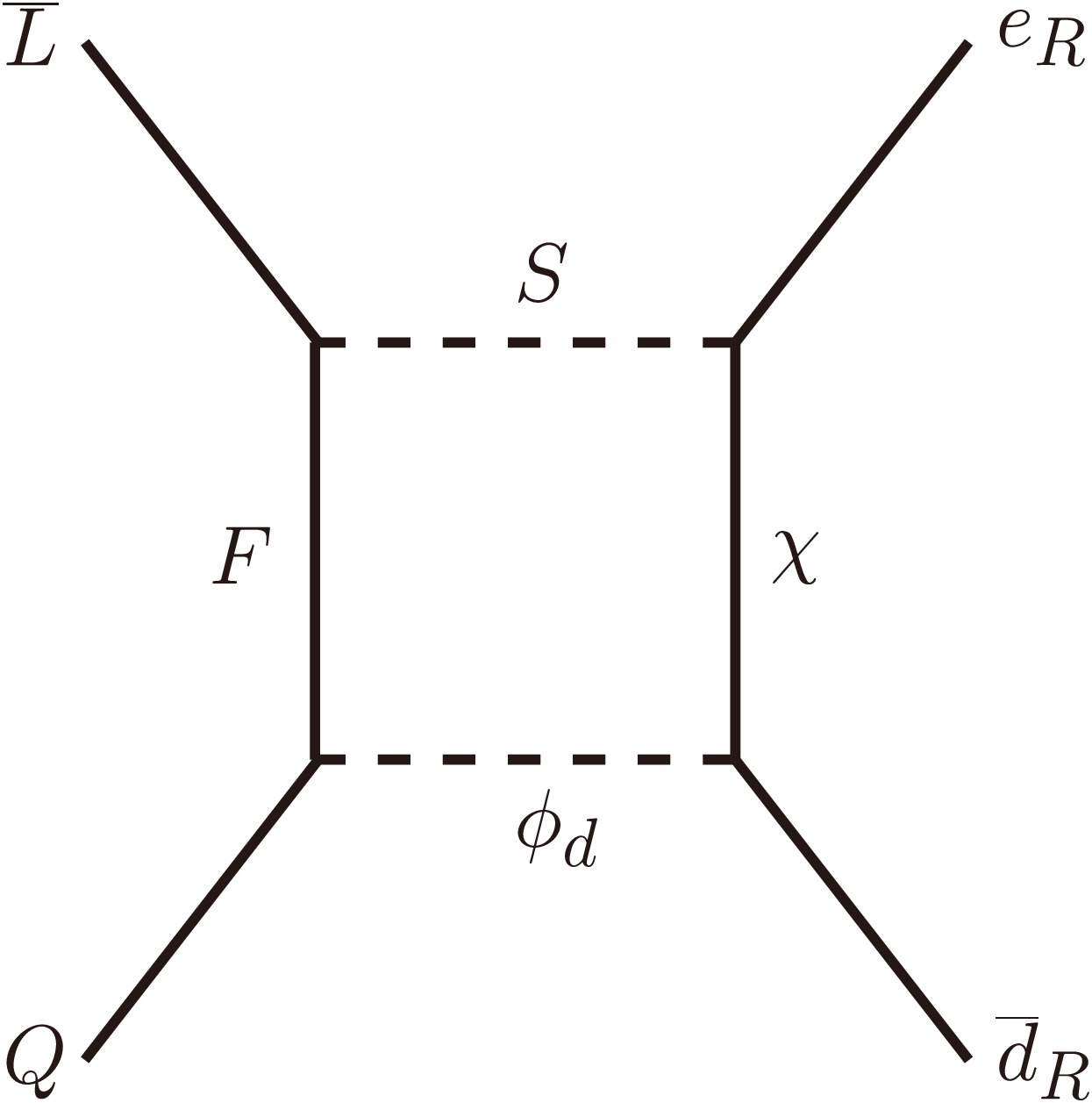
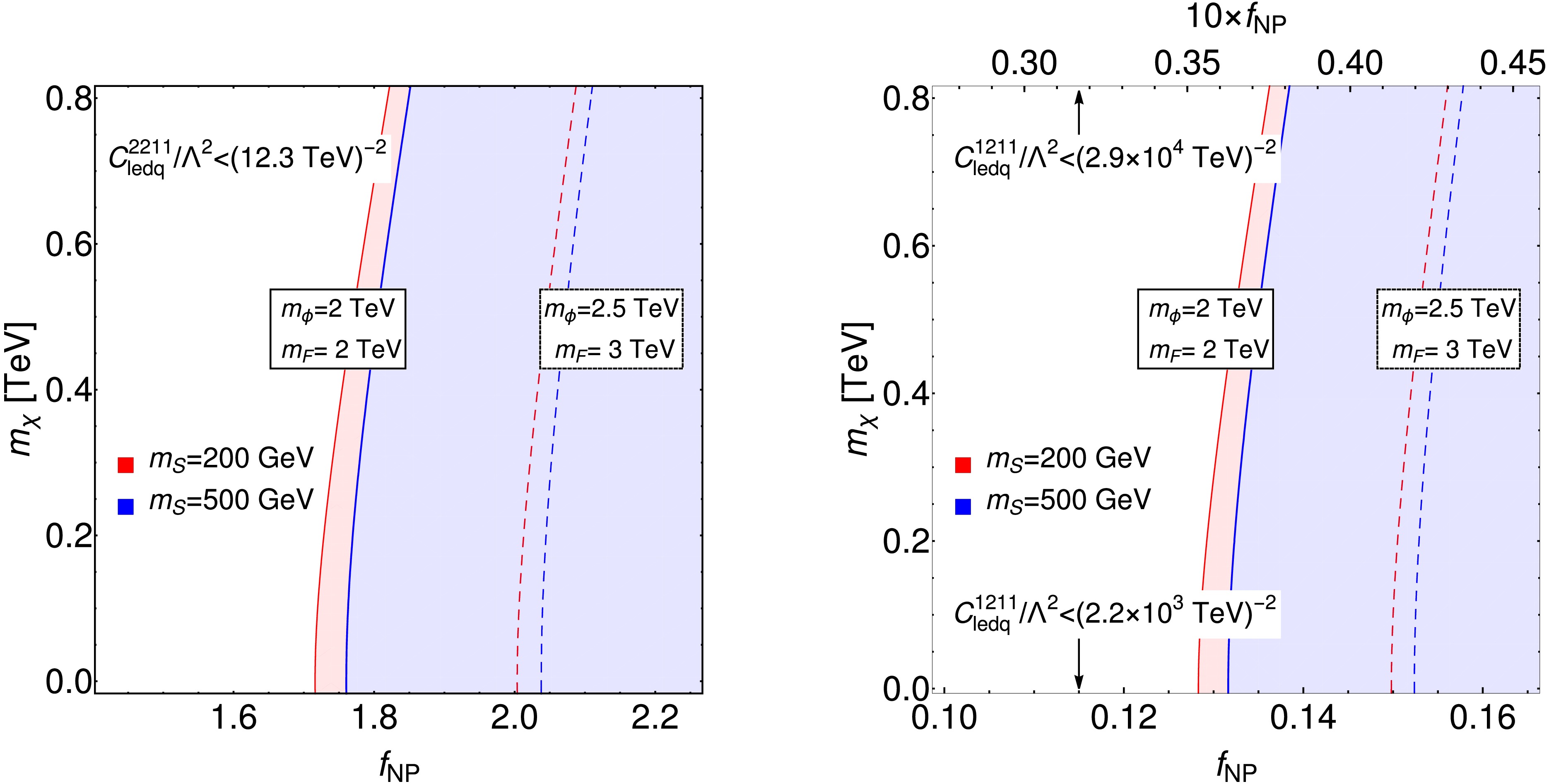
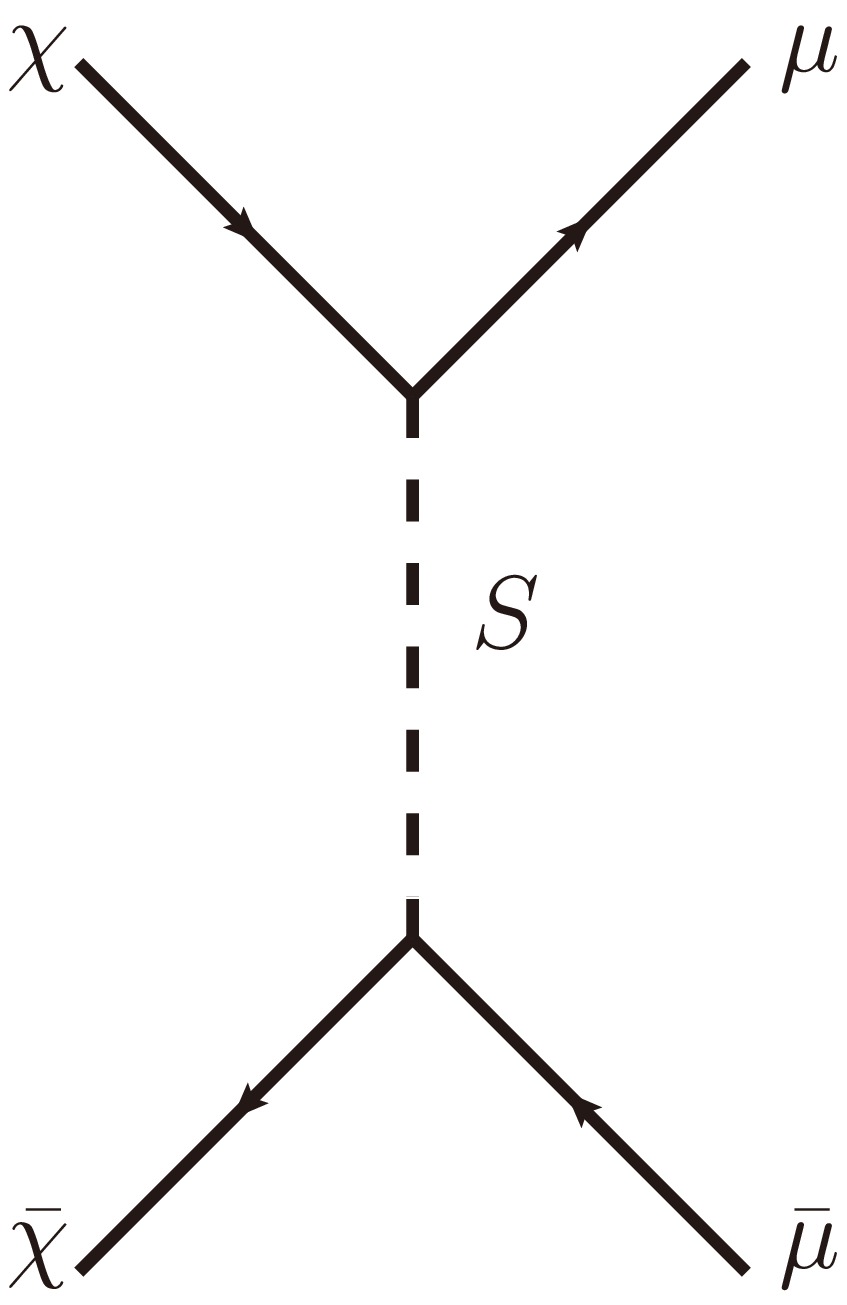
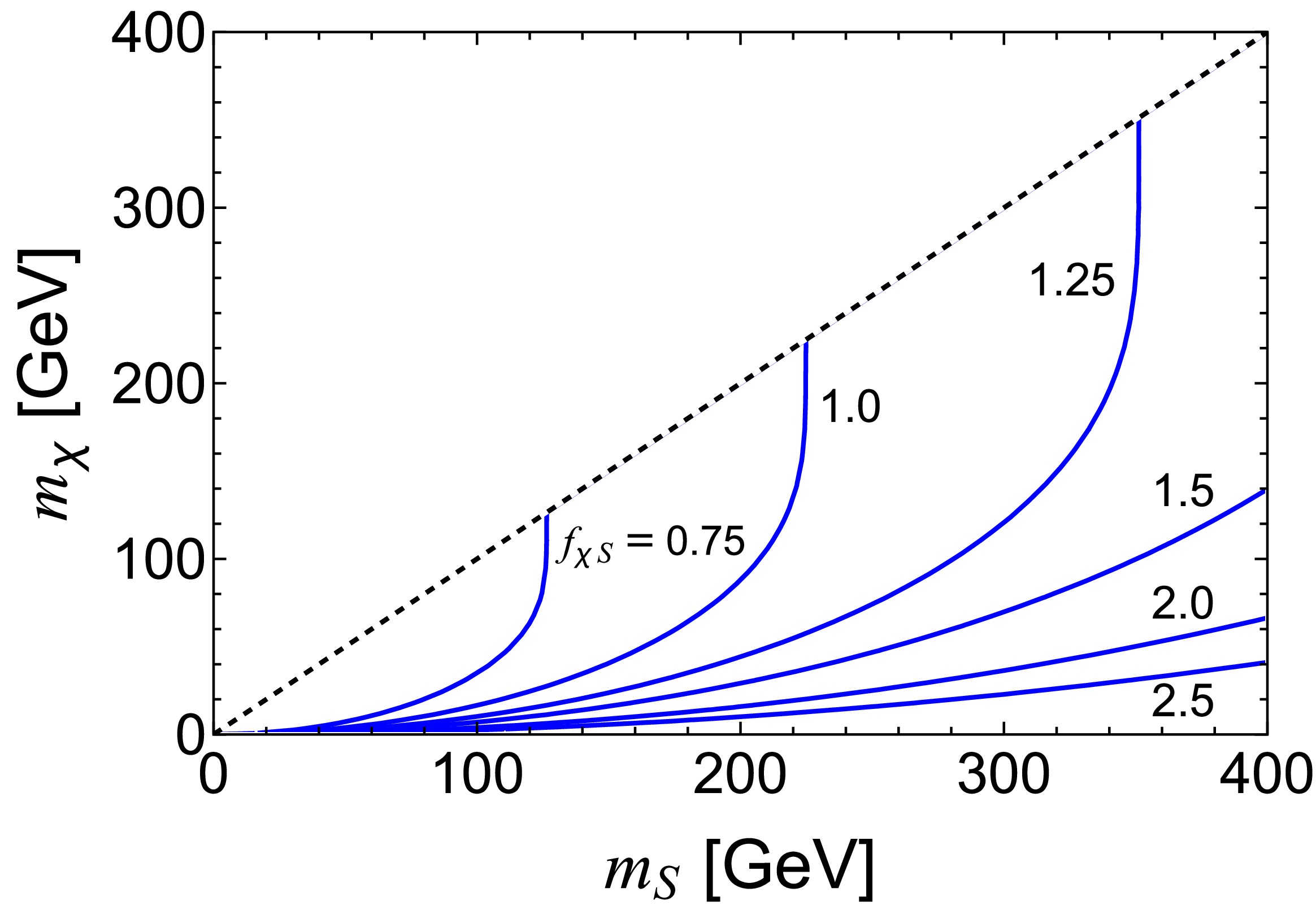
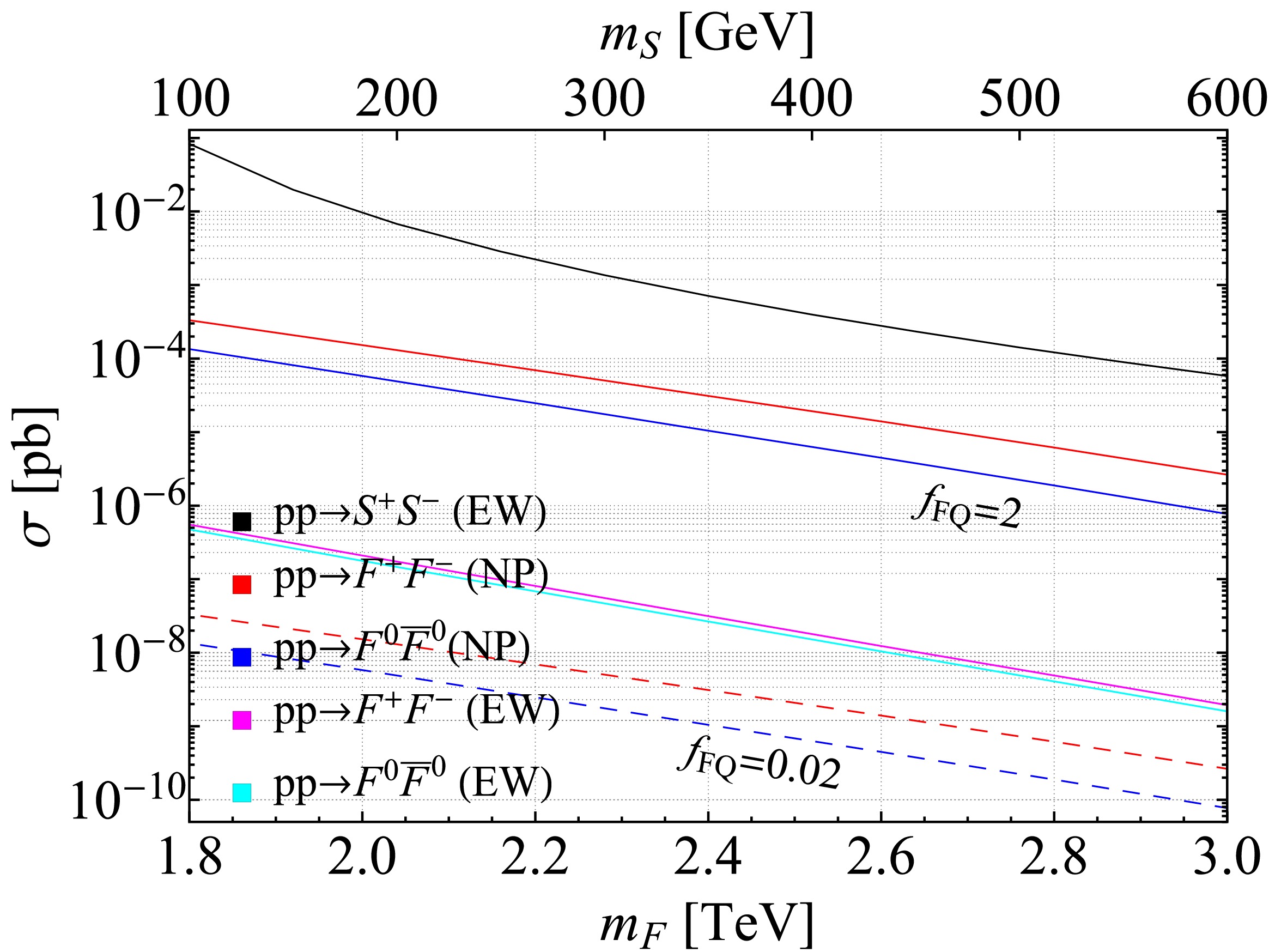
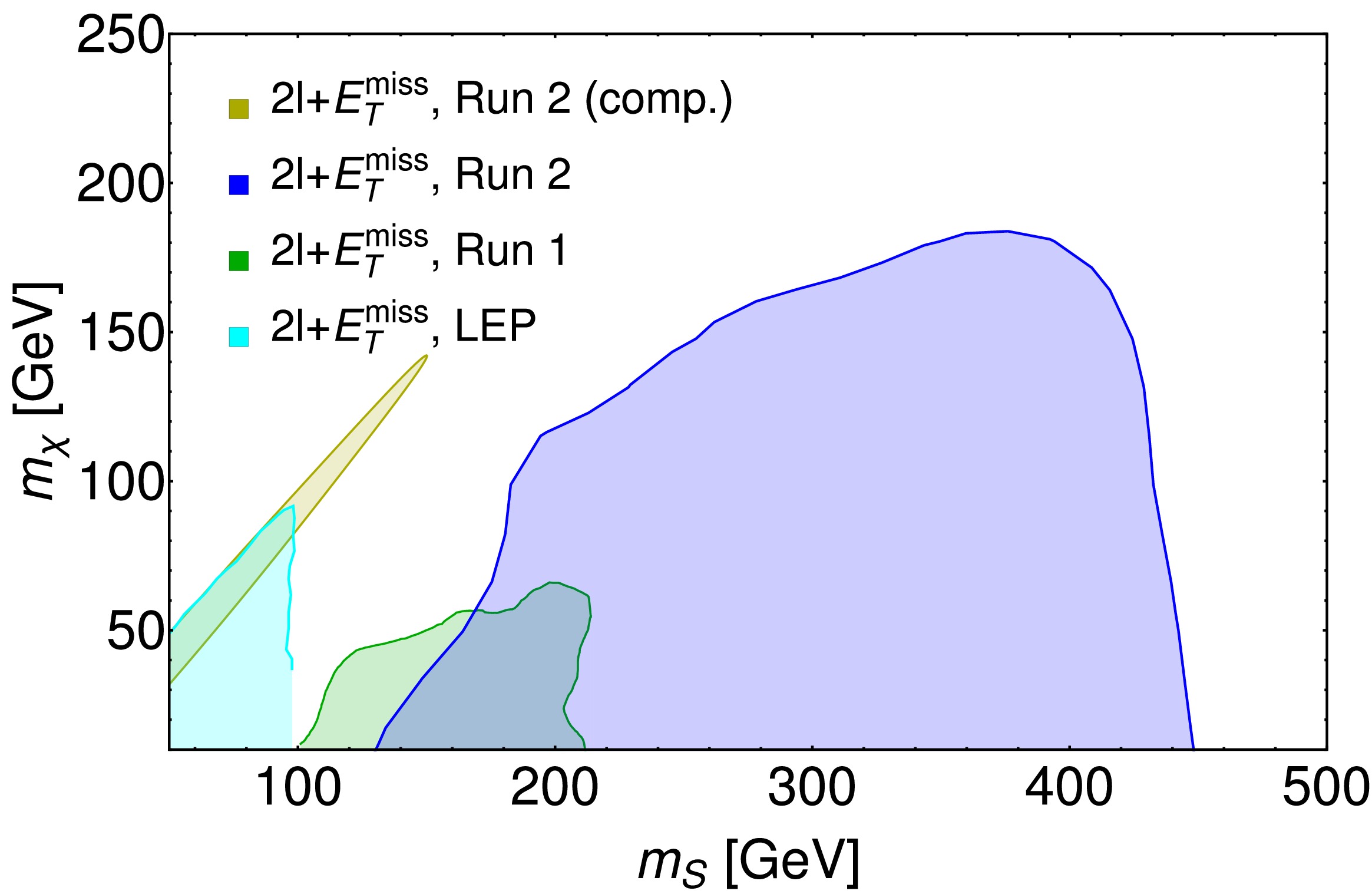
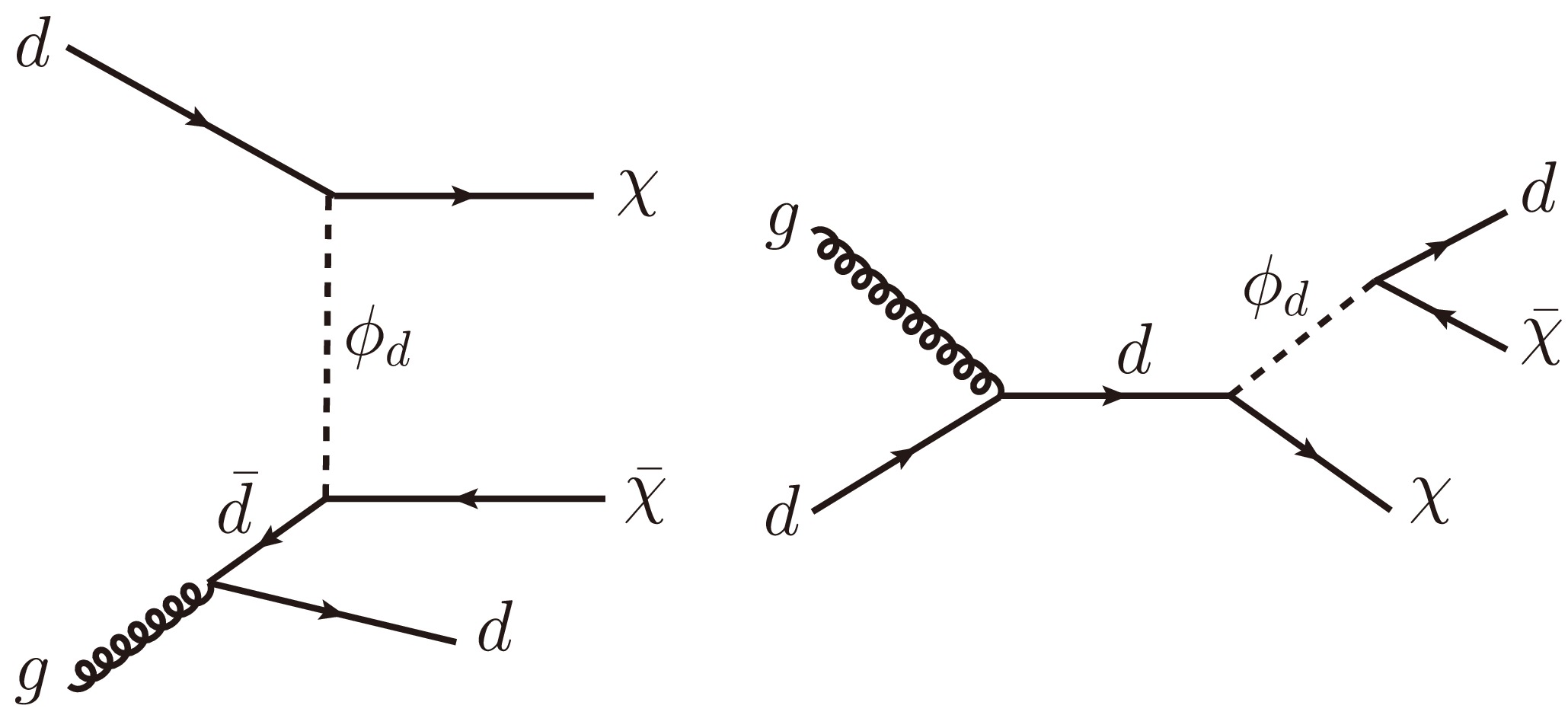
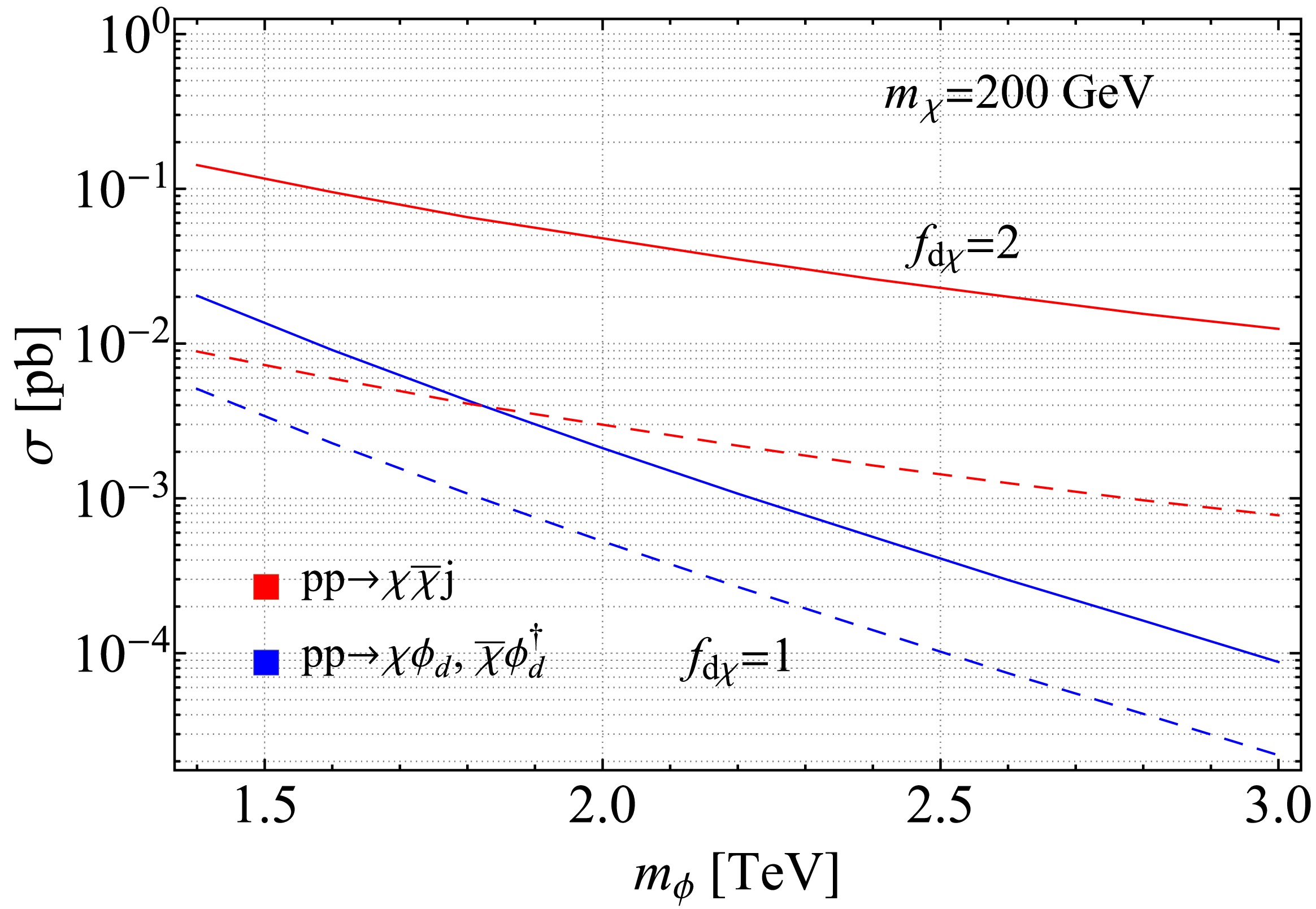
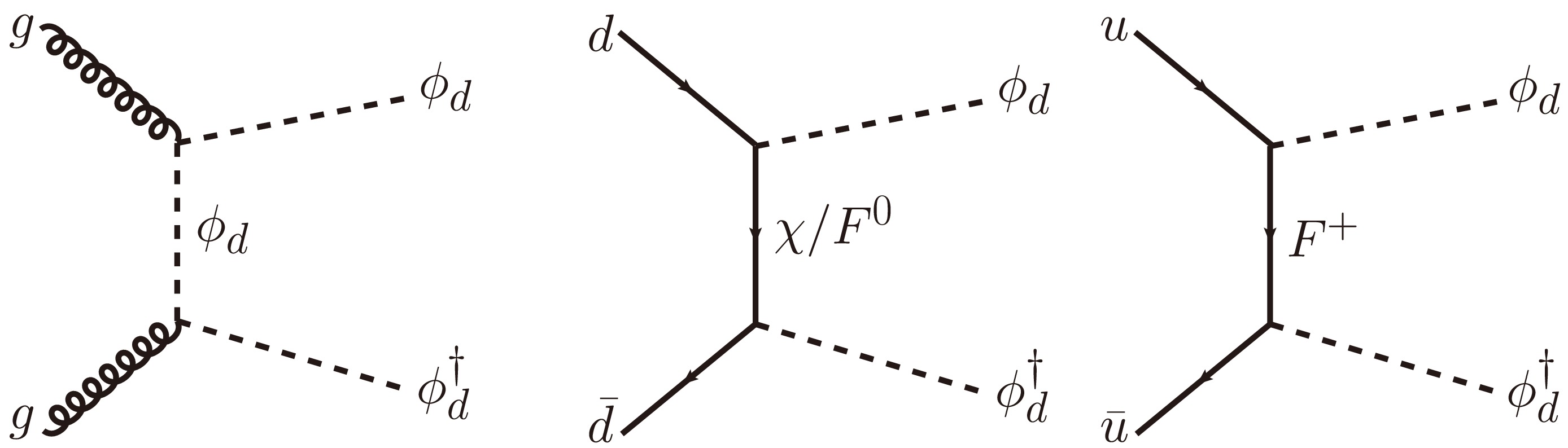
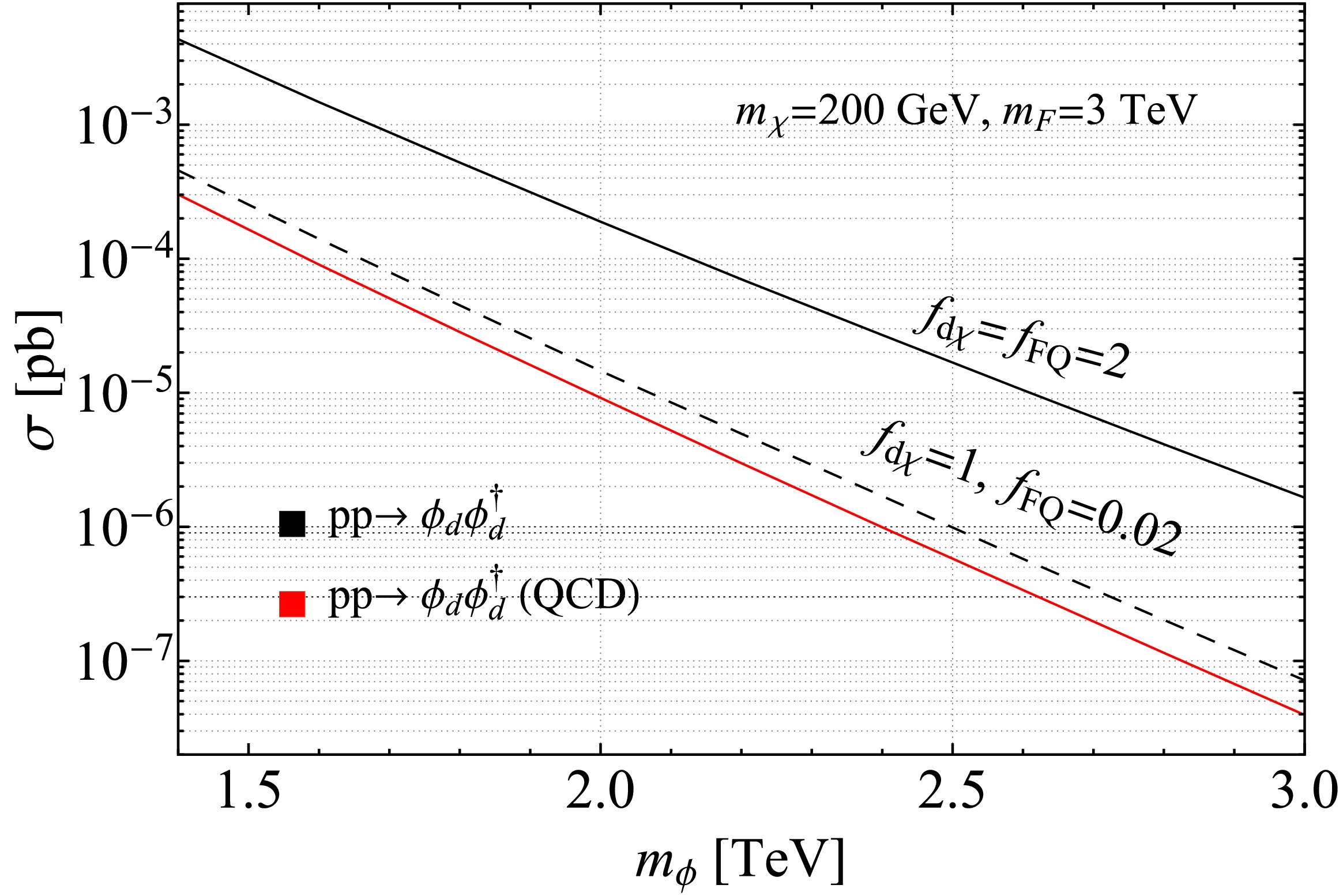
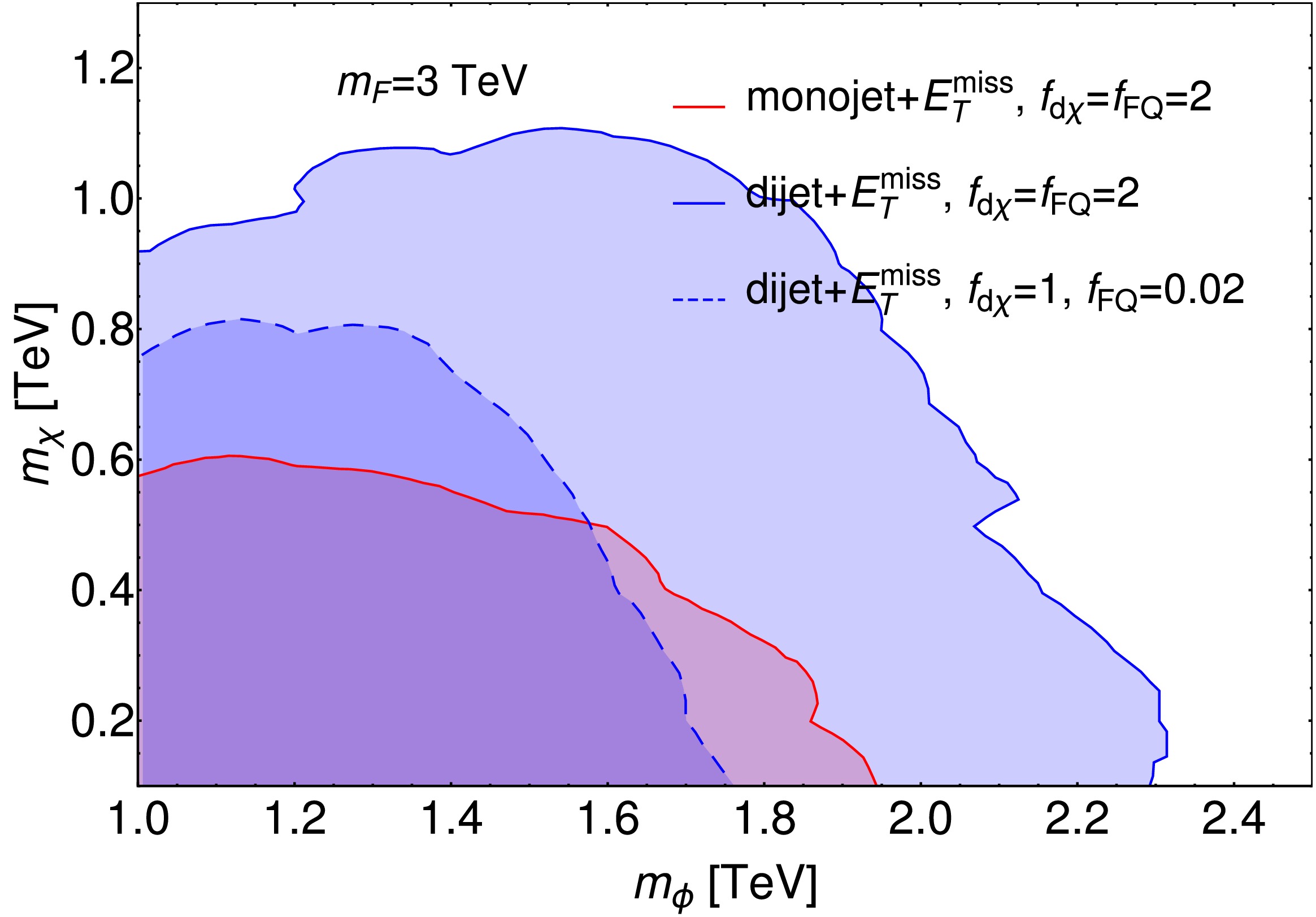
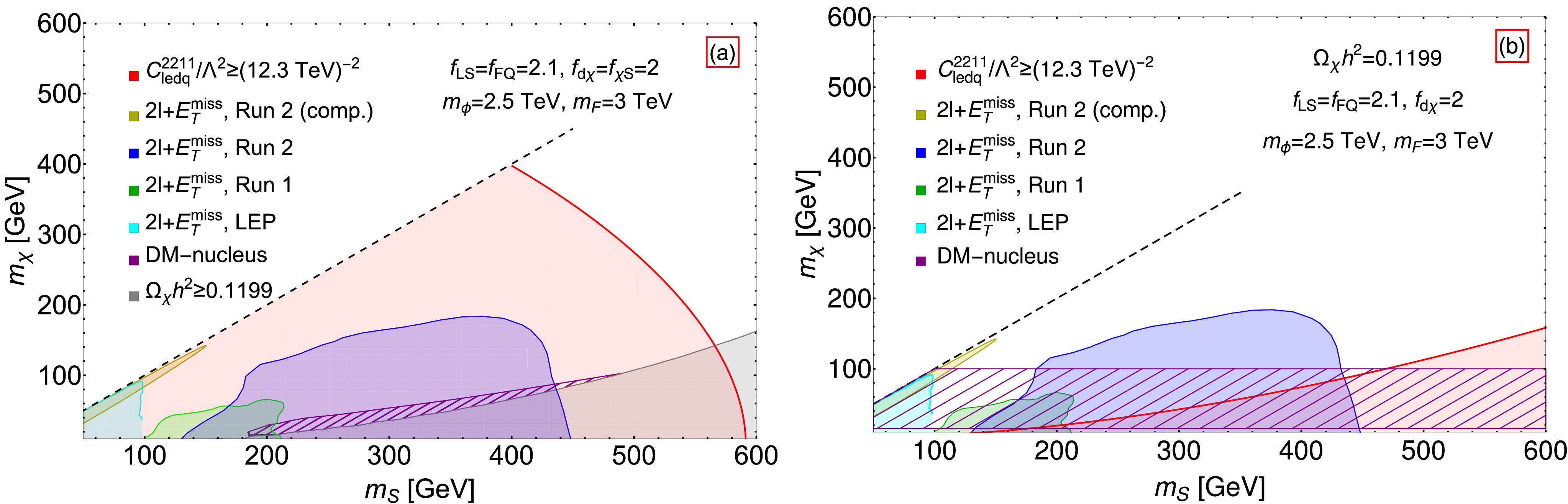
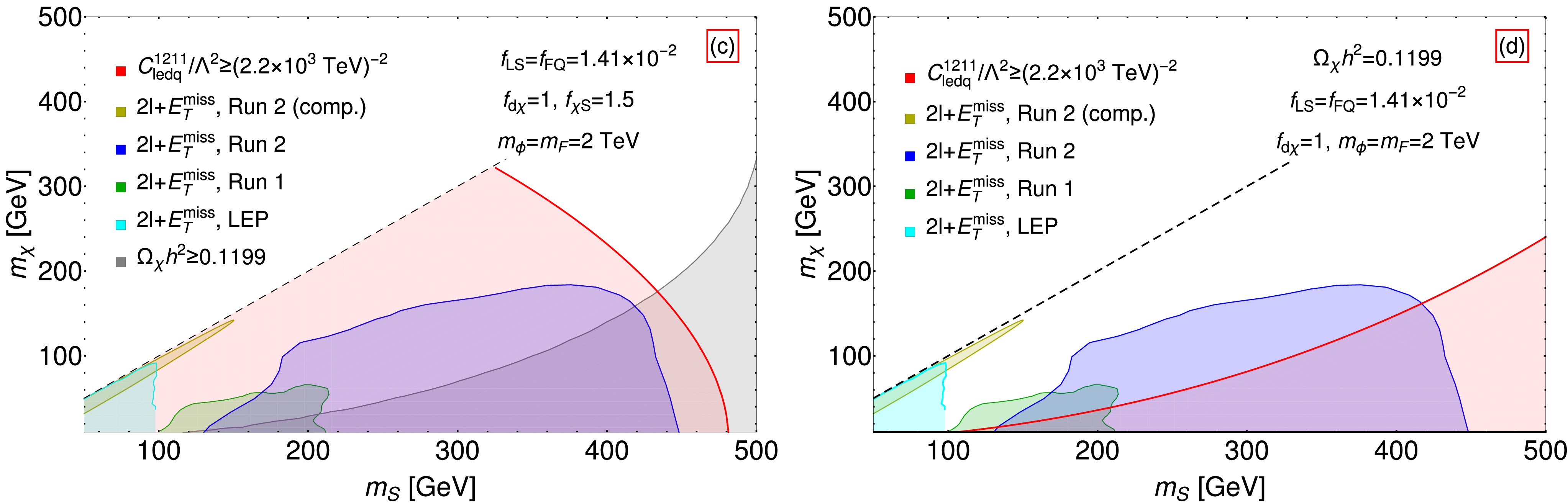
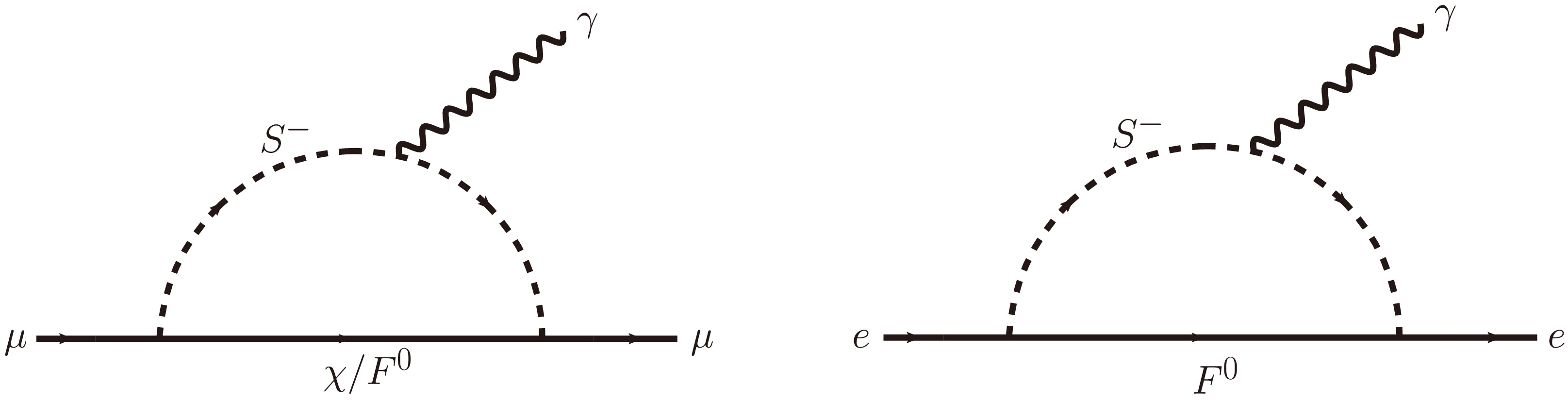
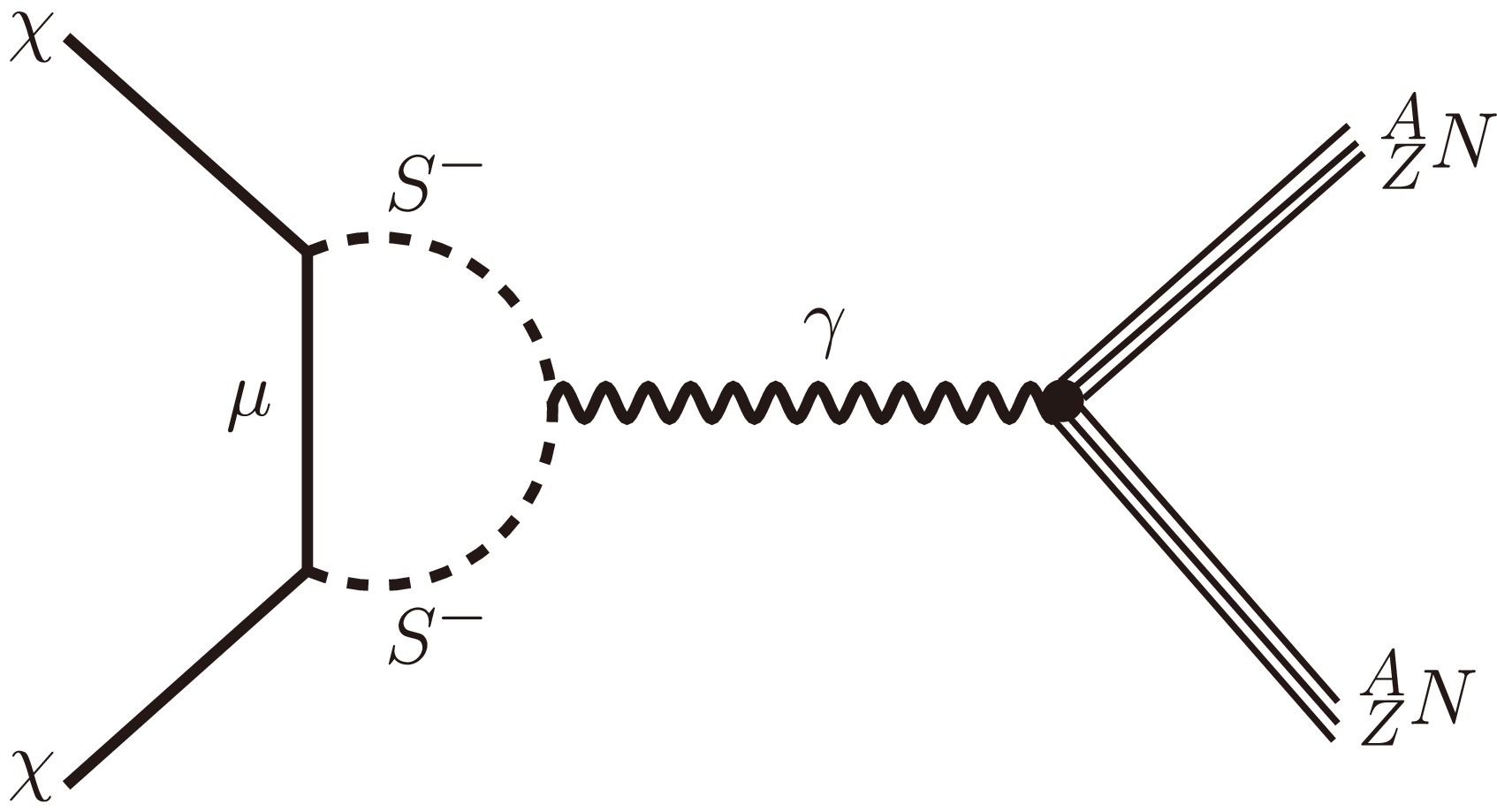
This study investigates the ultraviolet realization of semileptonic four-fermion operator\begin{document}$ O_{ledq}^{\alpha \beta 11} $\end{document} \begin{document}$ C_{ledq}^{2211}/\Lambda^2< $\end{document} \begin{document}$ (12.3\; \text{TeV})^{-2} $\end{document} \begin{document}$ C_{ledq}^{1211}/\Lambda^2< \left(2.2\times 10^3\; \text{TeV} \right)^{-2} $\end{document} \begin{document}$ 2\; \text{TeV} $\end{document}
This study investigates the ultraviolet realization of semileptonic four-fermion operator
2026, 50(6): 063102. doi: 10.1088/1674-1137/ae4a07
Abstract:
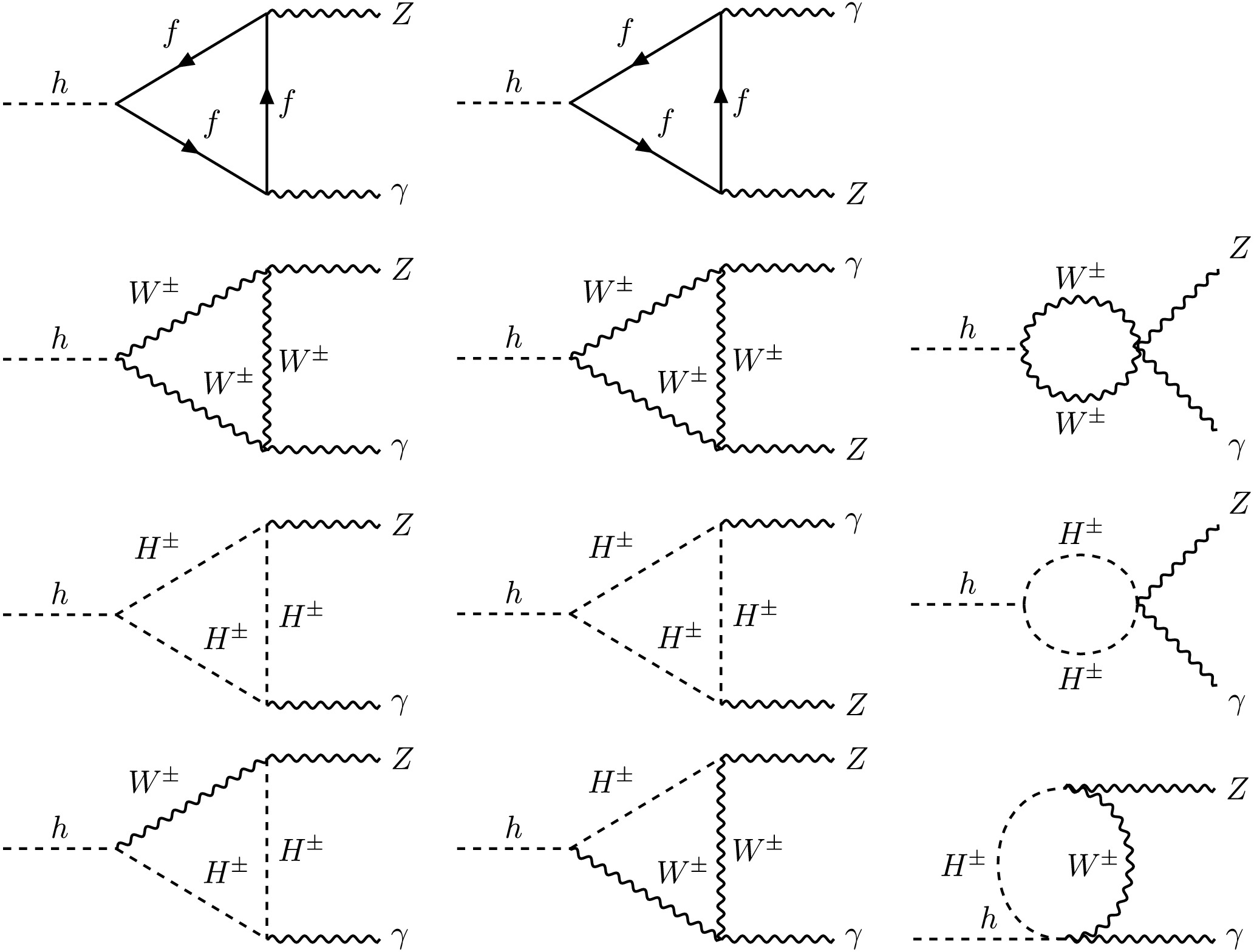
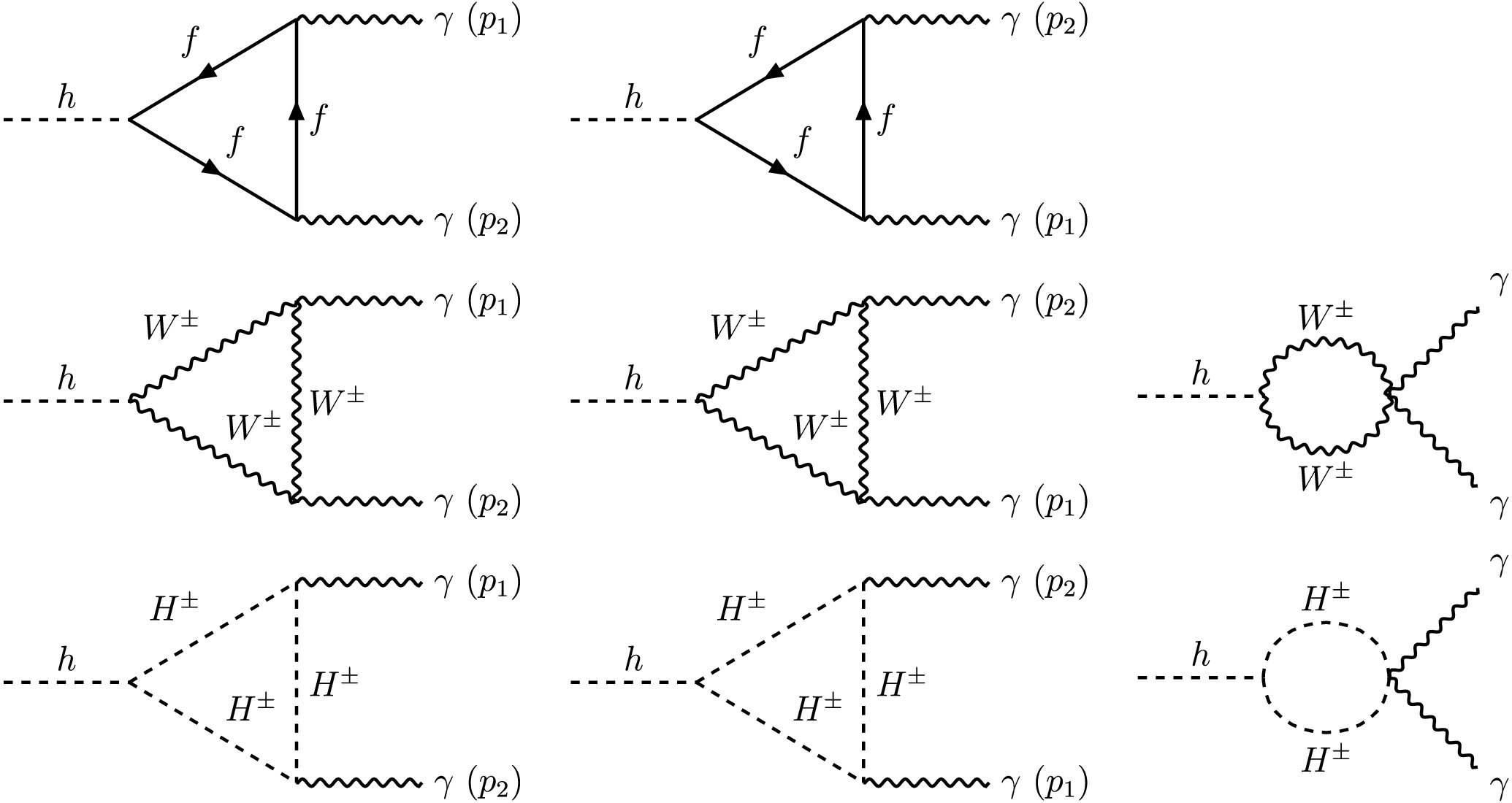
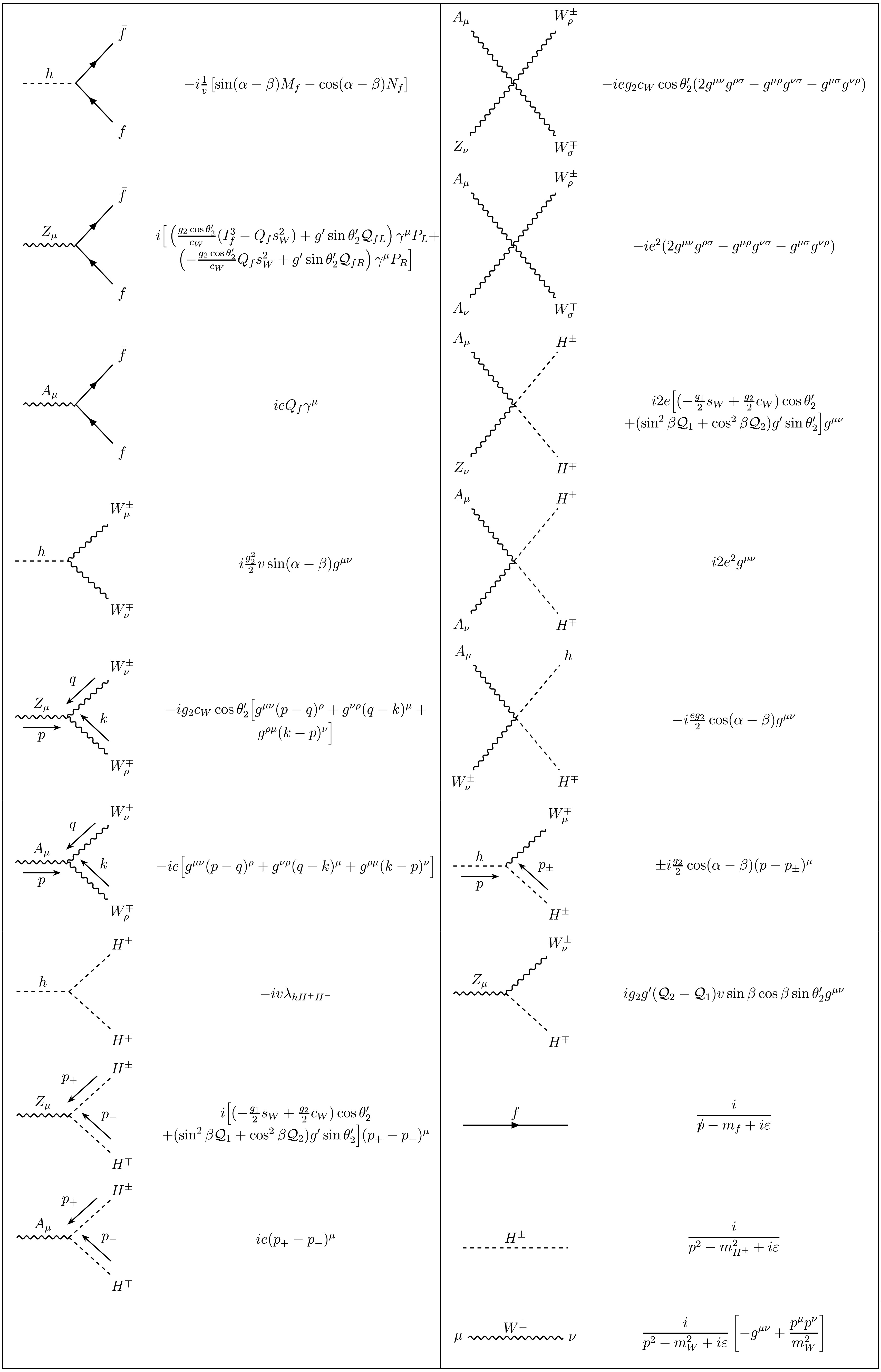
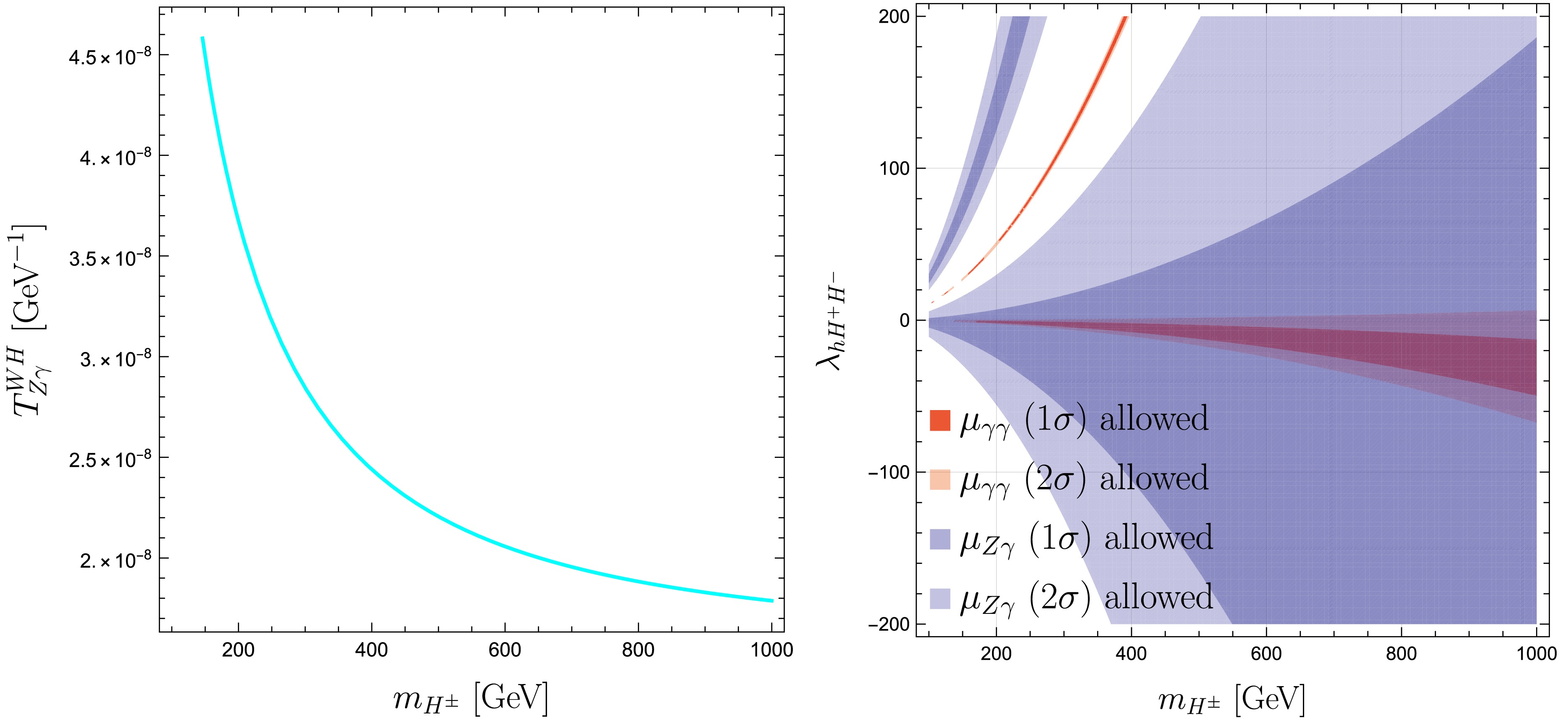
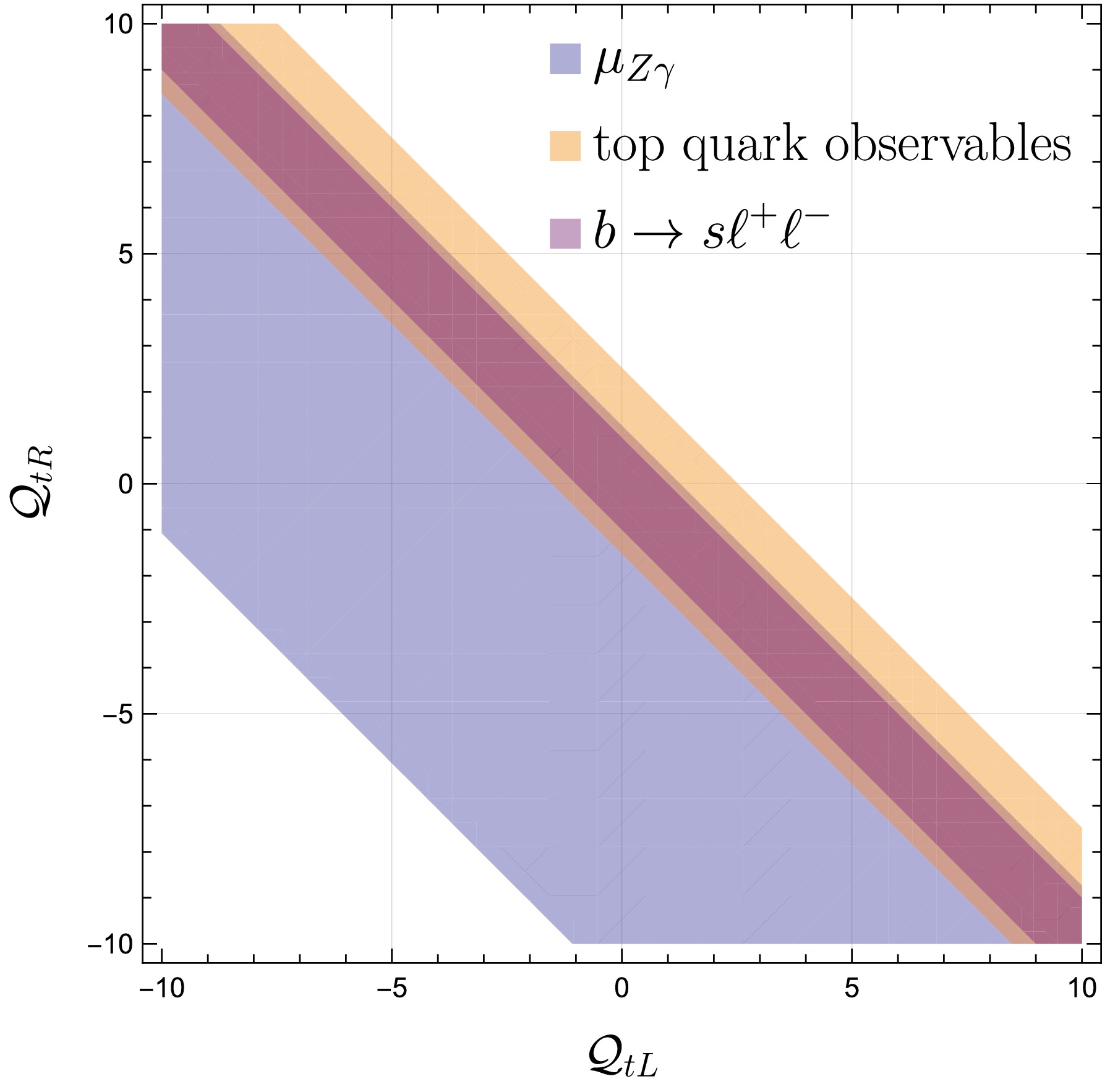
This study examines the\begin{document}$ h\to Z\gamma $\end{document} \begin{document}$ h\to\gamma\gamma $\end{document} \begin{document}$ U(1)' $\end{document} \begin{document}$ Z' $\end{document} \begin{document}$ h \to Z\gamma $\end{document} \begin{document}$ f\bar{f}Z $\end{document} \begin{document}$ b\to s\ell^+\ell^- $\end{document} \begin{document}$ m_{H^\pm}>200 $\end{document} \begin{document}$ \lambda_{hH^+H^-}<0 $\end{document} \begin{document}$ 1\sigma $\end{document} \begin{document}$ \mu_{\gamma\gamma} $\end{document} \begin{document}$ f\bar{f}Z $\end{document} \begin{document}$ \mathcal{Q}_{tL} $\end{document} \begin{document}$ \mathcal{Q}_{tR} $\end{document} \begin{document}$ b\to s\ell^+\ell^- $\end{document} \begin{document}$ 14\% $\end{document} \begin{document}$ \mu_{Z\gamma} $\end{document}
This study examines the
2026, 50(6): 063103. doi: 10.1088/1674-1137/ae4328
Abstract:
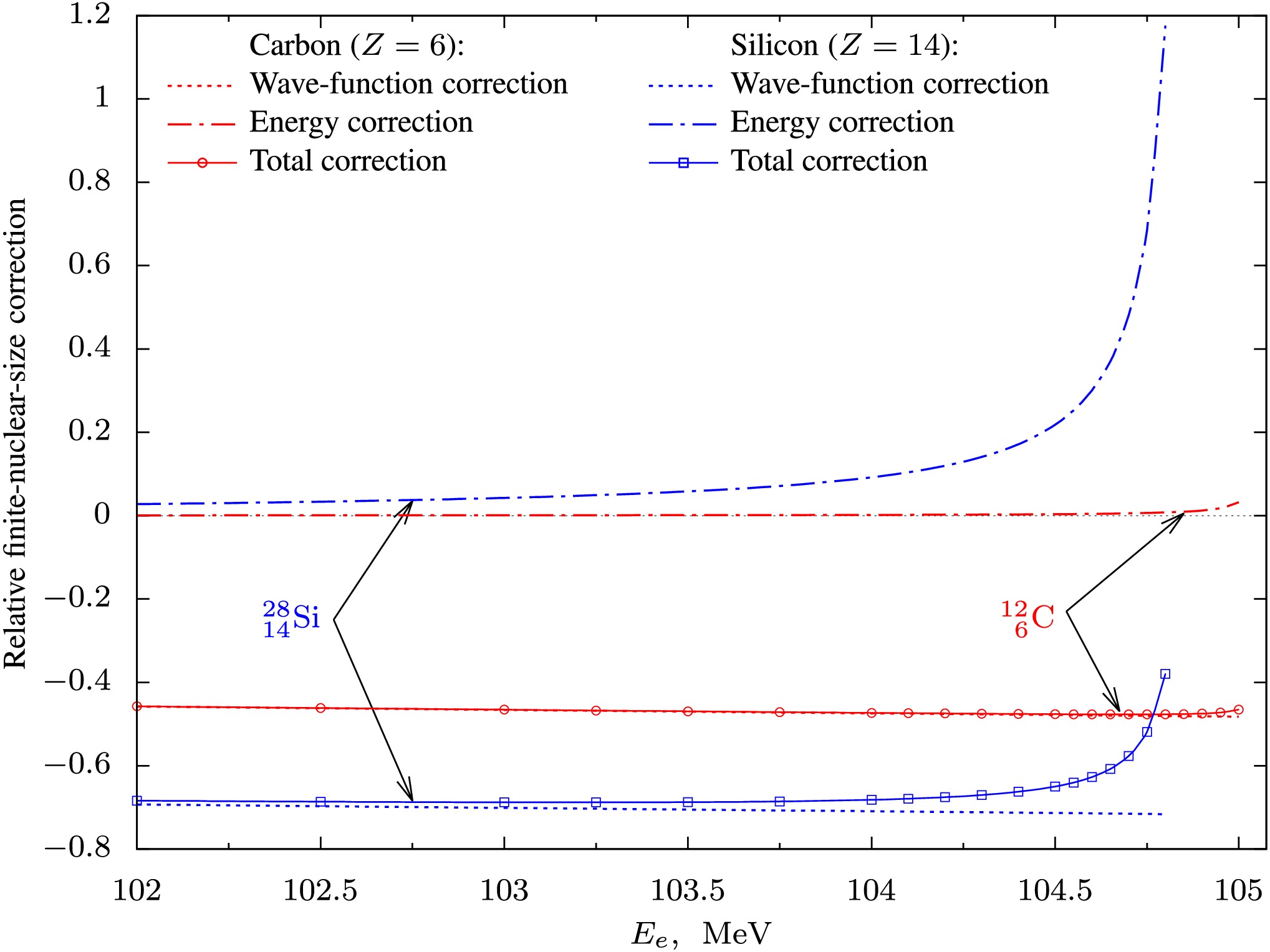
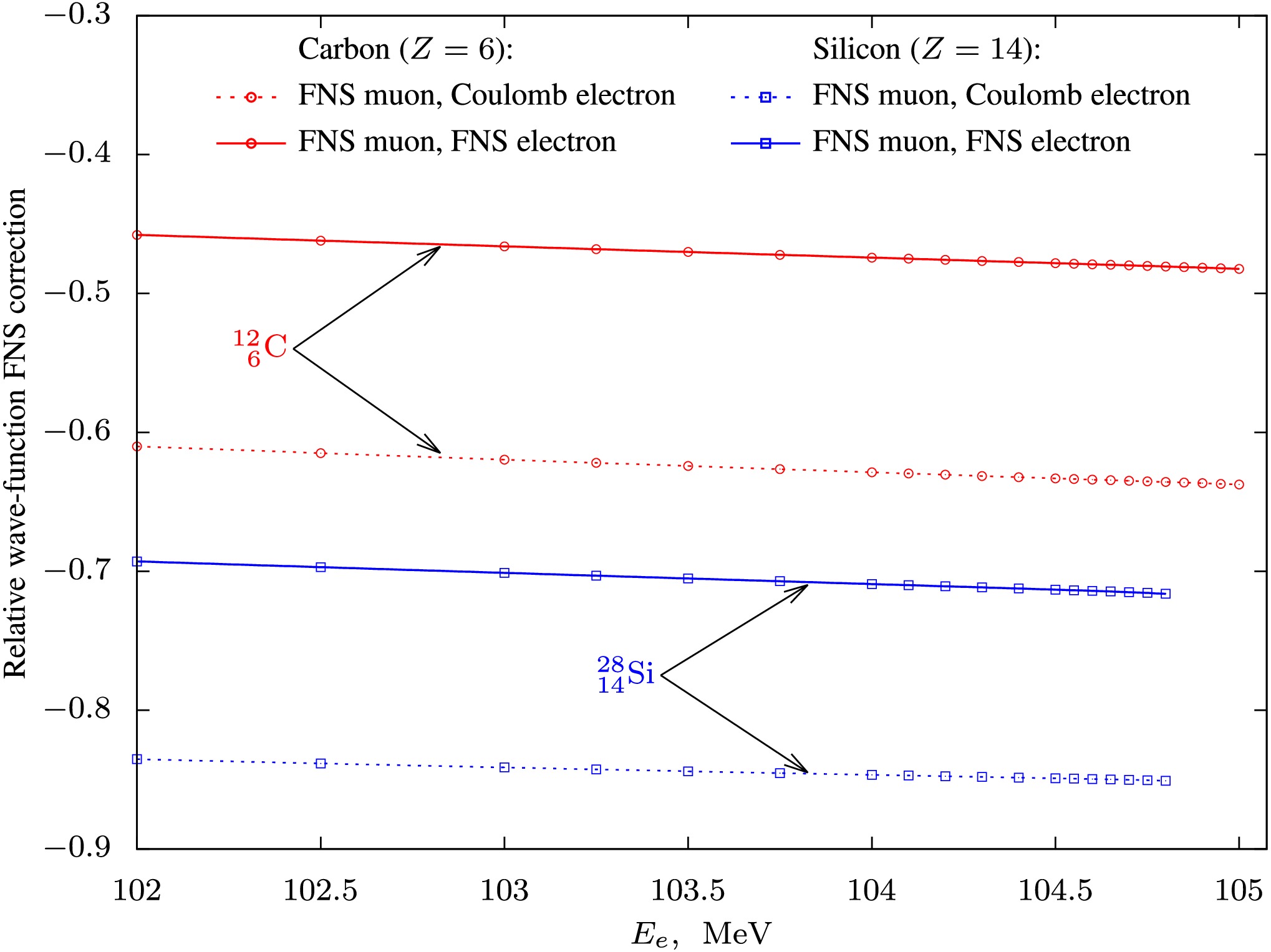
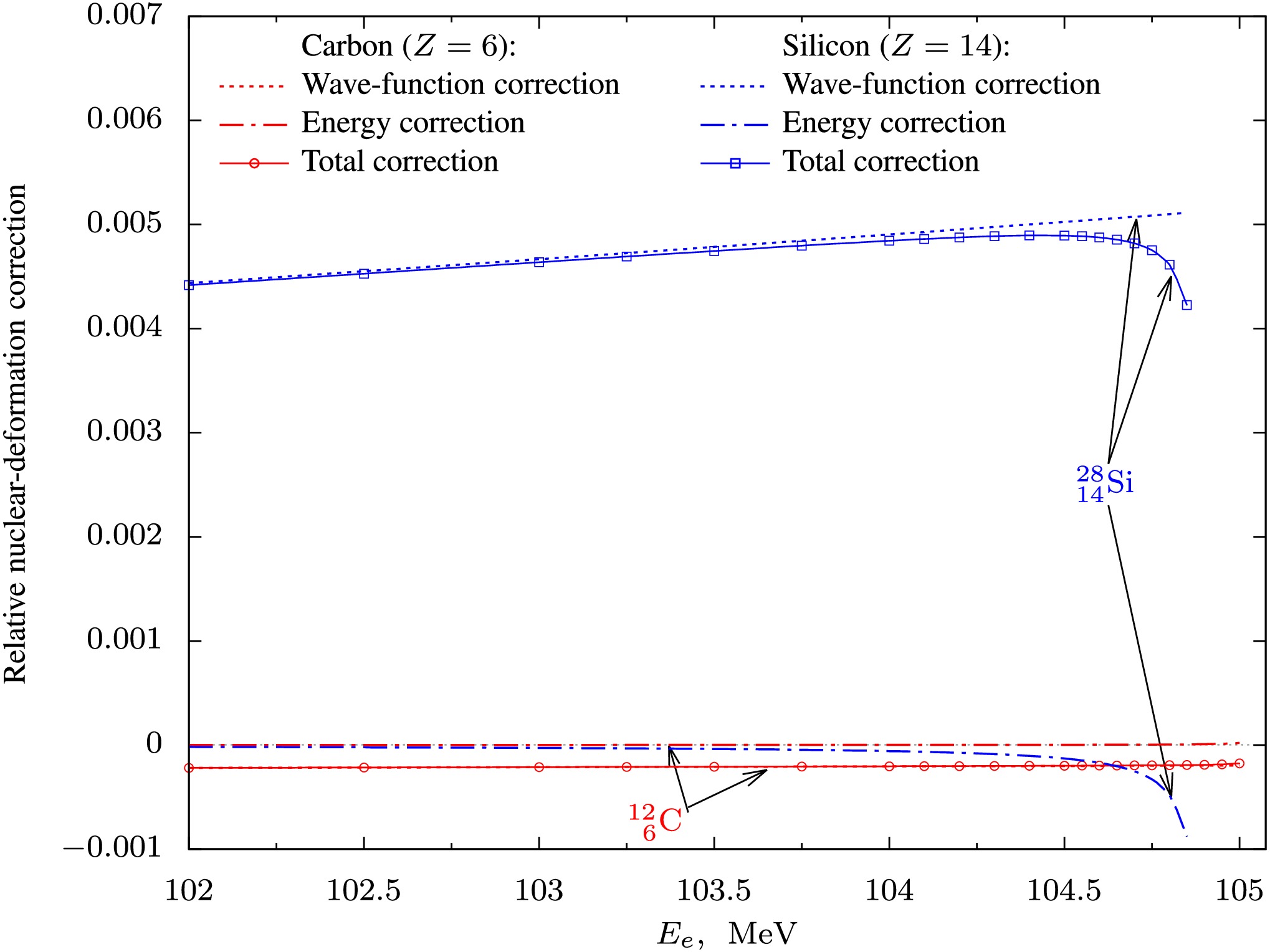
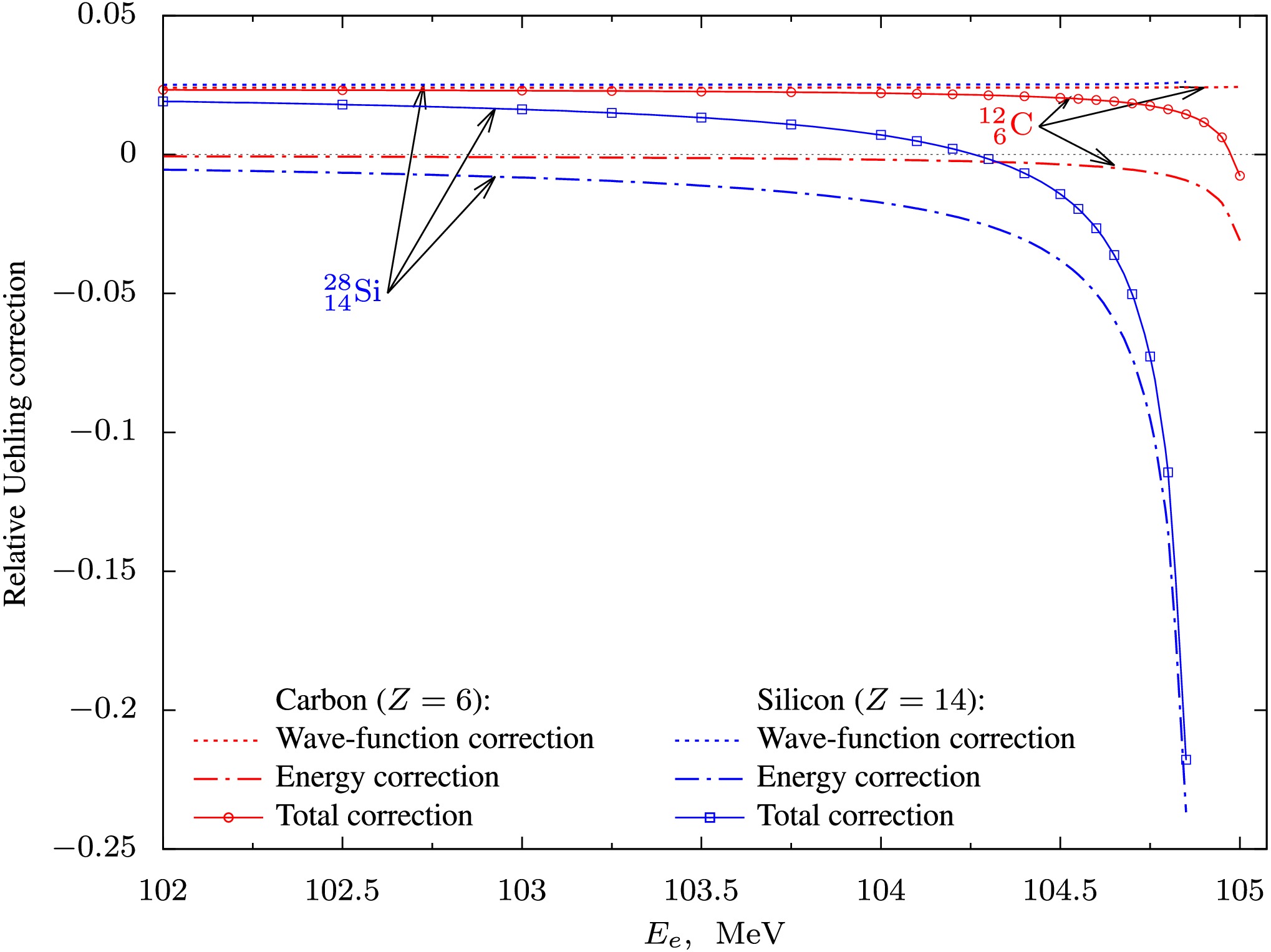
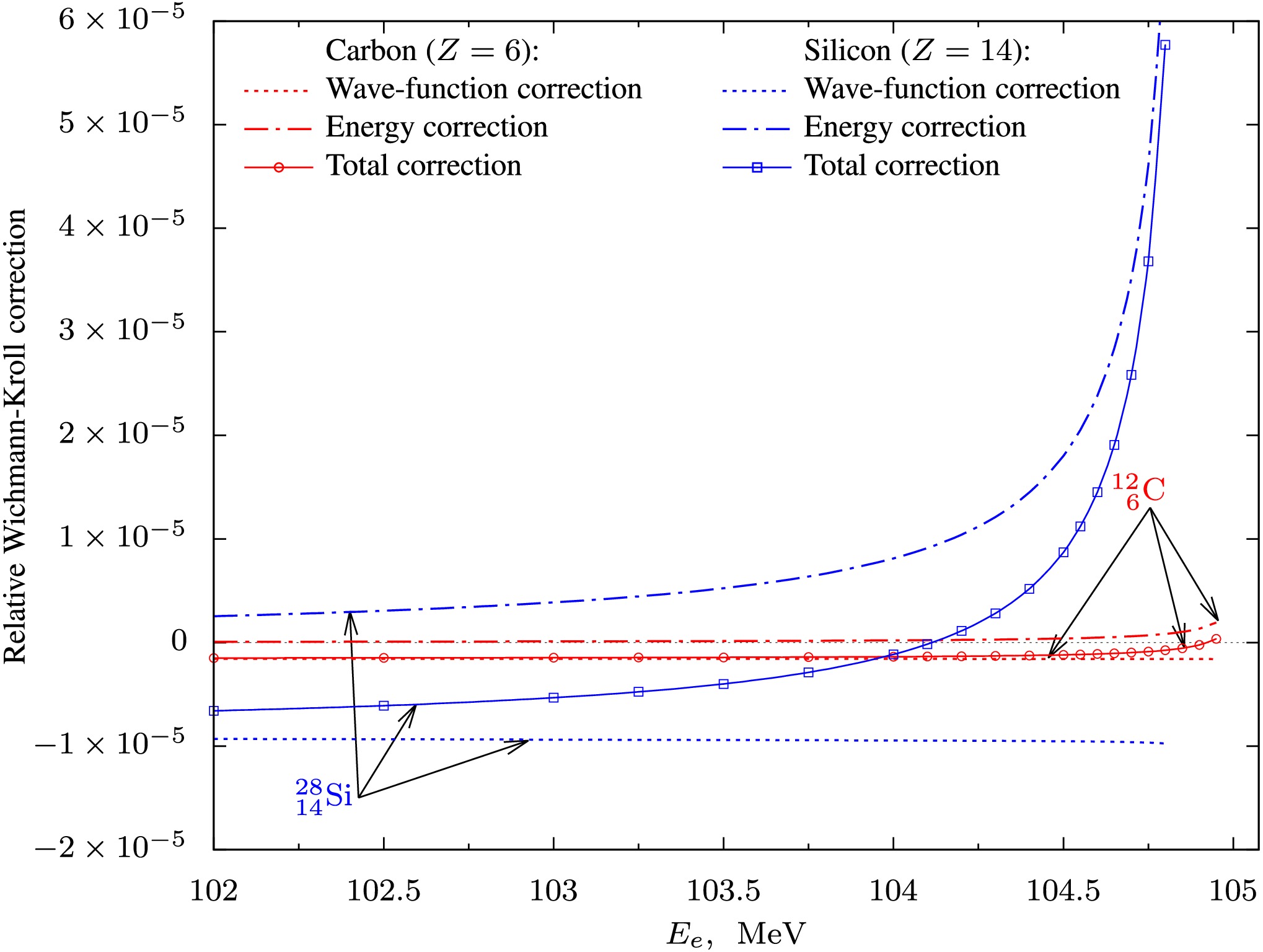
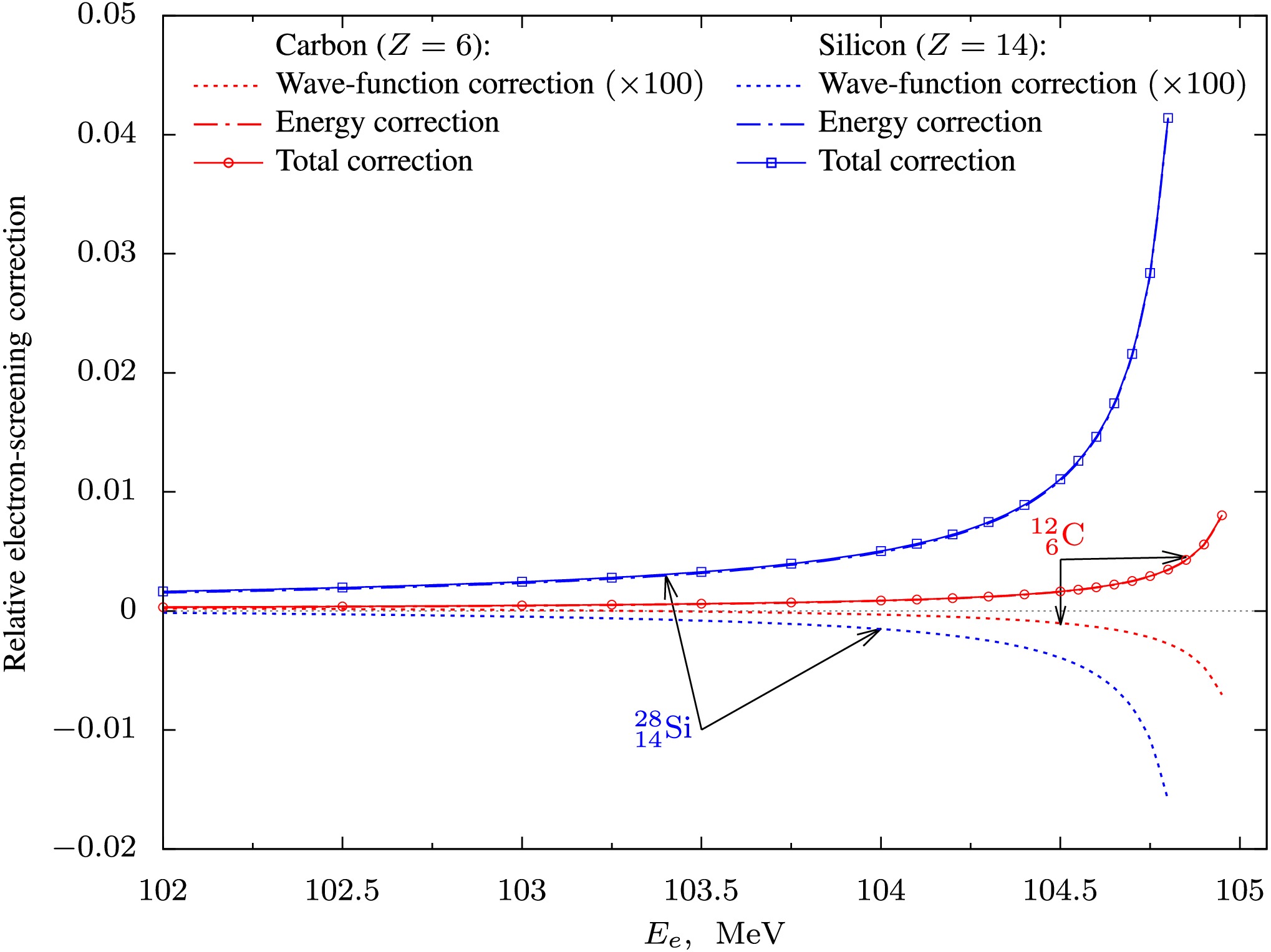
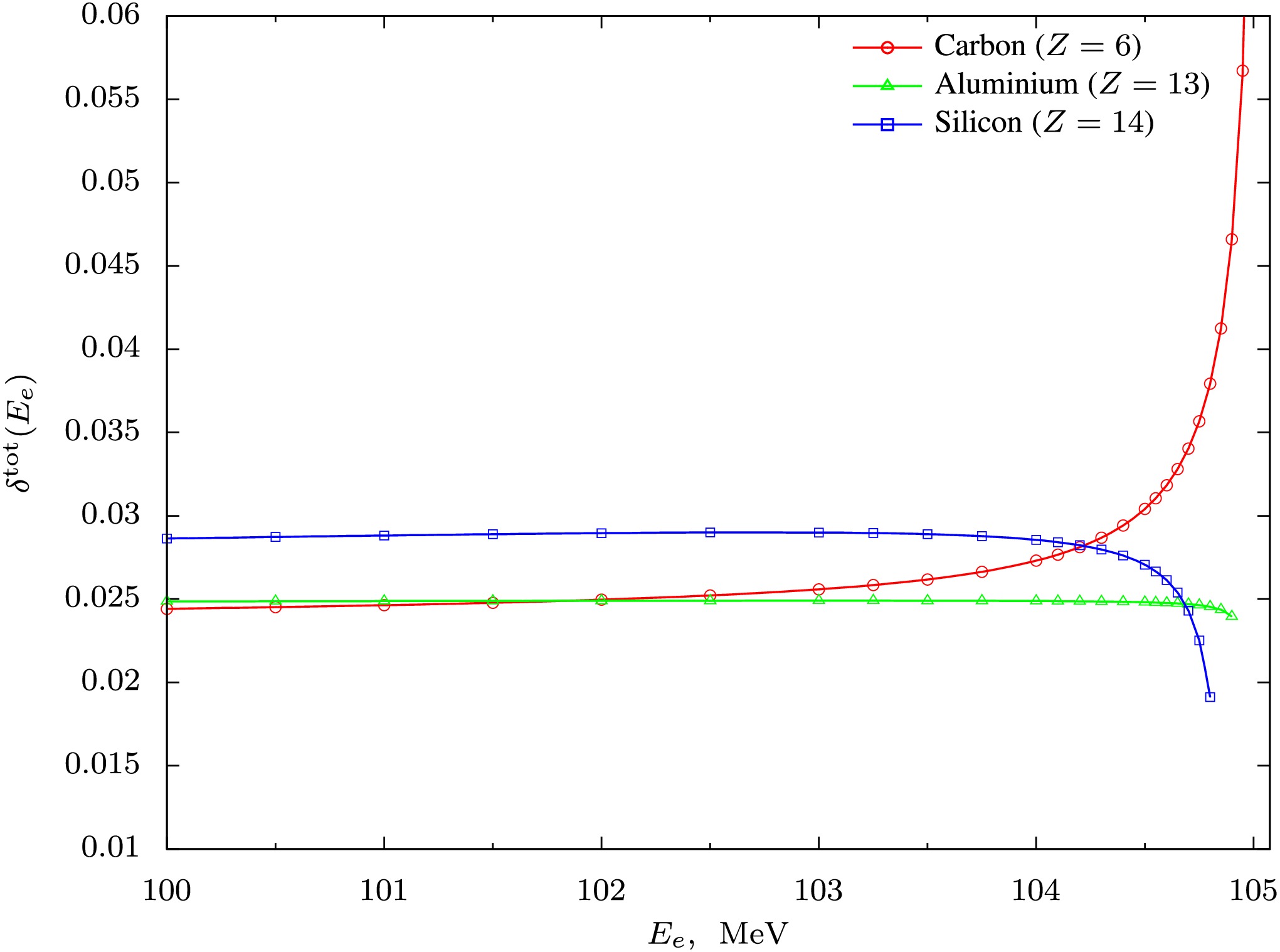
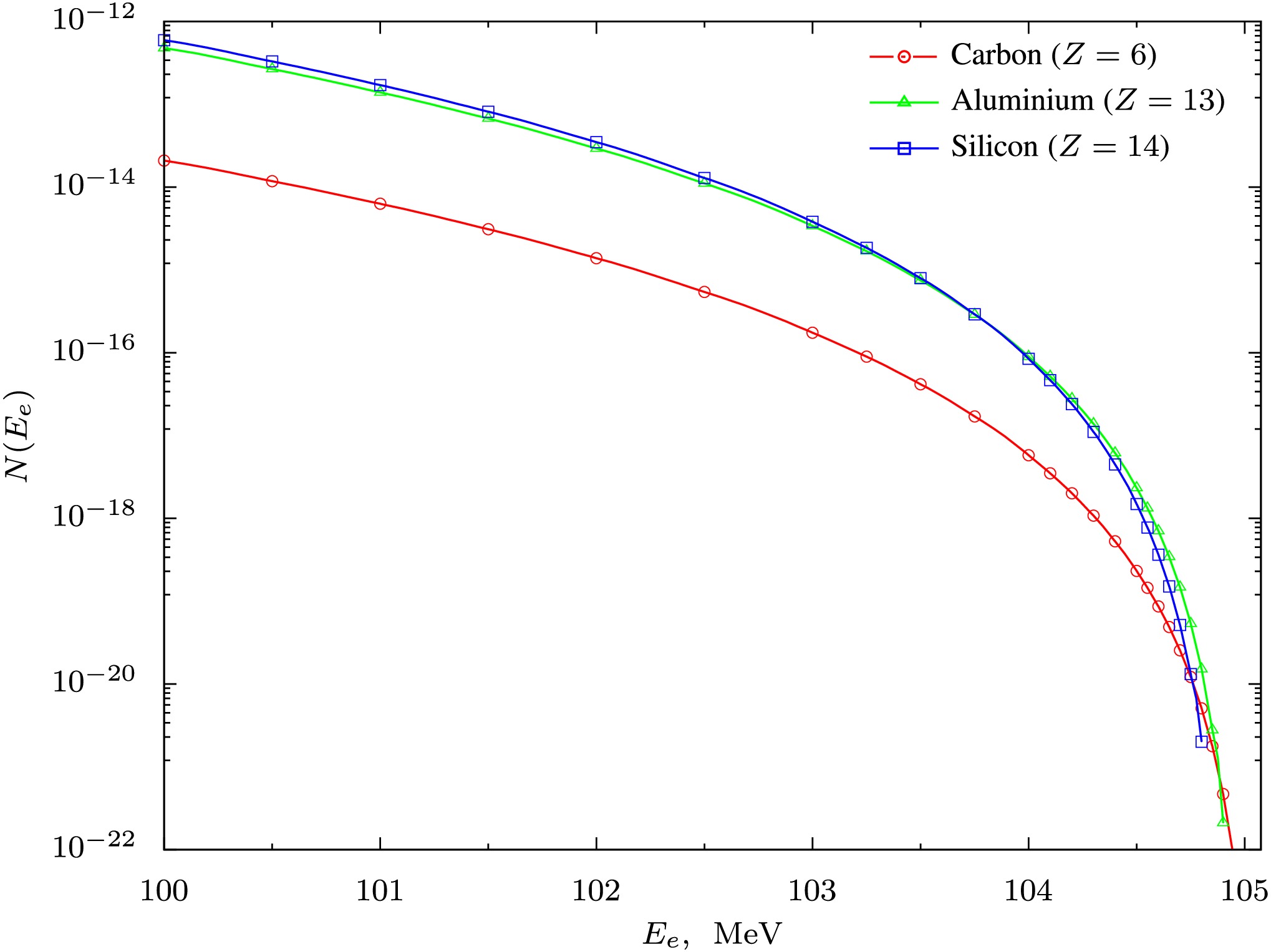
The process in which a muon bound to the nuclear potential decays into an unbound electron, a muon neutrino, and an electron antineutrino is considered. The study examines atomic effects on the differential transition rate relative to the energy of the emitted electron, specifically the electron spectrum, near its high-energy boundary, within the framework of Fermi effective theory. The analysis takes into account corrections due to finite-nuclear-size, nuclear-deformation, electron-screening, and vacuum-polarization effects, all of which are incorporated self-consistently into the Dirac equation. Furthermore, the nuclear-recoil correction to the muon binding energy is included. Calculations are carried out for the isotopes of C, Al, and Si, which are particularly important for forthcoming experiments aimed at search for the charged-lepton flavor-violating process of muon-to-electron conversion in a nuclear field.
The process in which a muon bound to the nuclear potential decays into an unbound electron, a muon neutrino, and an electron antineutrino is considered. The study examines atomic effects on the differential transition rate relative to the energy of the emitted electron, specifically the electron spectrum, near its high-energy boundary, within the framework of Fermi effective theory. The analysis takes into account corrections due to finite-nuclear-size, nuclear-deformation, electron-screening, and vacuum-polarization effects, all of which are incorporated self-consistently into the Dirac equation. Furthermore, the nuclear-recoil correction to the muon binding energy is included. Calculations are carried out for the isotopes of C, Al, and Si, which are particularly important for forthcoming experiments aimed at search for the charged-lepton flavor-violating process of muon-to-electron conversion in a nuclear field.
2026, 50(6): 063104. doi: 10.1088/1674-1137/ae551e
Abstract:
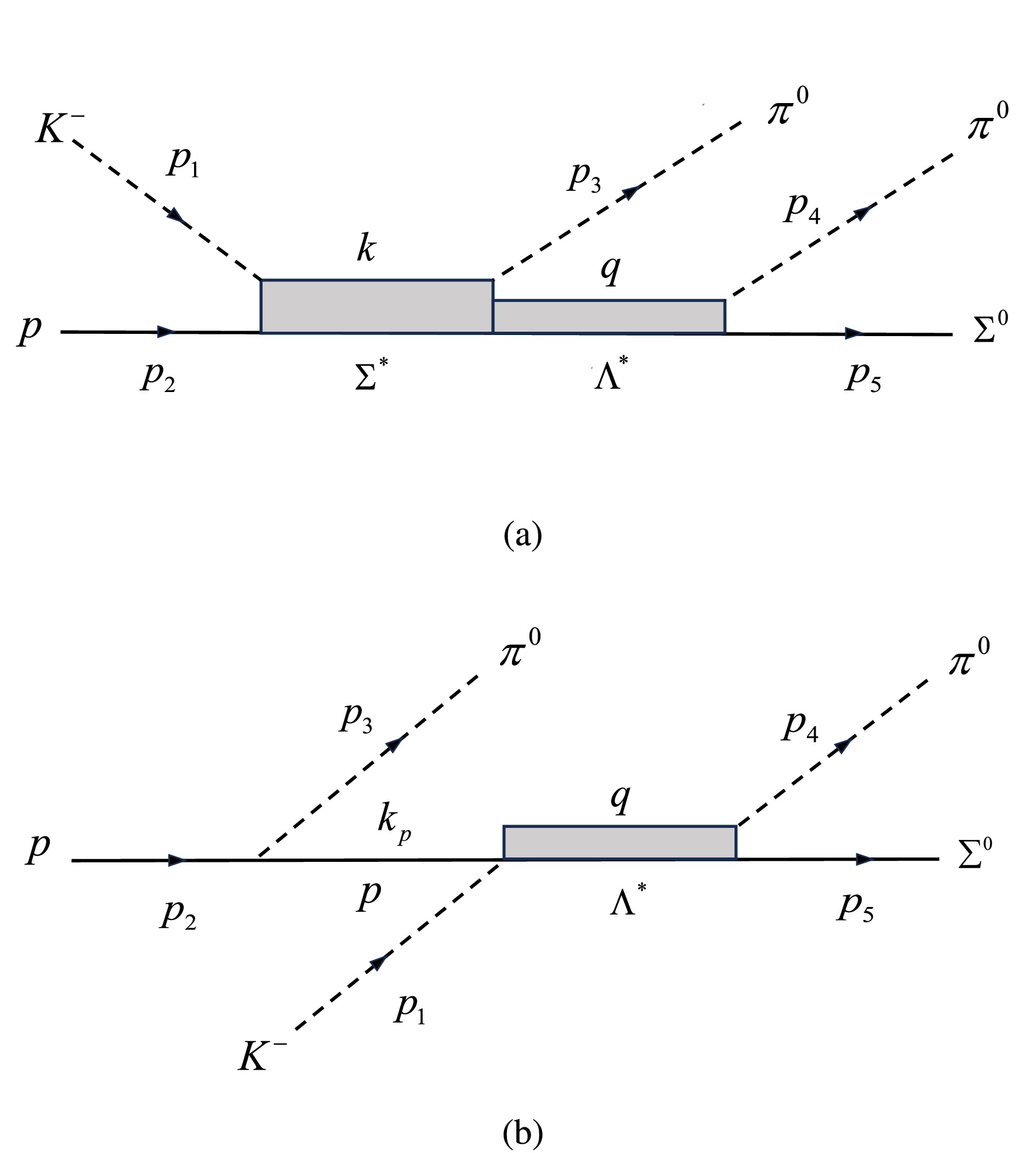
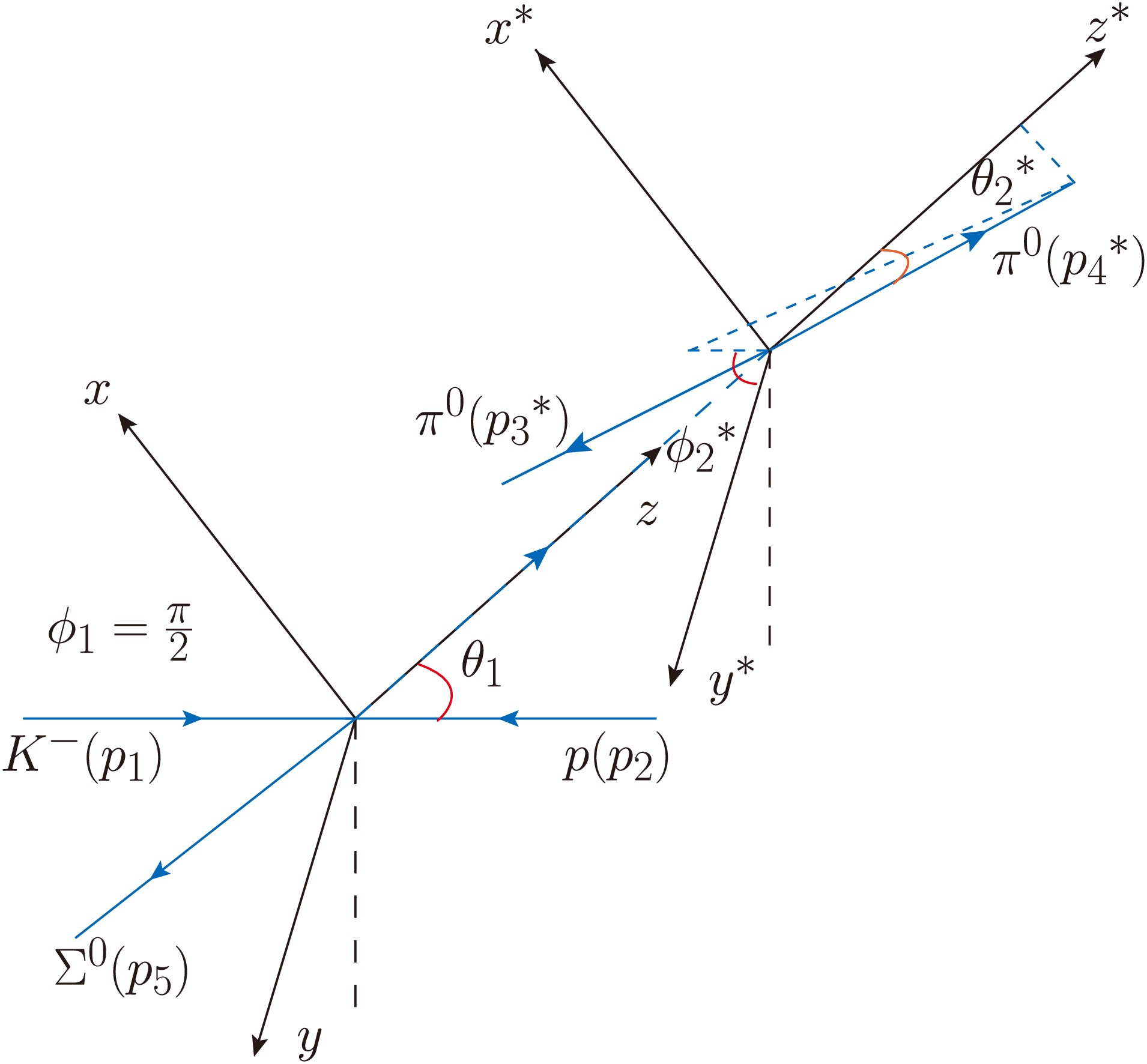
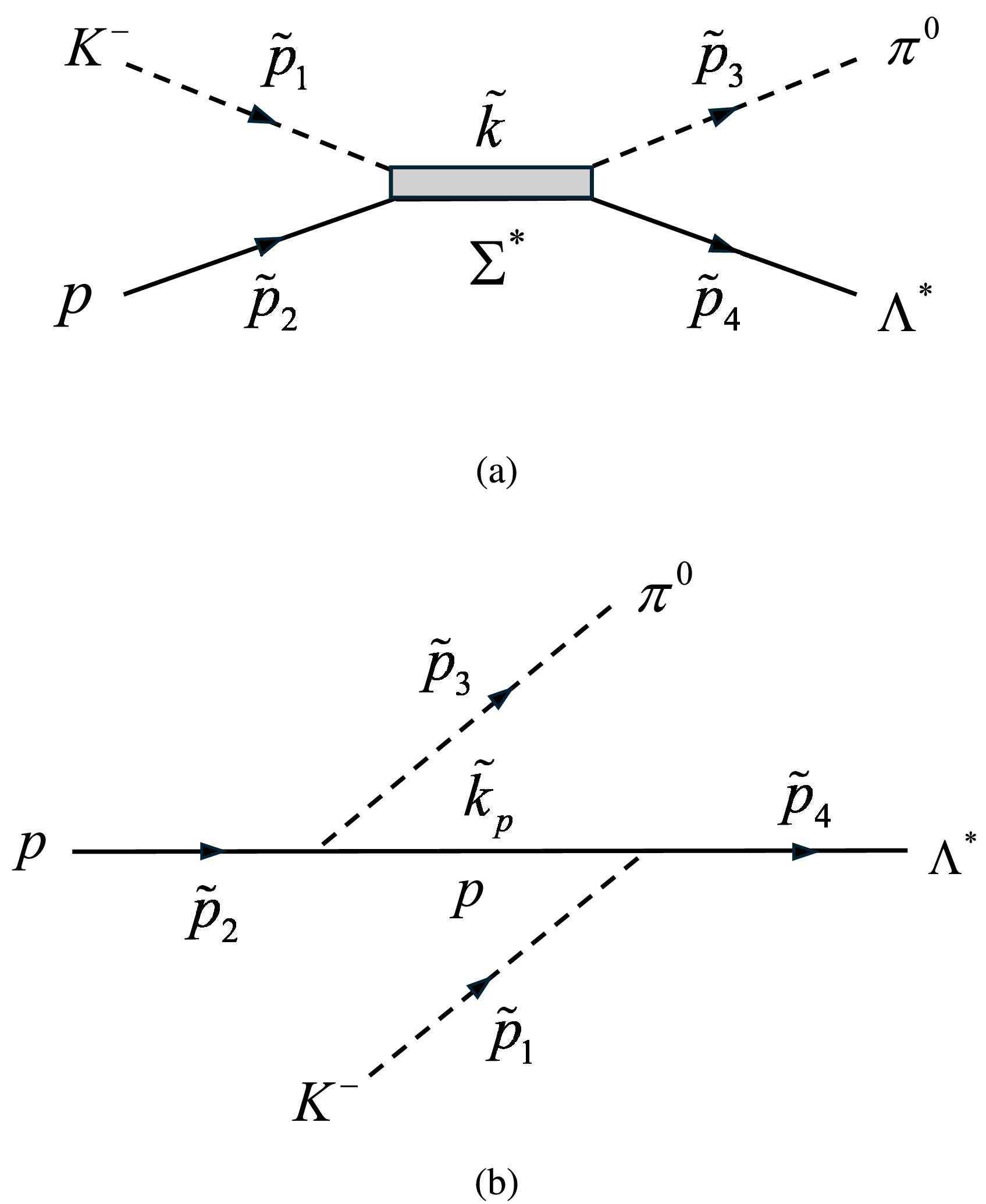
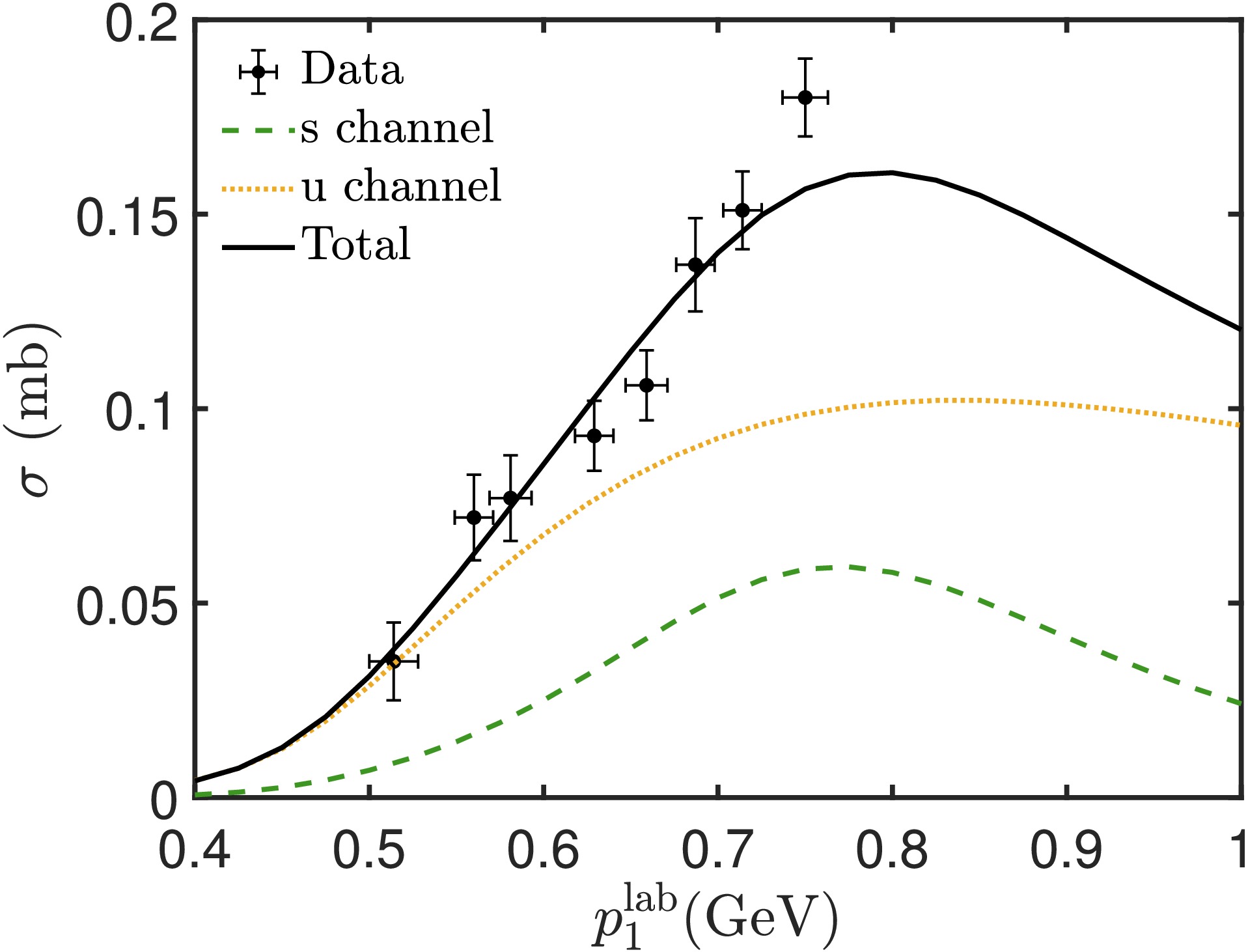
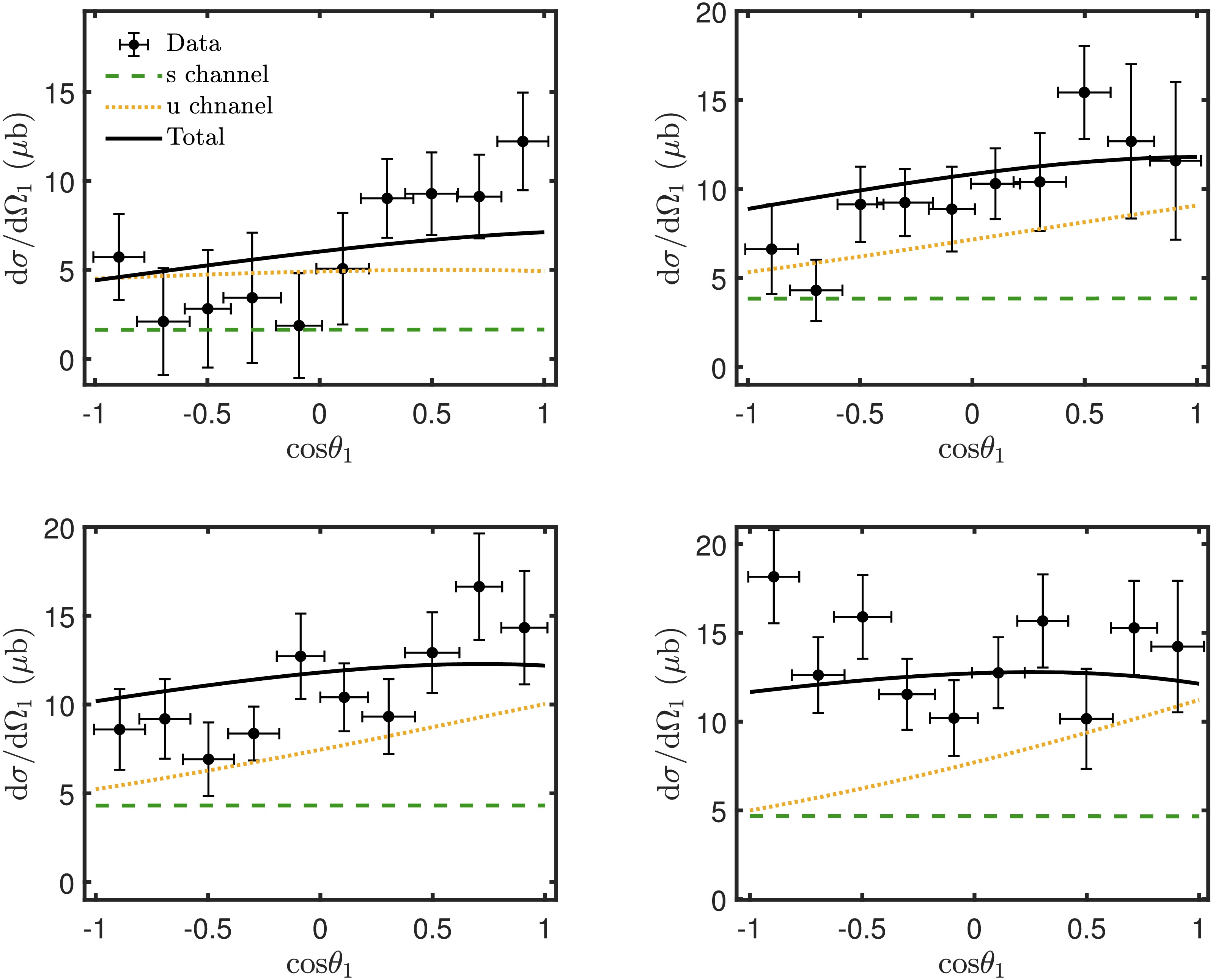
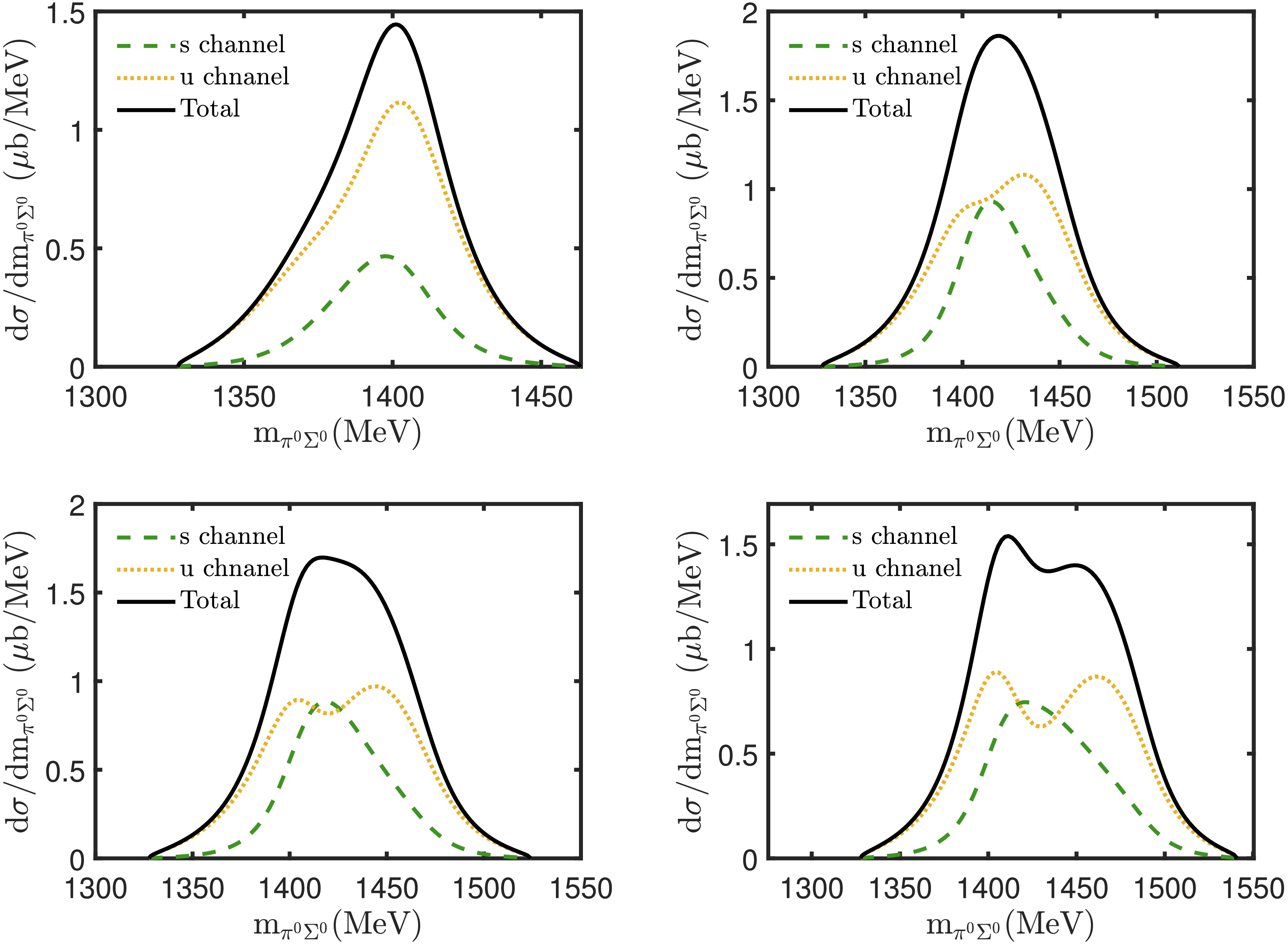
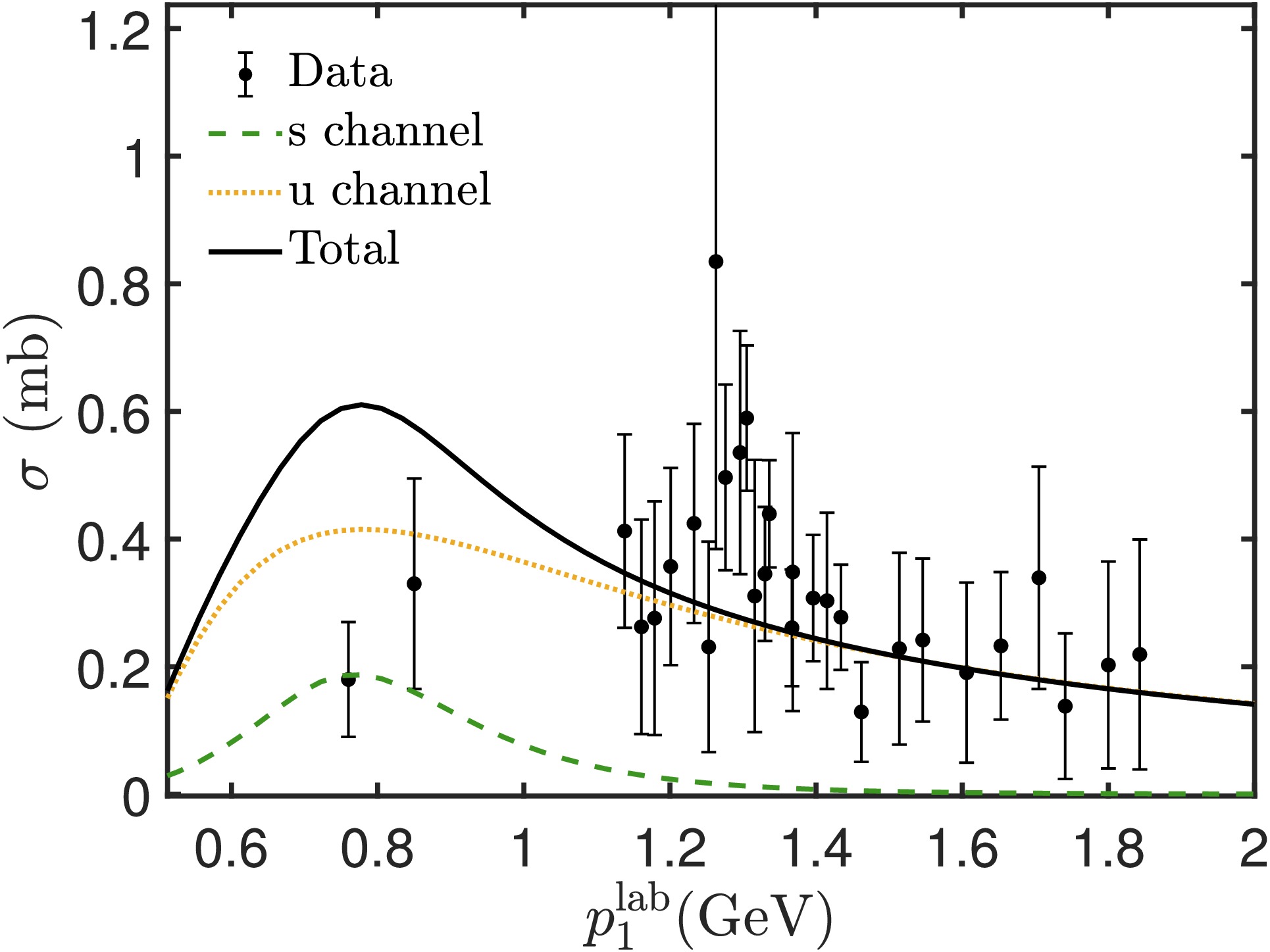
The processes of\begin{document}$ K^-p \to \pi^0 \pi^0 \Sigma^0 $\end{document} \begin{document}$ K^- p \to \pi^0 \Lambda(1405) $\end{document} \begin{document}$ \Sigma(1660) $\end{document} \begin{document}$ J^P=1/2^+ $\end{document} \begin{document}$ K^-p \to \pi^0 \pi^0 \Sigma^0 $\end{document} \begin{document}$ \Sigma(1660) $\end{document} \begin{document}$ \pi^0 \Lambda(1405) $\end{document} \begin{document}$ \Lambda(1405) $\end{document} \begin{document}$ \pi^0 \Sigma^0 $\end{document} \begin{document}$ K^-p \to \pi^0 \pi^0 \Sigma^0 $\end{document} \begin{document}$ K^- p \to \pi^0 \Lambda(1405) $\end{document} \begin{document}$ \Sigma(1660) $\end{document} \begin{document}$ \Sigma(1660) $\end{document}
The processes of
2026, 50(6): 063105. doi: 10.1088/1674-1137/ae4baa
Abstract:
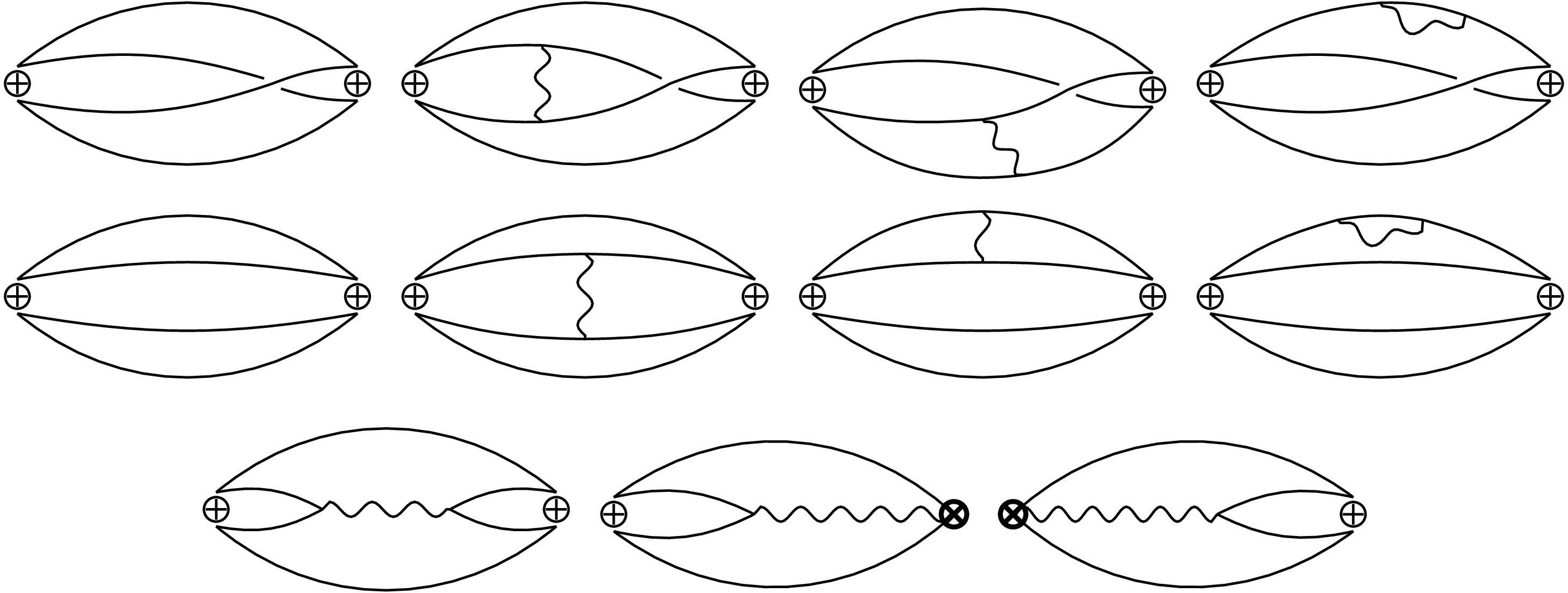
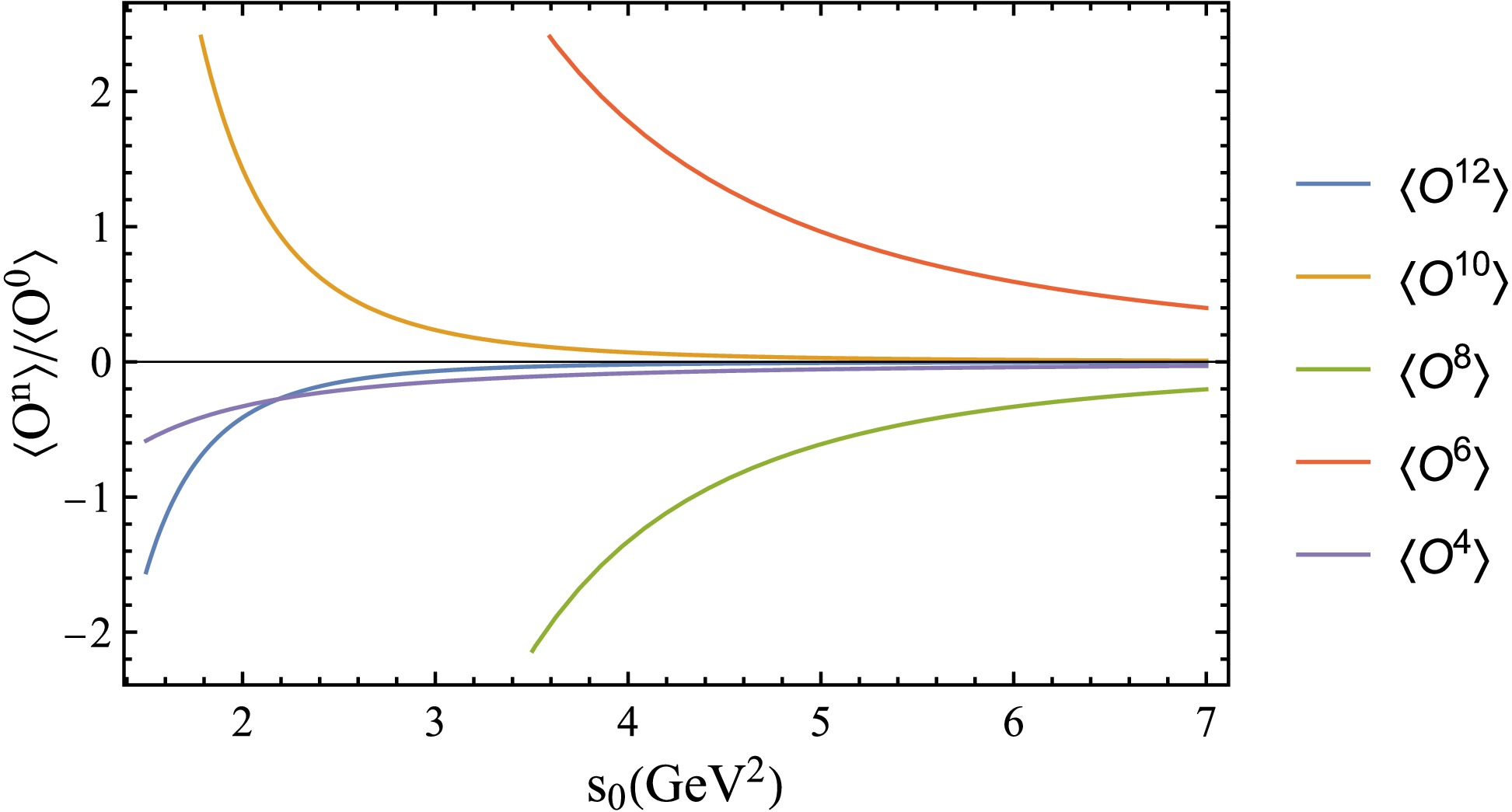
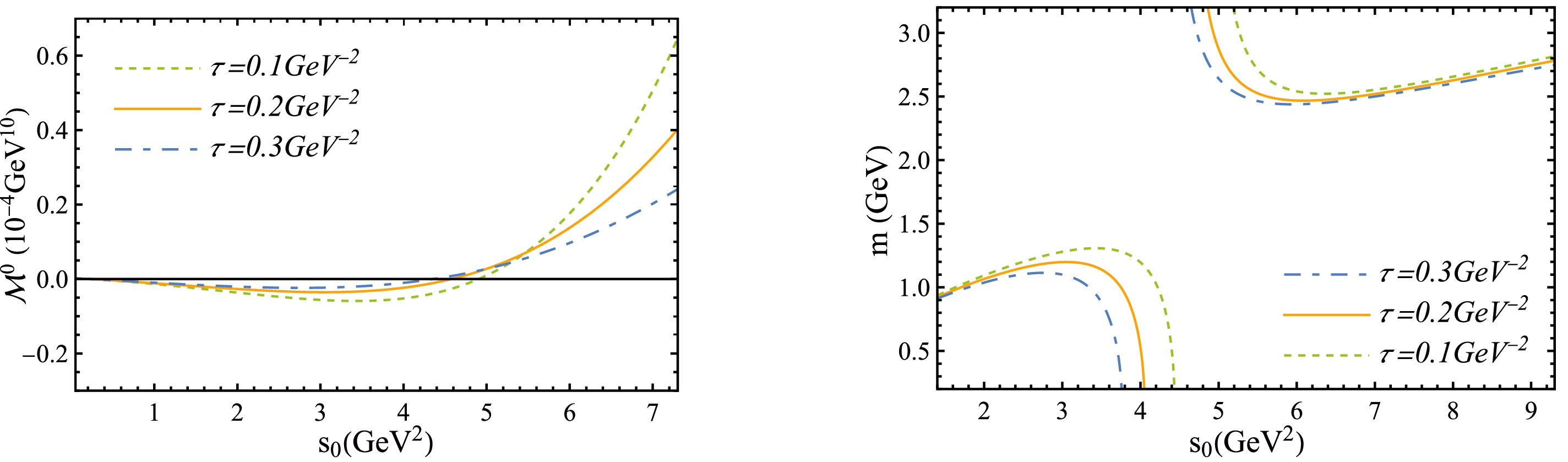
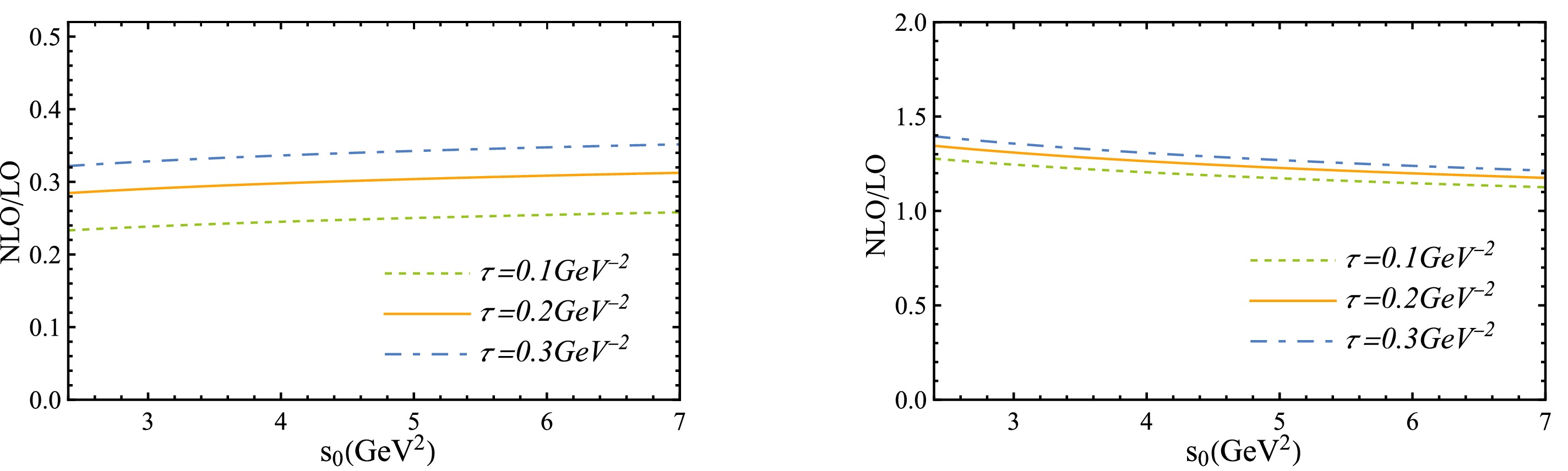
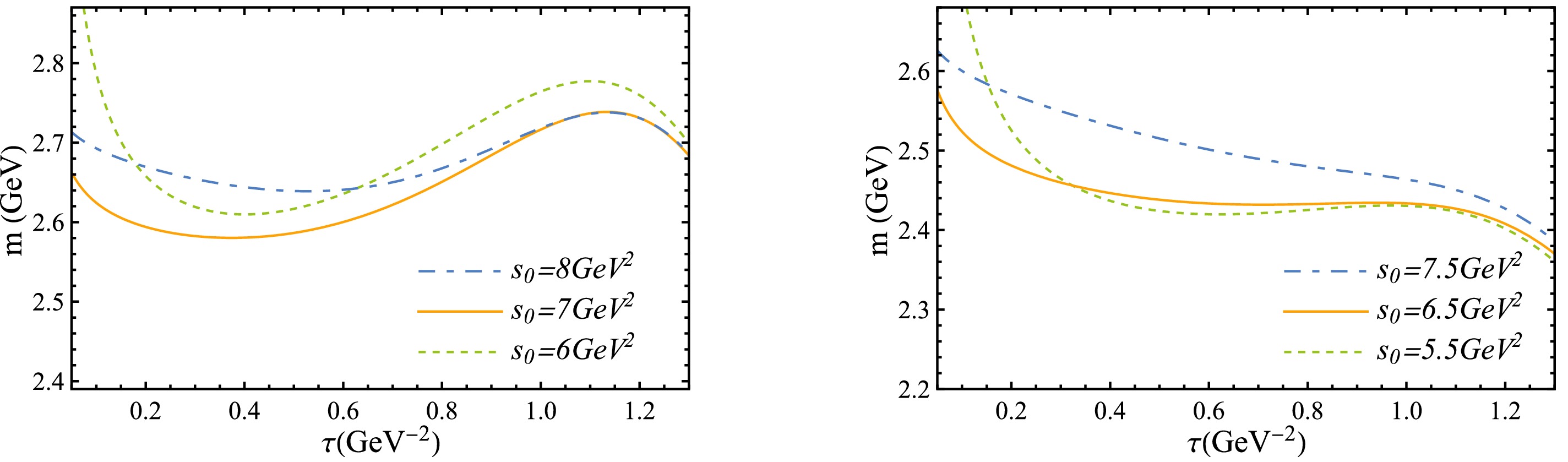
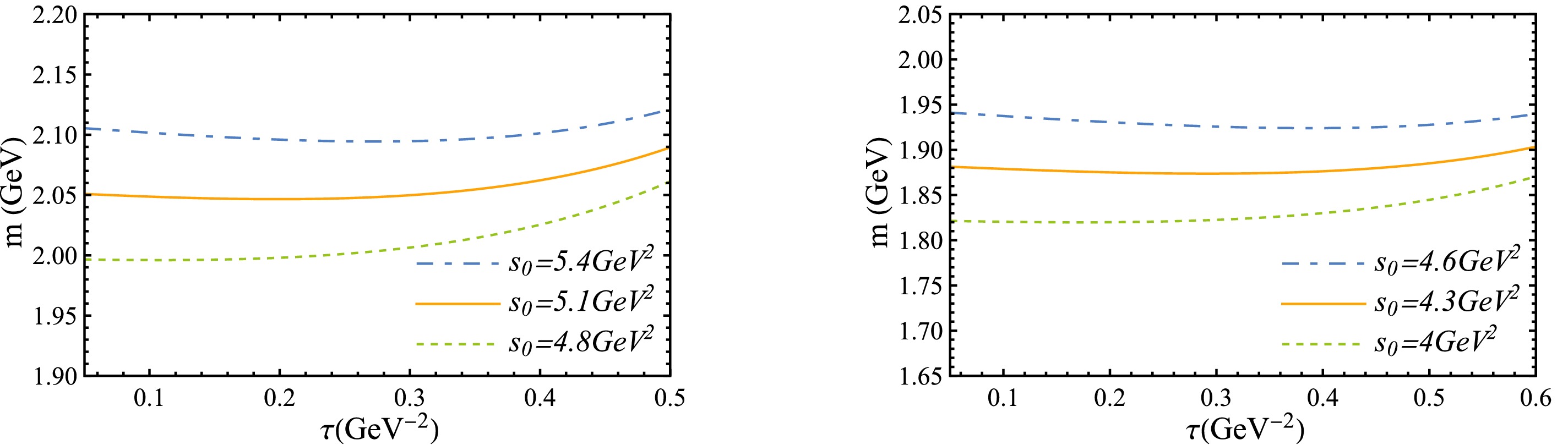
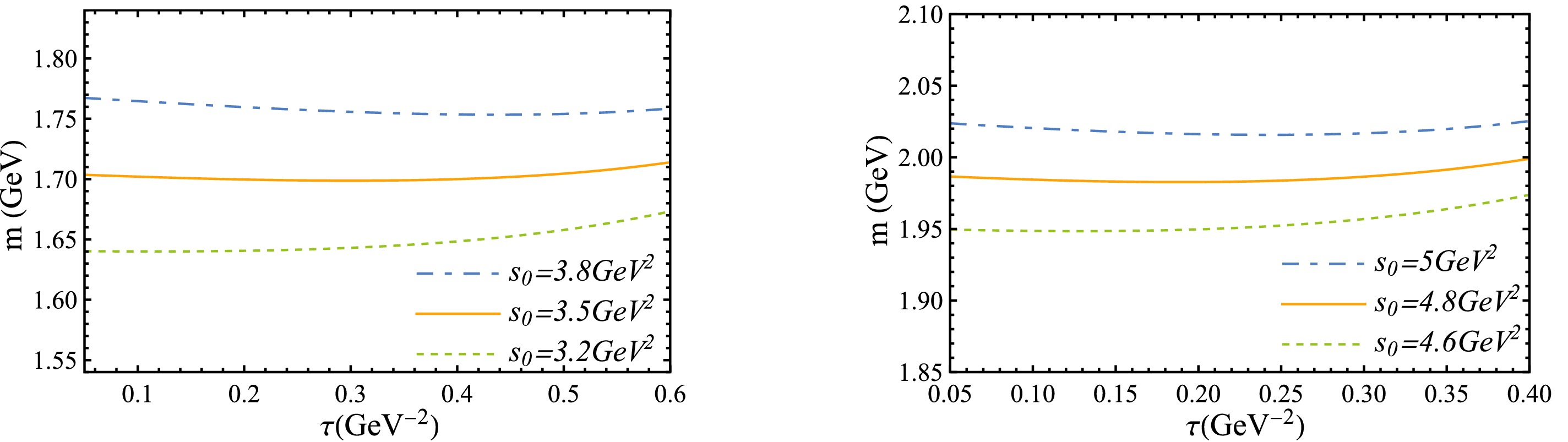
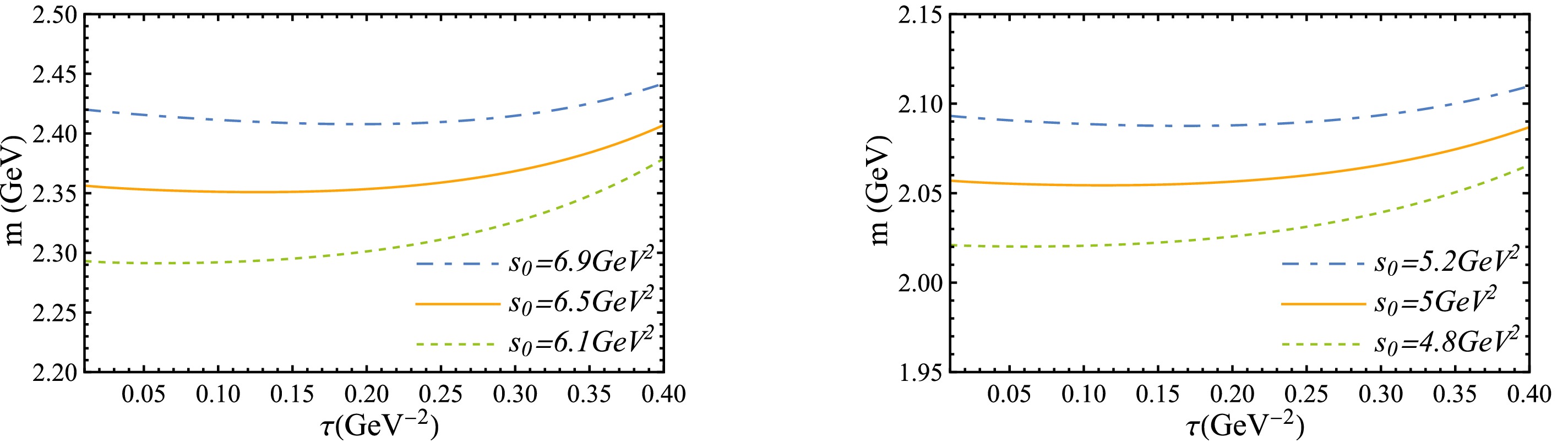
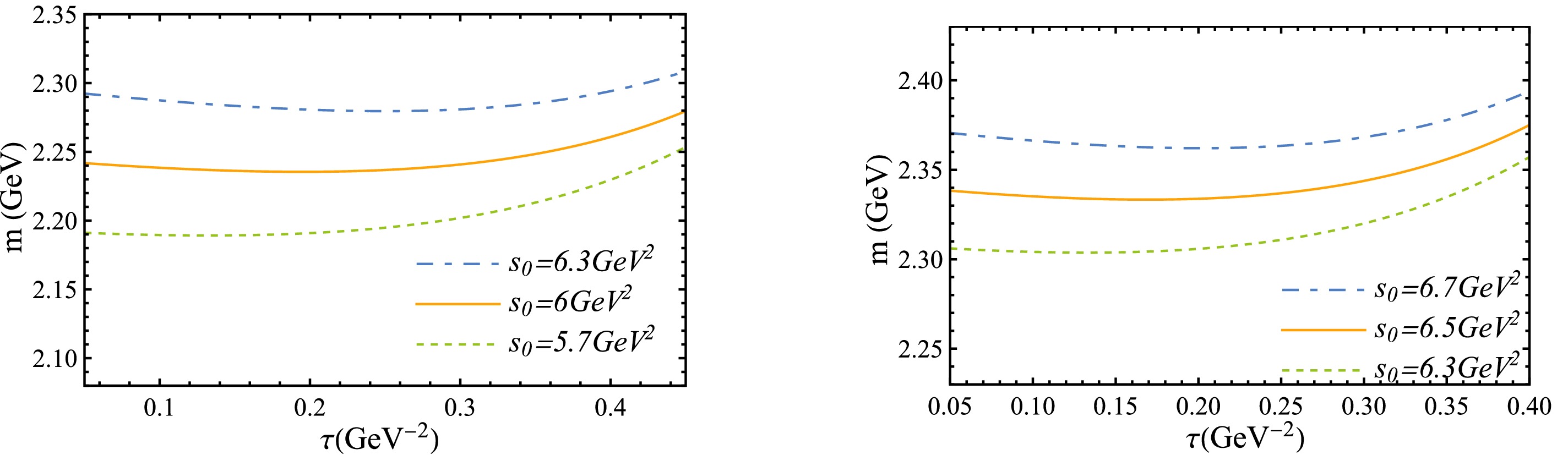
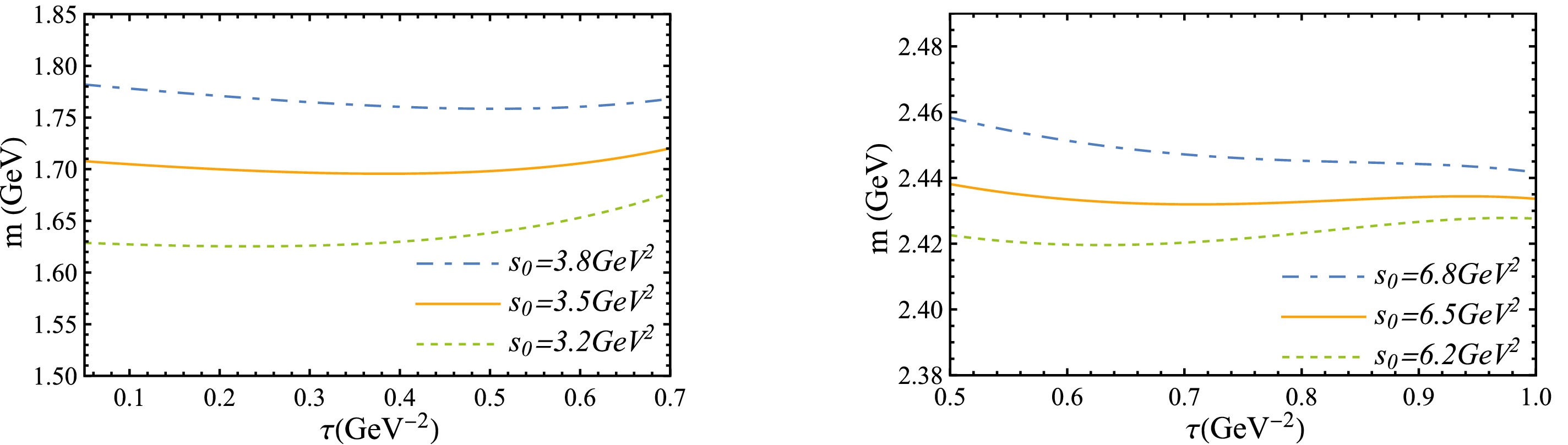
We have performed a next-to-leading-order (NLO) QCD sum rules analysis of the\begin{document}$1^{-+}$\end{document} \begin{document}$1.7\,\text{GeV}$\end{document} \begin{document}$1^{-+}$\end{document} \begin{document}$2.0\,\text{GeV}$\end{document} \begin{document}$\pi_{1}(2015)$\end{document} \begin{document}$\pi_{1}(2015)$\end{document} \begin{document}$\pi_{1}(1400)$\end{document}
We have performed a next-to-leading-order (NLO) QCD sum rules analysis of the
2026, 50(6): 063106. doi: 10.1088/1674-1137/ae5044
Abstract:
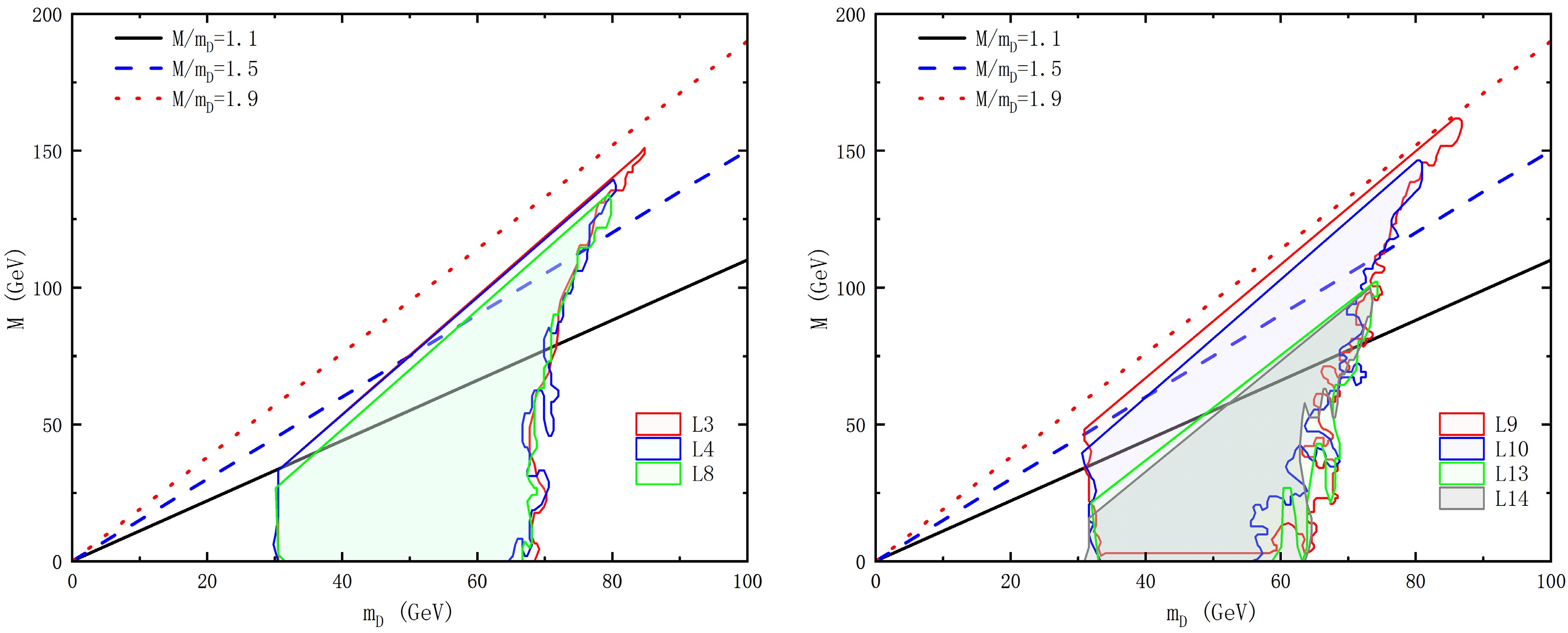
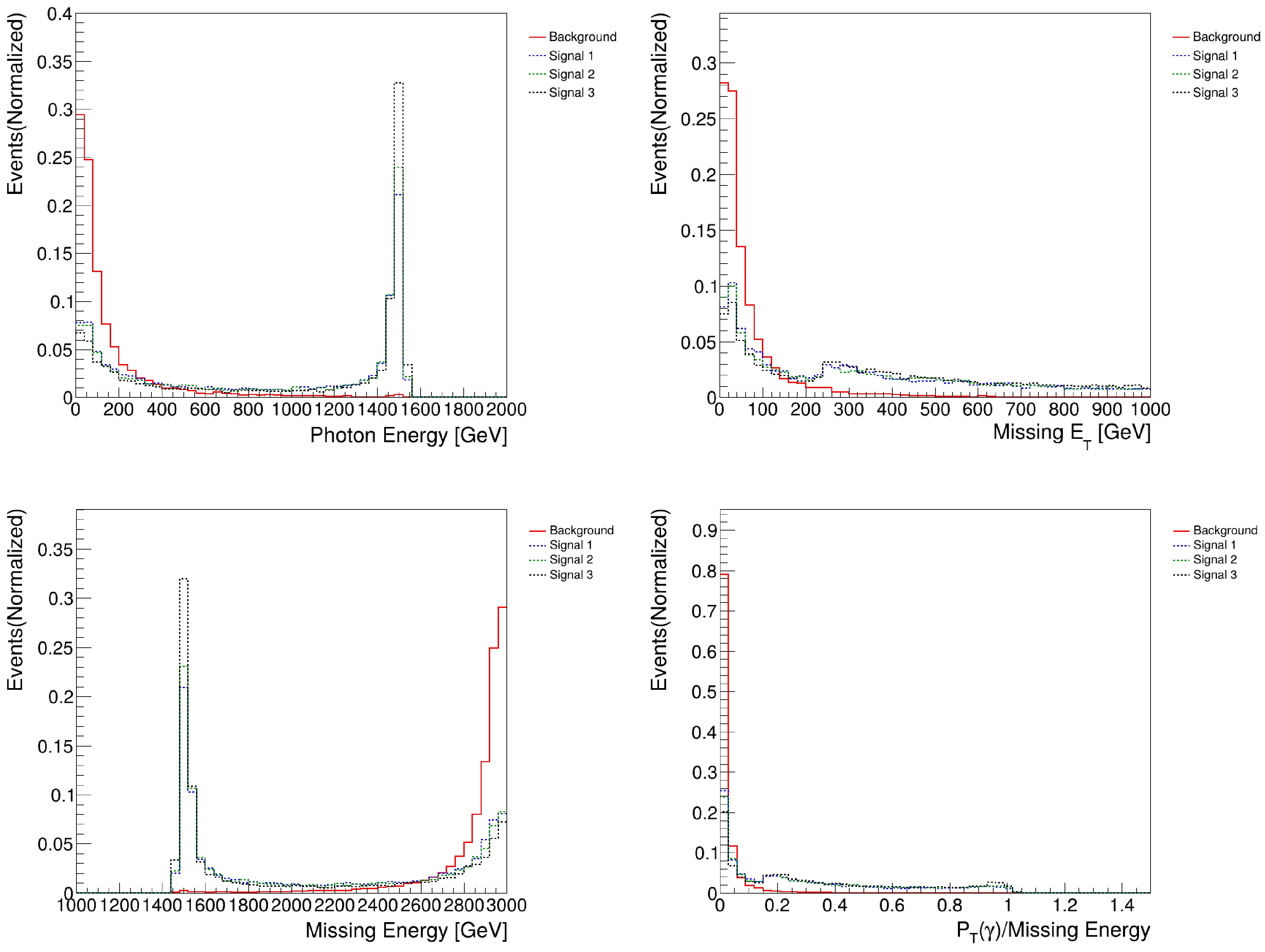
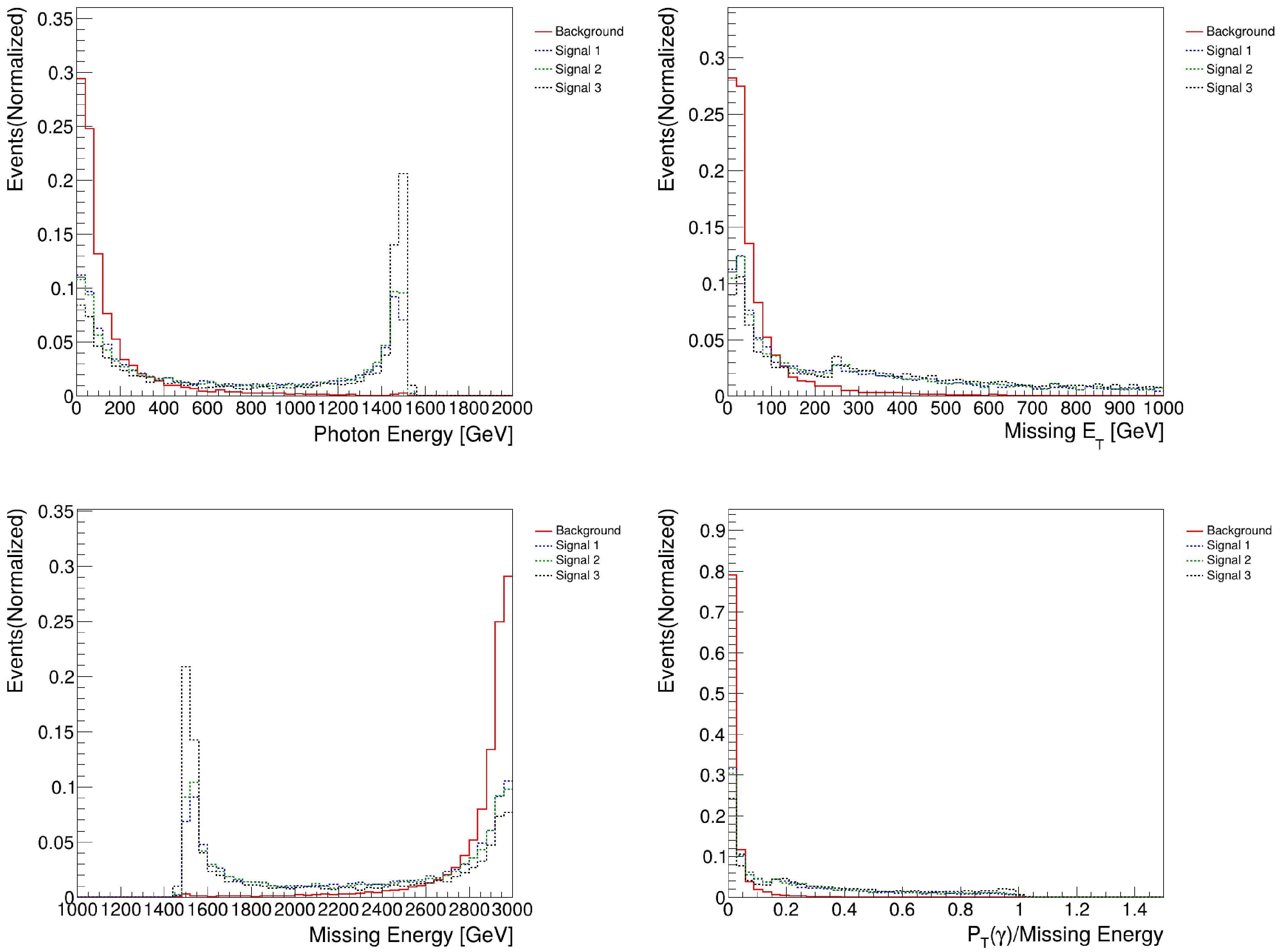
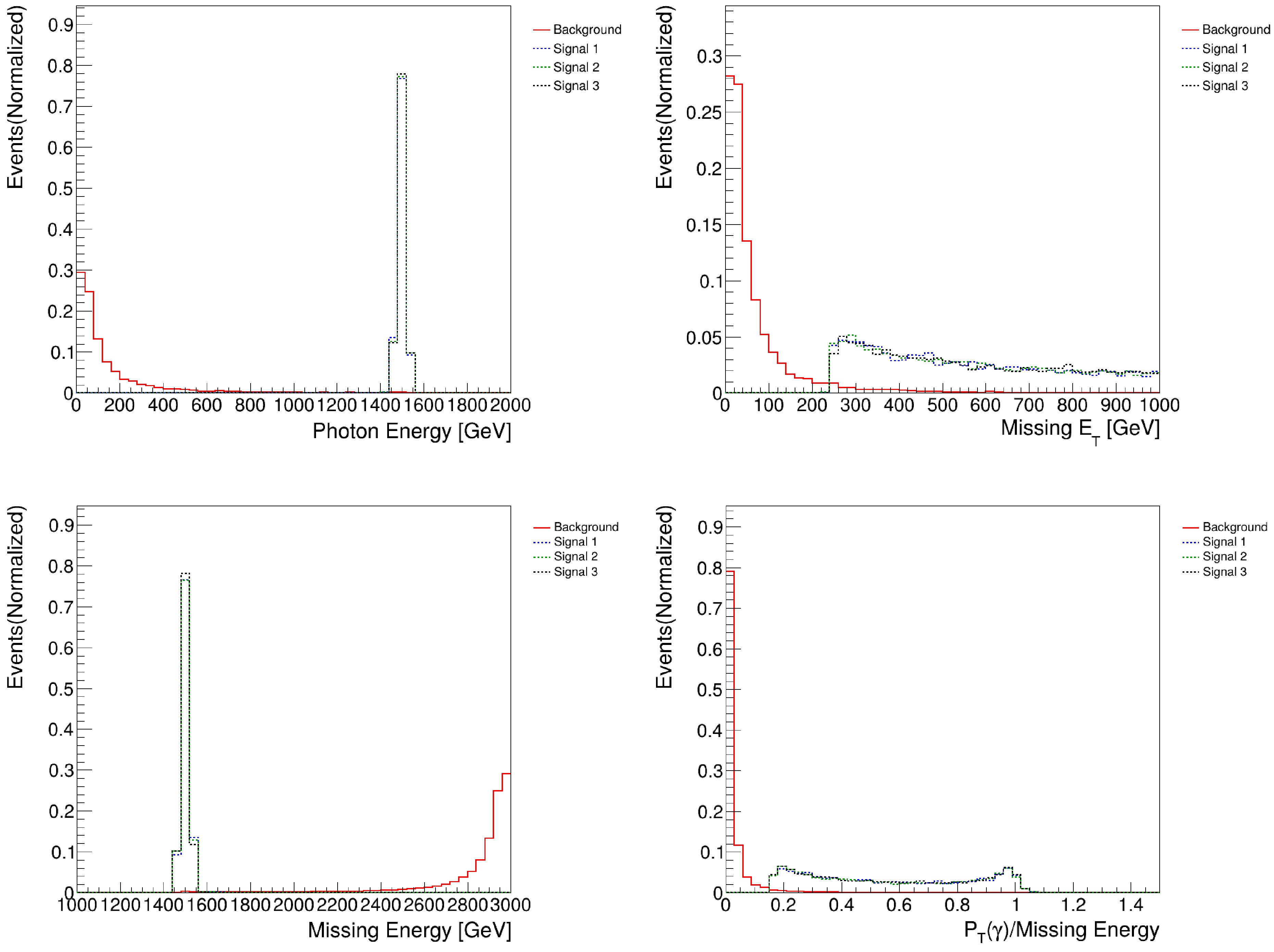
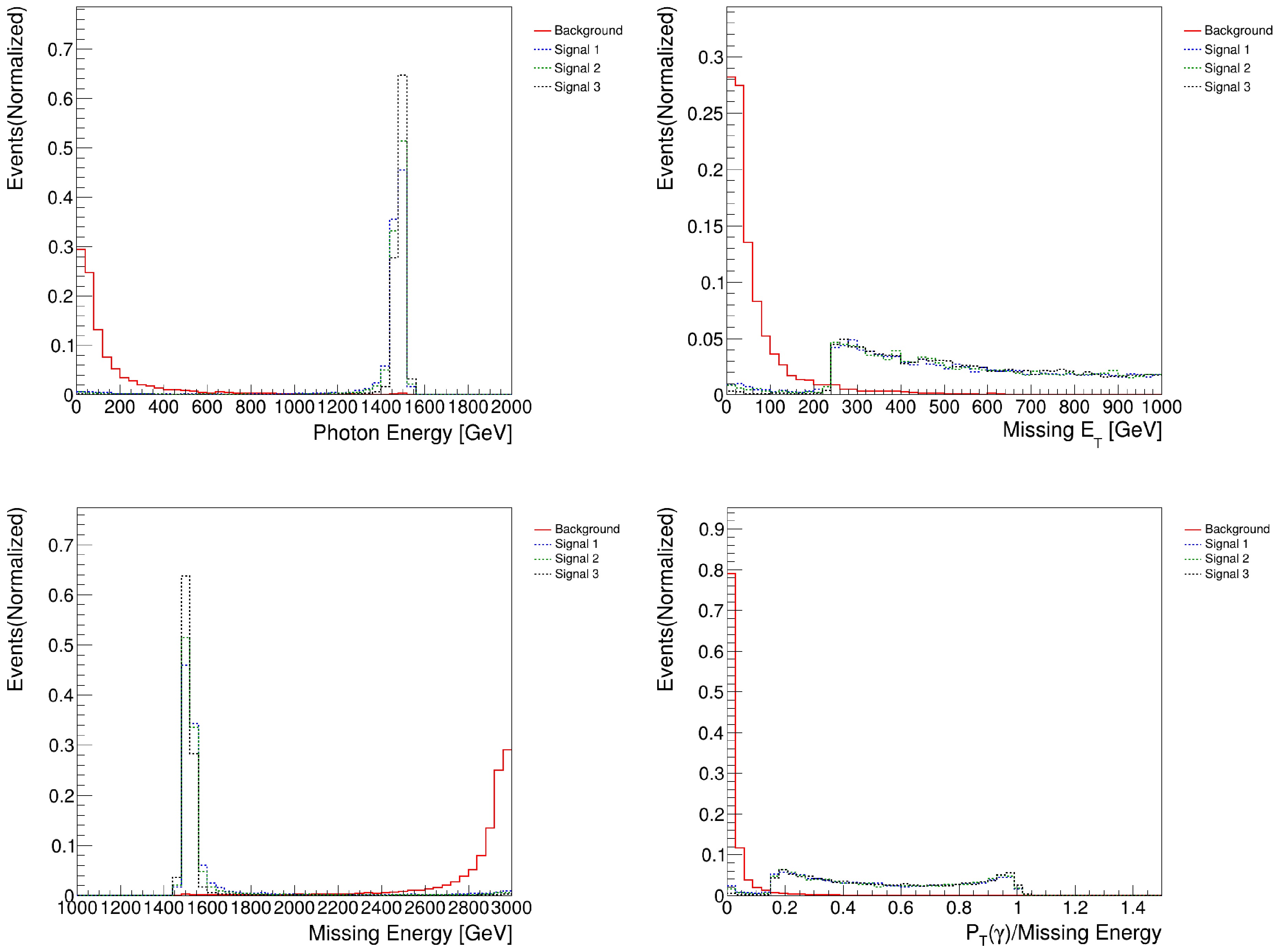
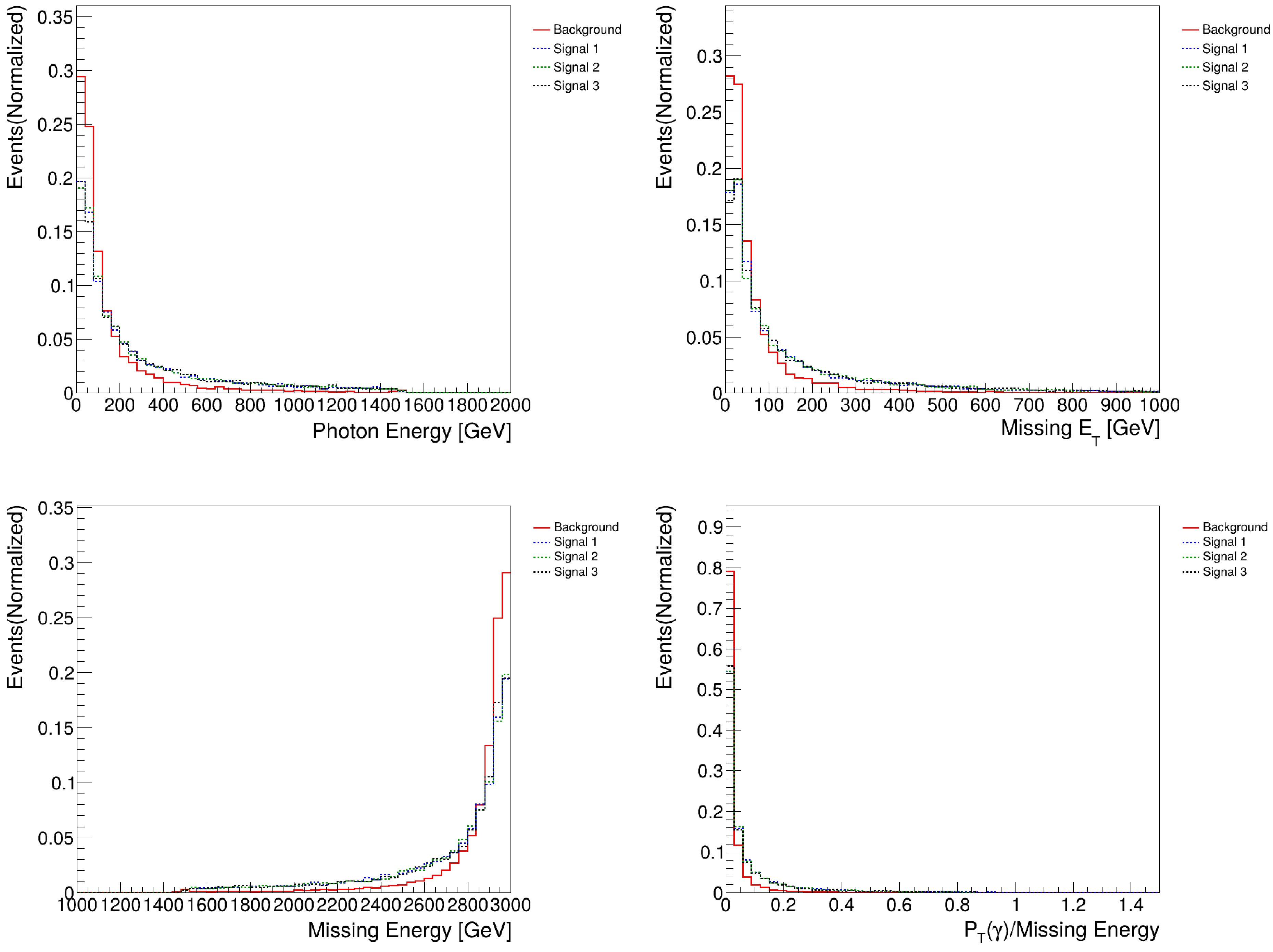
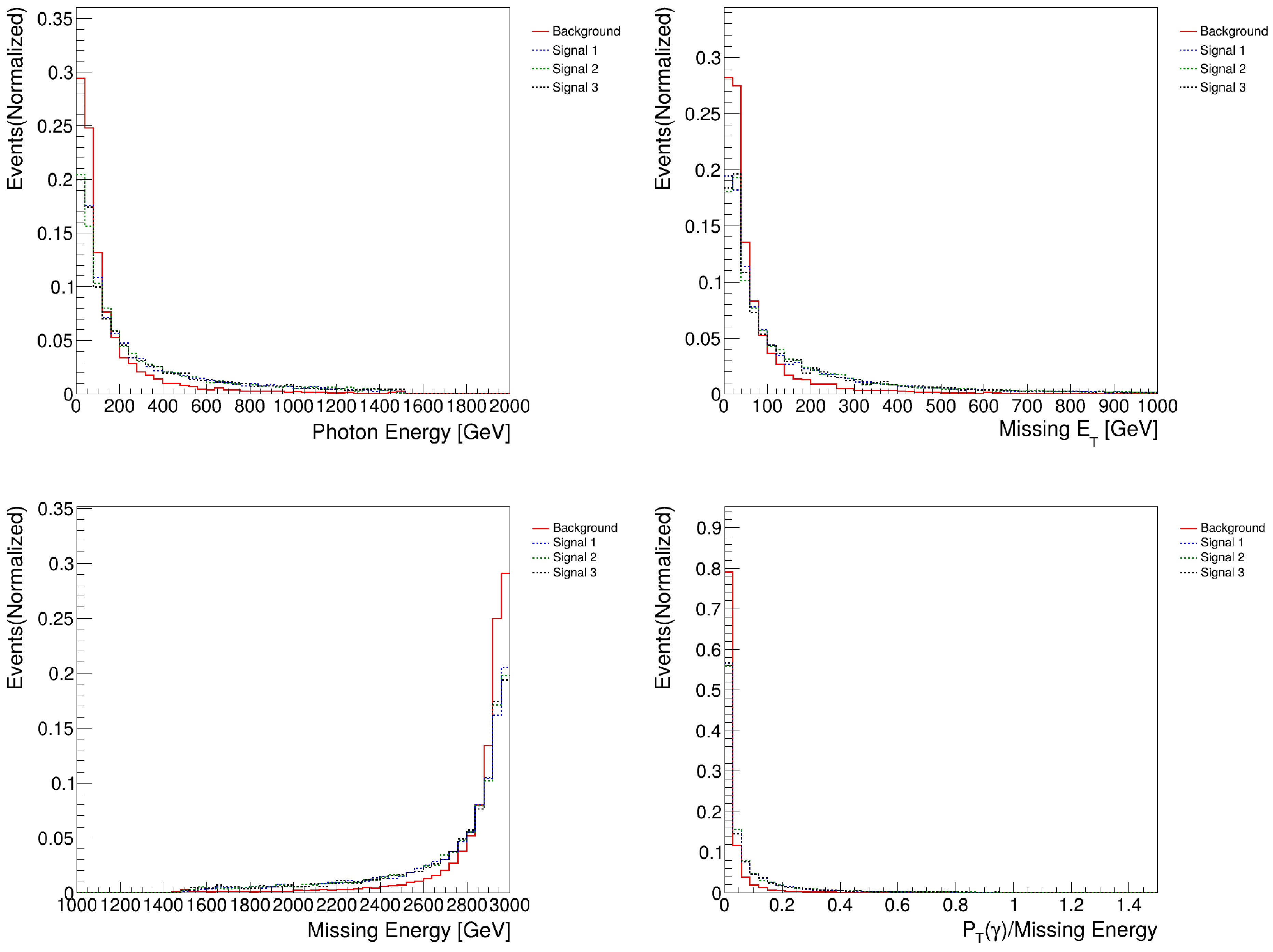
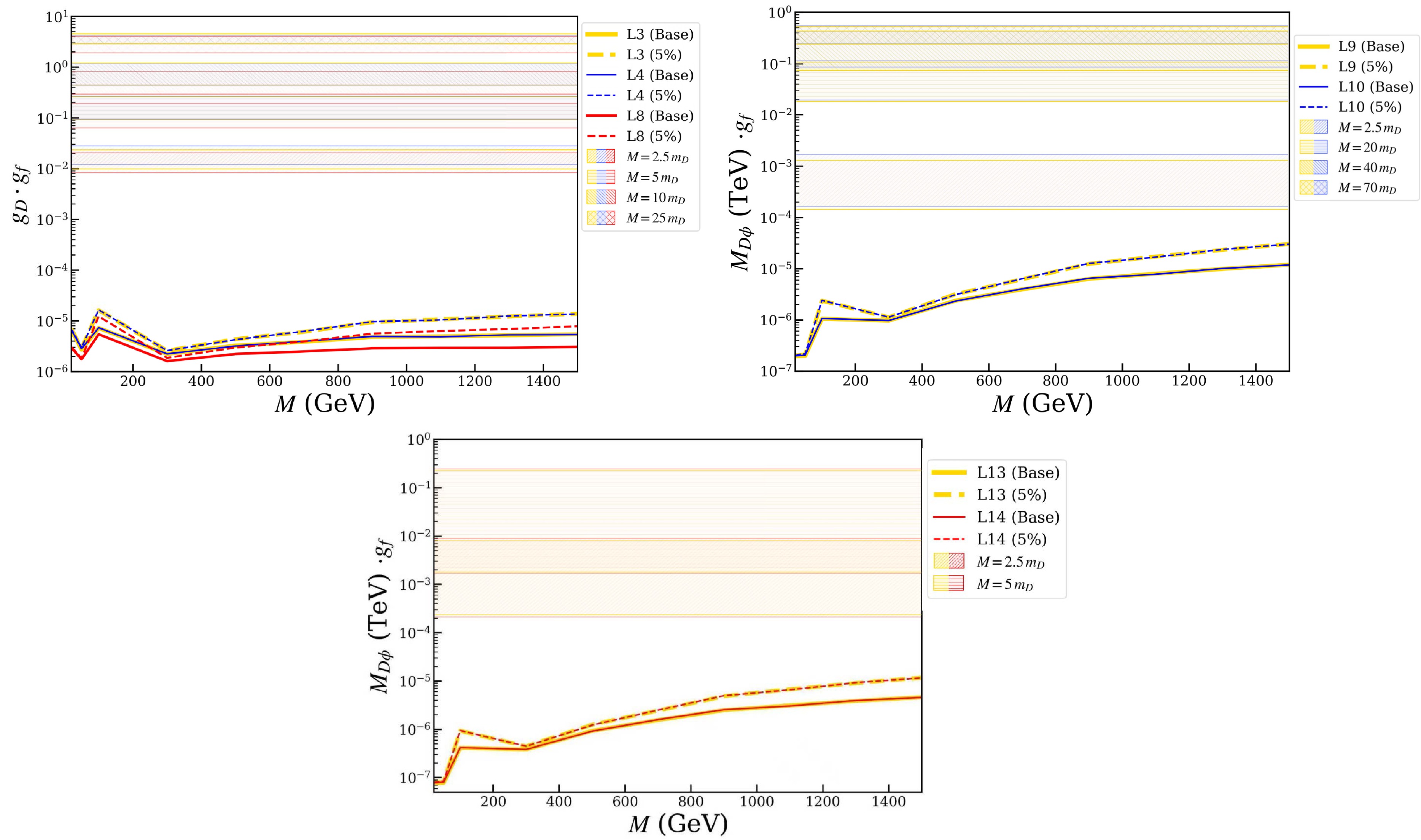
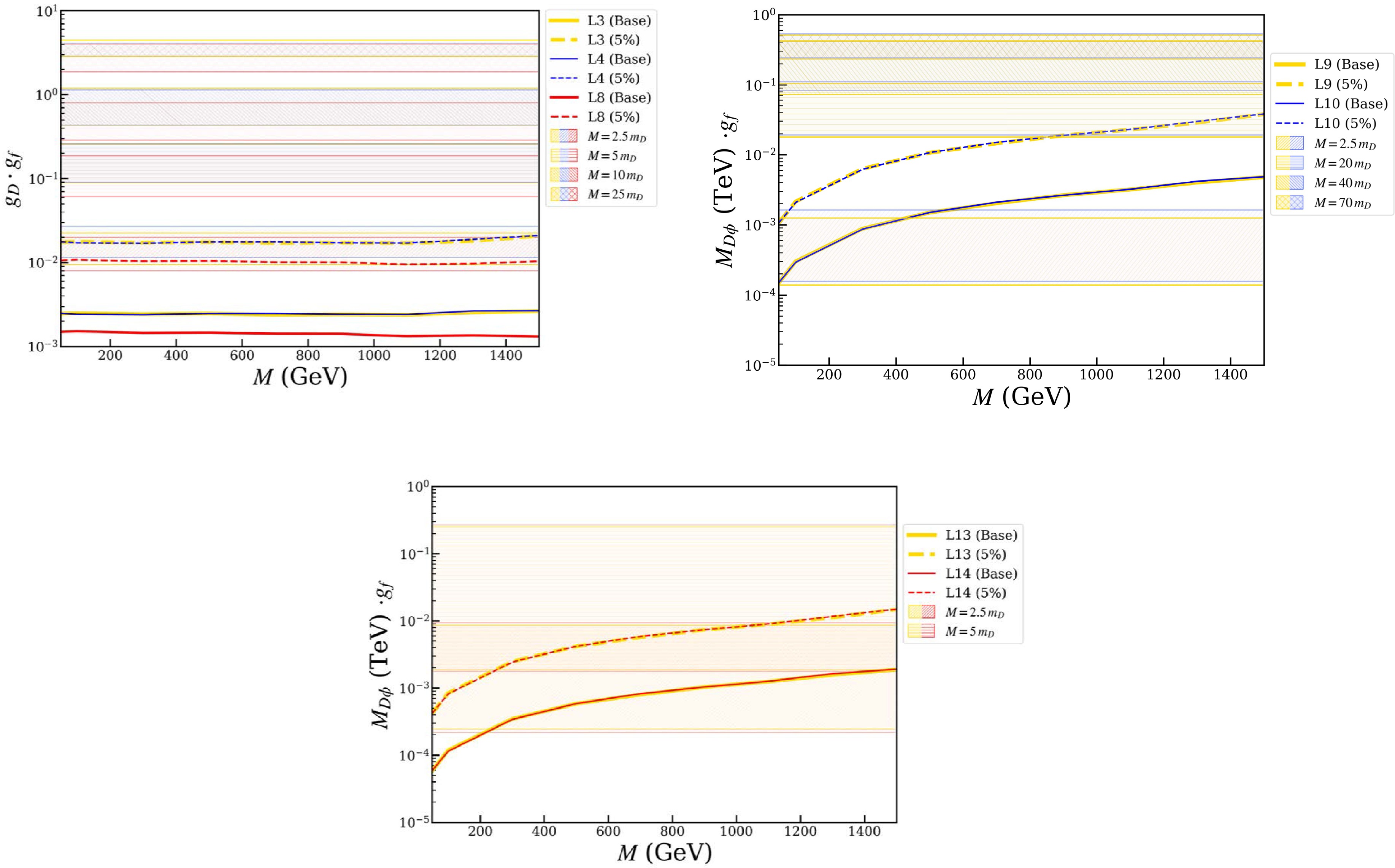
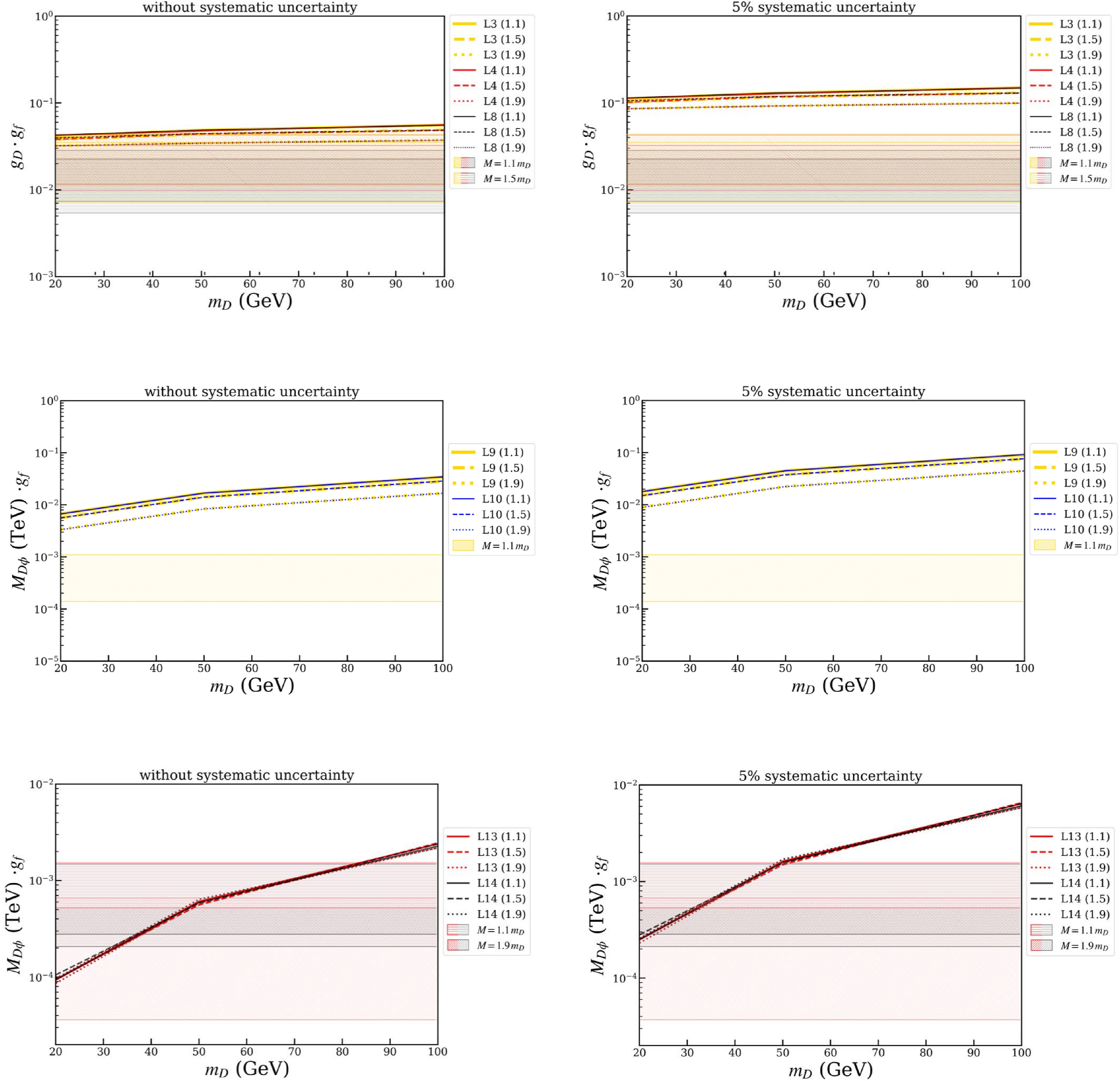
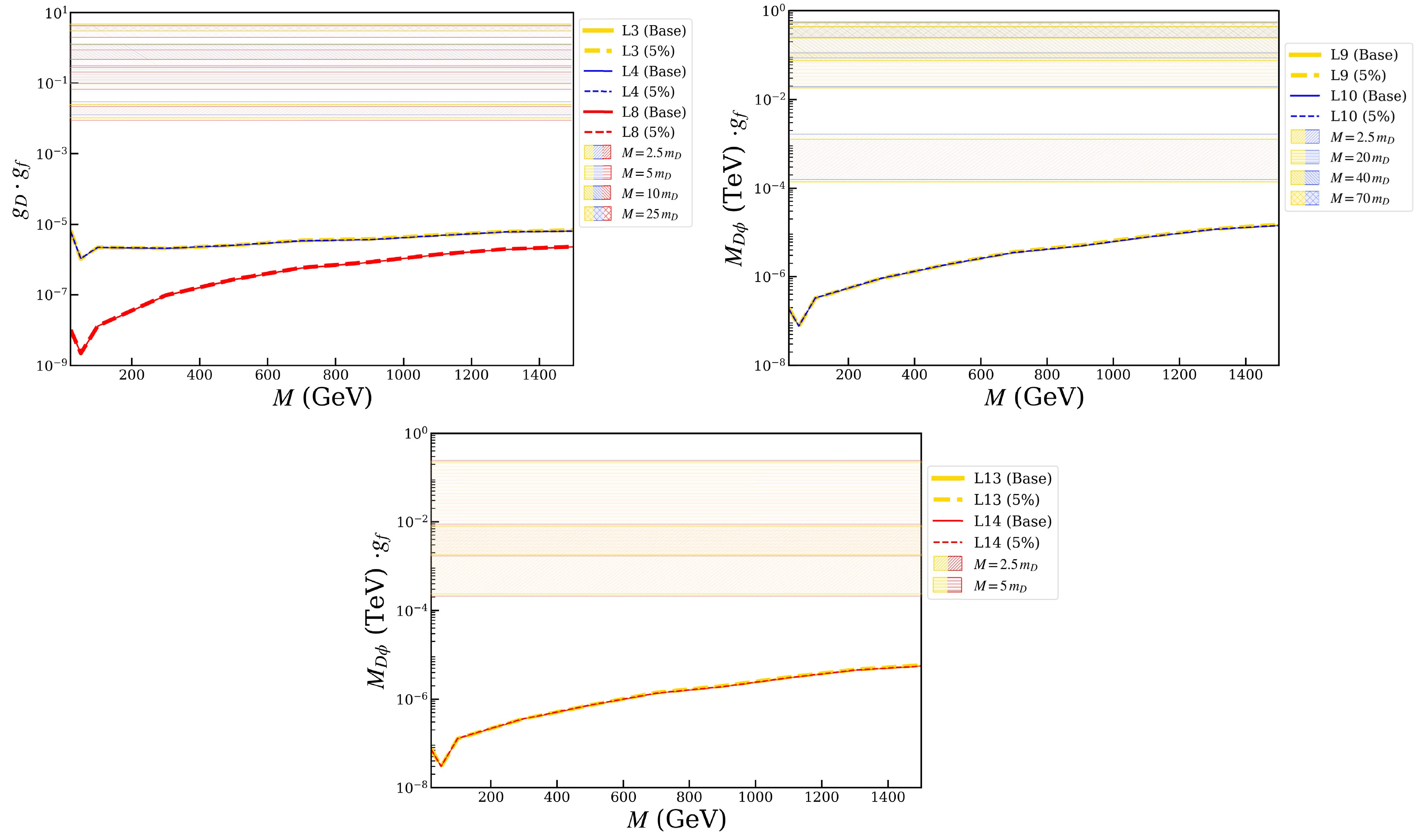
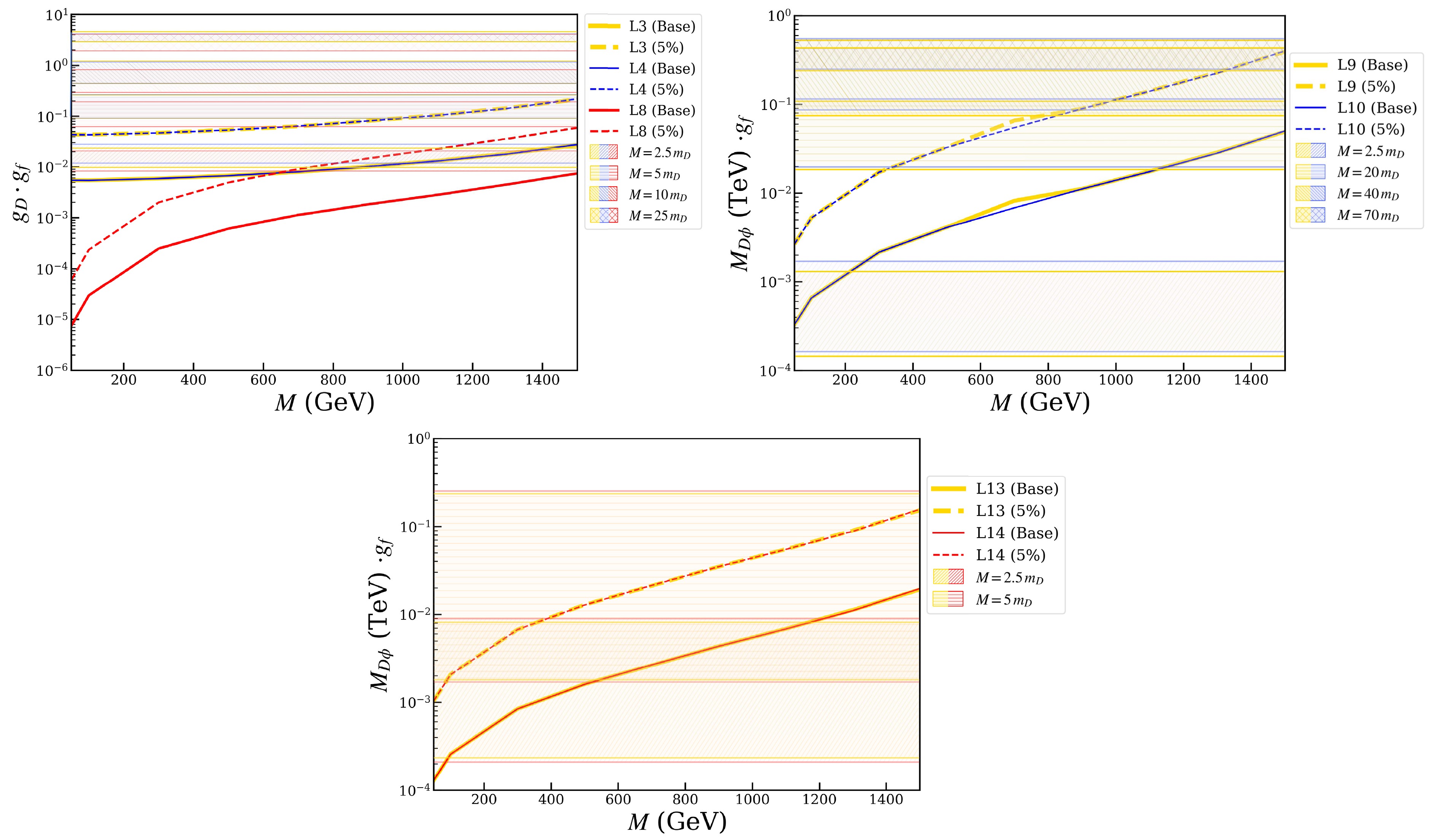
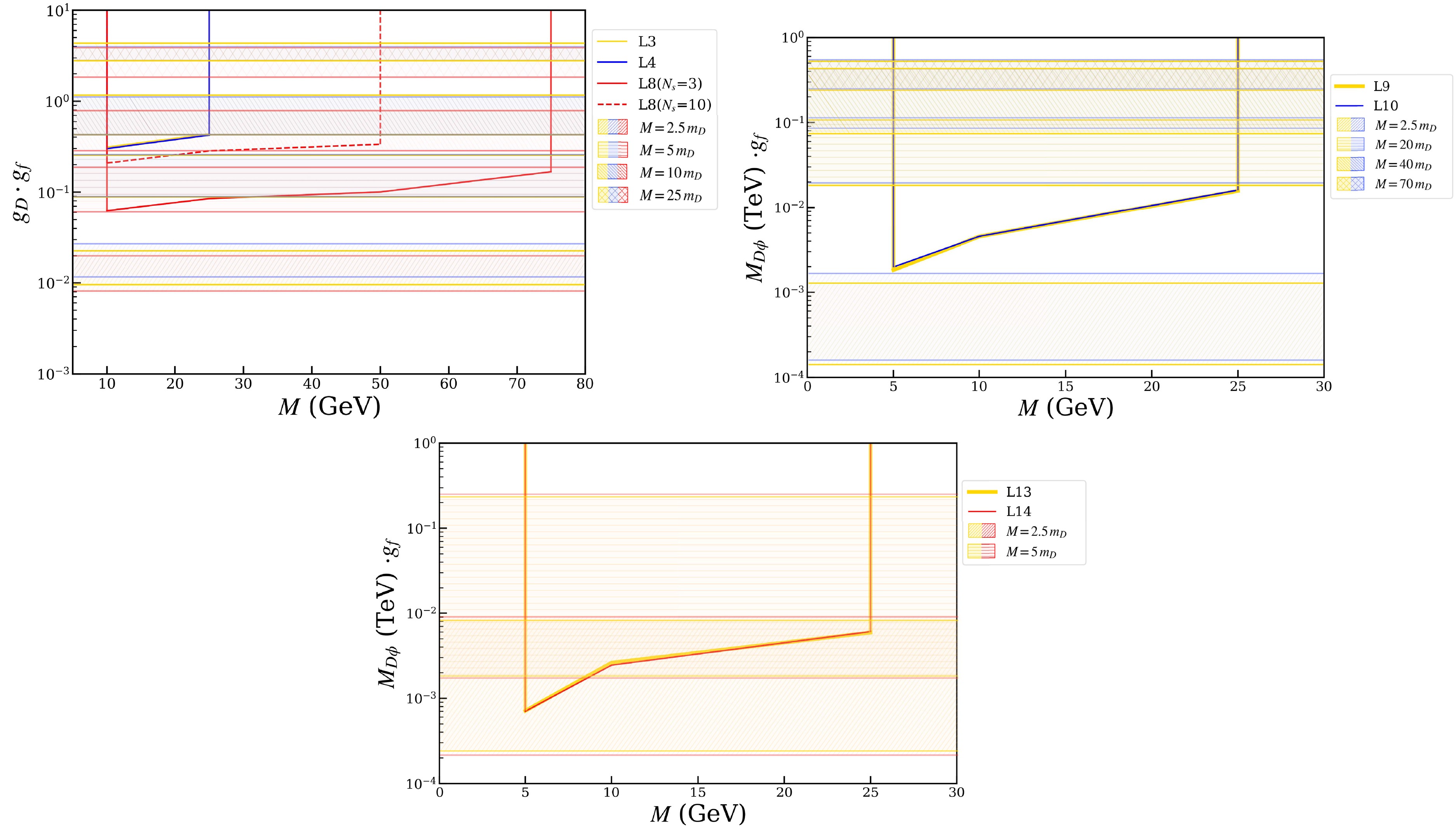
The Galactic Center GeV Excess (GCE) remains a compelling but enigmatic signal from the inner regions of our galaxy. Muonphilic dark matter (DM), which couples exclusively to muons via a new mediator, provides a viable explanation for the GCE and relic density while naturally evading constraints from direct detection, collider searches, and other multimessenger observations. Based on the viable nonresonant parameter space identified in previous global fits, we perform a comprehensive study on the prospects for discovering such muonphilic DM in the context of a future 3 TeV muon collider, focusing on simplified models with a\begin{document}$Z_2$\end{document} \begin{document}$\mu^{+}\mu^{-}\gamma$\end{document} \begin{document}$ 95 $\end{document}
The Galactic Center GeV Excess (GCE) remains a compelling but enigmatic signal from the inner regions of our galaxy. Muonphilic dark matter (DM), which couples exclusively to muons via a new mediator, provides a viable explanation for the GCE and relic density while naturally evading constraints from direct detection, collider searches, and other multimessenger observations. Based on the viable nonresonant parameter space identified in previous global fits, we perform a comprehensive study on the prospects for discovering such muonphilic DM in the context of a future 3 TeV muon collider, focusing on simplified models with a
2026, 50(6): 063107. doi: 10.1088/1674-1137/ae5048
Abstract:
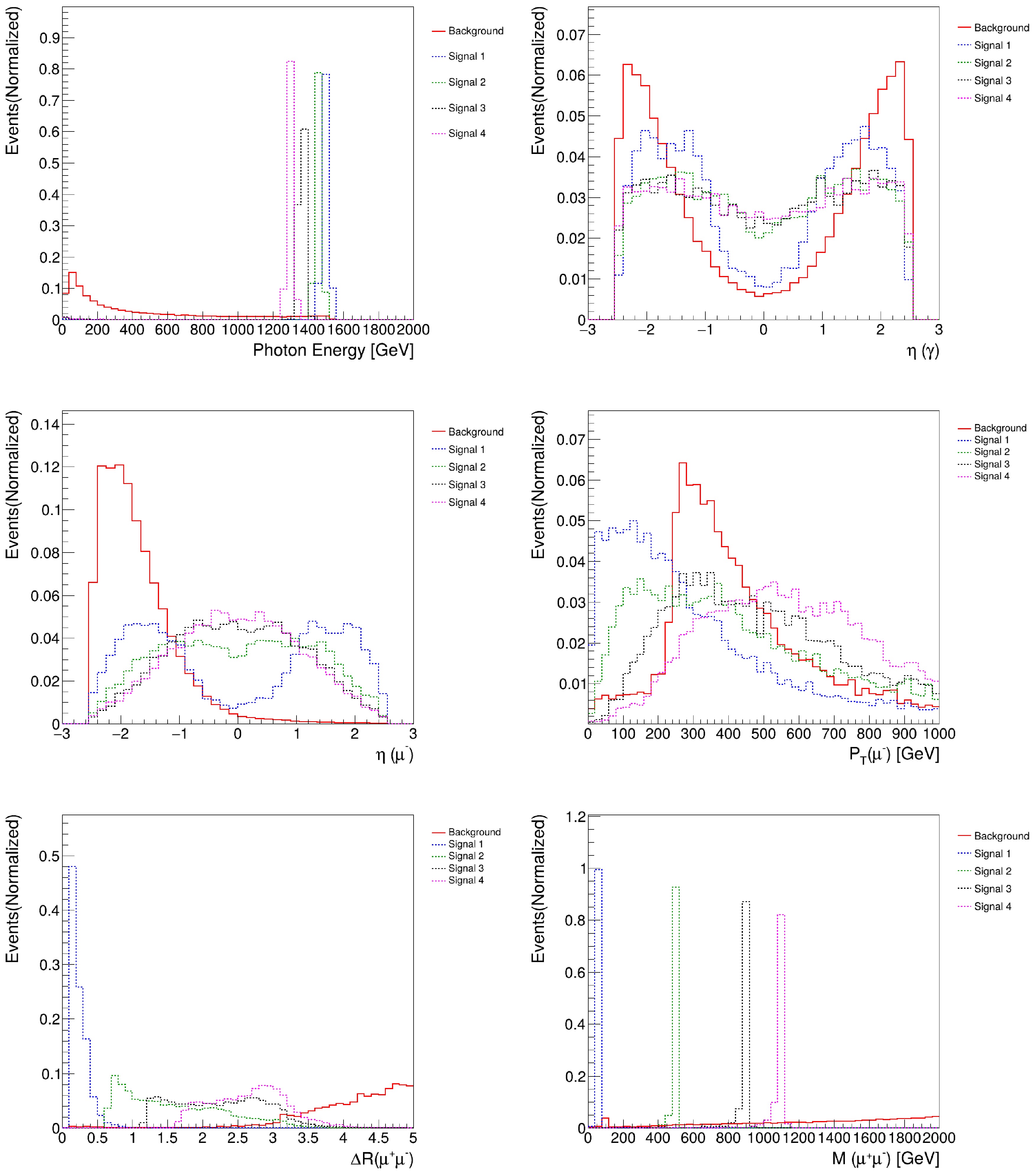
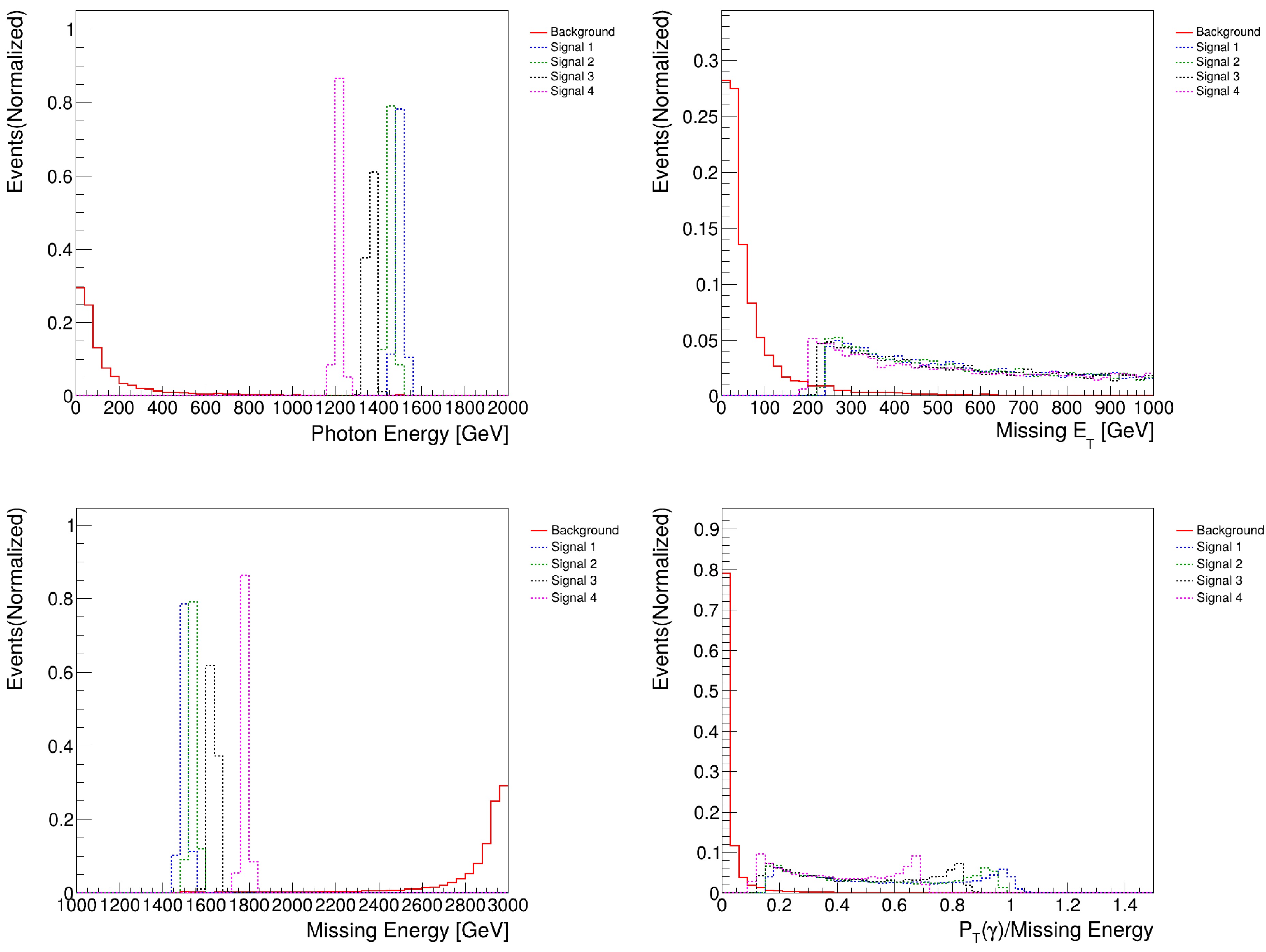
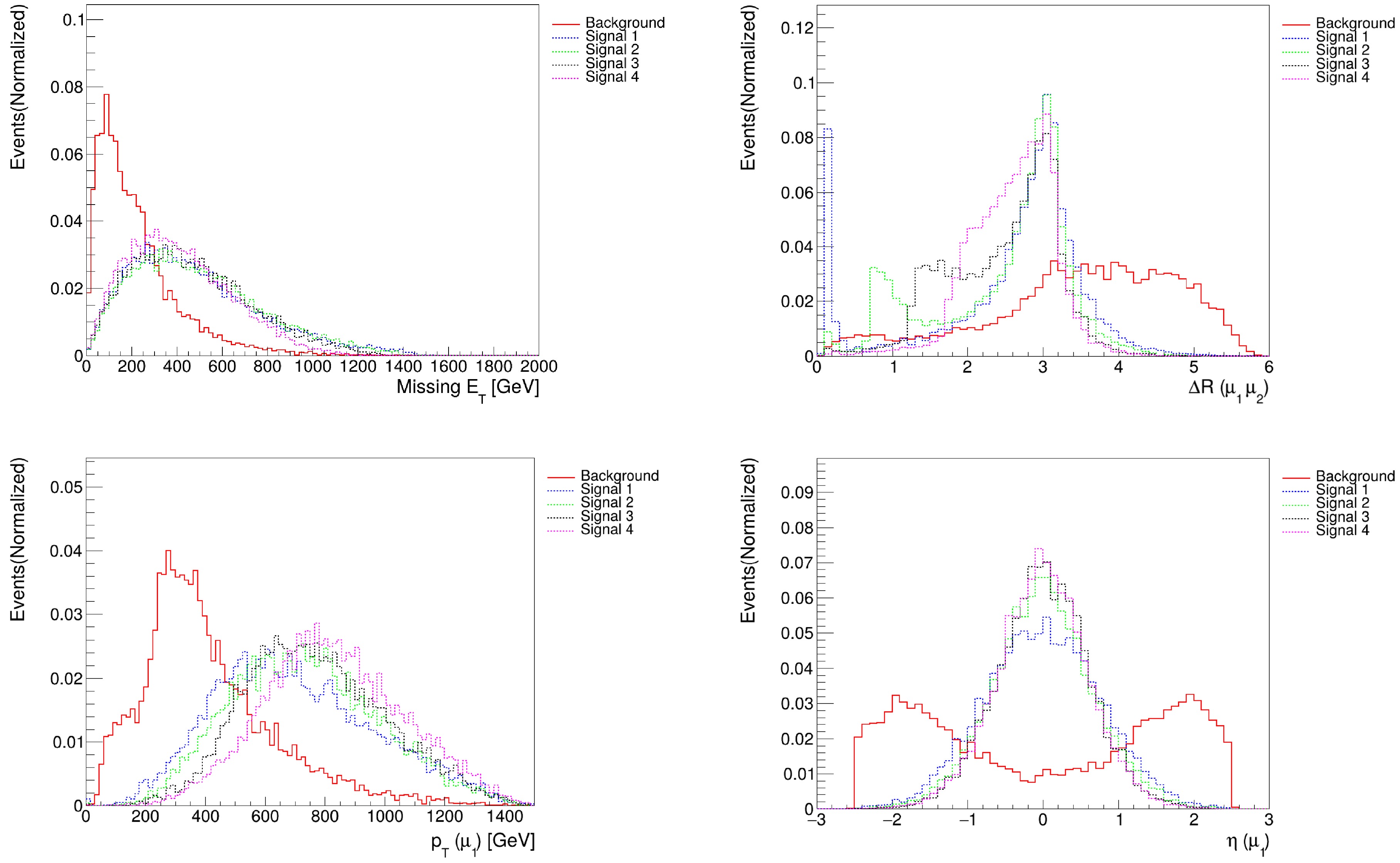
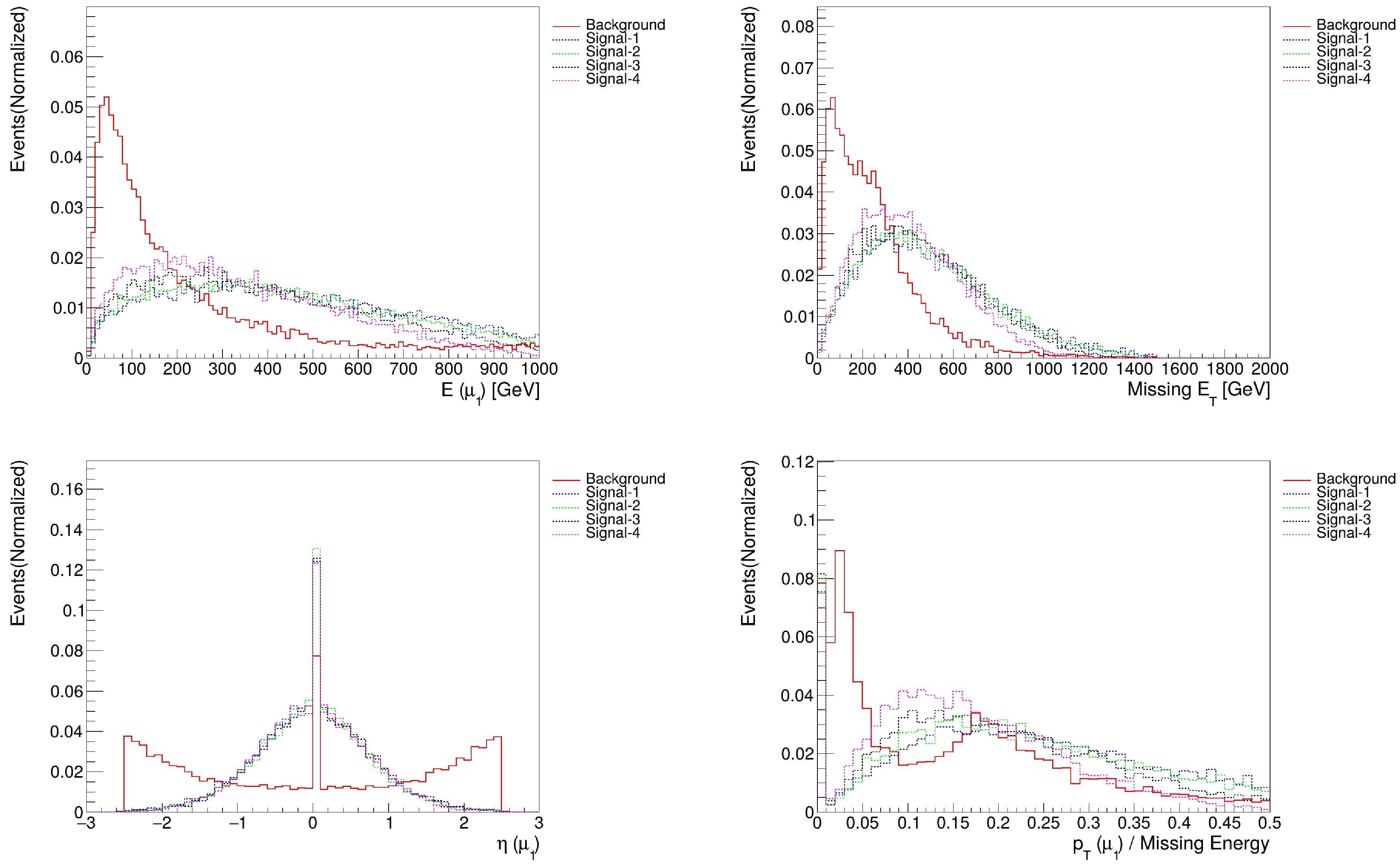
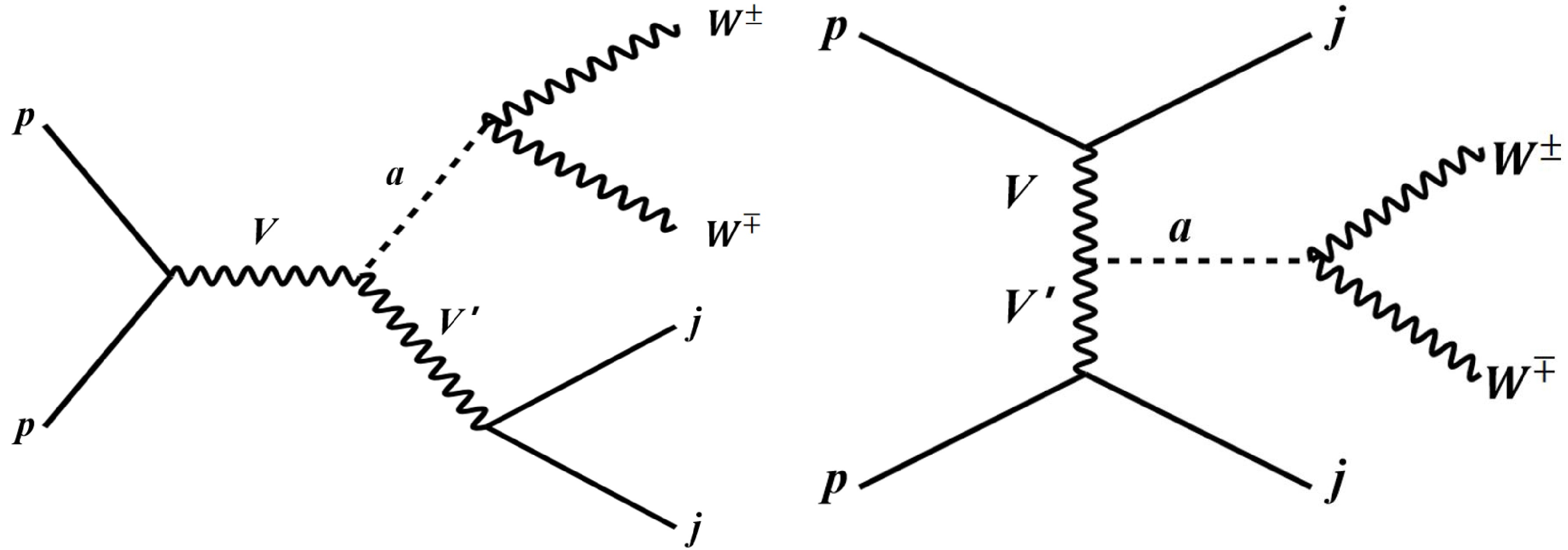
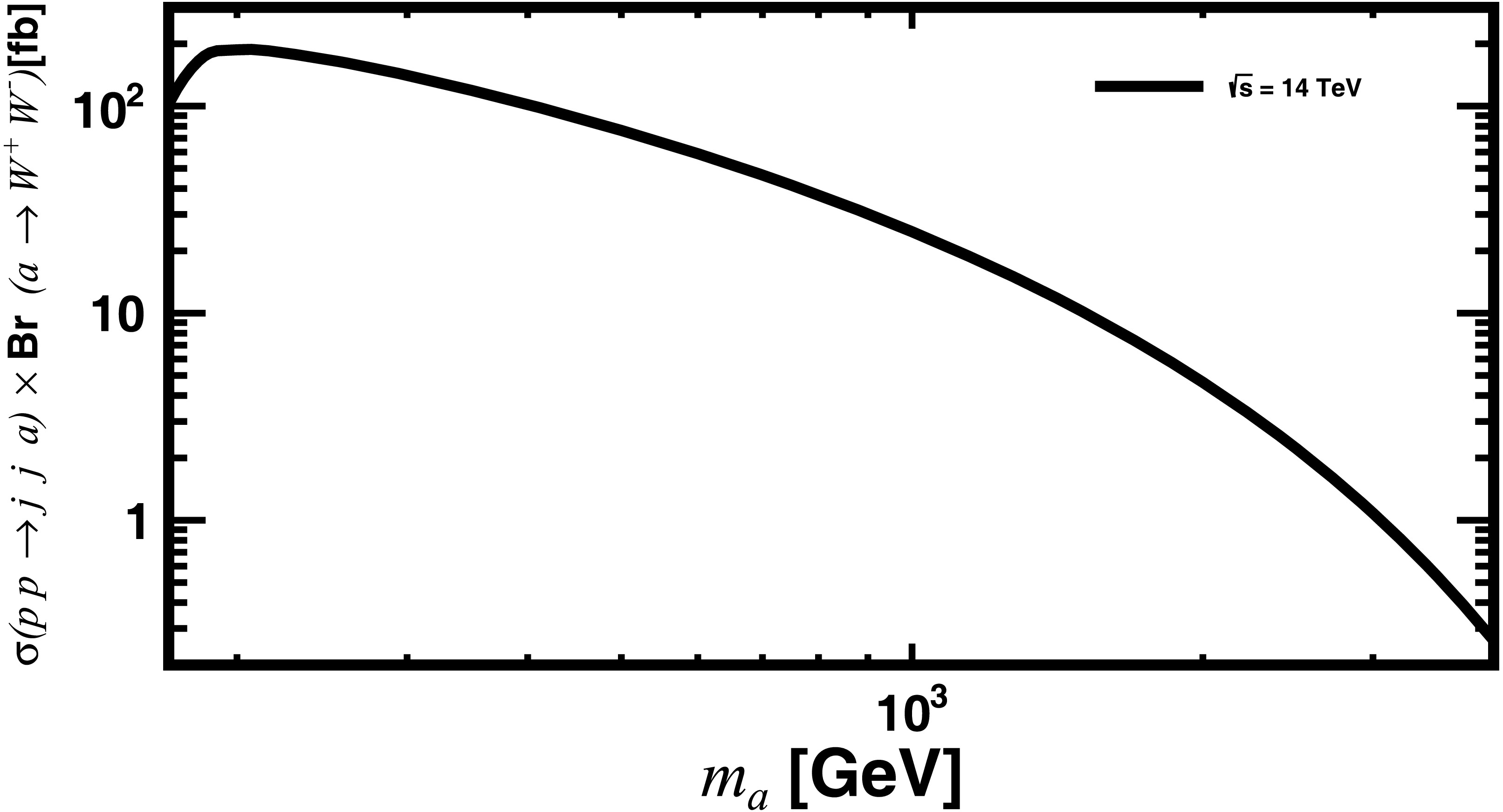
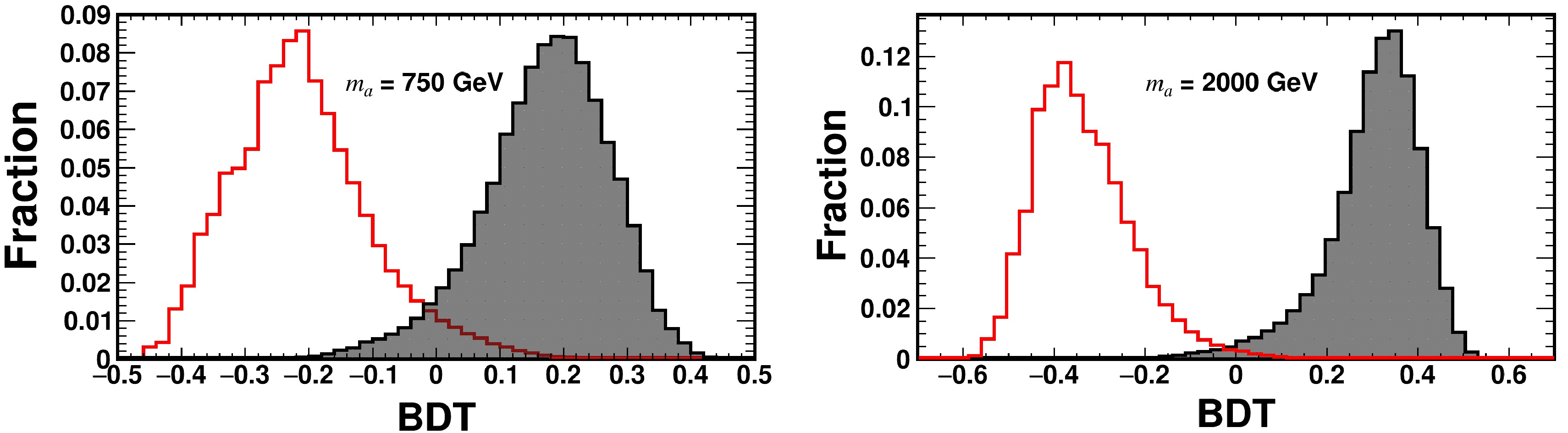
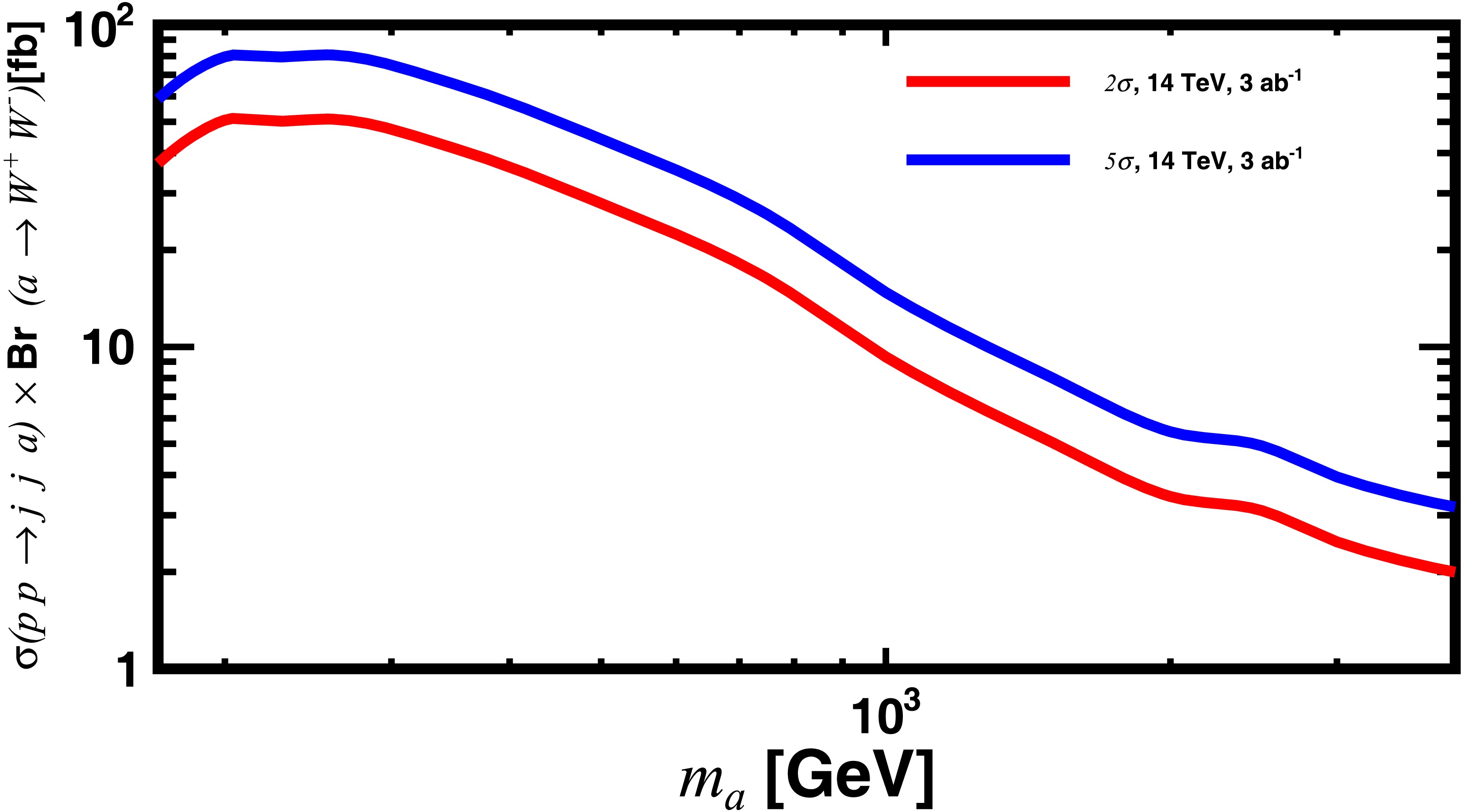
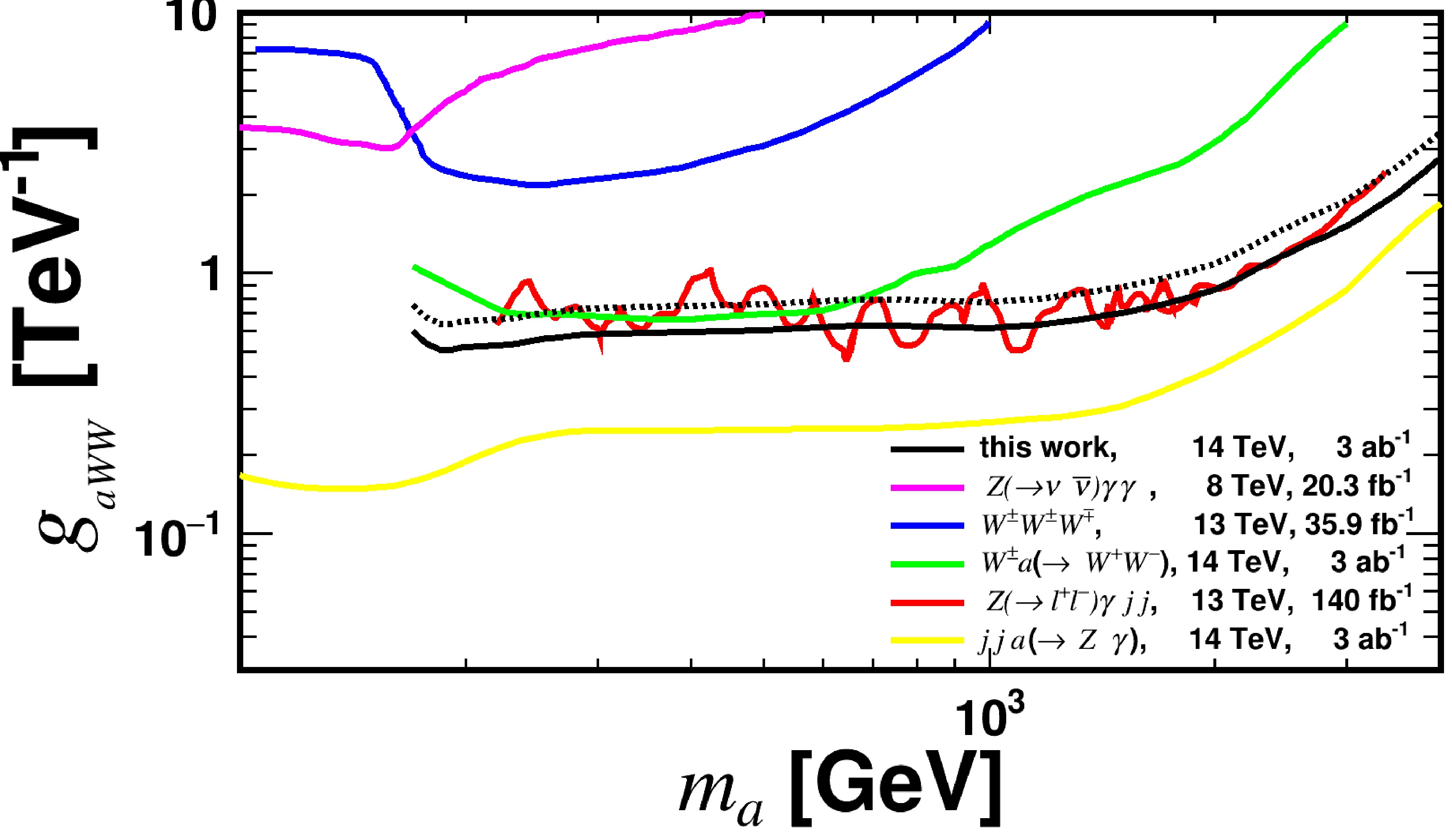
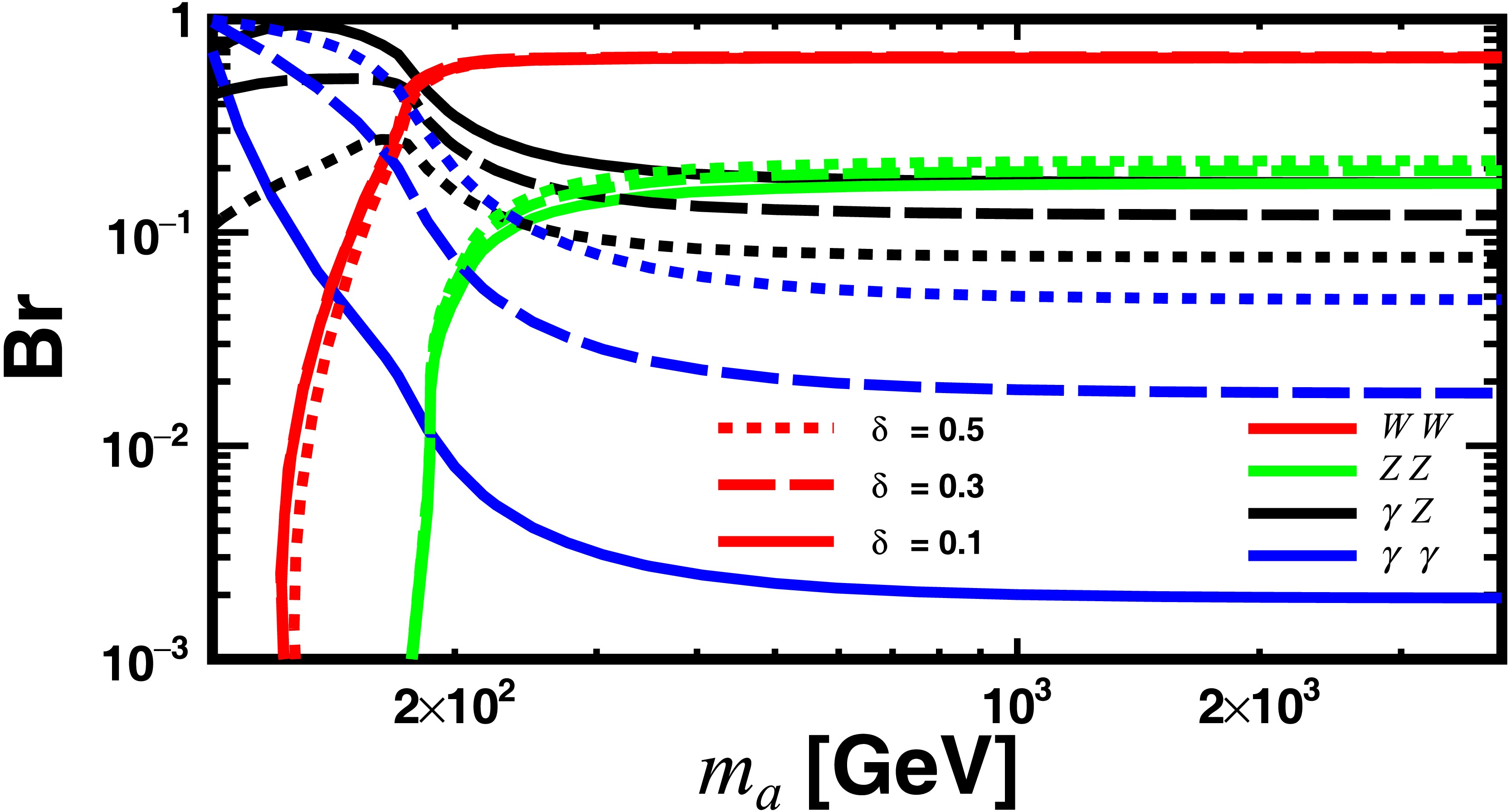
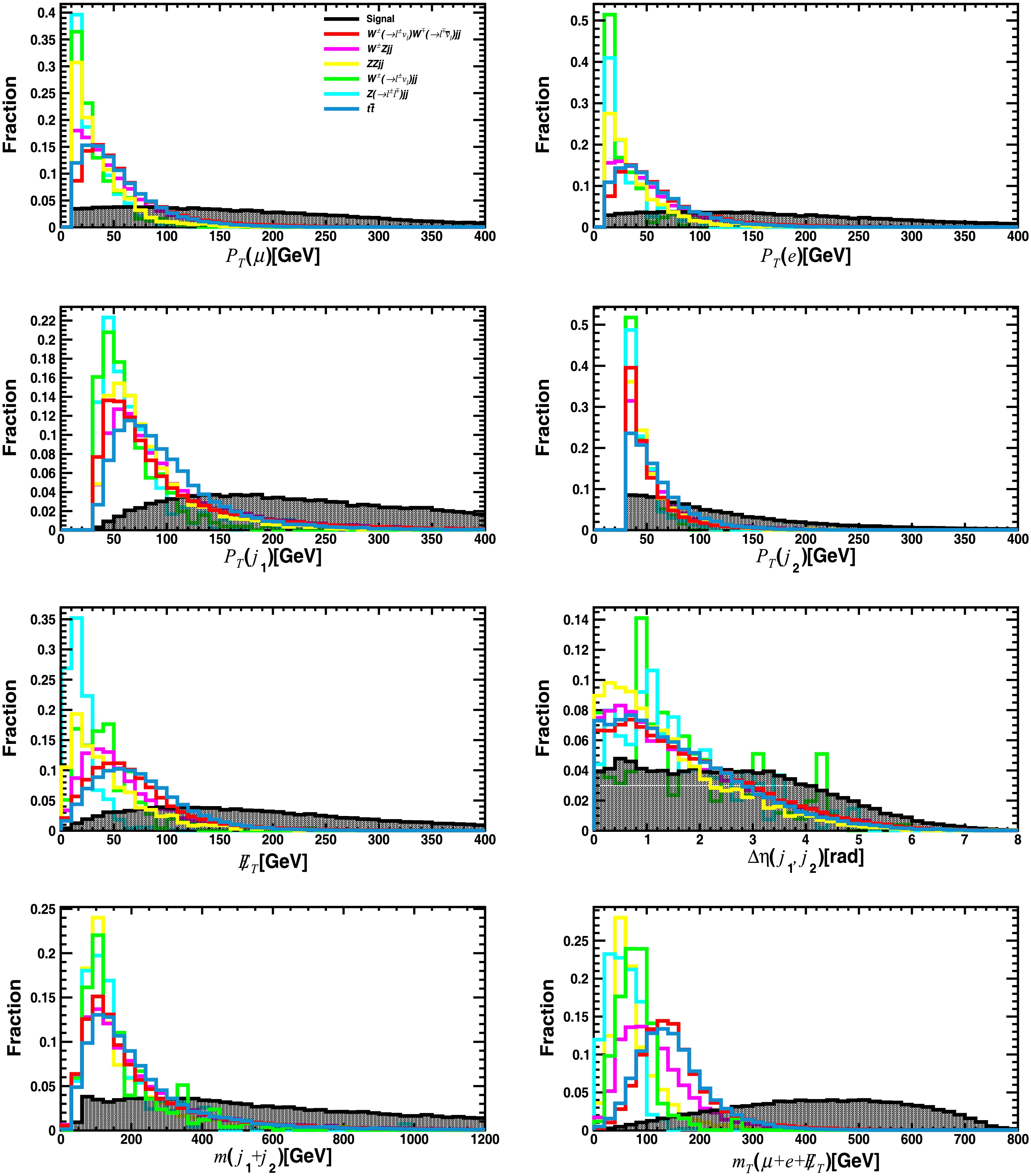
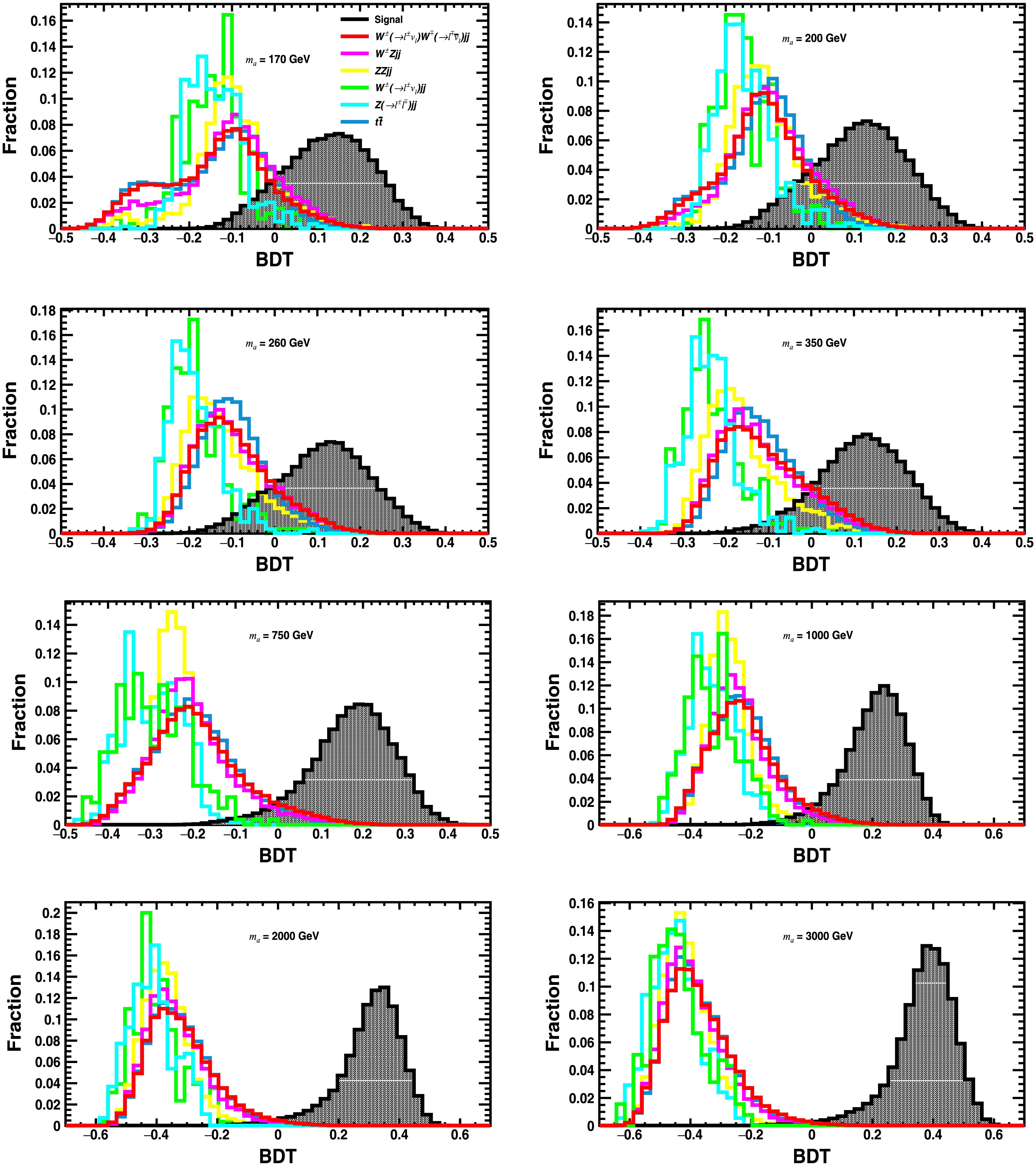
We evaluate discovery prospects for photophobic axion-like particles (ALPs) in the WWjj final state at the High-Luminosity LHC (HL-LHC;\begin{document}$\sqrt{s}=14\ {\rm{TeV}}$\end{document} \begin{document}${\cal{L}}=3\ {\rm{ab}}^{-1}$\end{document} \begin{document}$g_{a\gamma\gamma}=0$\end{document} \begin{document}$ pp\to jj\ a $\end{document} \begin{document}$a\to W^+W^-$\end{document} \begin{document}$W^+W^- \to e^\pm\mu^\mp\nu \bar{\nu}$\end{document} \begin{document}$m_a$\end{document} \begin{document}$g_{aWW}$\end{document} \begin{document}$260\ {\rm{GeV}}\le m_a\le1500\ {\rm{GeV}}$\end{document} \begin{document}$ 0.61(0.76)\ {\rm{TeV}}^{-1}$\end{document} \begin{document}$g_{aWW}$\end{document} \begin{document}$ \sigma(pp\to jj\ a)\times\rm{Br}(a\to W^+W^-) $\end{document} \begin{document}$WWjj$\end{document}
We evaluate discovery prospects for photophobic axion-like particles (ALPs) in the WWjj final state at the High-Luminosity LHC (HL-LHC;
2026, 50(6): 063108. doi: 10.1088/1674-1137/ae5a88
Abstract:
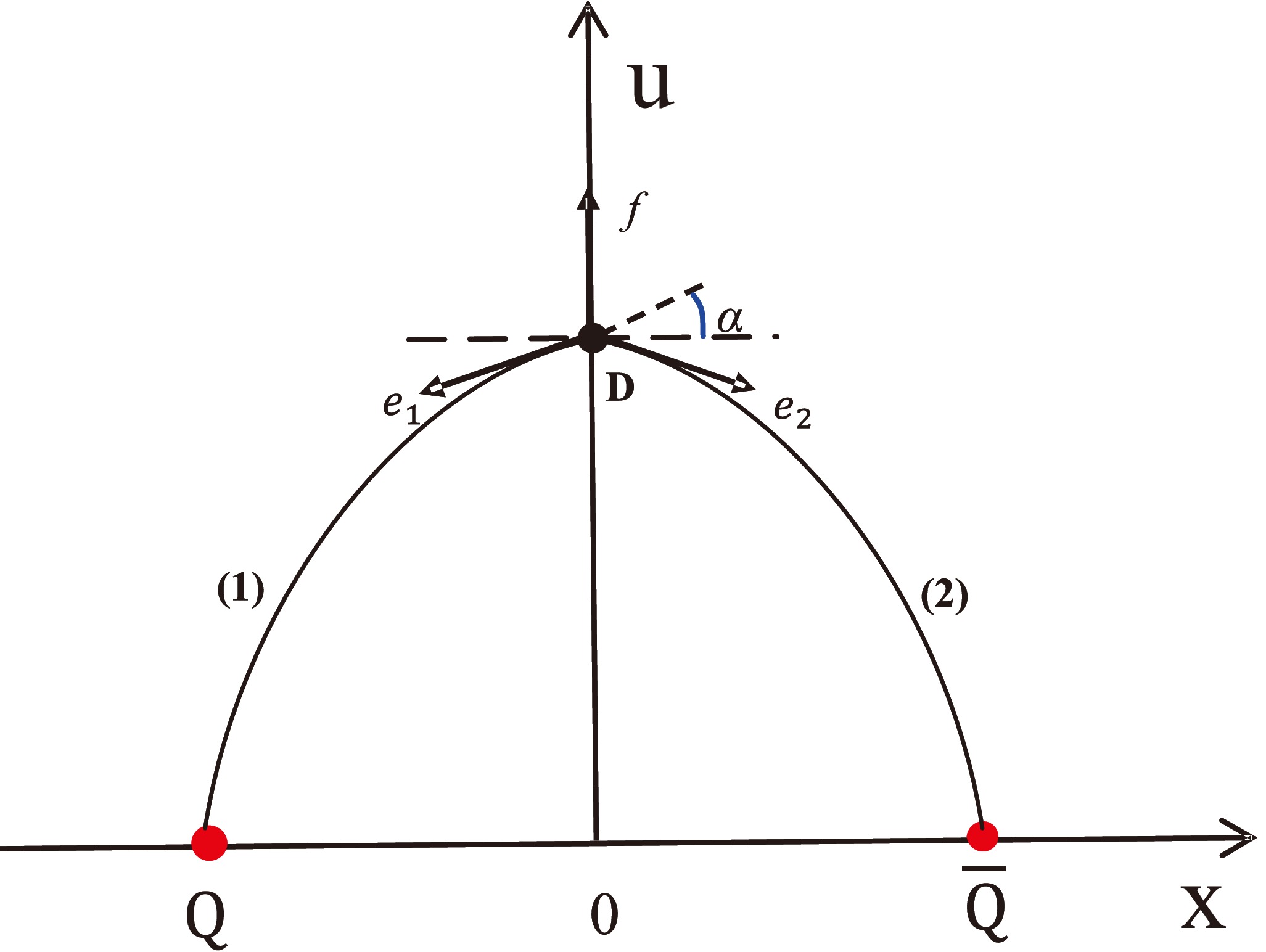
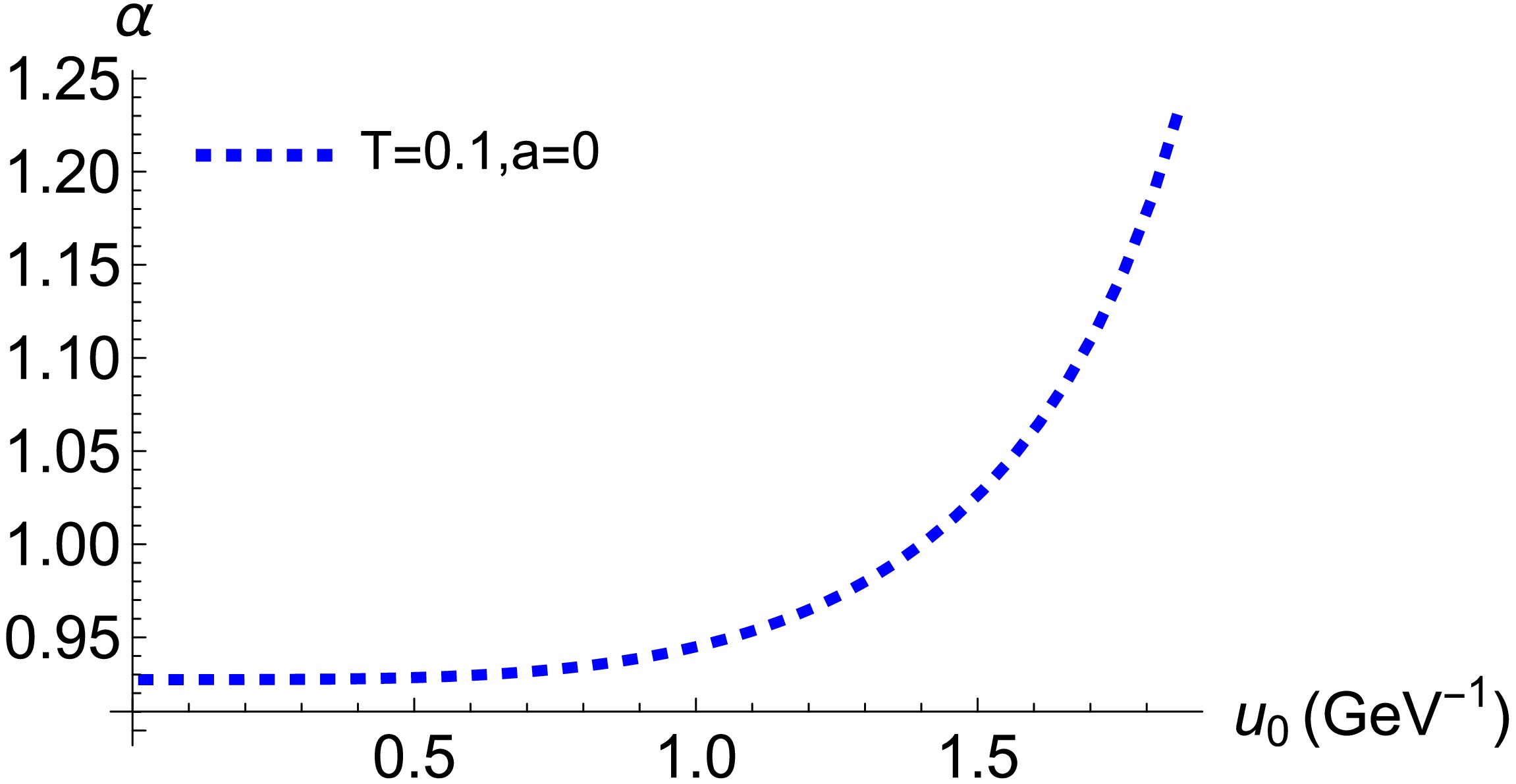
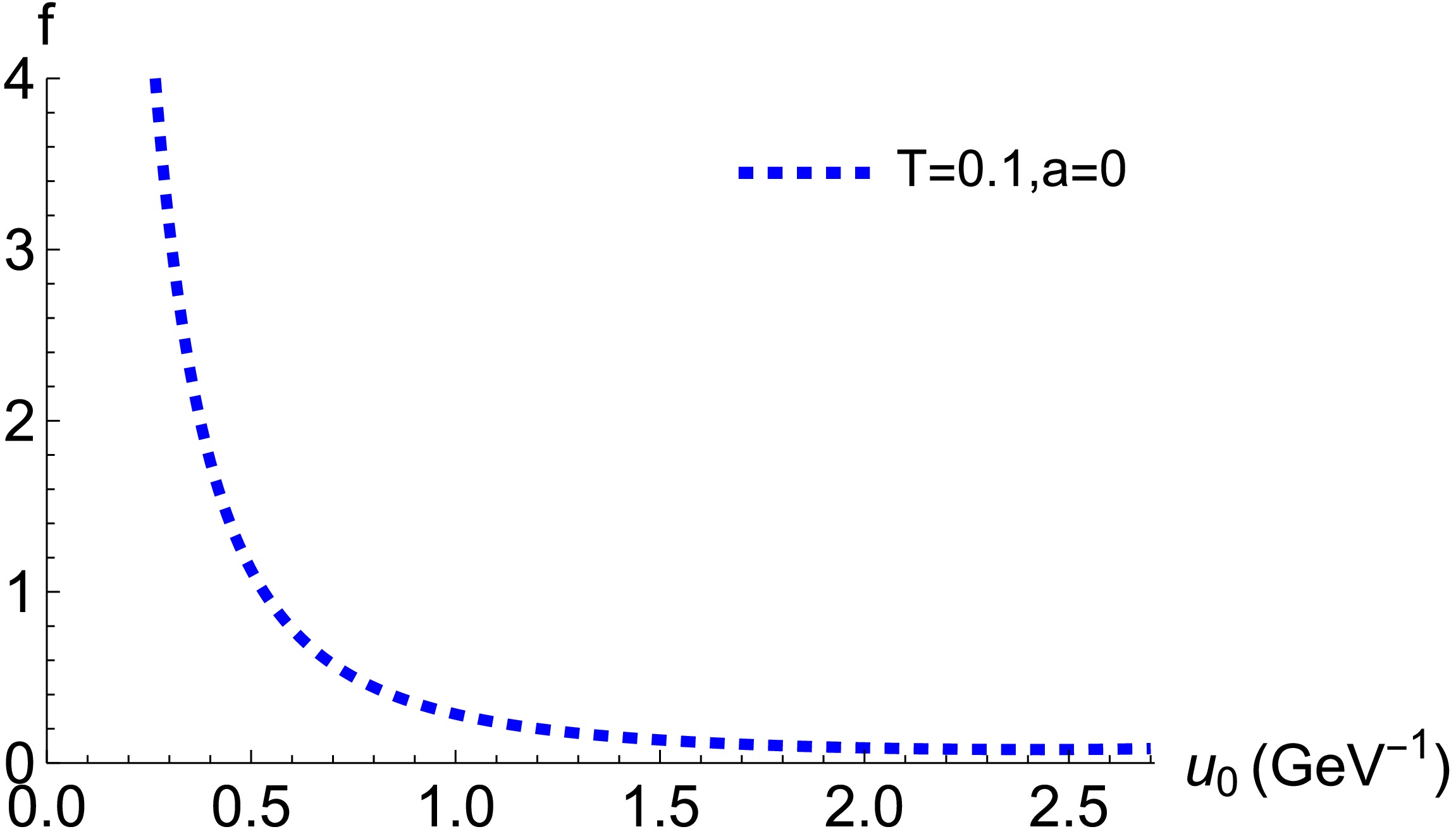
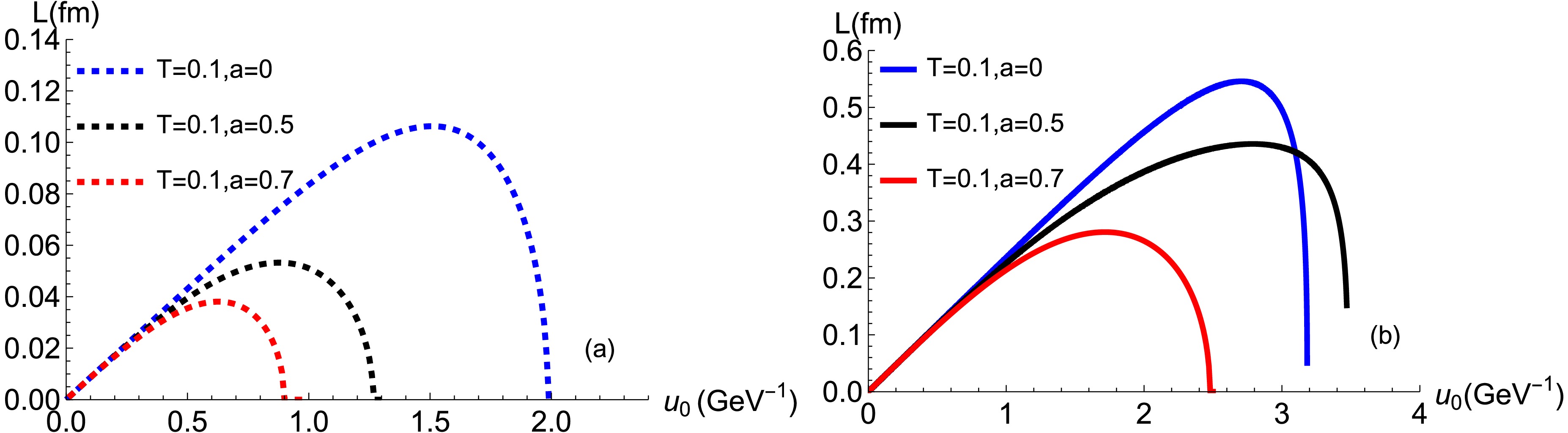
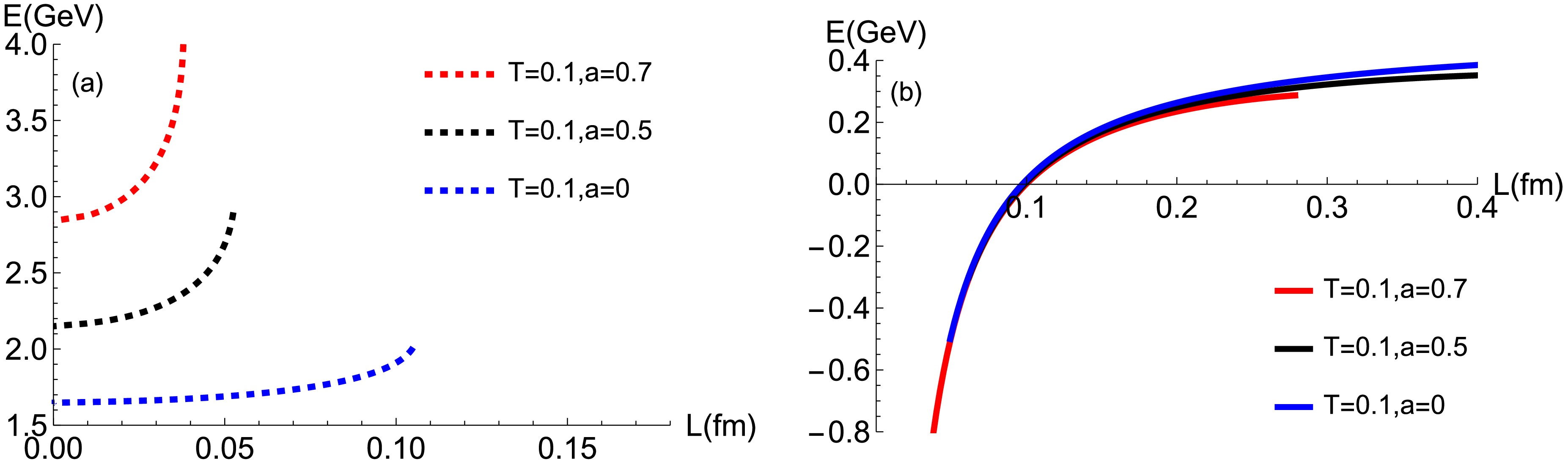
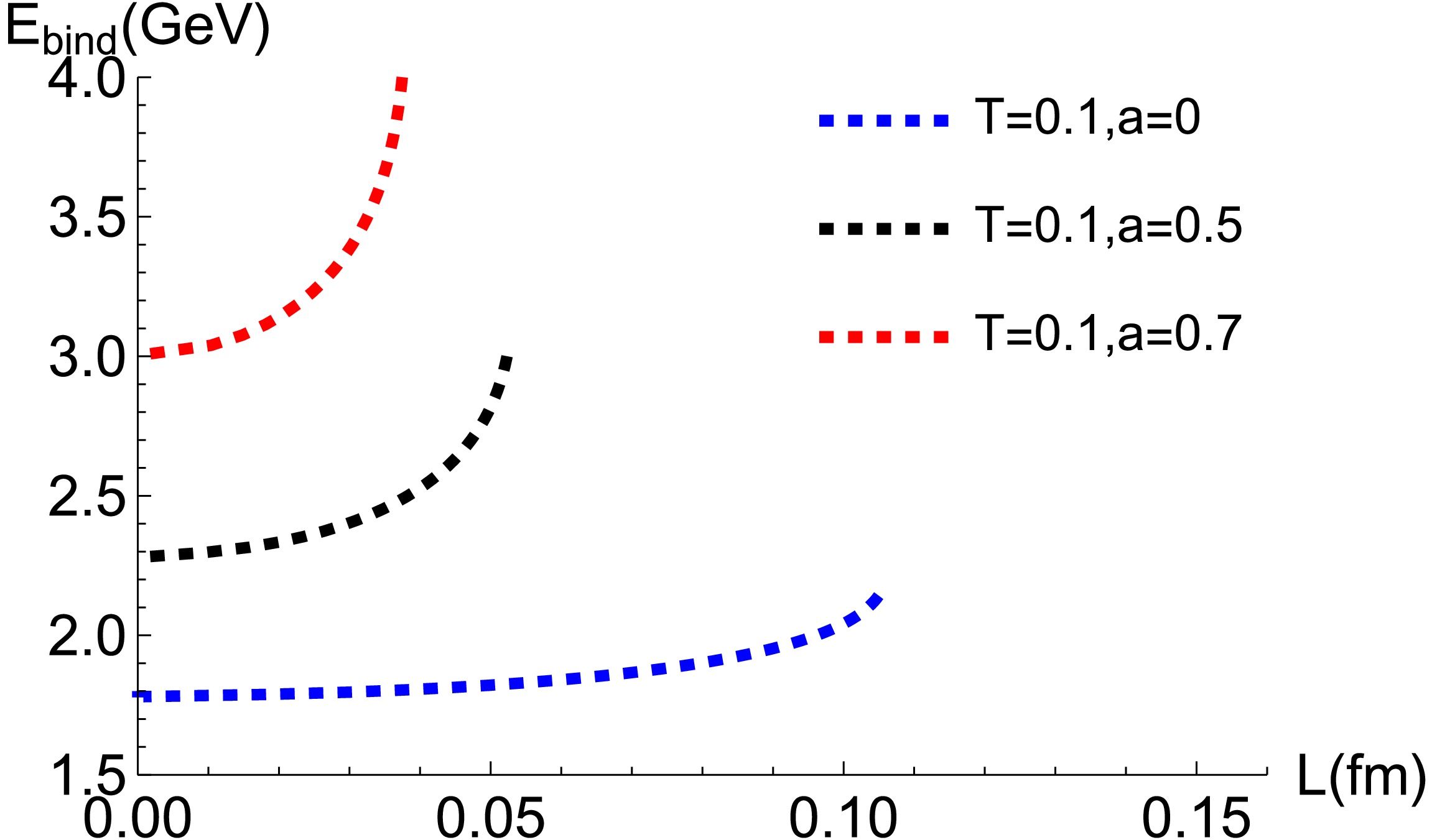
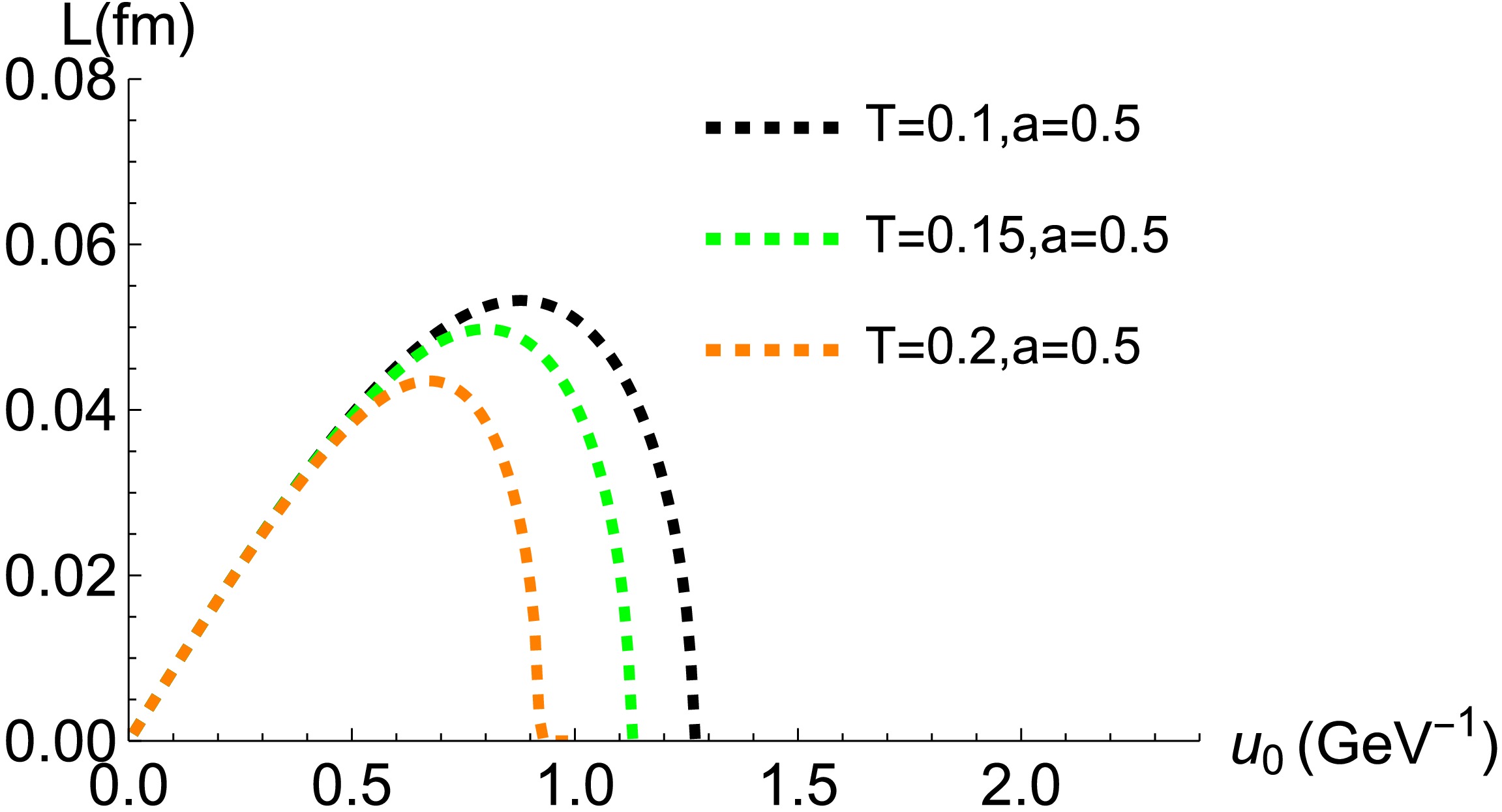
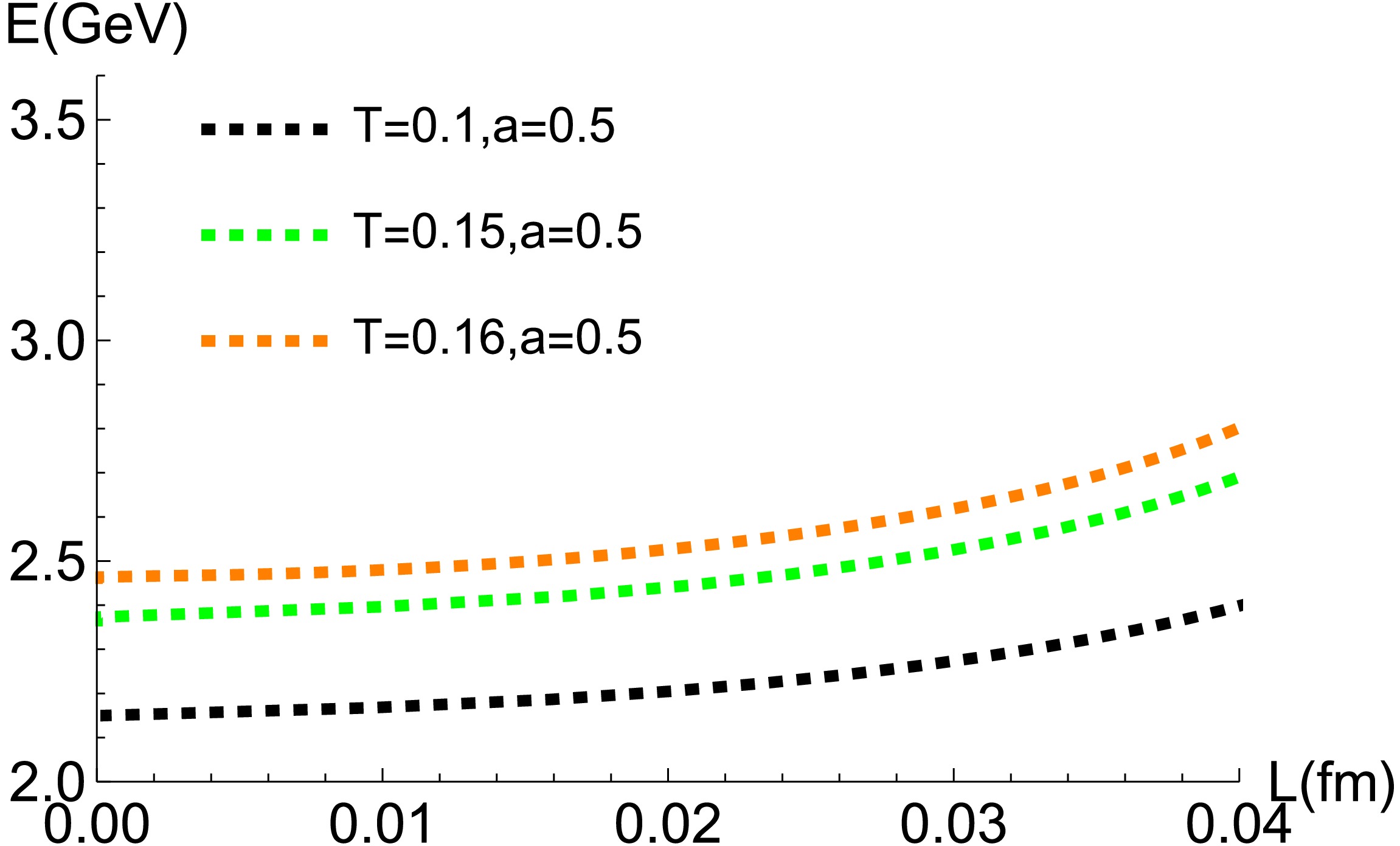
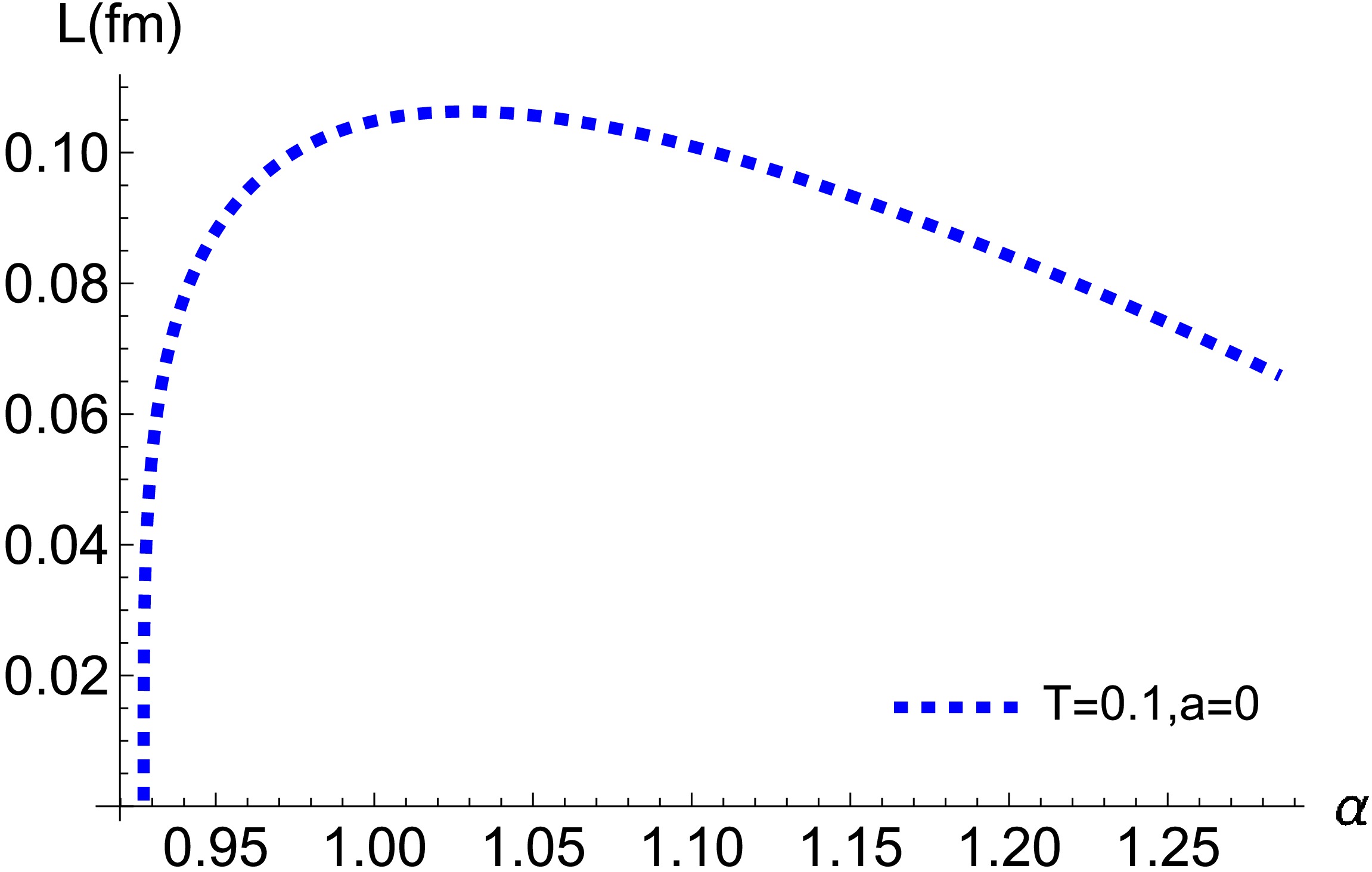
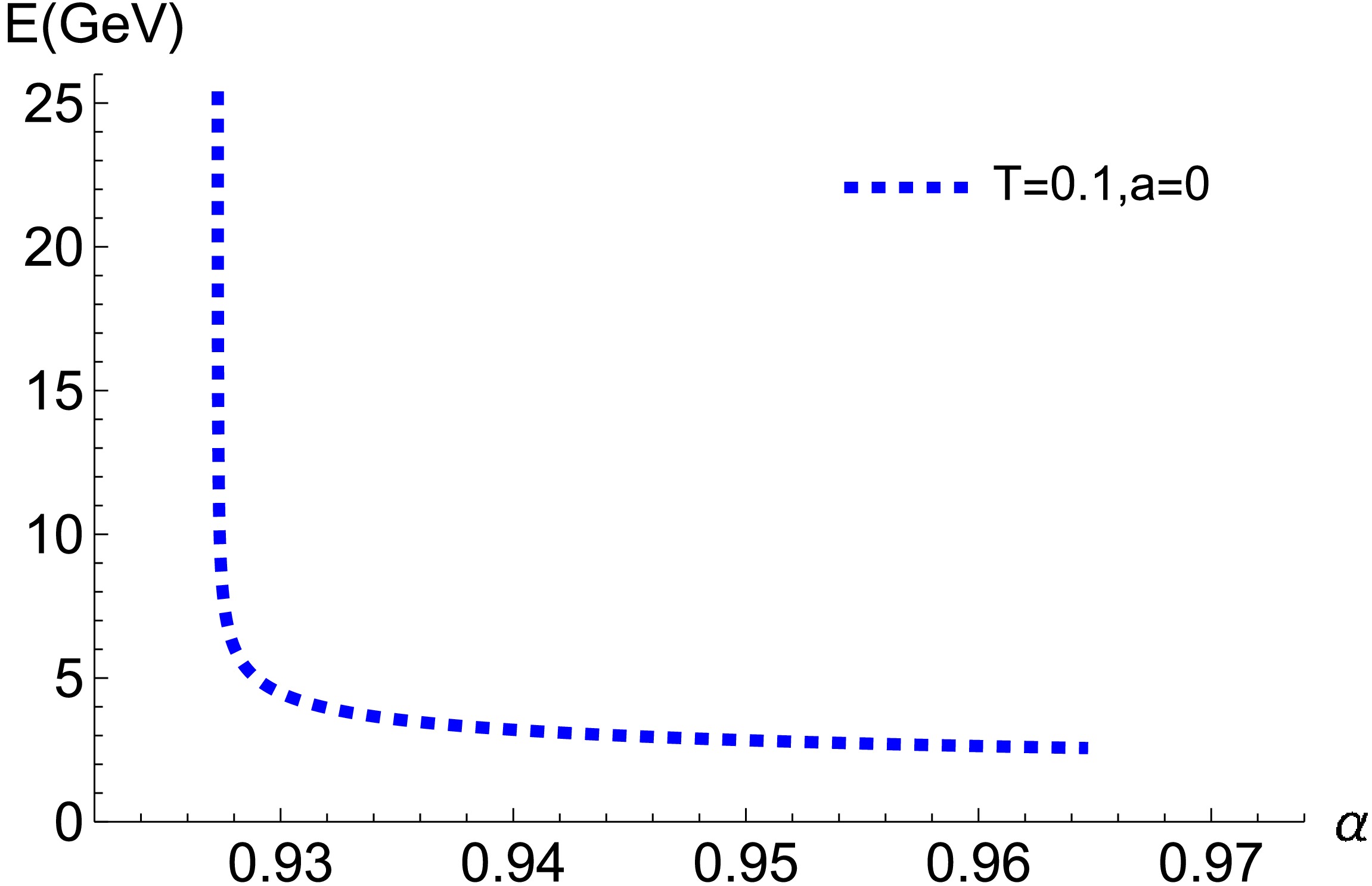
We investigate the pseudopotential of hybrid mesons in a holographic anisotropic background within the AdS/CFT correspondence. Hybrid states are modeled by introducing a defect, and we analyze the associated force-balance condition in the string configuration. From this setup, we derive the balance equation and compute key physical quantities, including the separation distance, pseudopotential, and binding energy of the hybrid mesons. We find that increasing the anisotropy parameter a decreases the separation distance for both ground and excited states. However, while the ground-state potential decreases, the pseudopotential of the hybrid state increases. Additionally, the pseudopotential of hybrid mesons exhibits significant sensitivity to variations in the angular parameter α.
We investigate the pseudopotential of hybrid mesons in a holographic anisotropic background within the AdS/CFT correspondence. Hybrid states are modeled by introducing a defect, and we analyze the associated force-balance condition in the string configuration. From this setup, we derive the balance equation and compute key physical quantities, including the separation distance, pseudopotential, and binding energy of the hybrid mesons. We find that increasing the anisotropy parameter a decreases the separation distance for both ground and excited states. However, while the ground-state potential decreases, the pseudopotential of the hybrid state increases. Additionally, the pseudopotential of hybrid mesons exhibits significant sensitivity to variations in the angular parameter α.
2026, 50(6): 063109. doi: 10.1088/1674-1137/ae5590
Abstract:
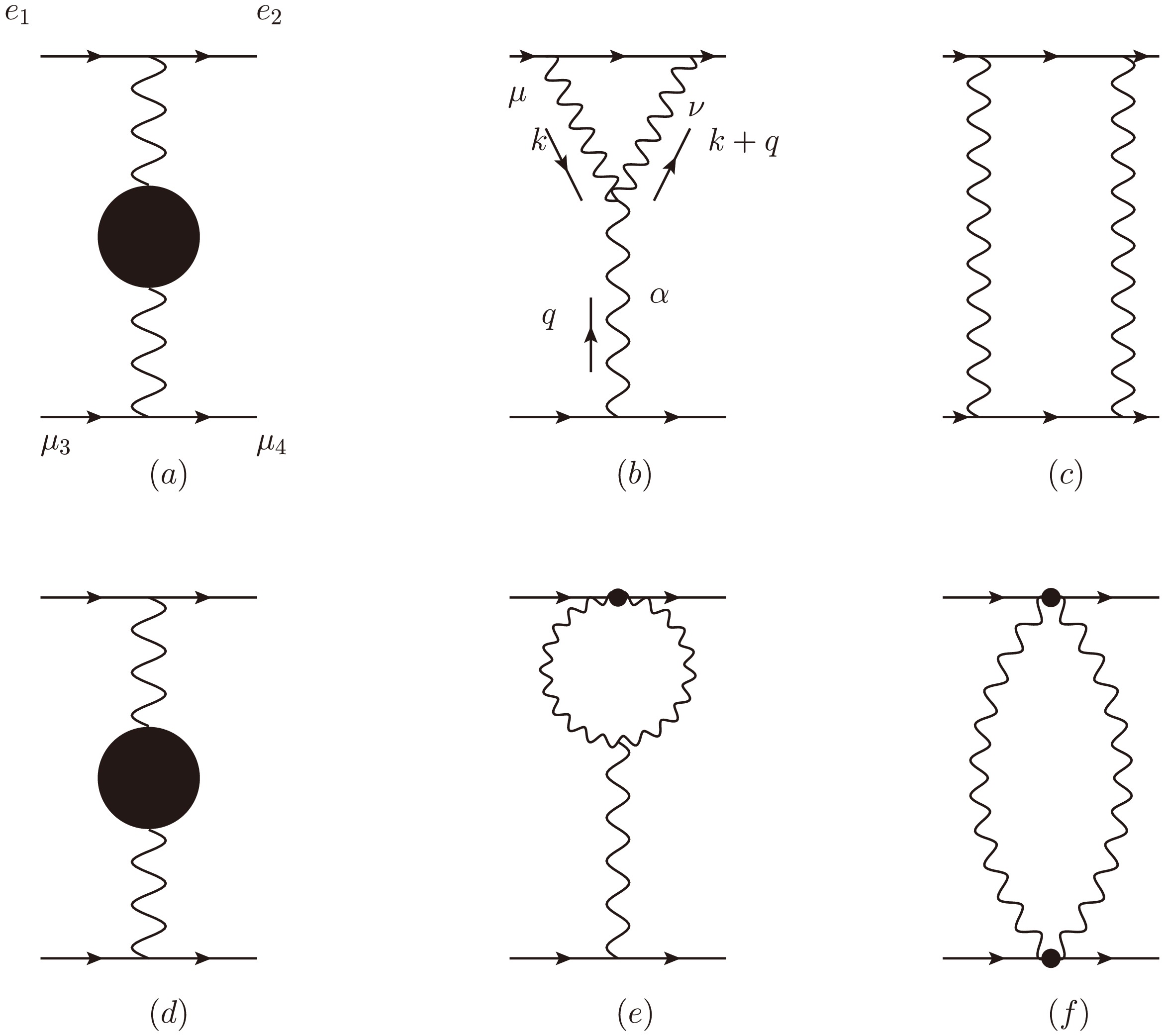
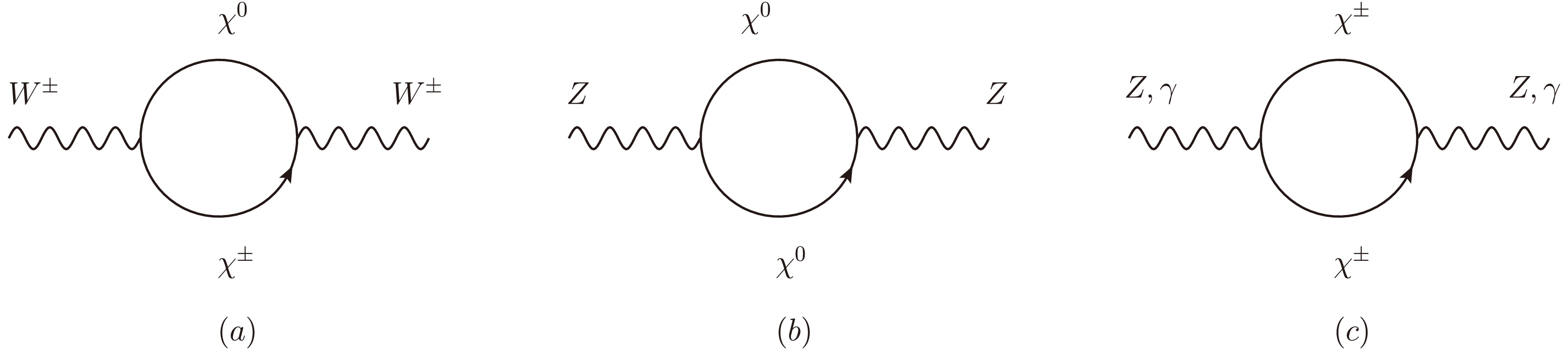
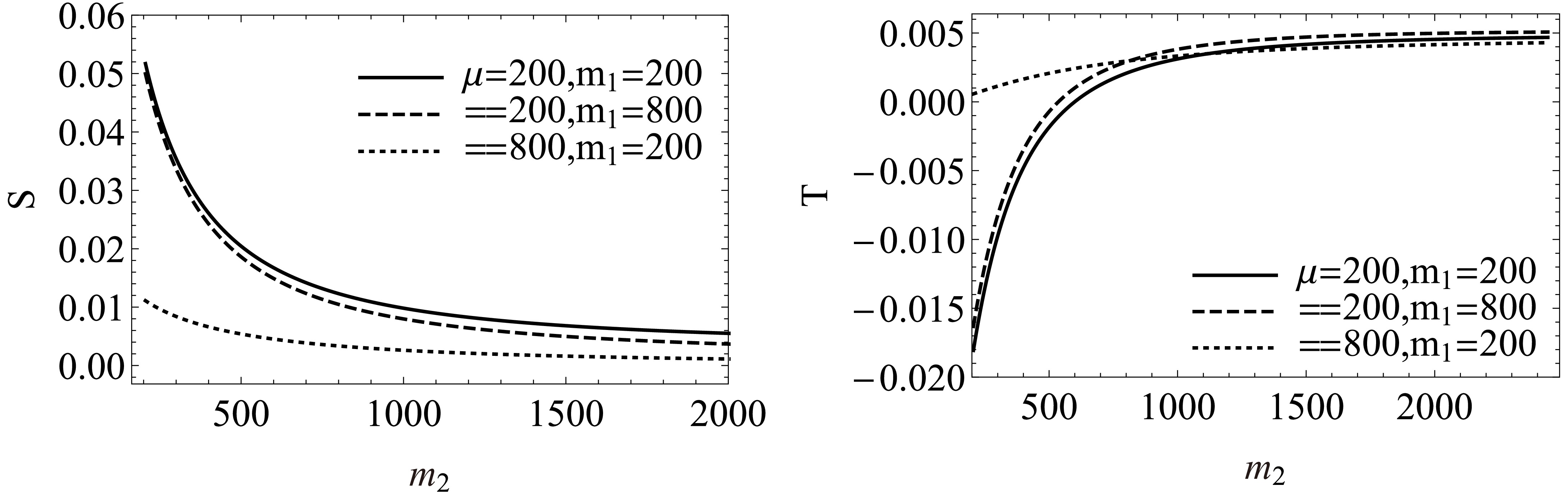
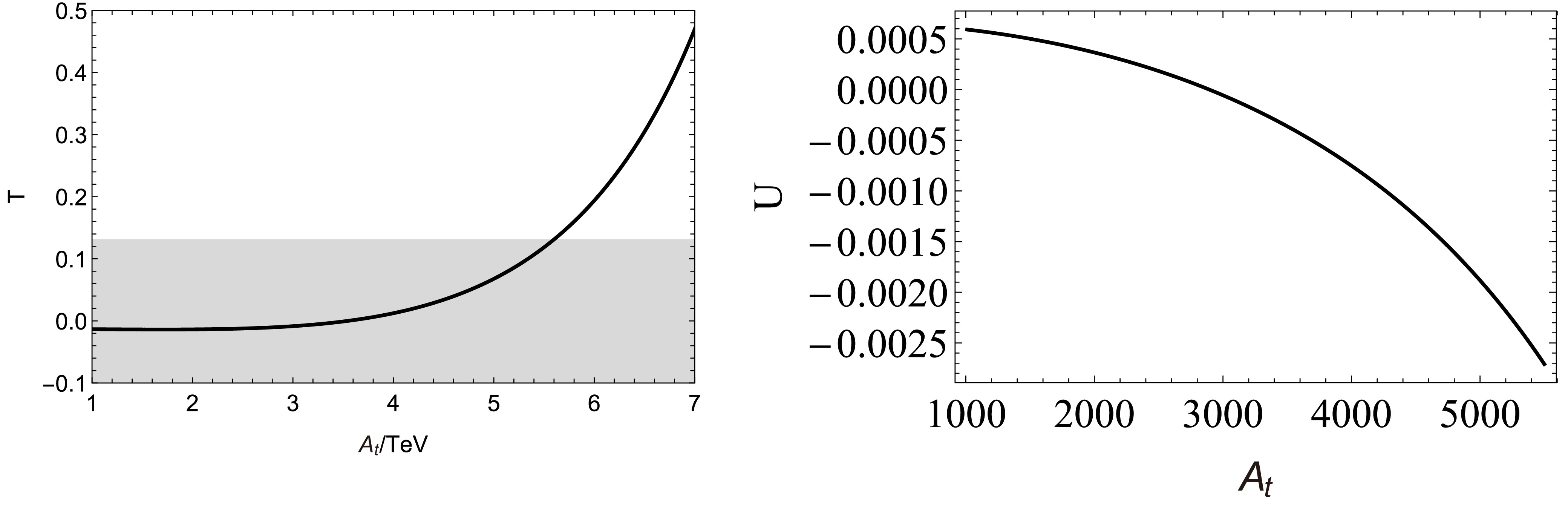
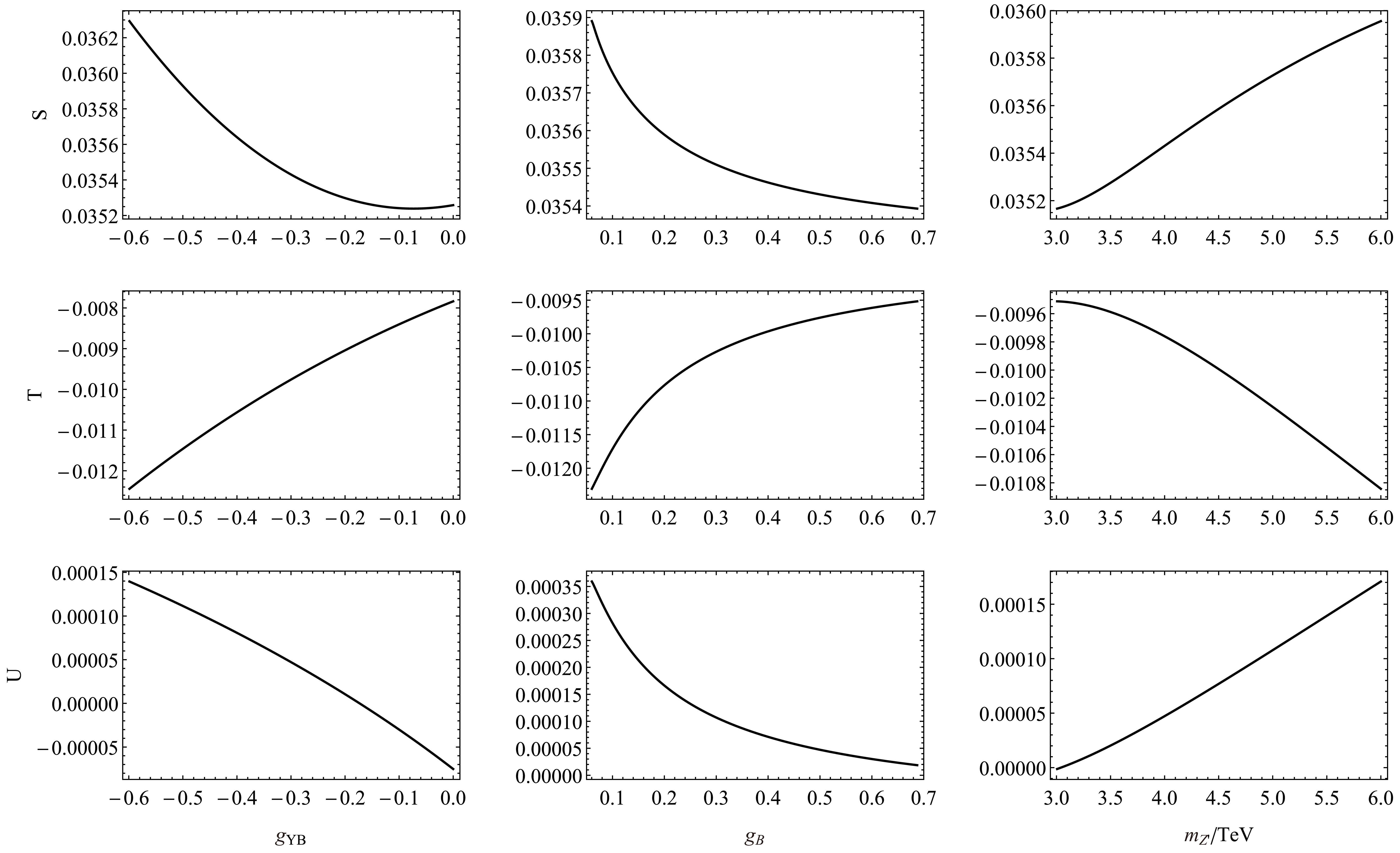
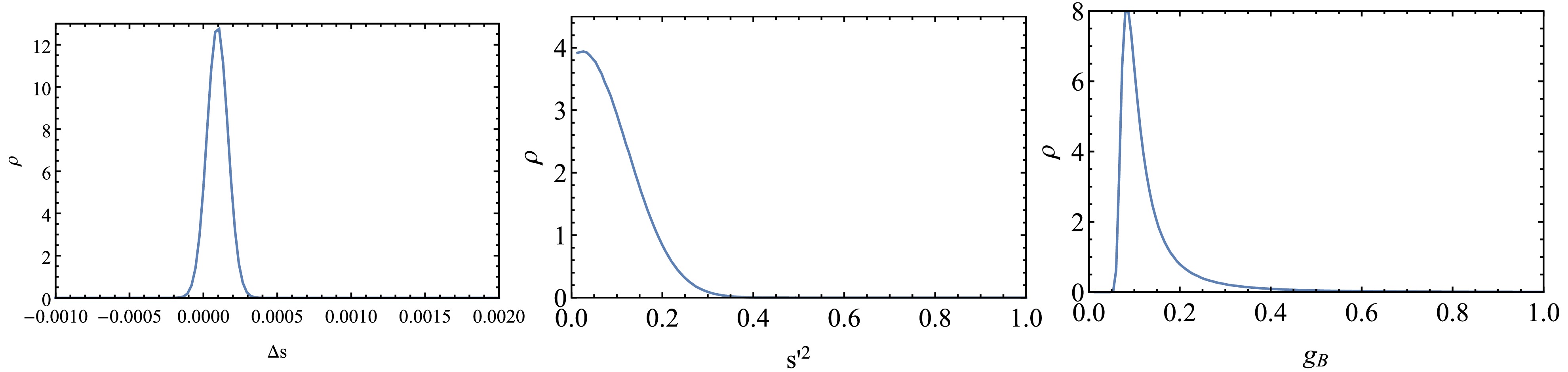
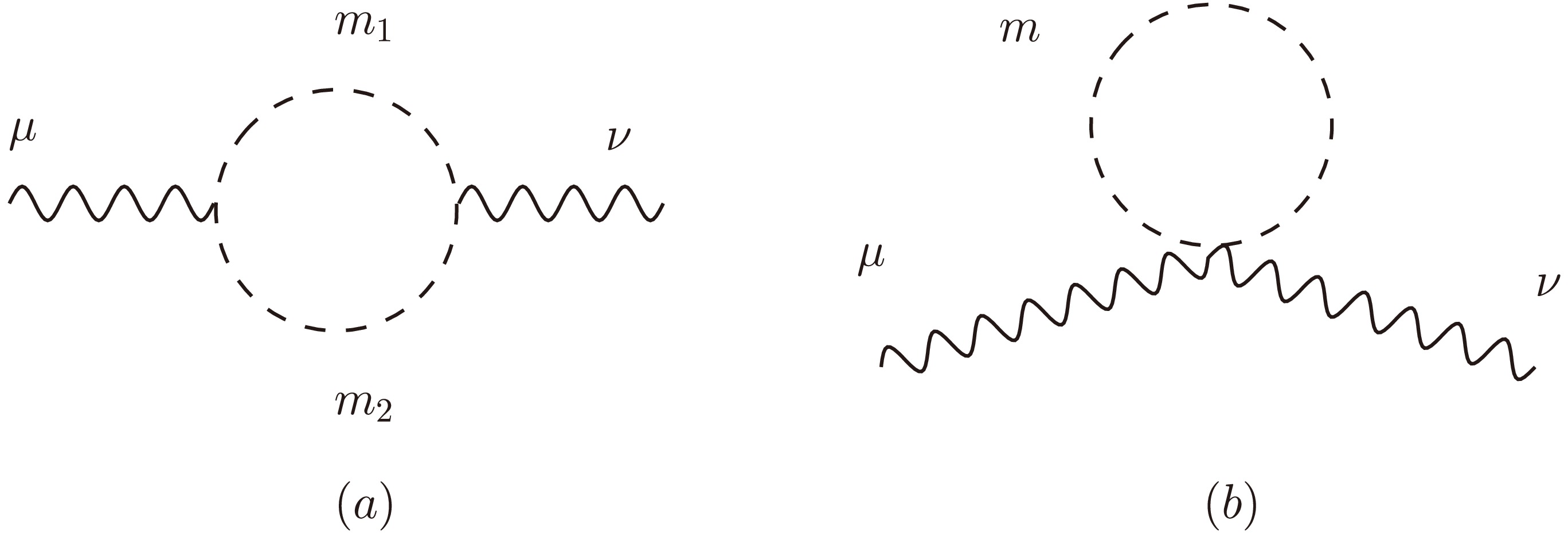
Using the pinch technique, we determine the one-loop vertices of weak interactions in the B-LSSM and incorporate their pinch contributions into the gauge boson self-energies. Compared to the definitions of the S, T, and U parameters in the Standard Model based on the\begin{document}$S U(2)_L \otimes U(1)_Y$\end{document}
Using the pinch technique, we determine the one-loop vertices of weak interactions in the B-LSSM and incorporate their pinch contributions into the gauge boson self-energies. Compared to the definitions of the S, T, and U parameters in the Standard Model based on the
2026, 50(6): 064001. doi: 10.1088/1674-1137/ae4bab
Abstract:
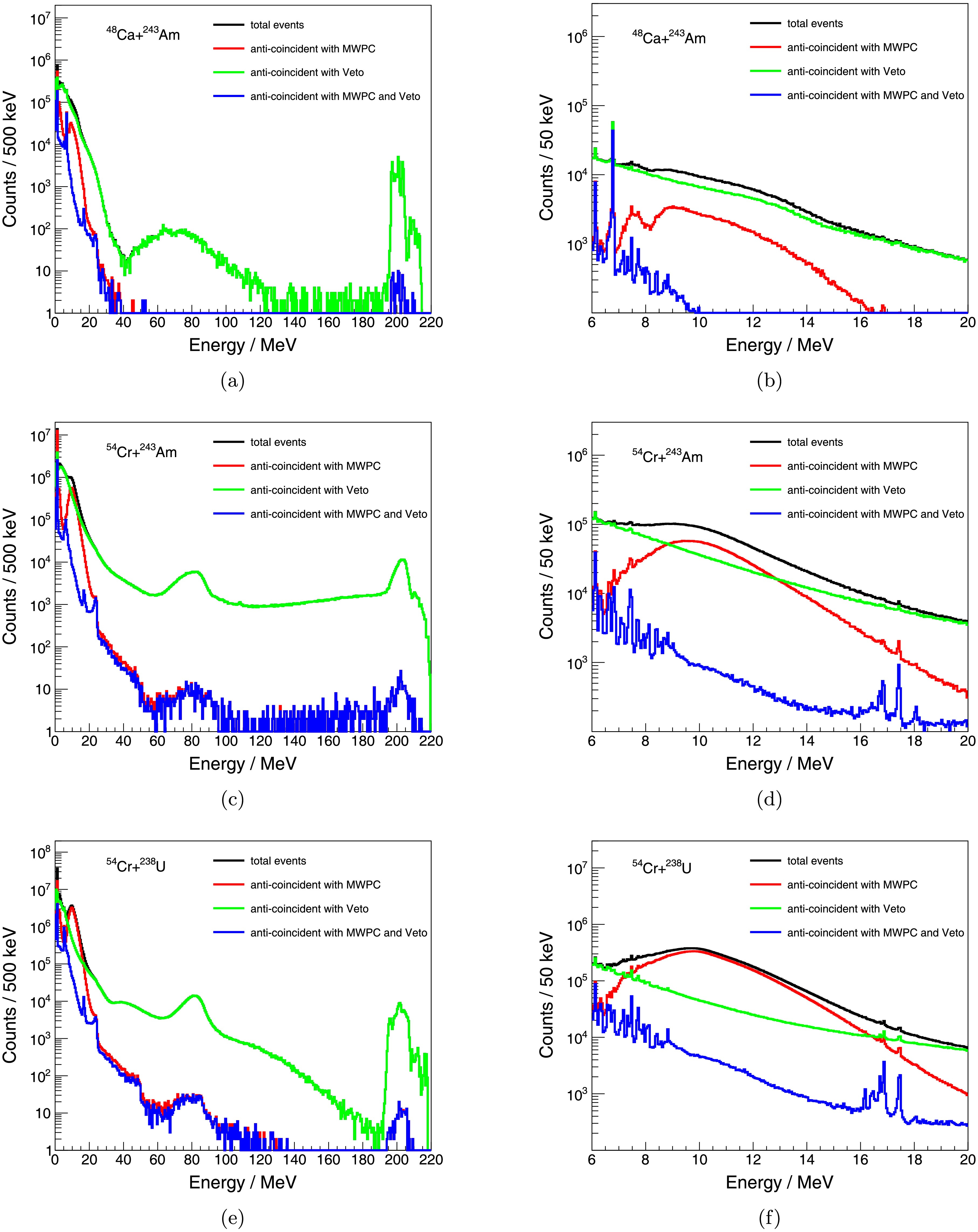
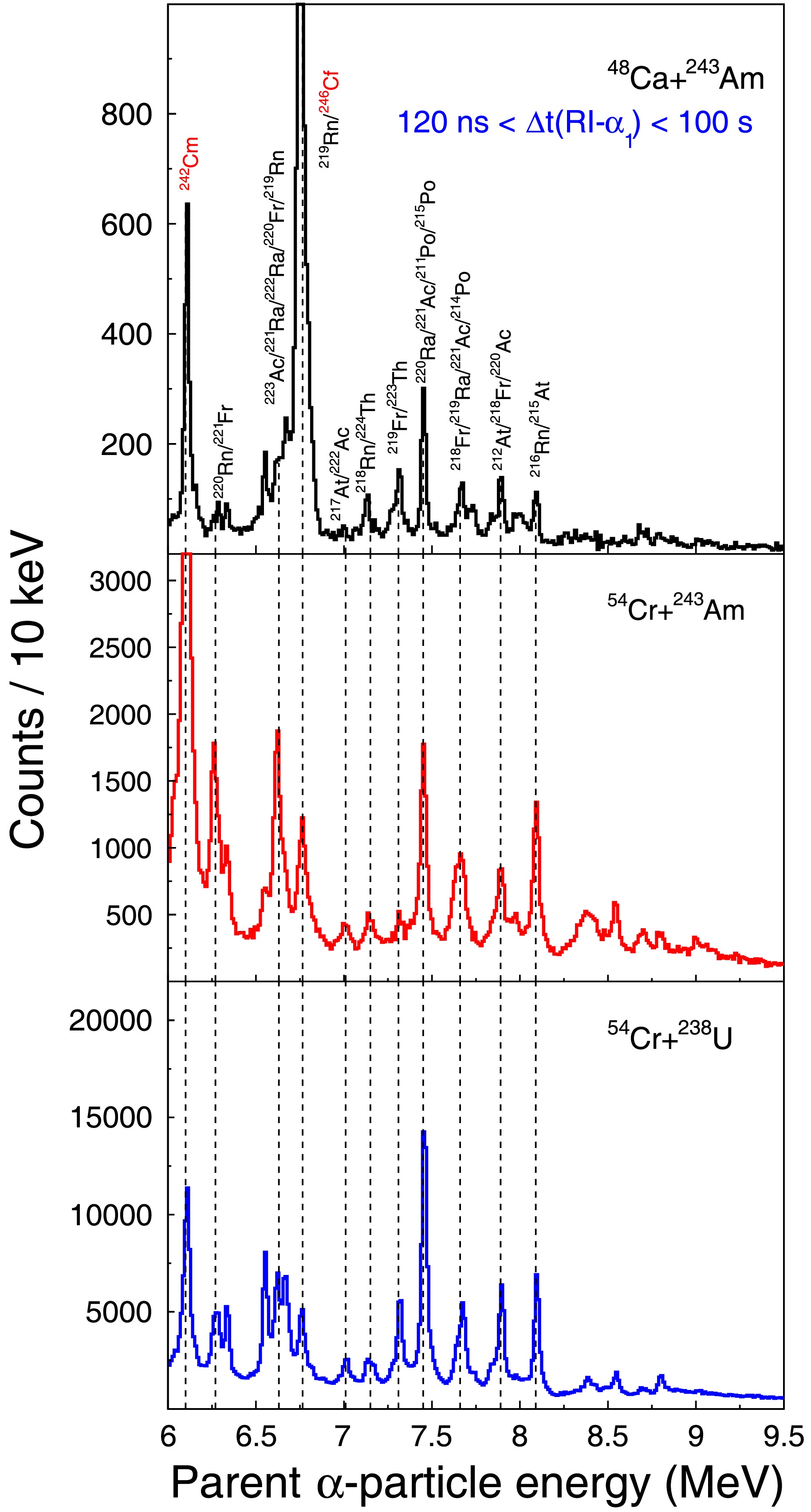
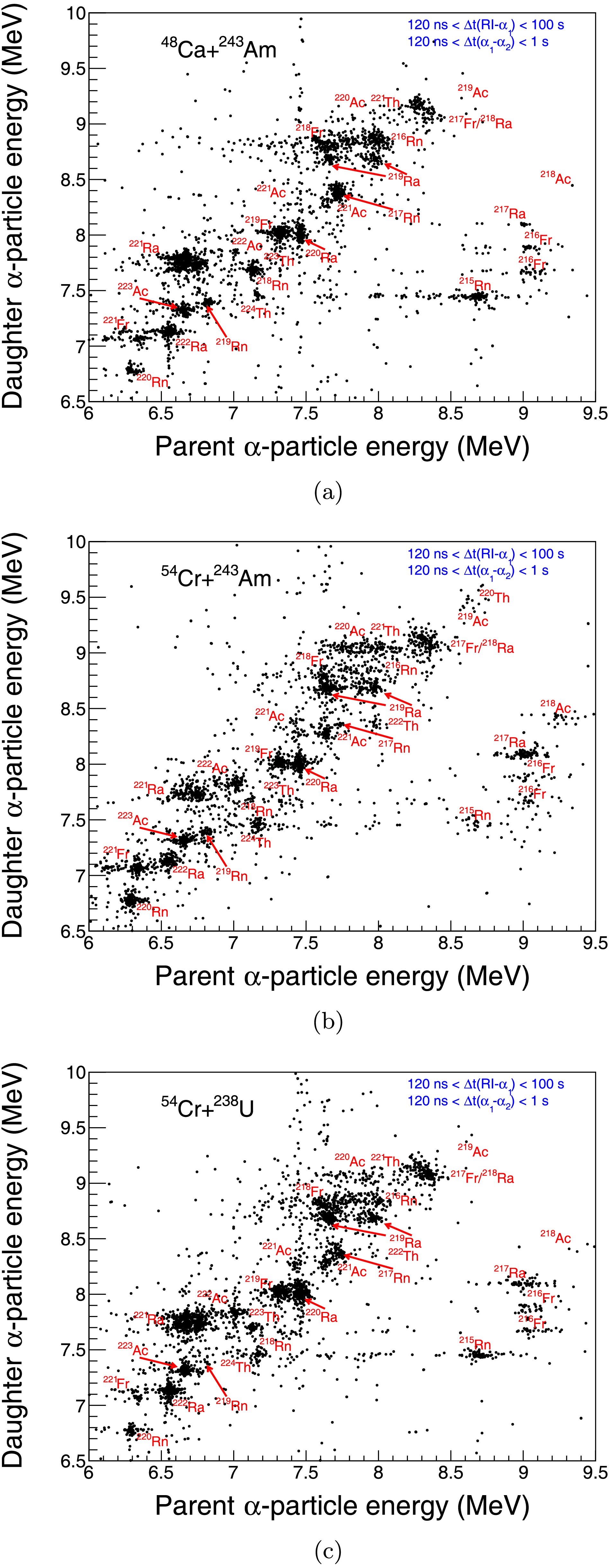
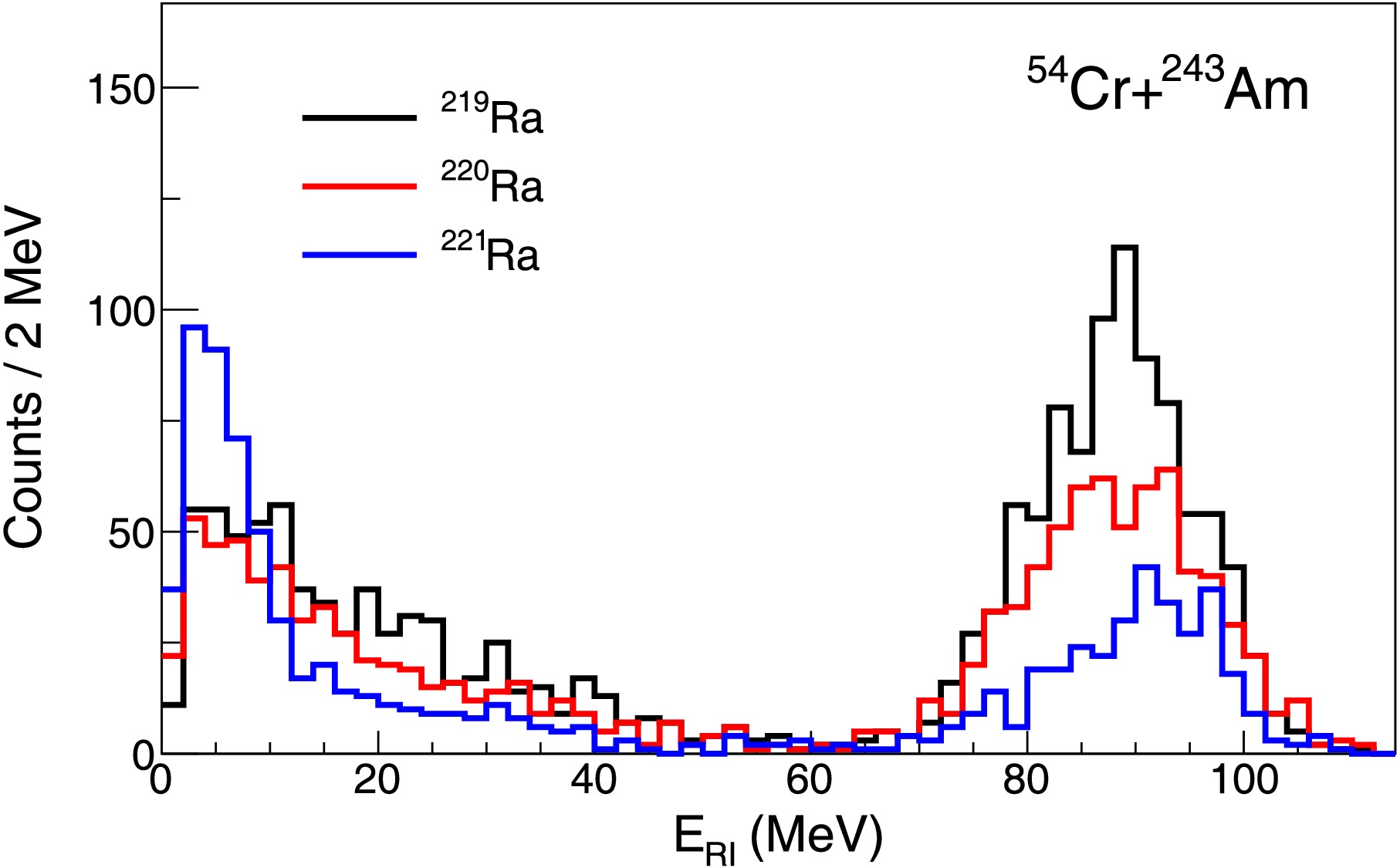
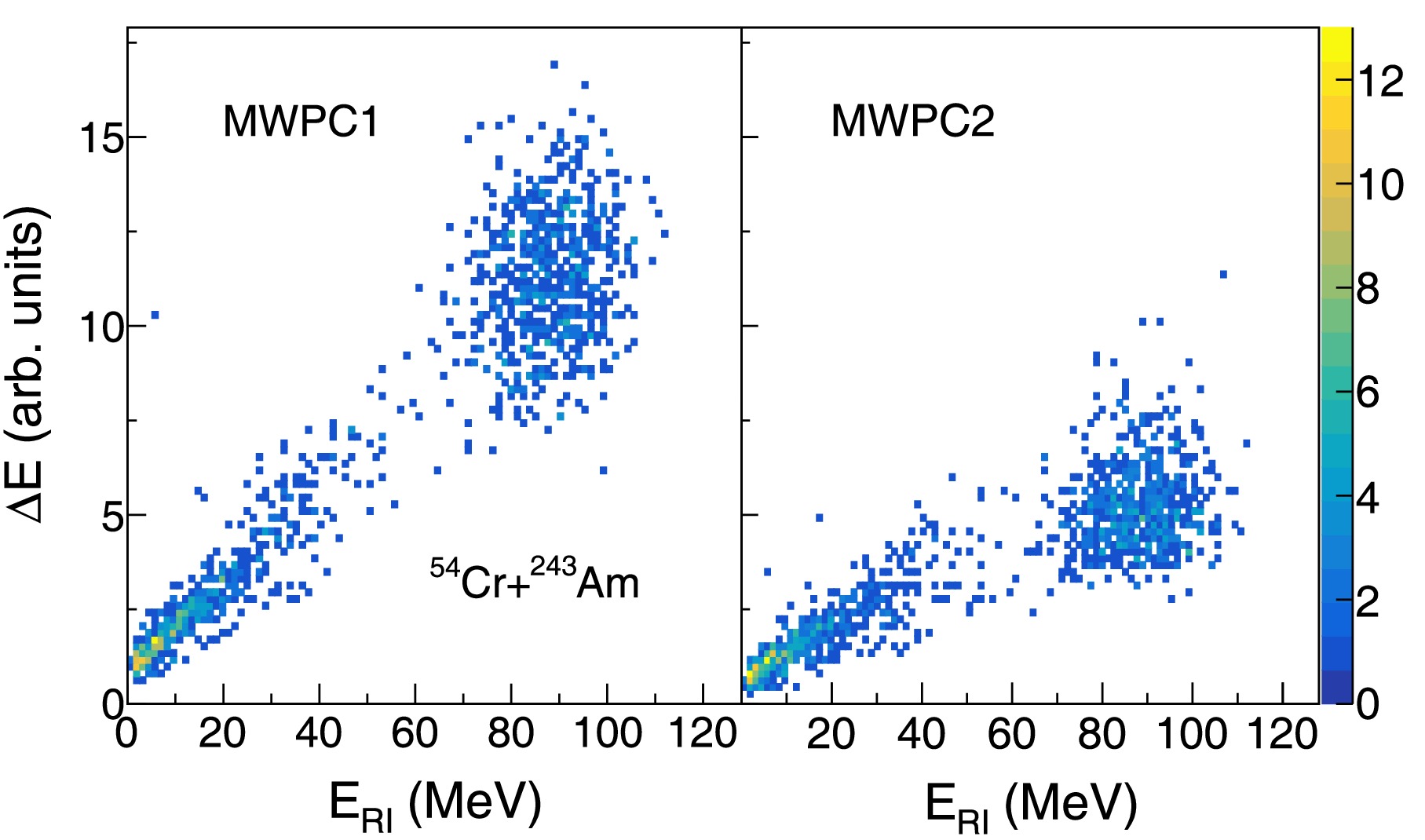
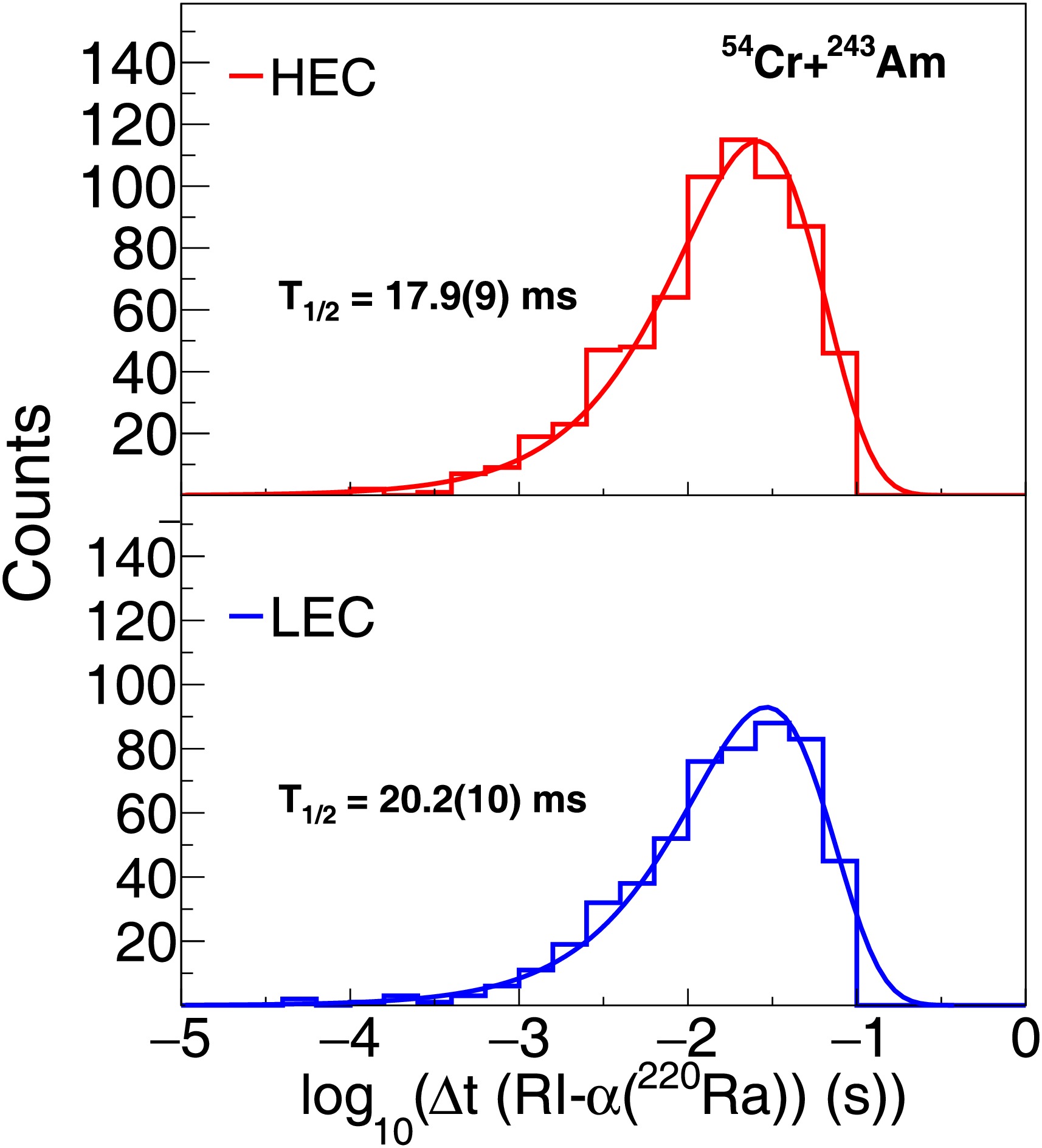
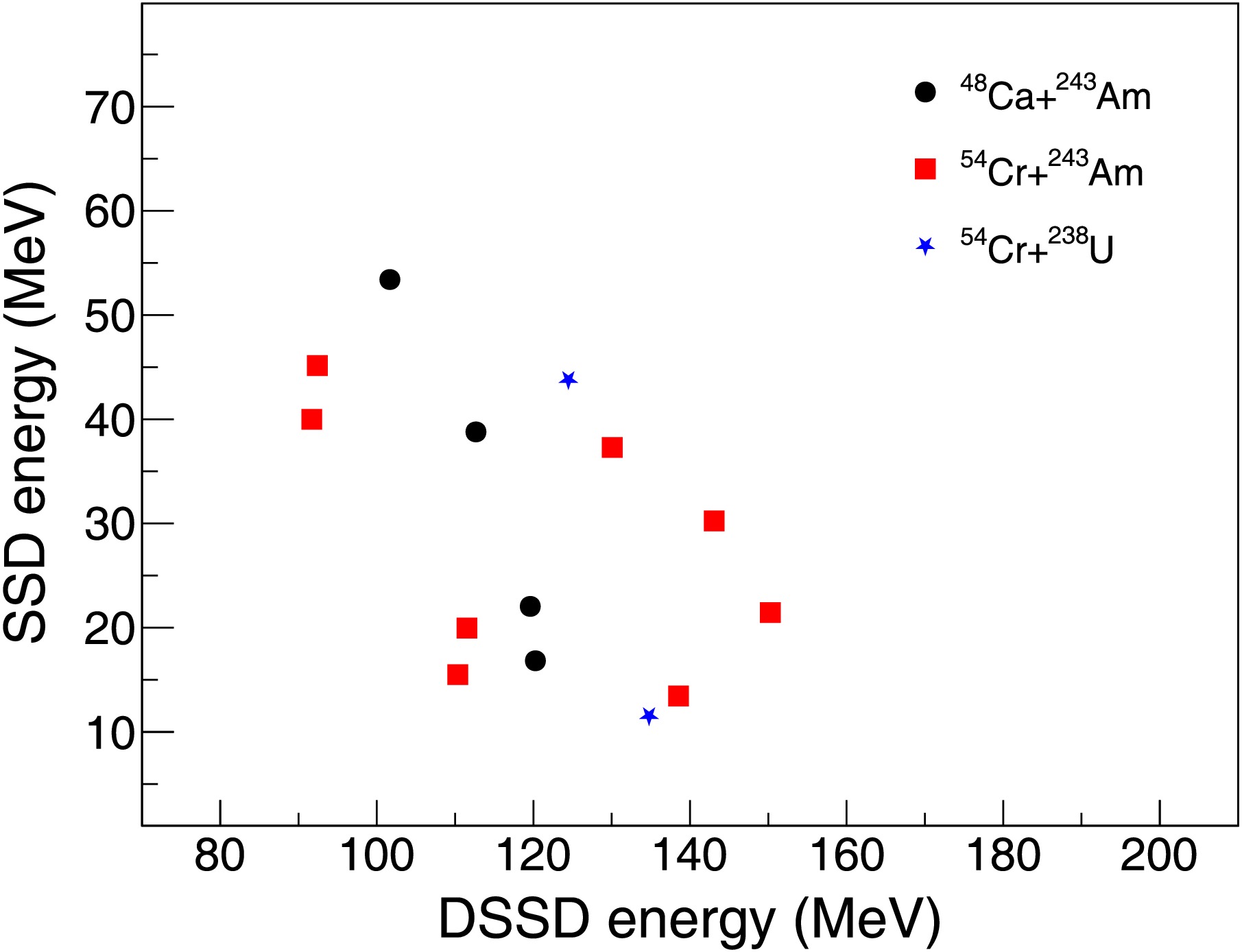
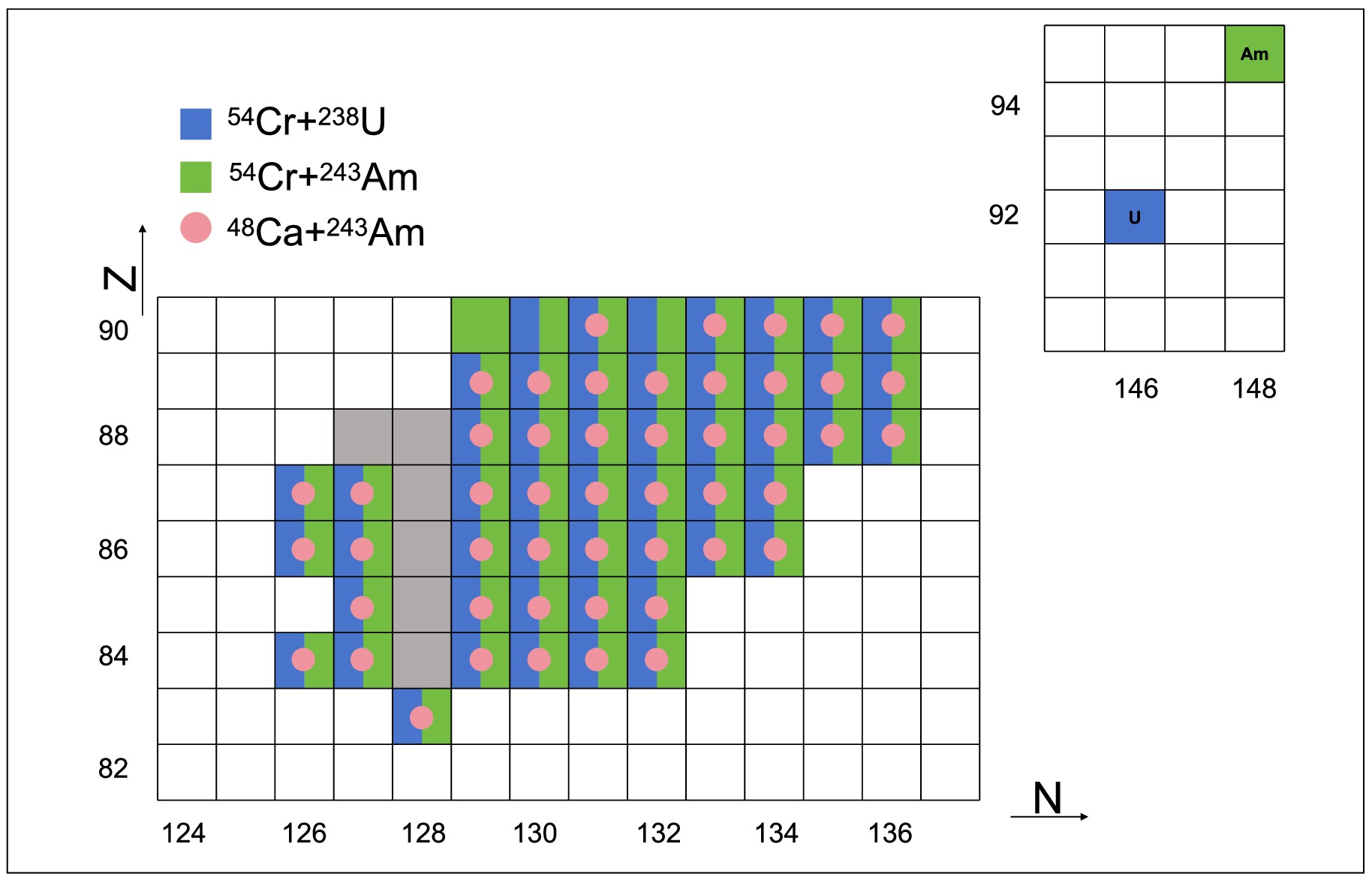
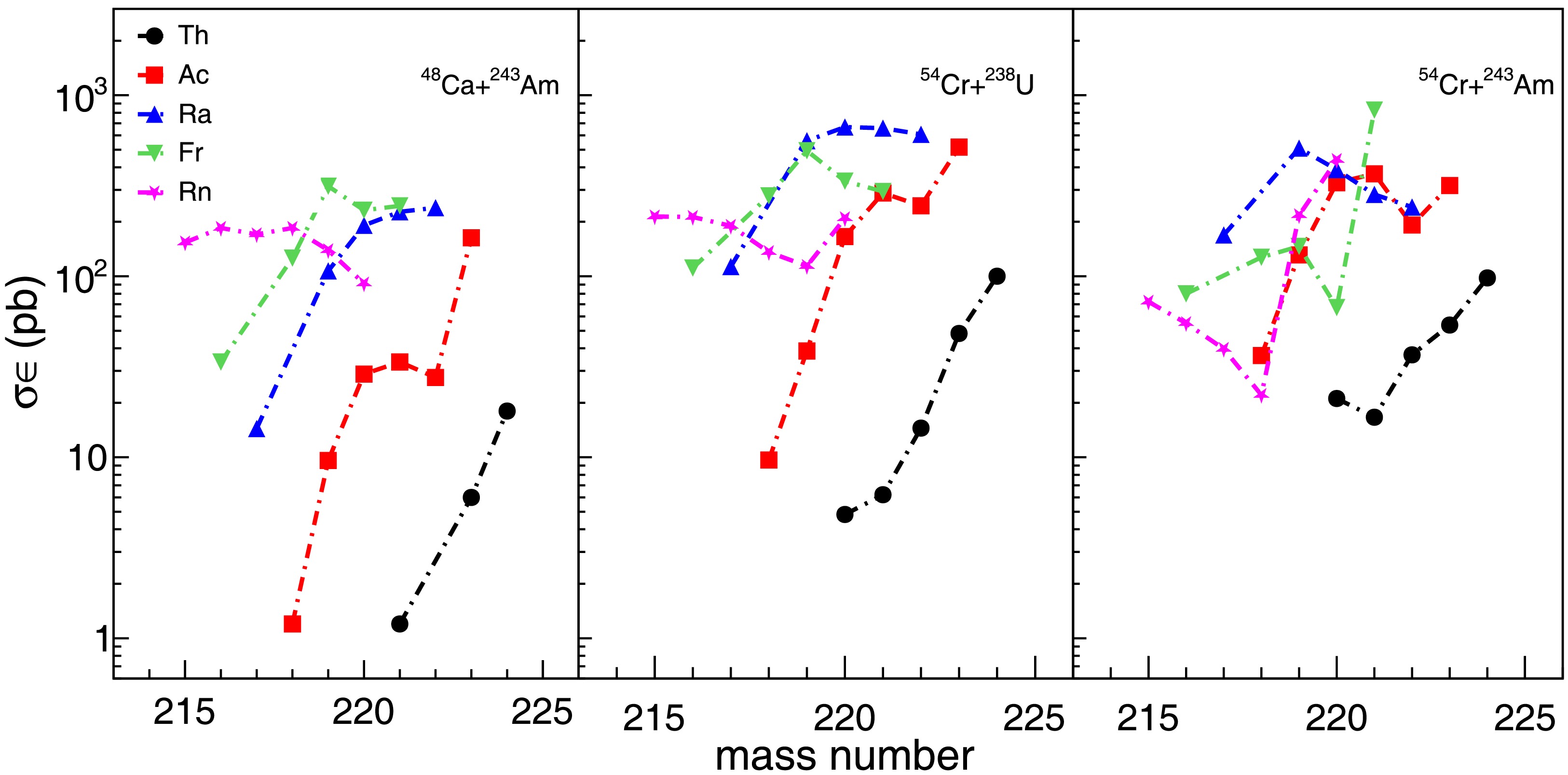
Experiments with 48Ca and 54Cr induced reactions were performed at the gas-filled recoil separator named Spectrometer for Heavy Atoms and Nuclear Structure-2 (SHANS2) of the China Accelerator Facility for superheavy Elements (CAFE2). The isotopic distributions of nuclei produced in the reactions of 48Ca+243Am, 54Cr+243Am, and 54Cr+238U were investigated. Bombardments were conducted at energies near the respective Coulomb barriers, with the SHANS2 magnetic rigidities set to collect fusion-evaporation residues. α-decay spectroscopy was employed to identify products, revealing 58 different isotopes in these experiments. The analysis indicates that the distribution of nuclides produced in different reactions exhibits clear systematic trends. Based on their mass distributions, these nuclei were attributed to the products from the quasi-fission (QF) process. Additionally, several short-lived fission events were identified and attributed to the fission isomers near the target.
Experiments with 48Ca and 54Cr induced reactions were performed at the gas-filled recoil separator named Spectrometer for Heavy Atoms and Nuclear Structure-2 (SHANS2) of the China Accelerator Facility for superheavy Elements (CAFE2). The isotopic distributions of nuclei produced in the reactions of 48Ca+243Am, 54Cr+243Am, and 54Cr+238U were investigated. Bombardments were conducted at energies near the respective Coulomb barriers, with the SHANS2 magnetic rigidities set to collect fusion-evaporation residues. α-decay spectroscopy was employed to identify products, revealing 58 different isotopes in these experiments. The analysis indicates that the distribution of nuclides produced in different reactions exhibits clear systematic trends. Based on their mass distributions, these nuclei were attributed to the products from the quasi-fission (QF) process. Additionally, several short-lived fission events were identified and attributed to the fission isomers near the target.
2026, 50(6): 064002. doi: 10.1088/1674-1137/ae5a18
Abstract:
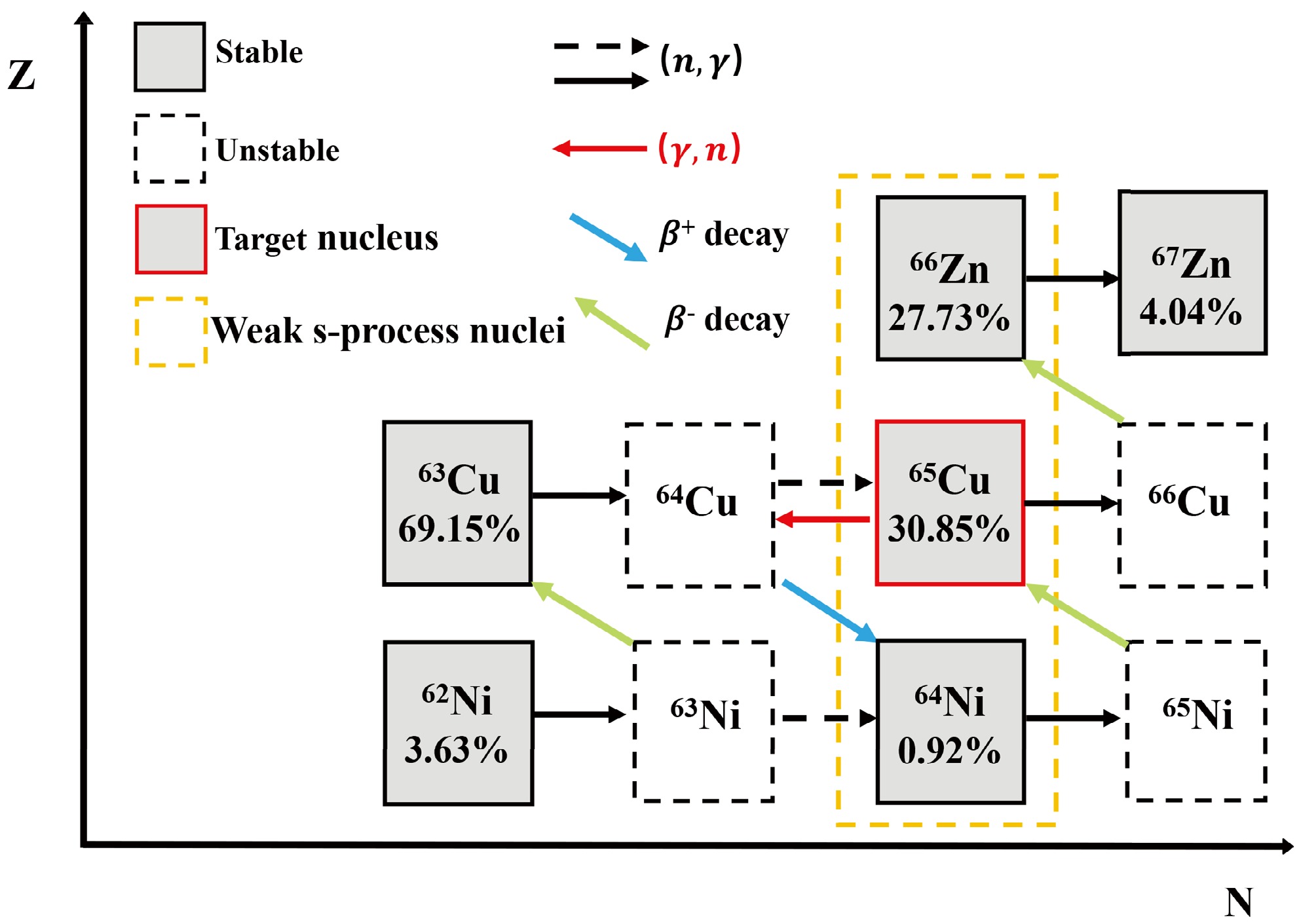
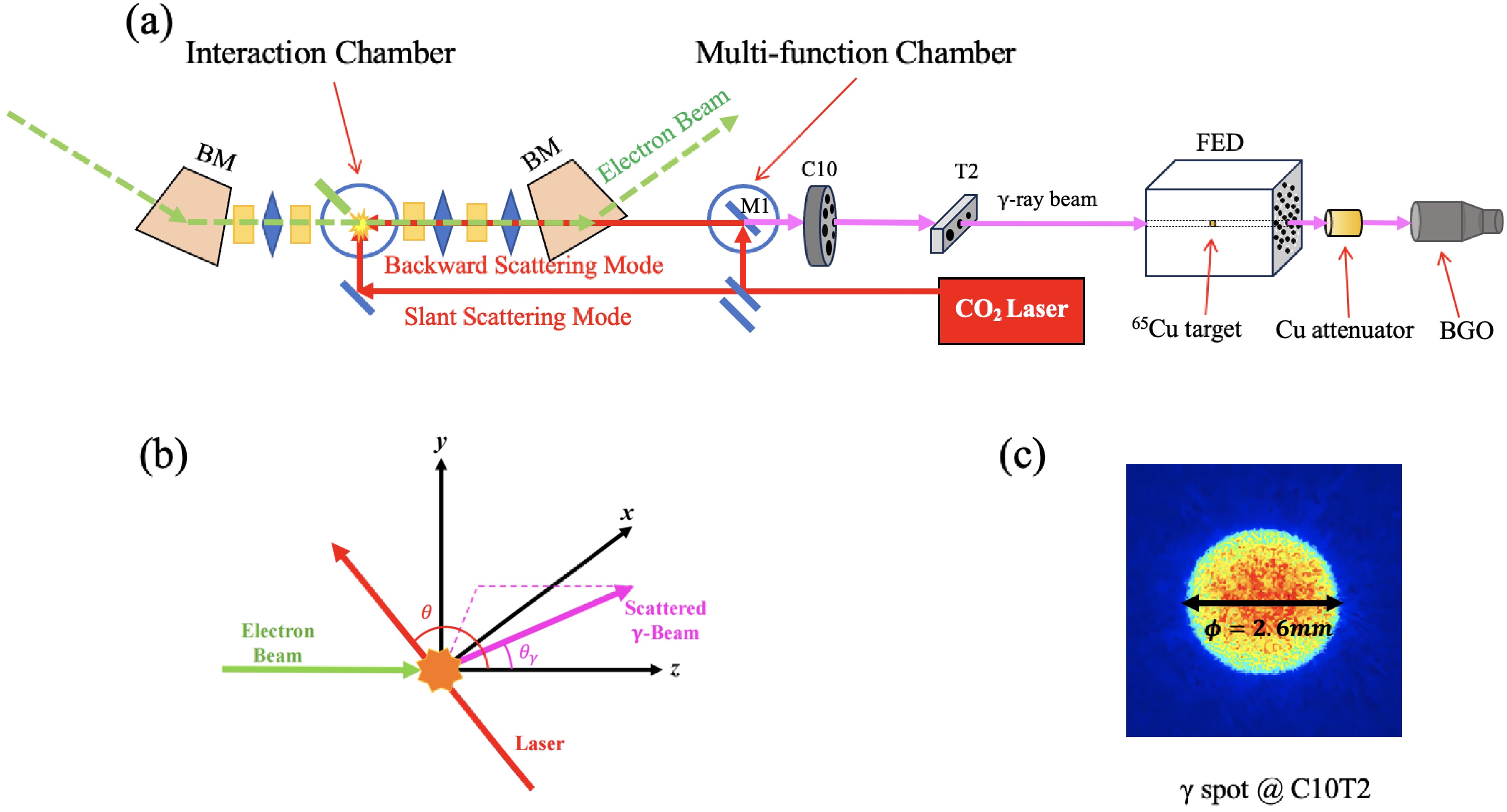
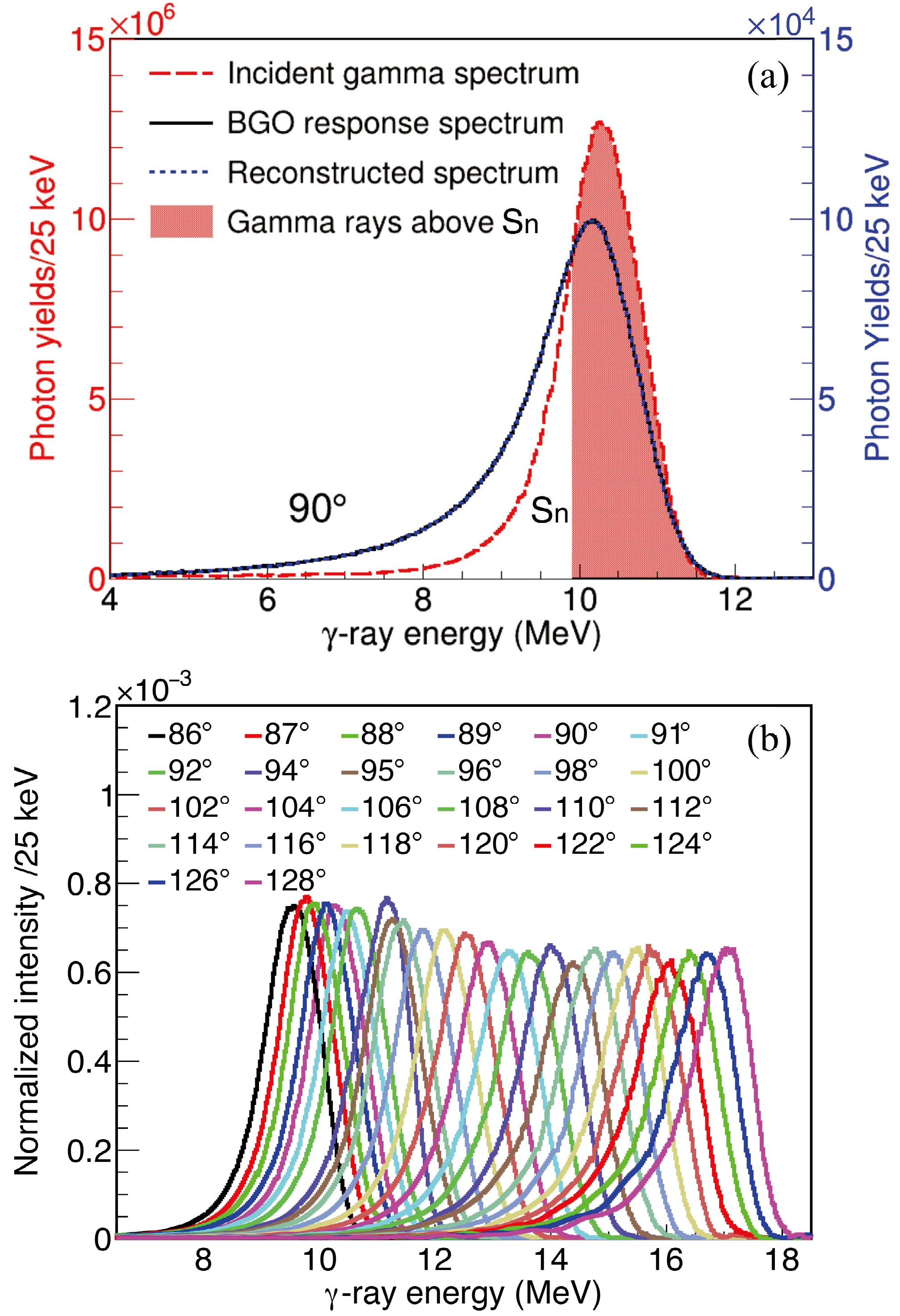
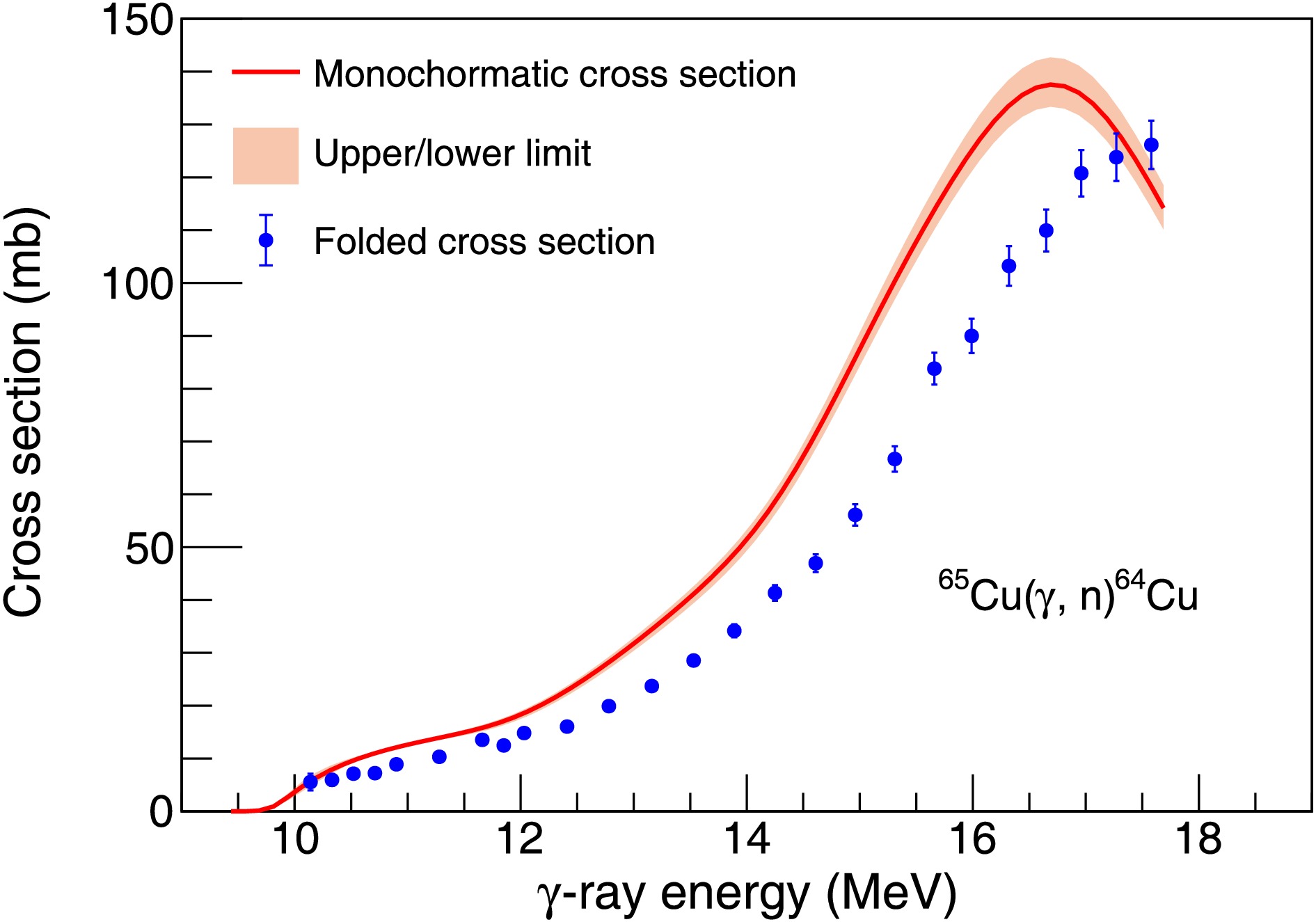
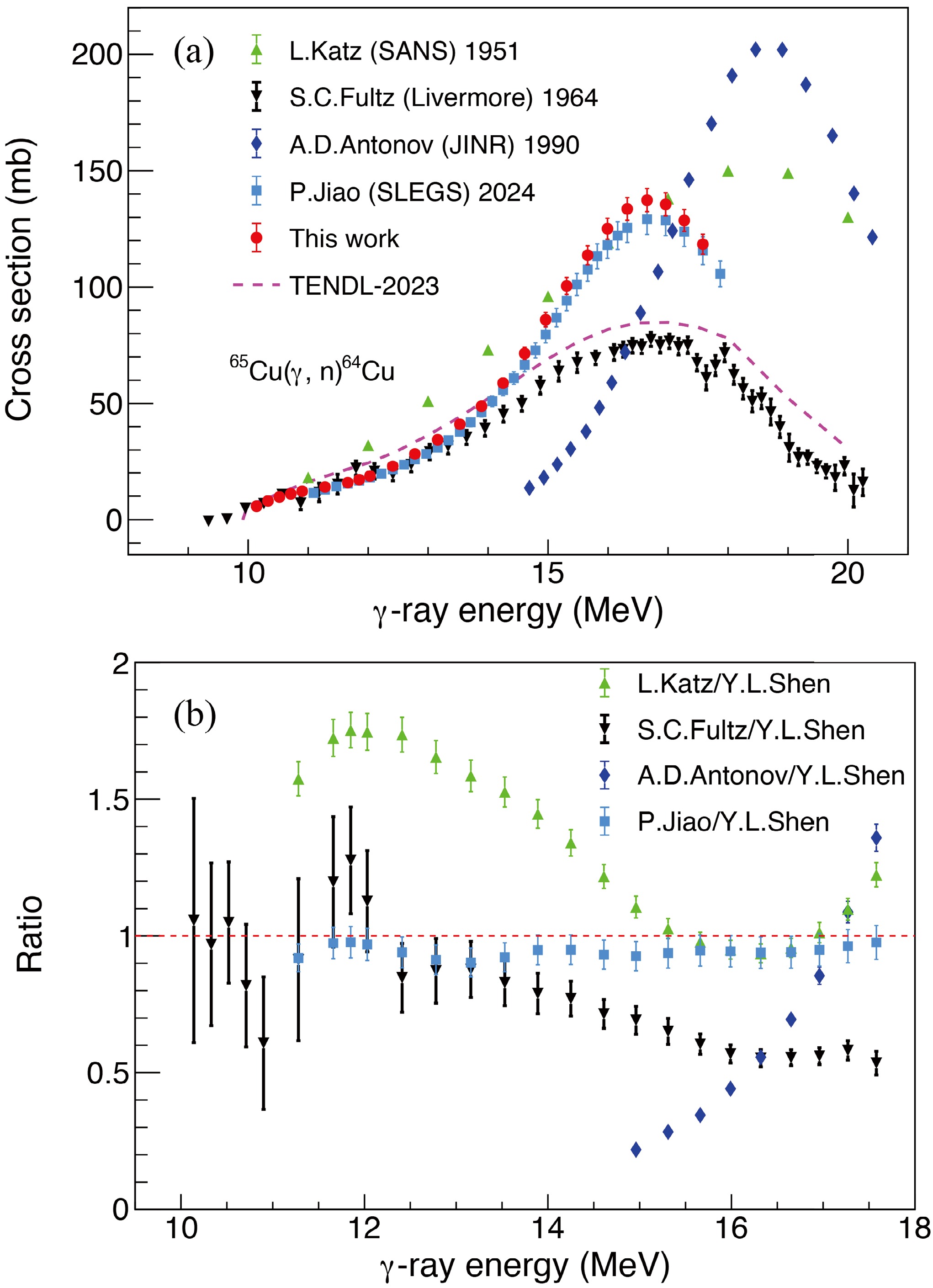
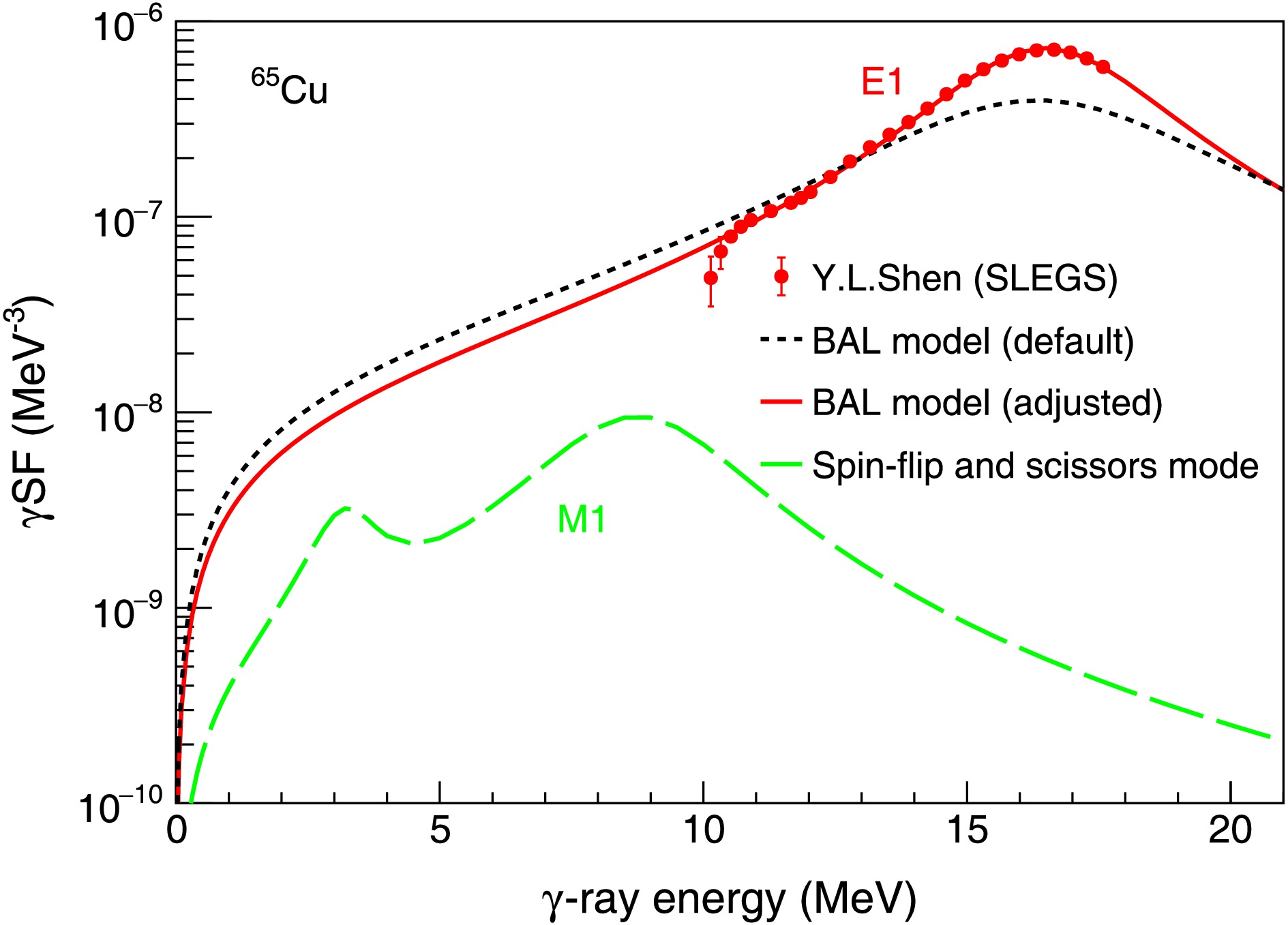
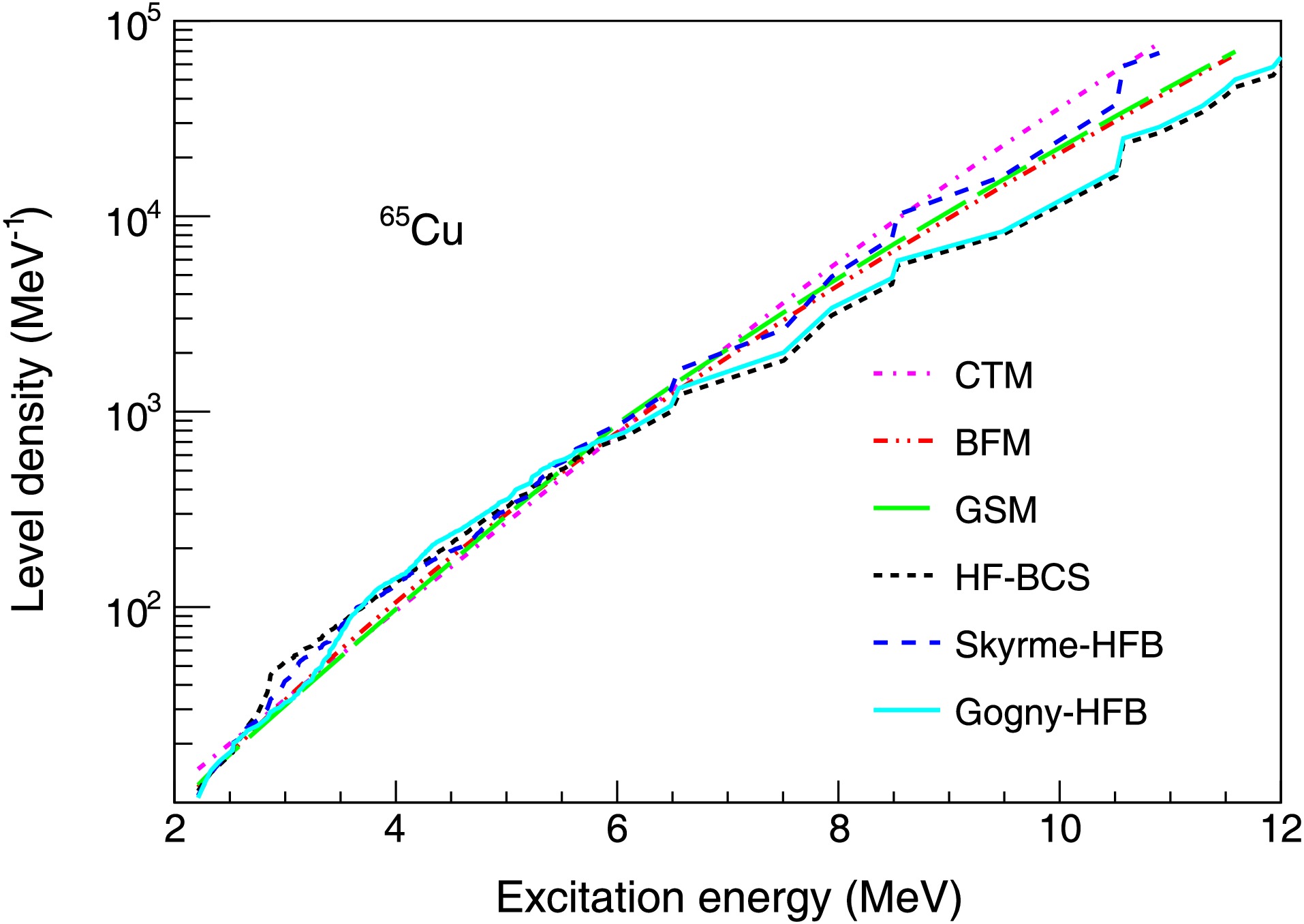
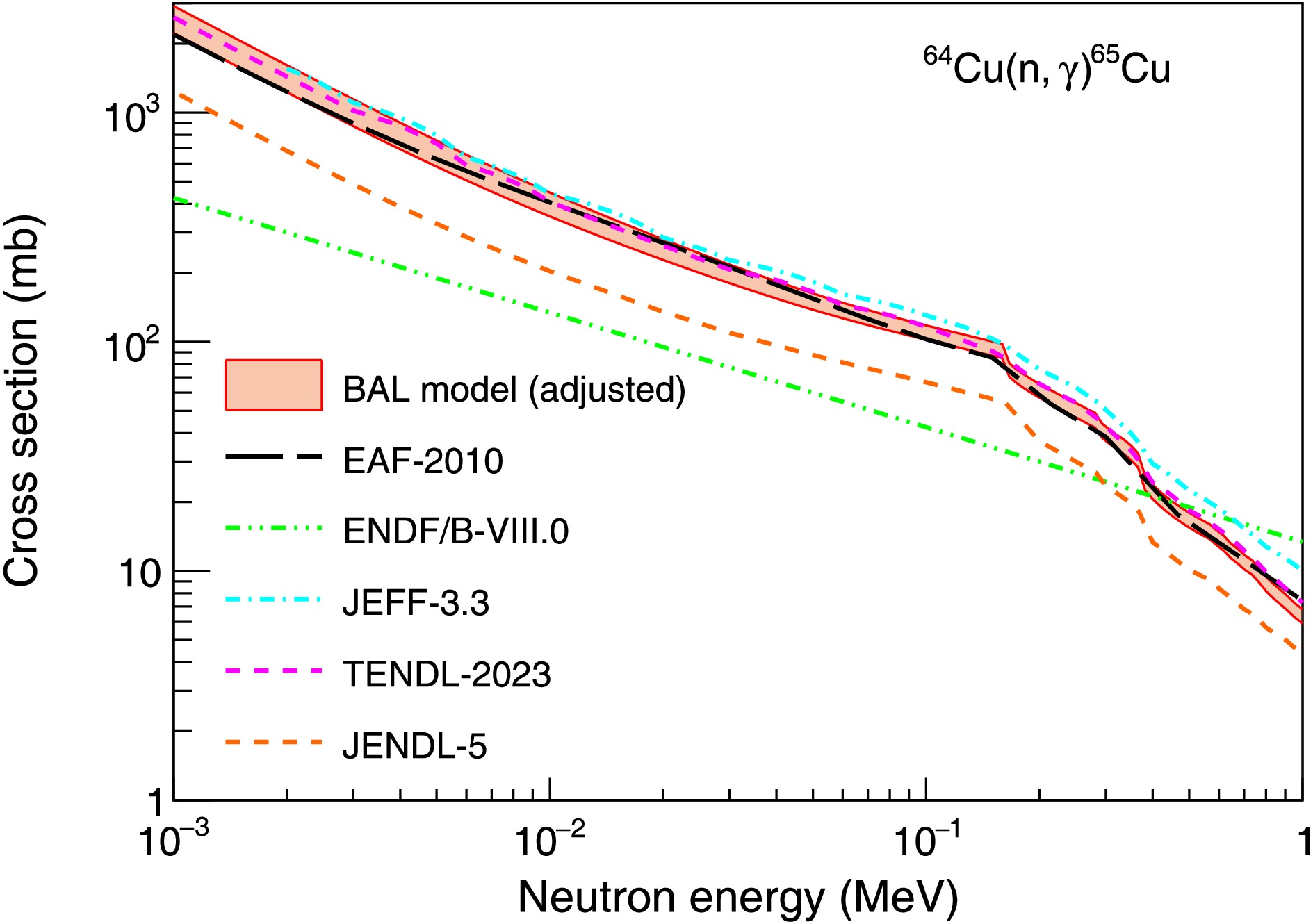
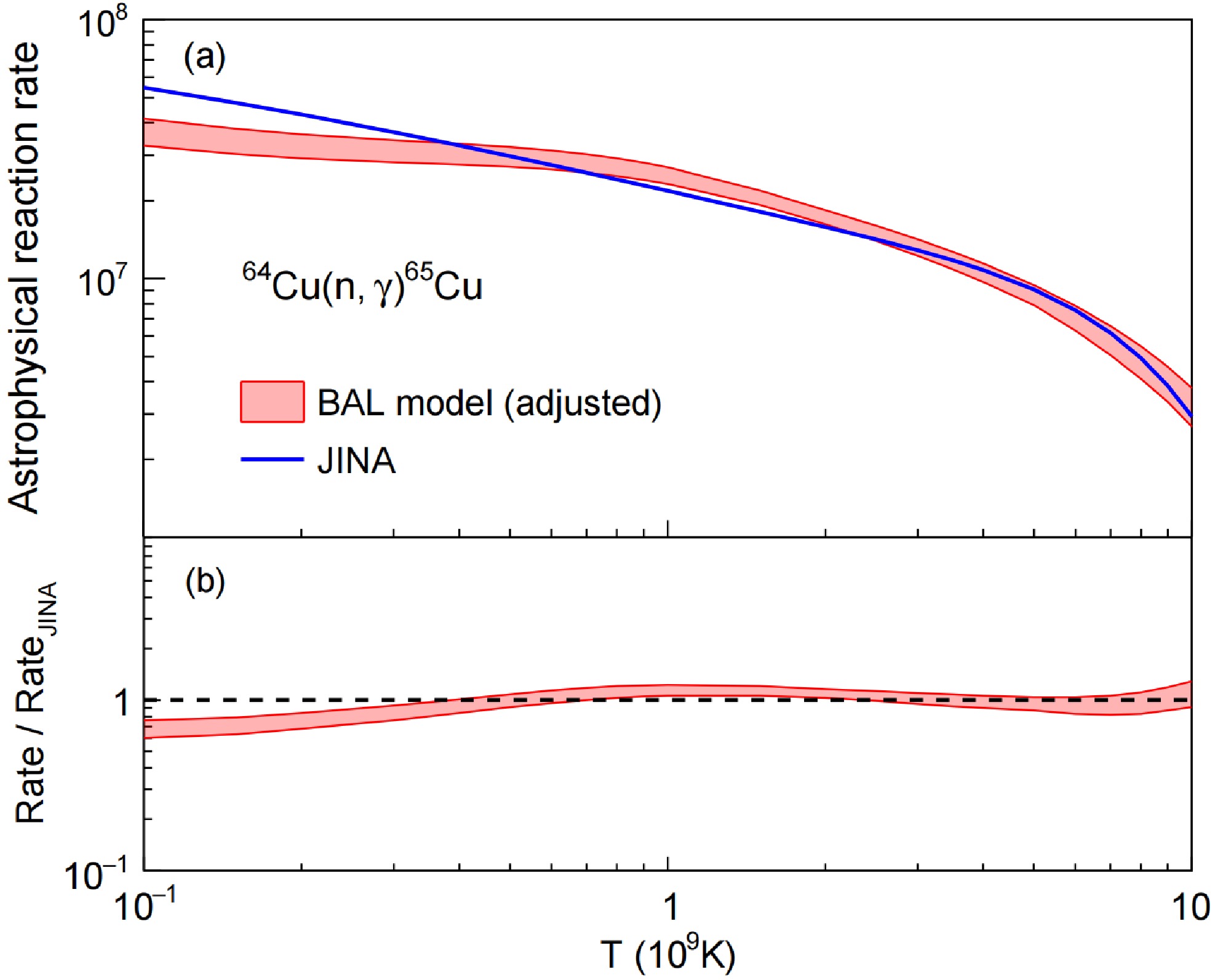
A new measurement of the 65Cu(γ, n)64Cu photoneutron cross section is performed using quasi-monoenergetic, tunable γ-ray beams produced at the Shanghai Laser Electron Gamma Source (SLEGS). The energy spectrum of the SLEGS γ-ray beams incident on the isotopically enriched 65Cu target is monitored using a BGO detector, while the photoneutron yields are determined with a moderated 3He detection array with high and flat efficiency. Within the energy range of\begin{document}$10.1 \le E_\gamma \le 17.6$\end{document} \begin{document}$\sigma(E_\gamma)$\end{document} \begin{document}$\lesssim 4$\end{document} \begin{document}$E_\gamma \simeq 16.65$\end{document} \begin{document}$\sigma_{\text{max}} \simeq 137$\end{document}
A new measurement of the 65Cu(γ, n)64Cu photoneutron cross section is performed using quasi-monoenergetic, tunable γ-ray beams produced at the Shanghai Laser Electron Gamma Source (SLEGS). The energy spectrum of the SLEGS γ-ray beams incident on the isotopically enriched 65Cu target is monitored using a BGO detector, while the photoneutron yields are determined with a moderated 3He detection array with high and flat efficiency. Within the energy range of
2026, 50(6): 064003. doi: 10.1088/1674-1137/ae551d
Abstract:
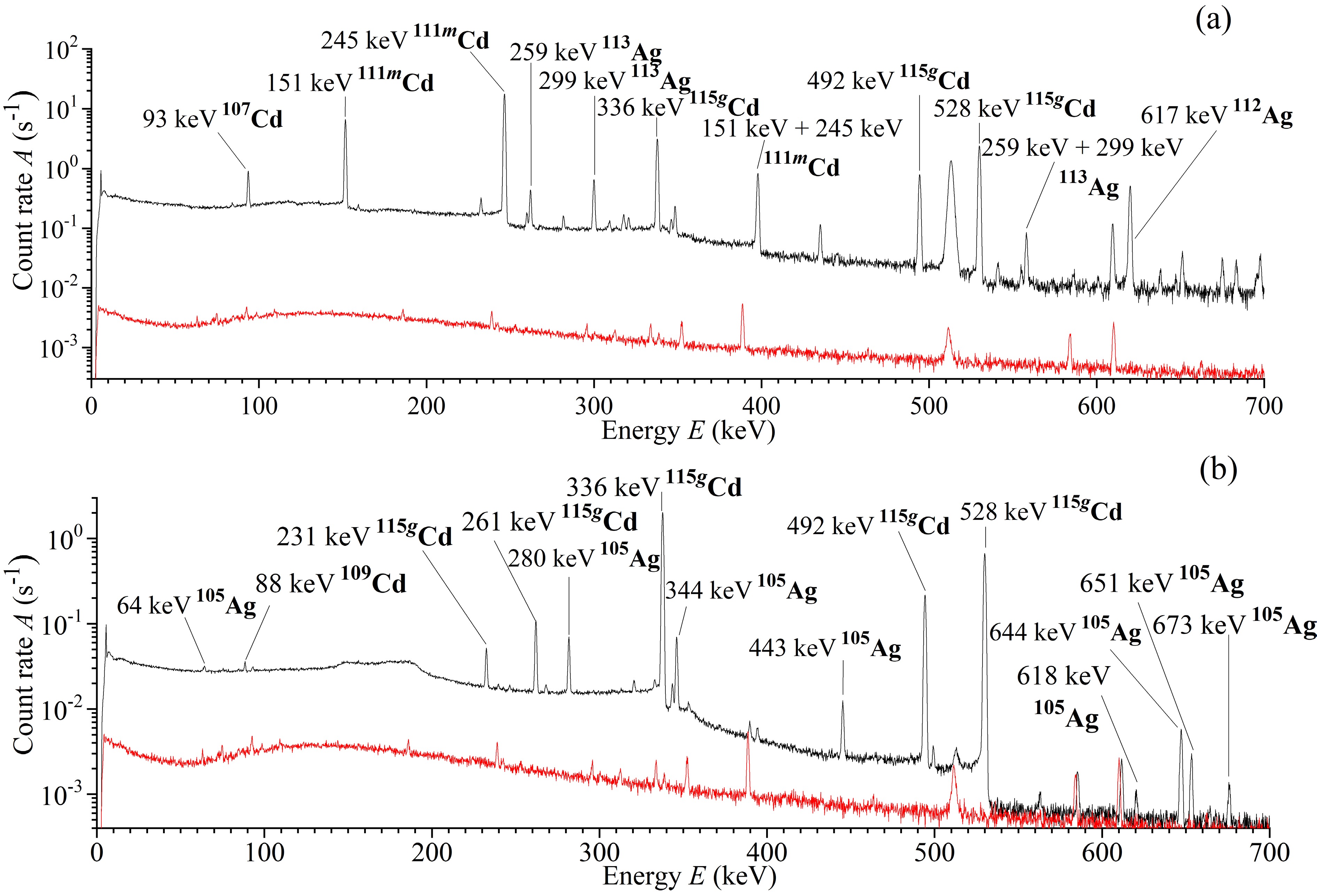
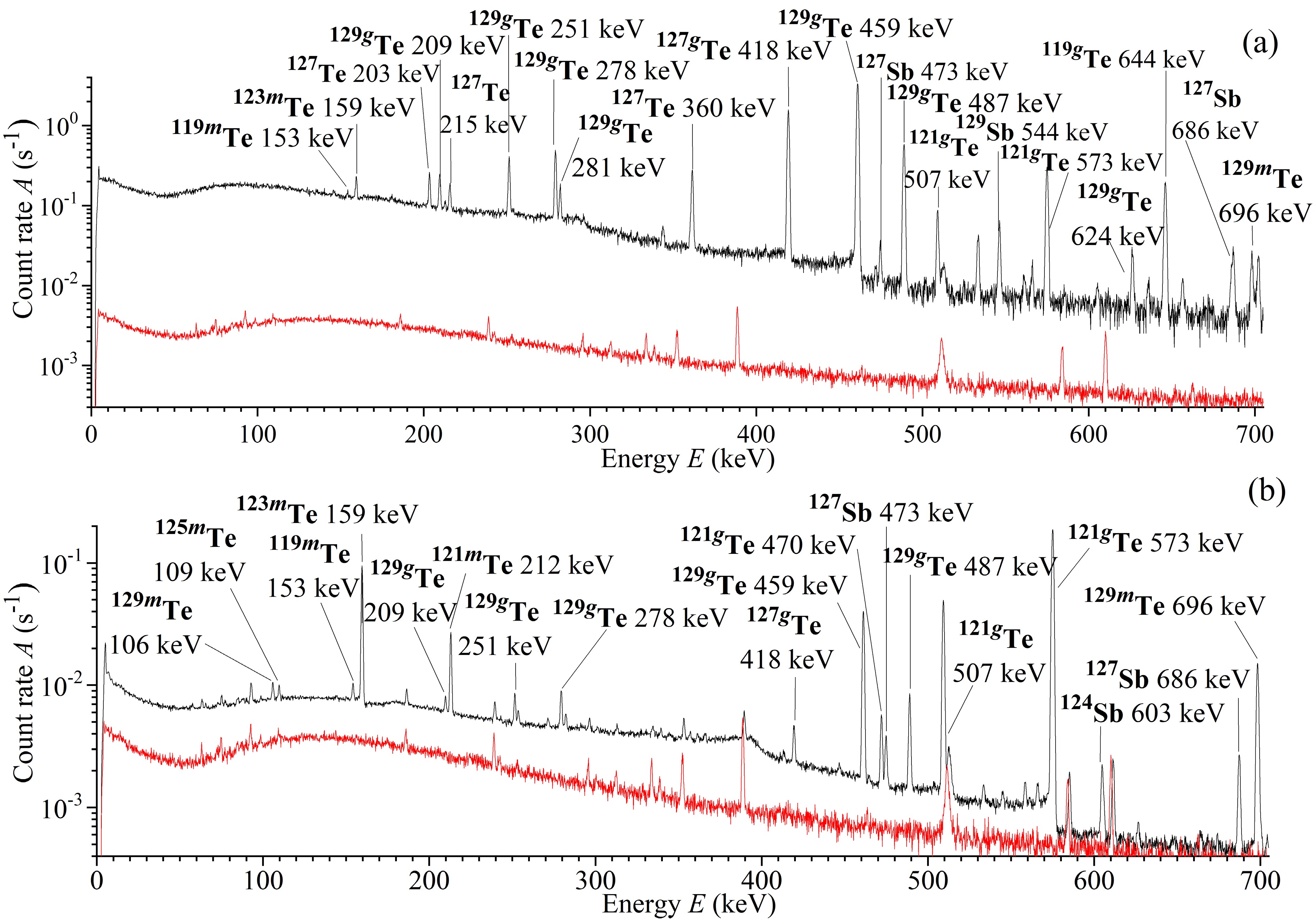
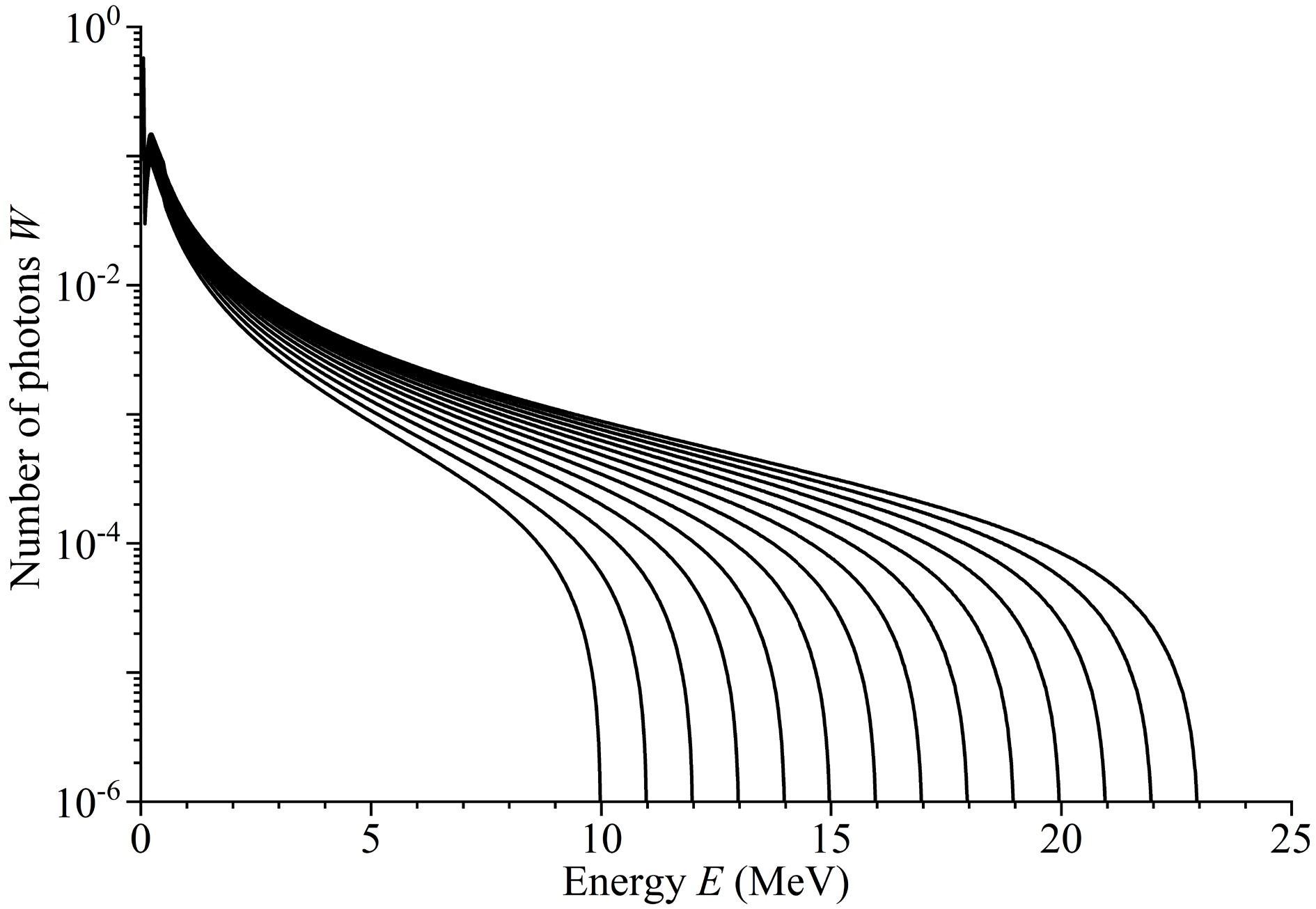
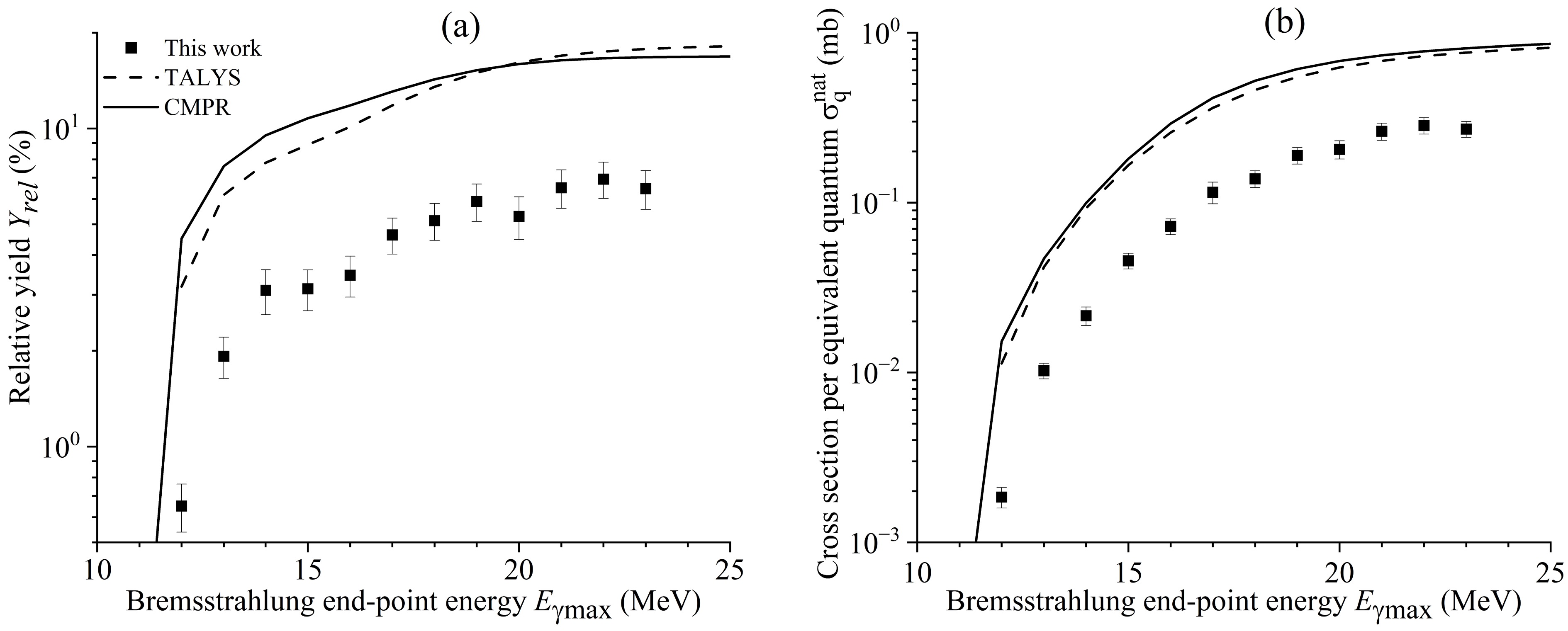
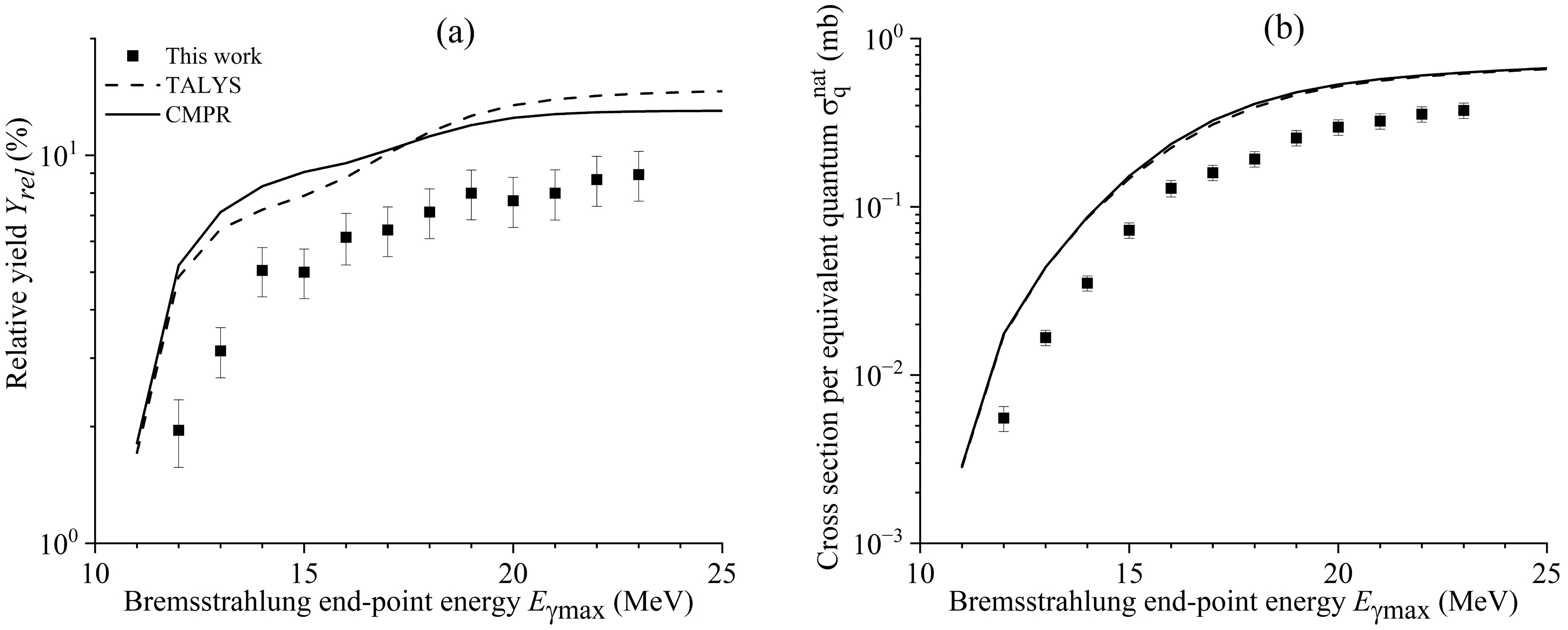
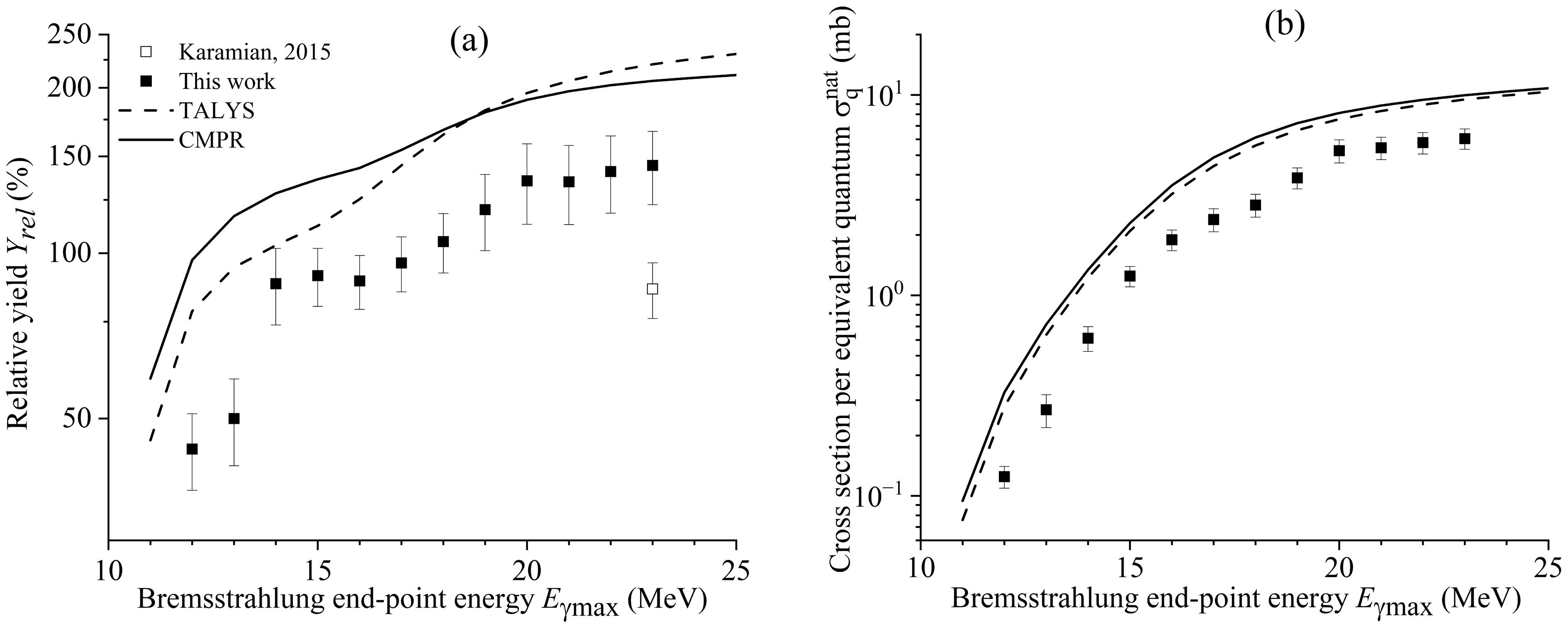
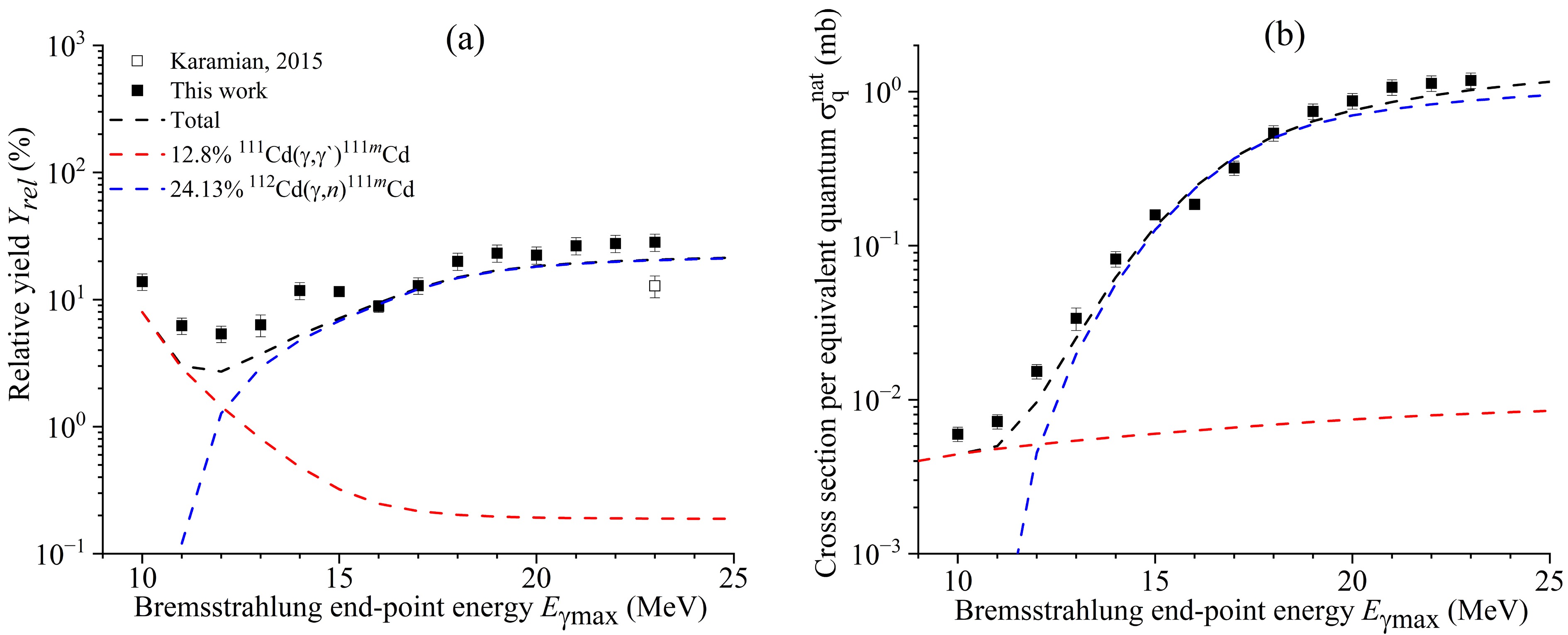
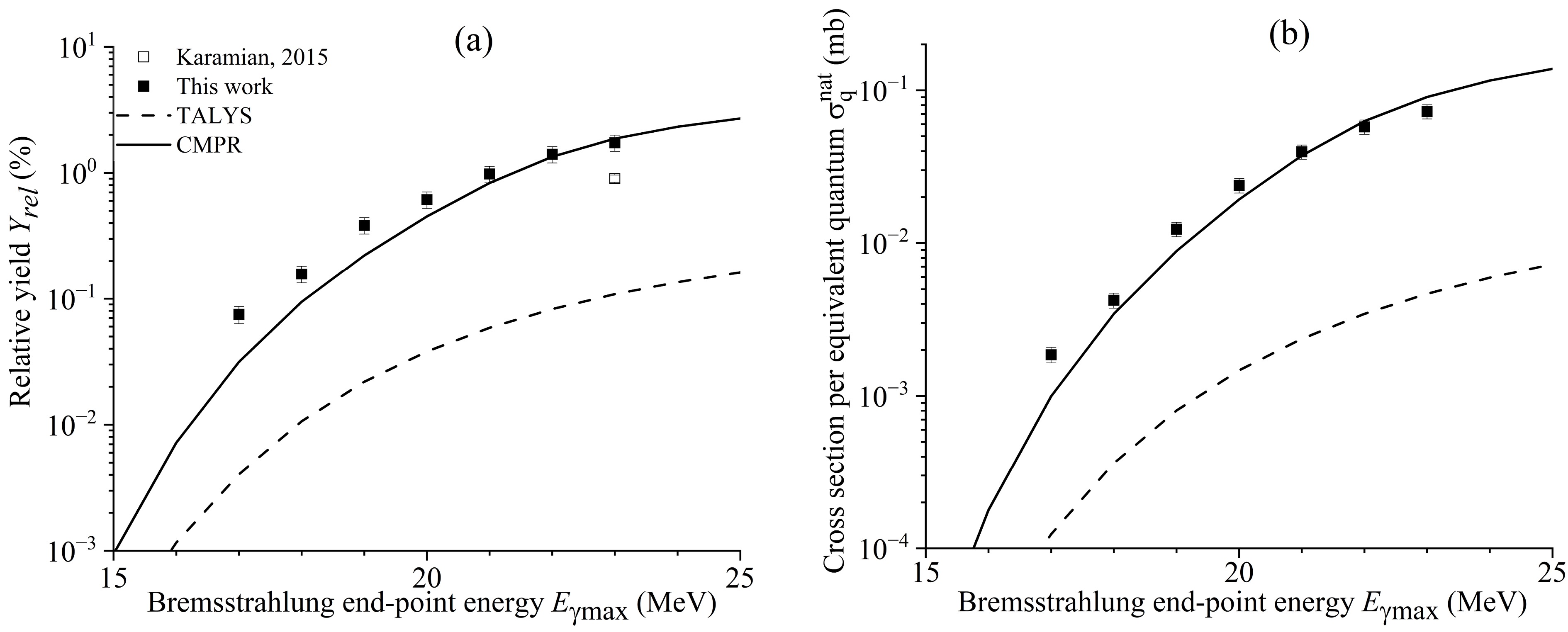
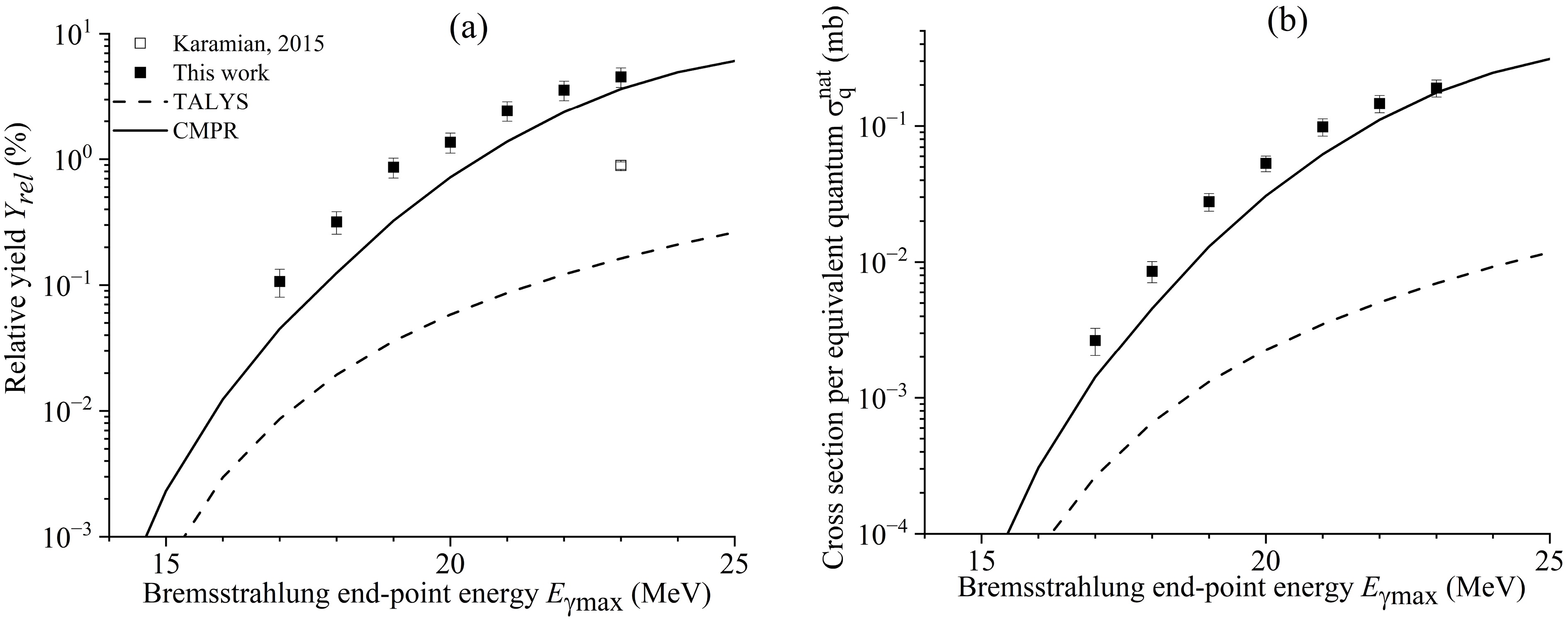
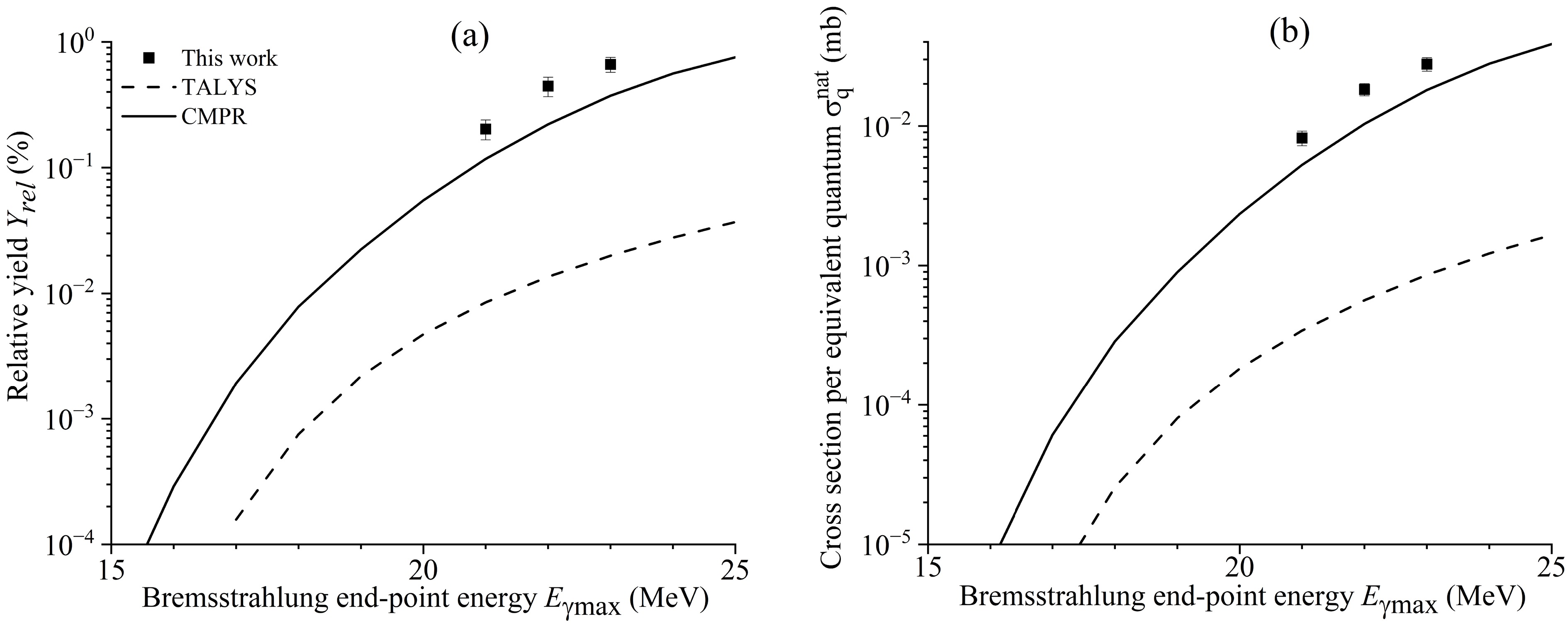
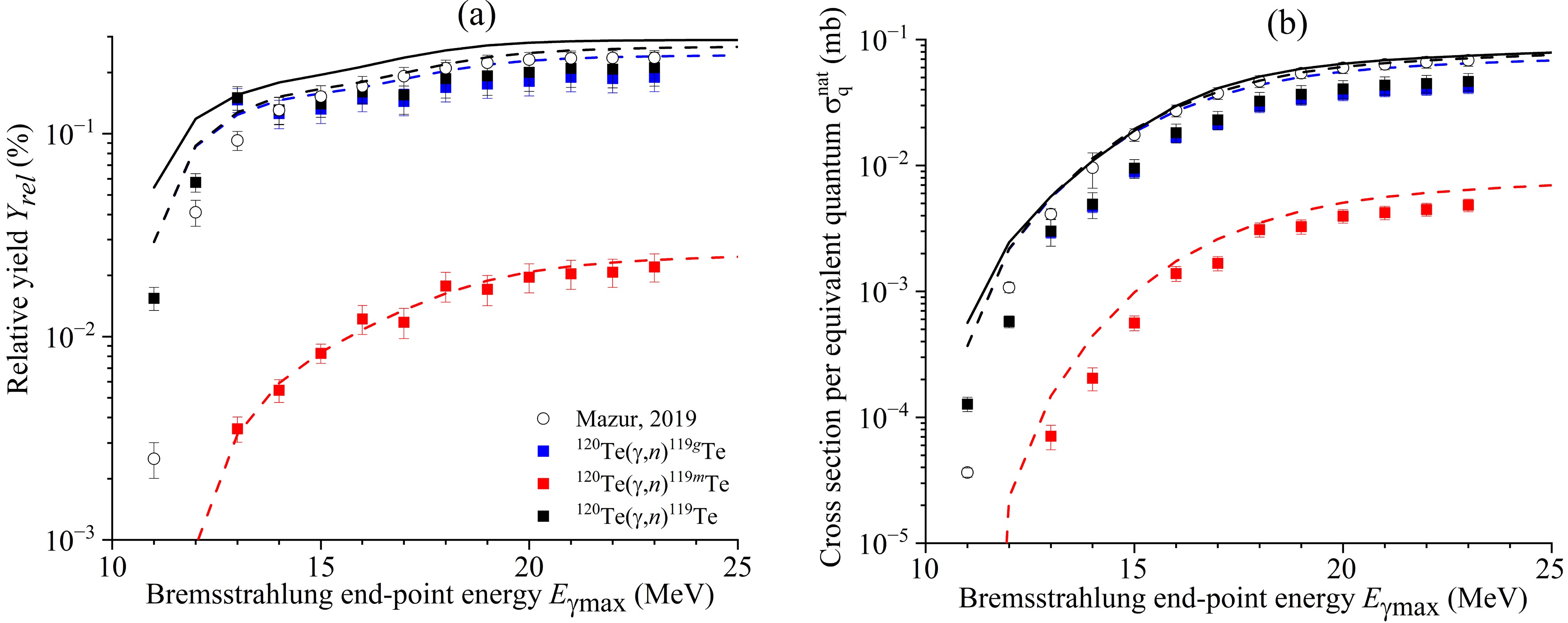
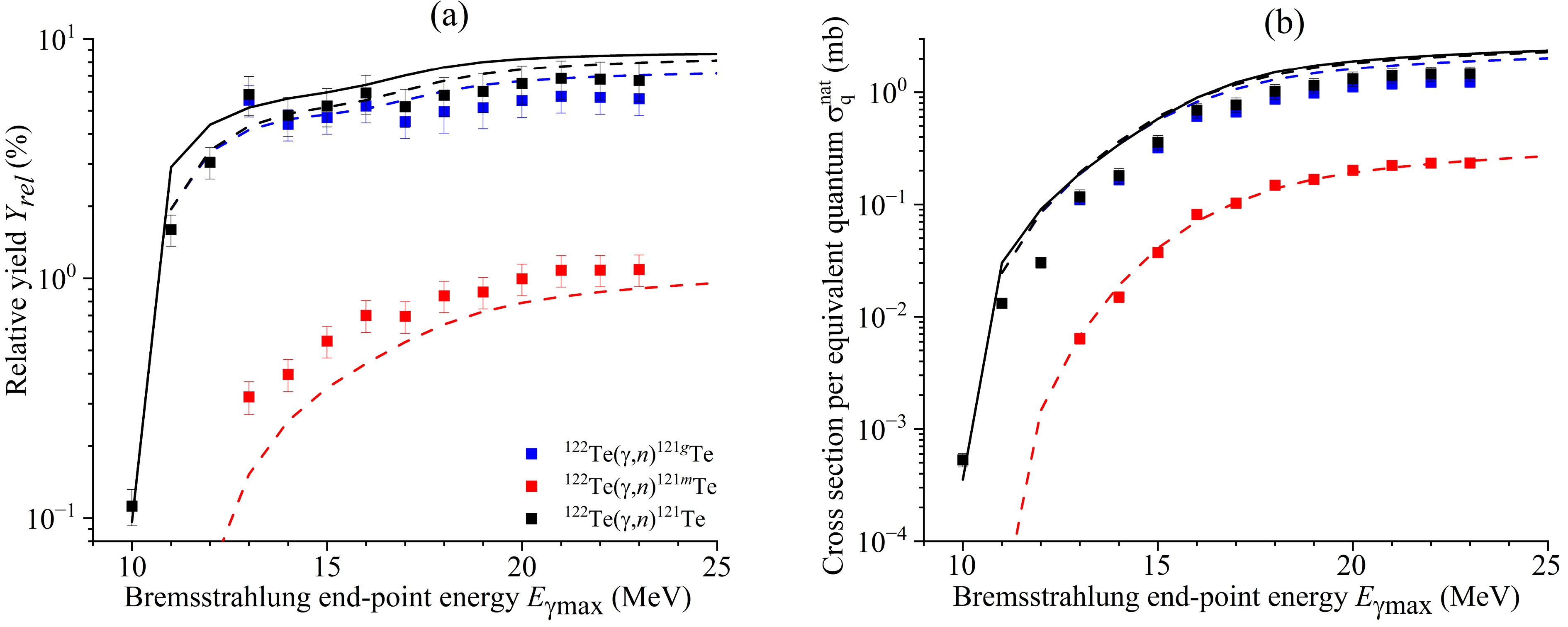
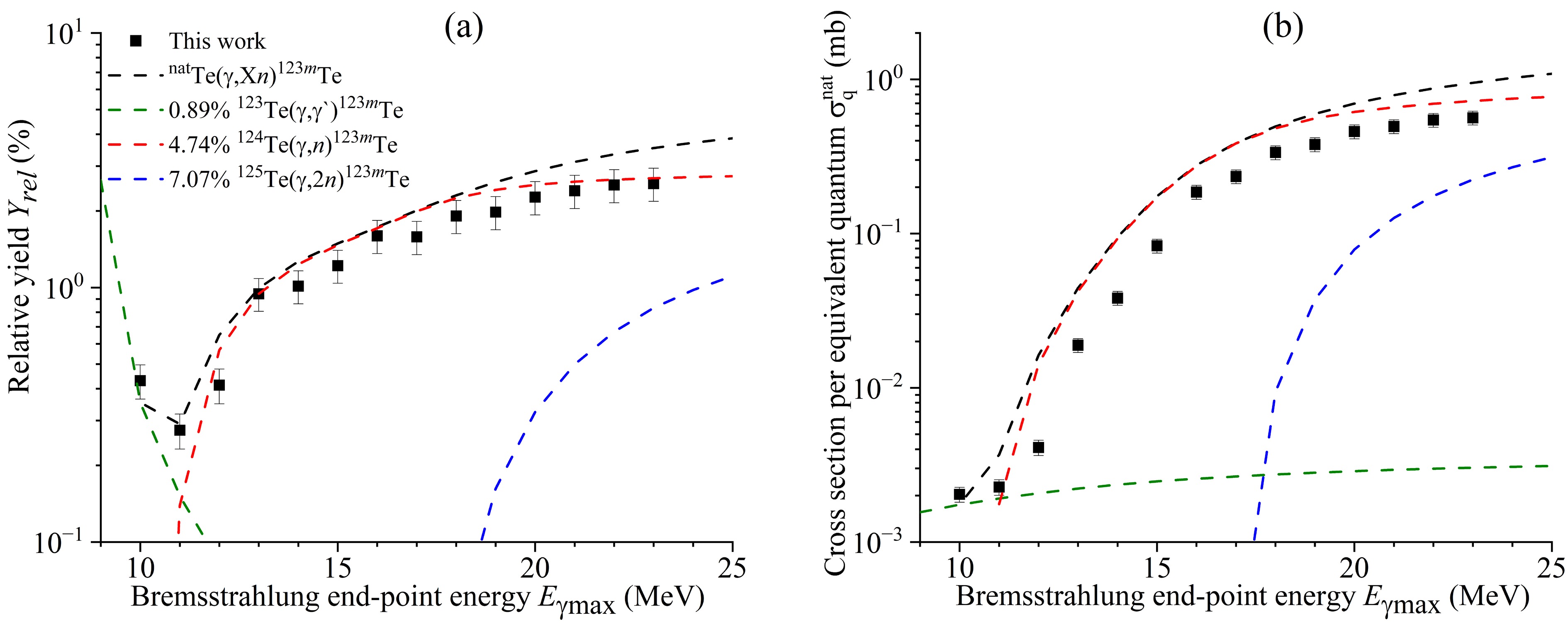
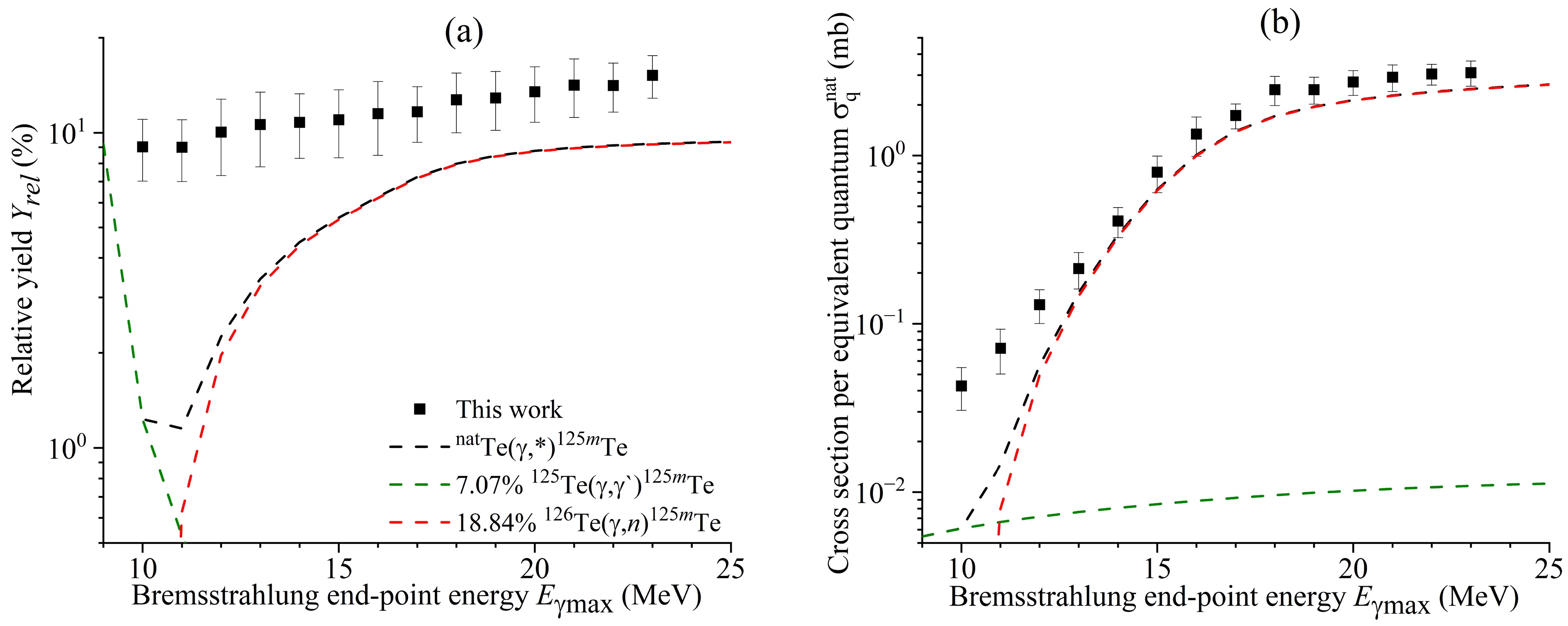
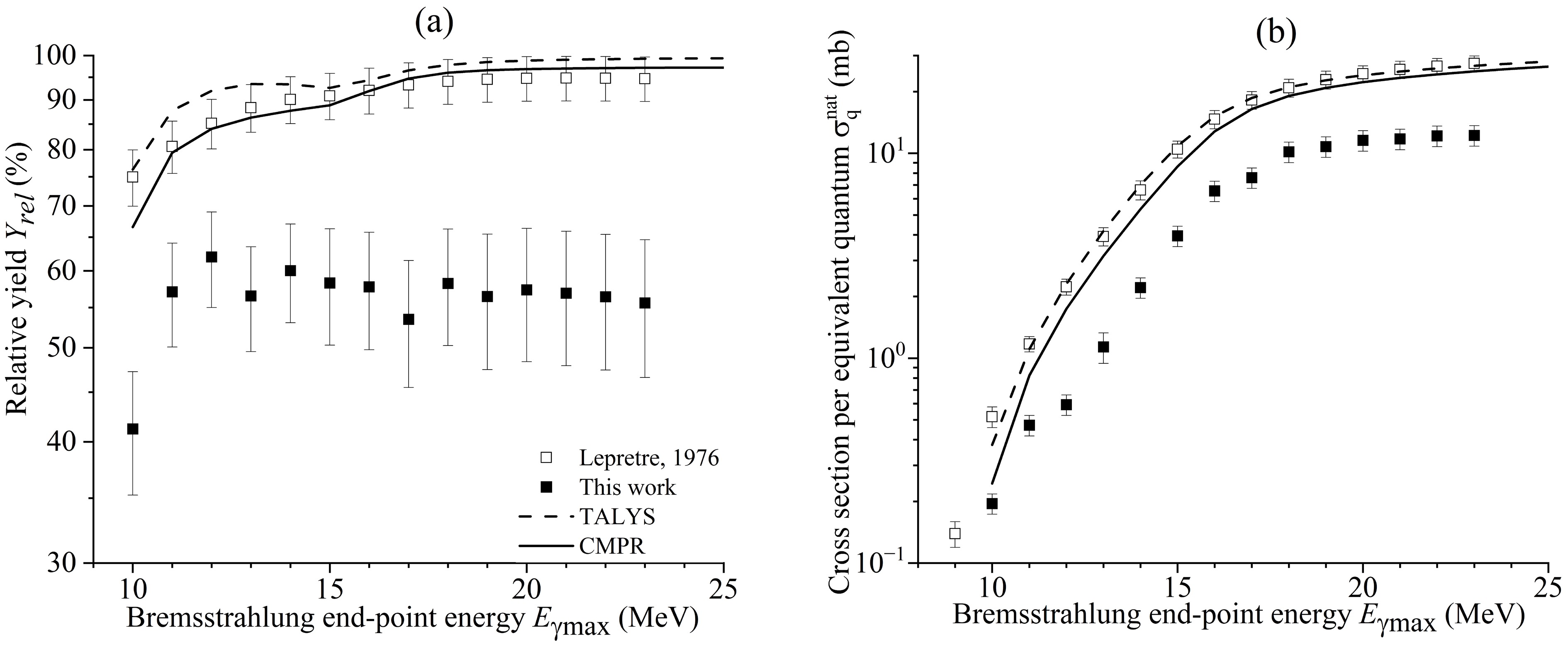
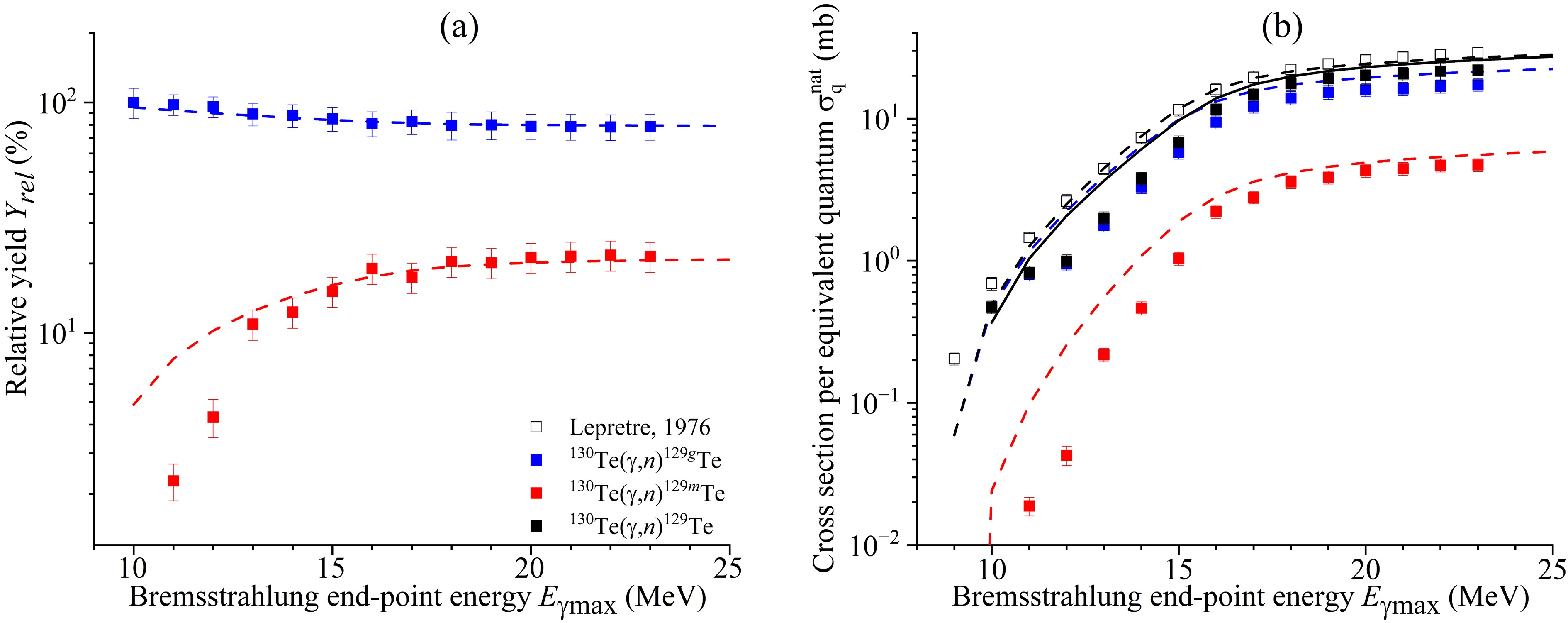
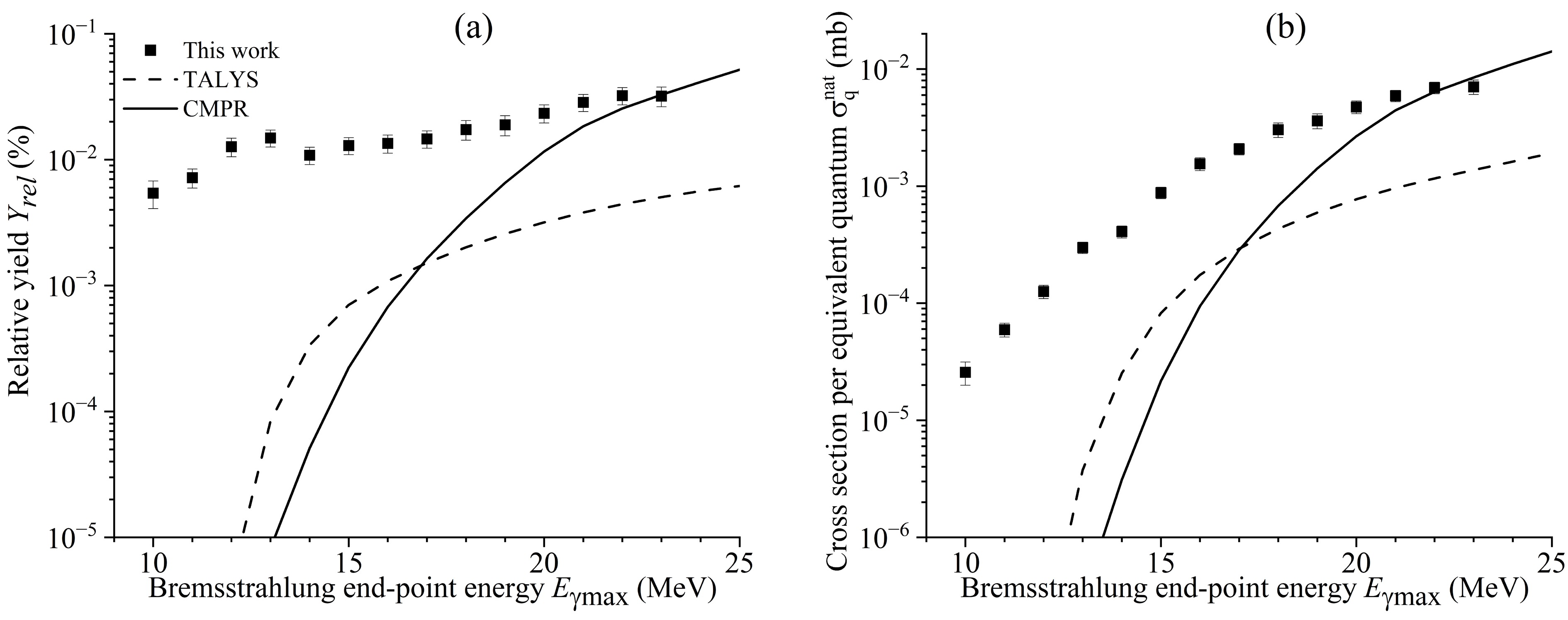
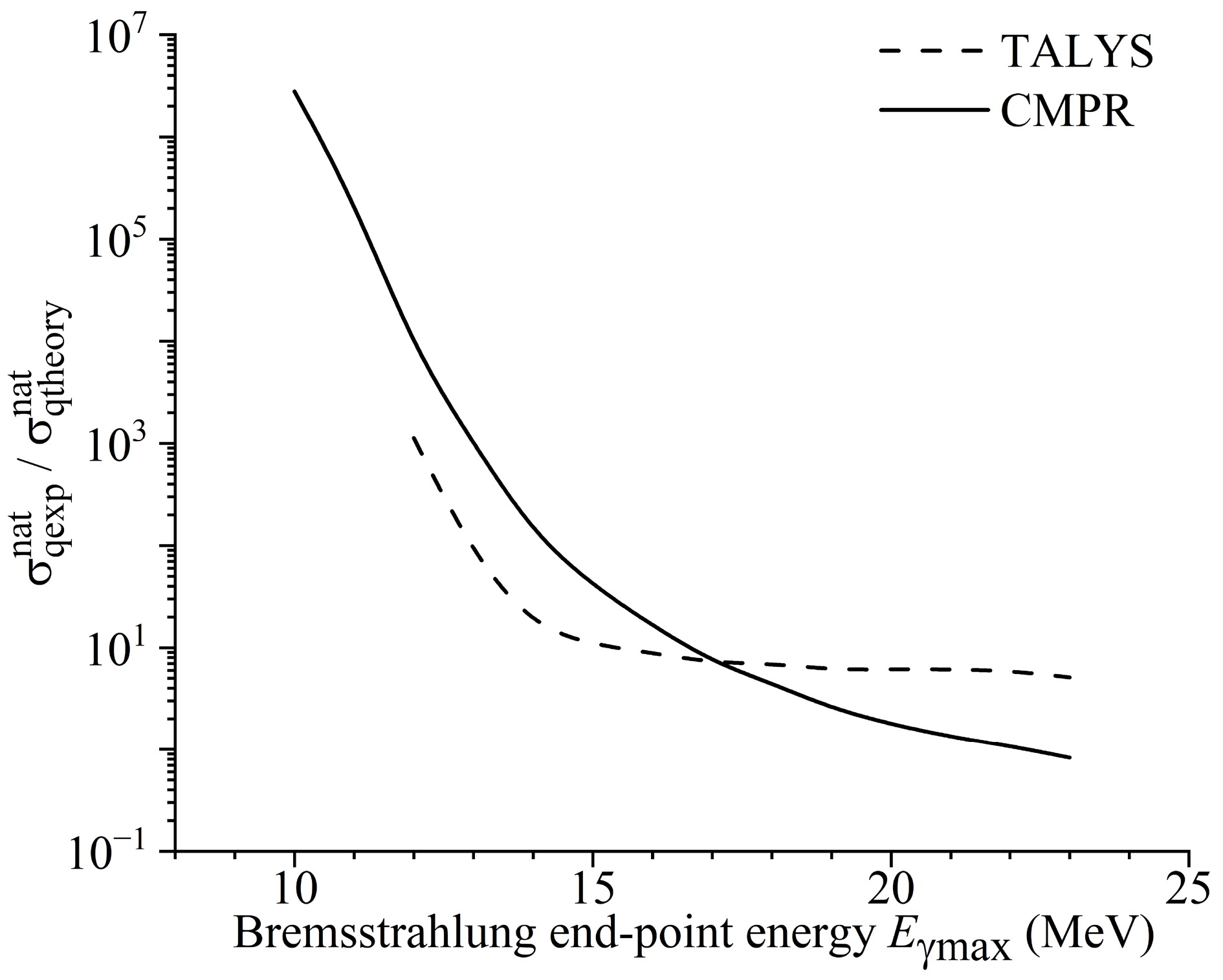
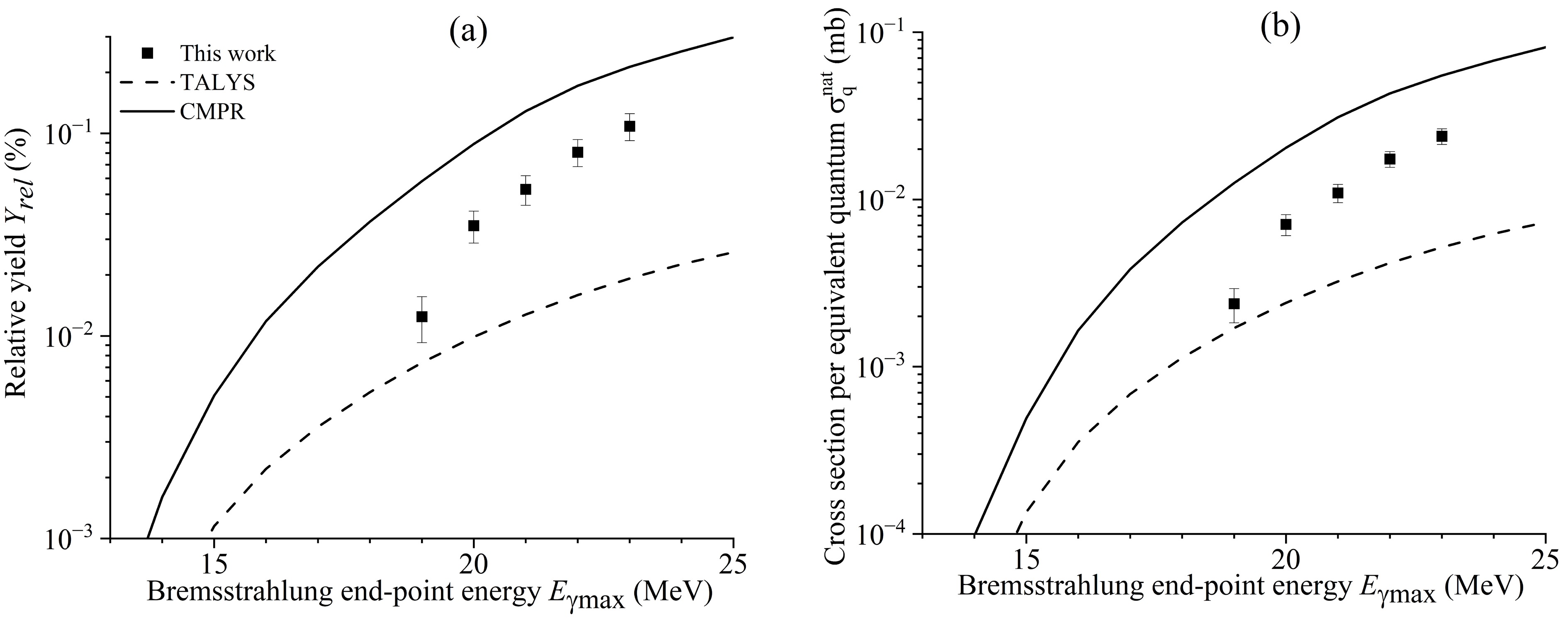
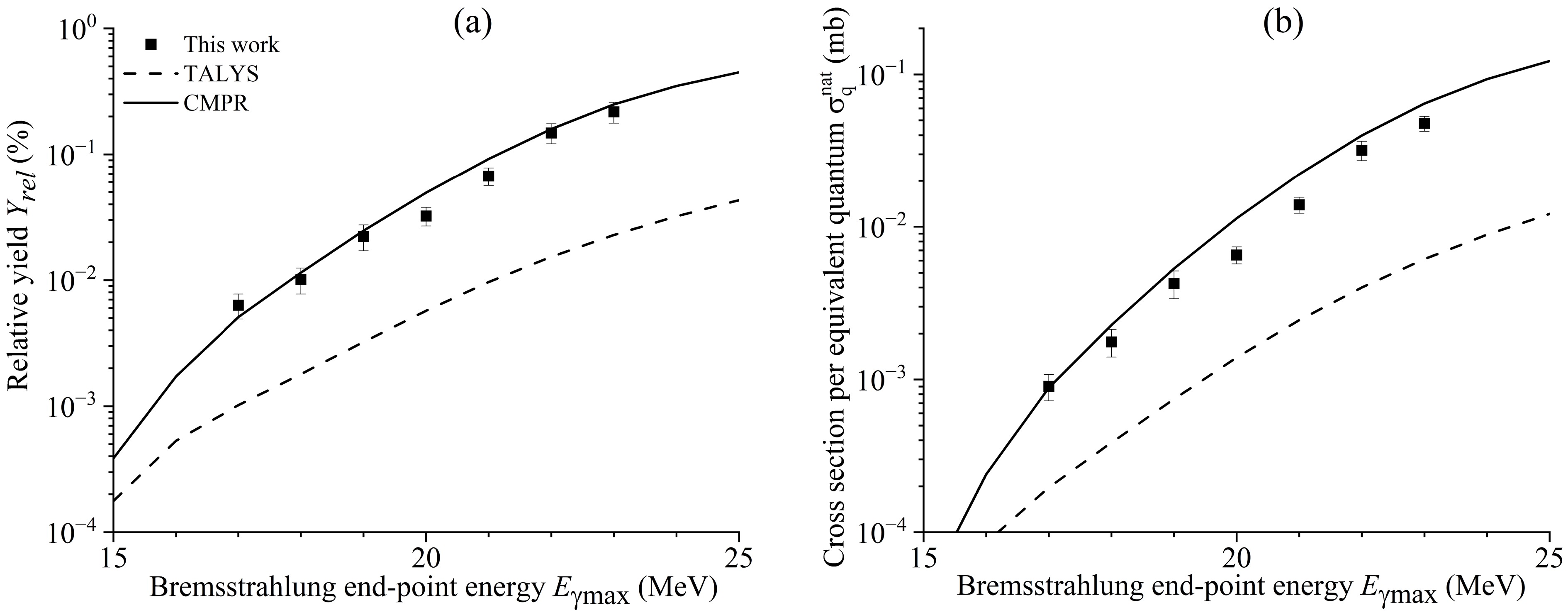
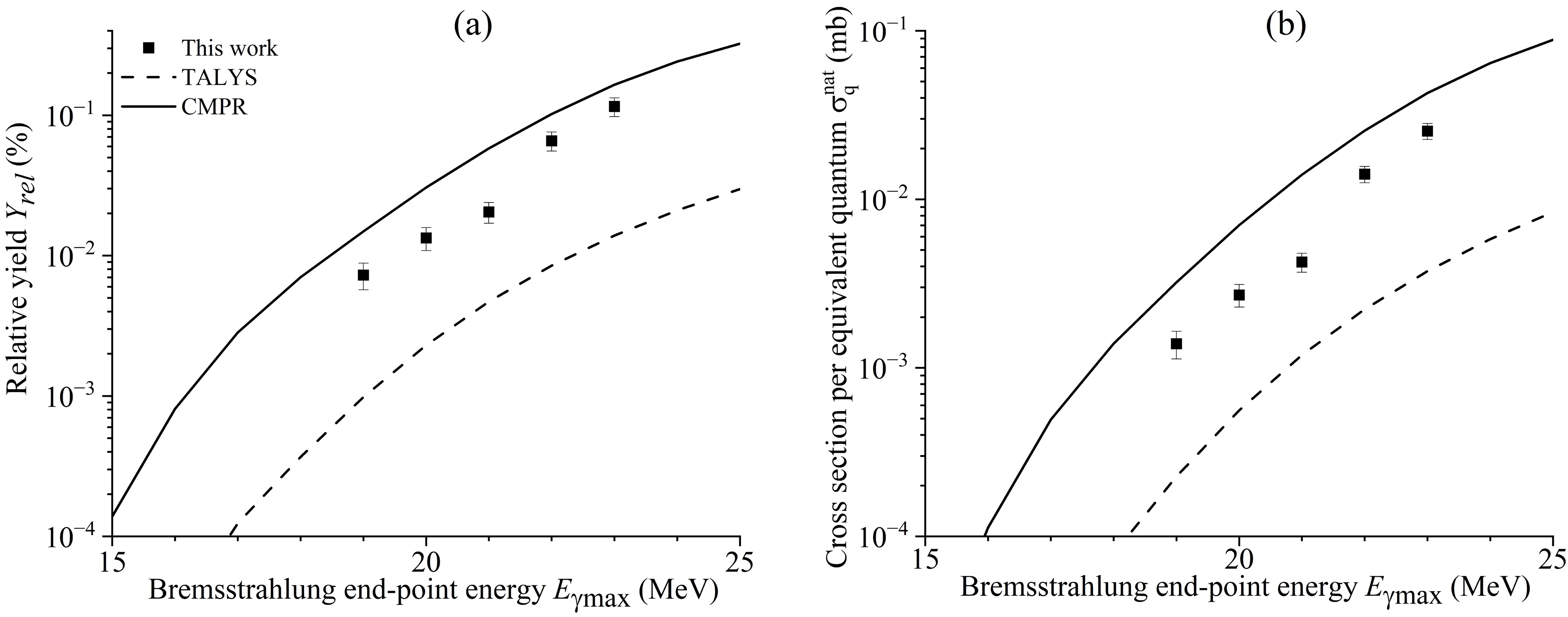
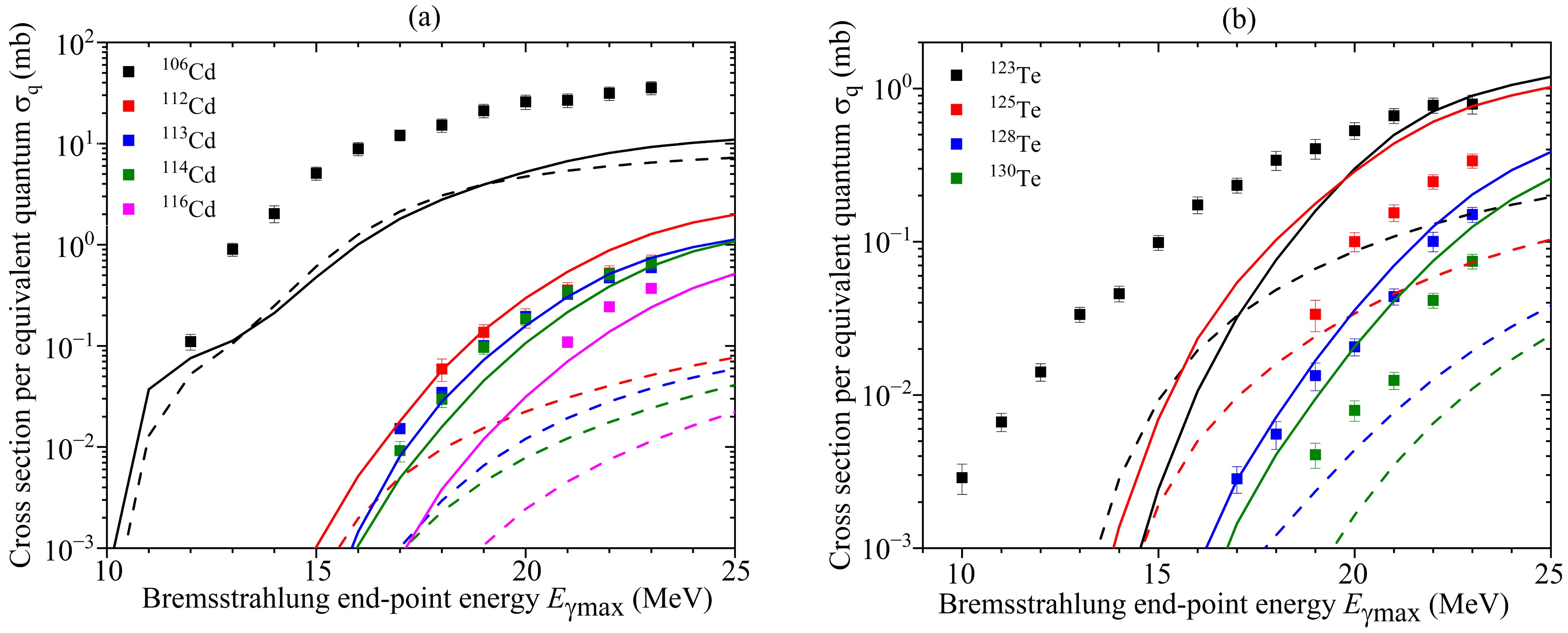
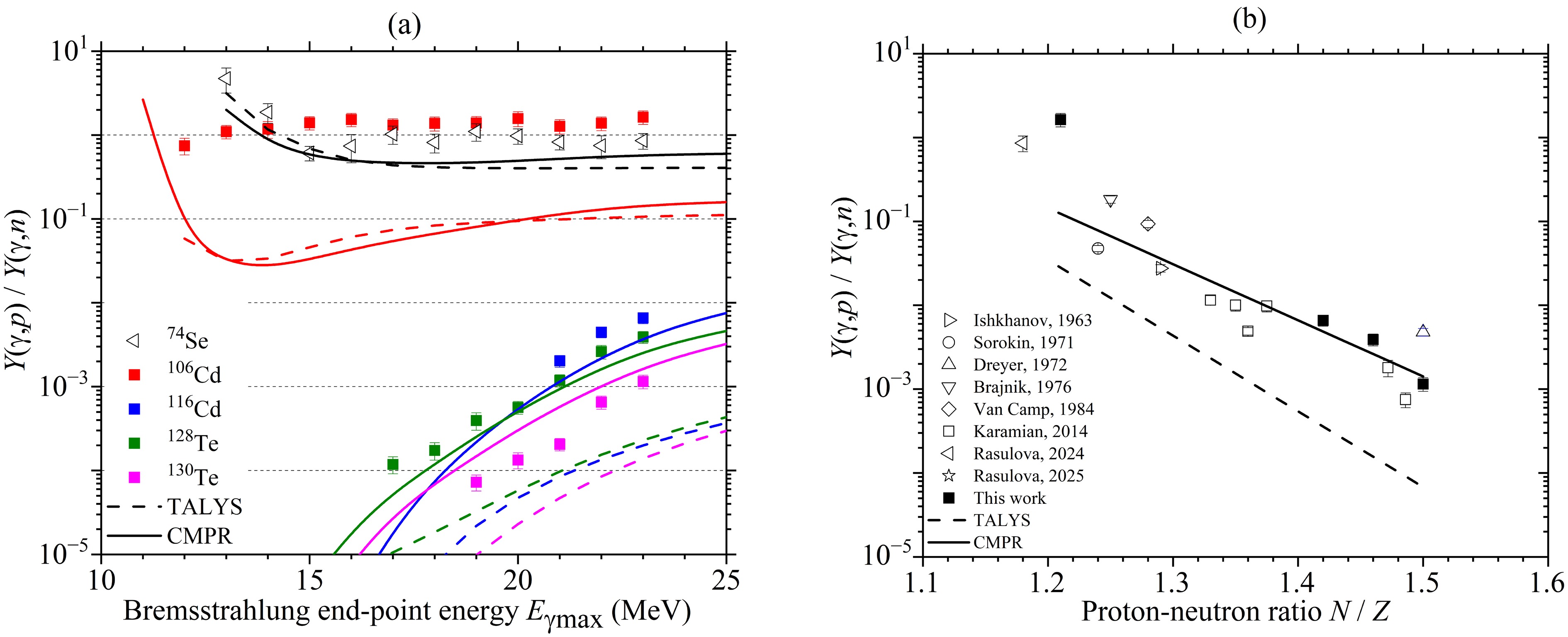
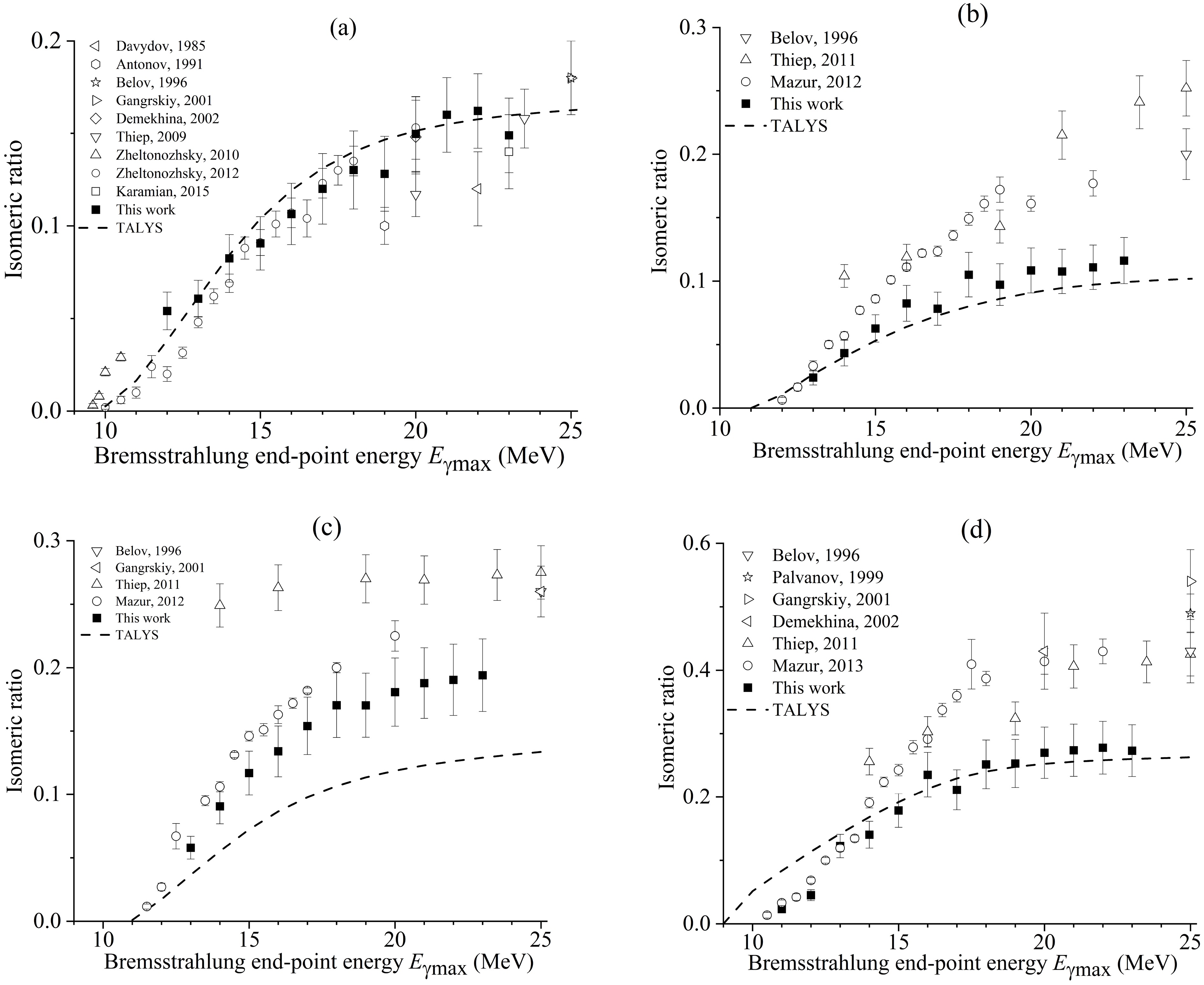
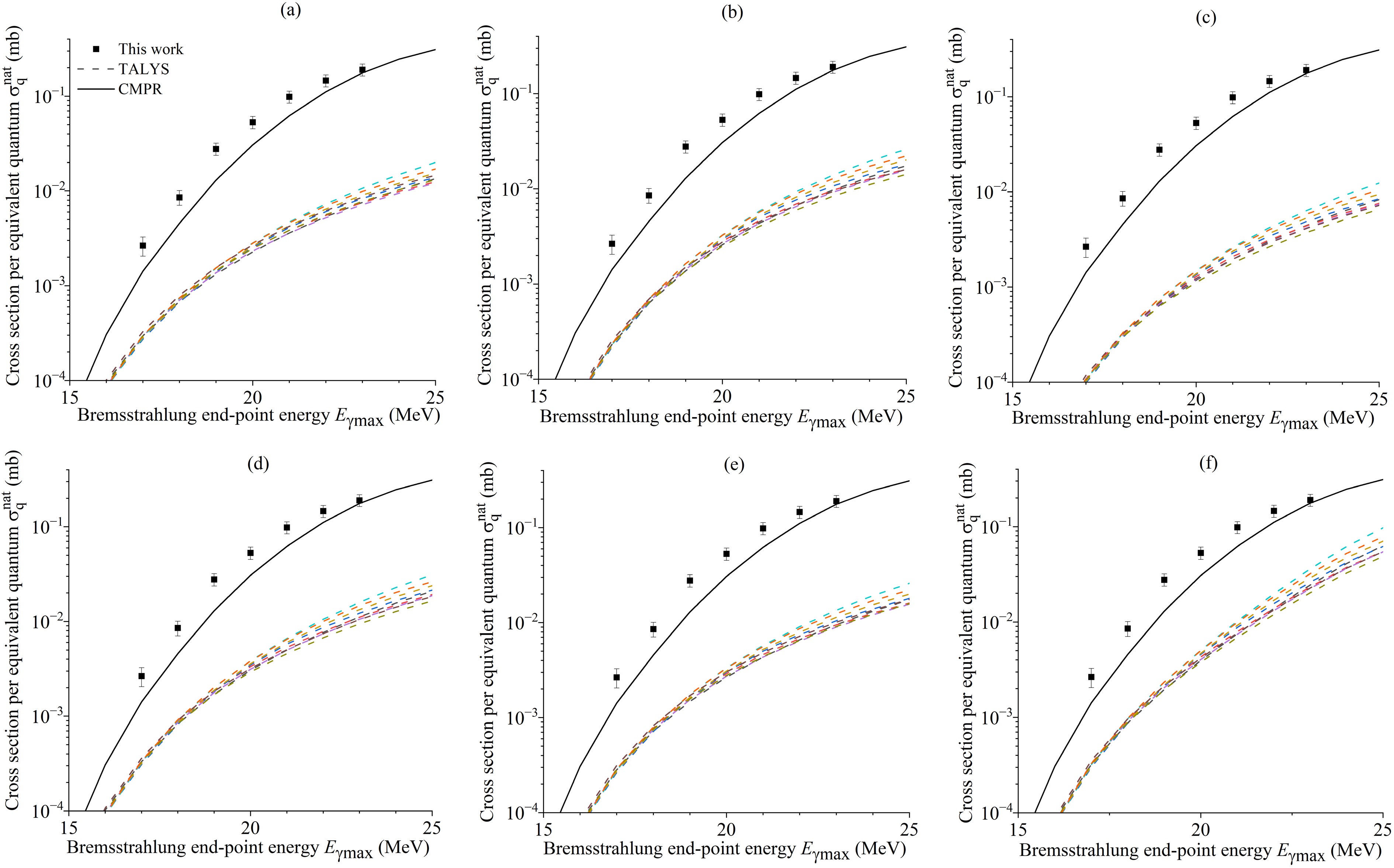
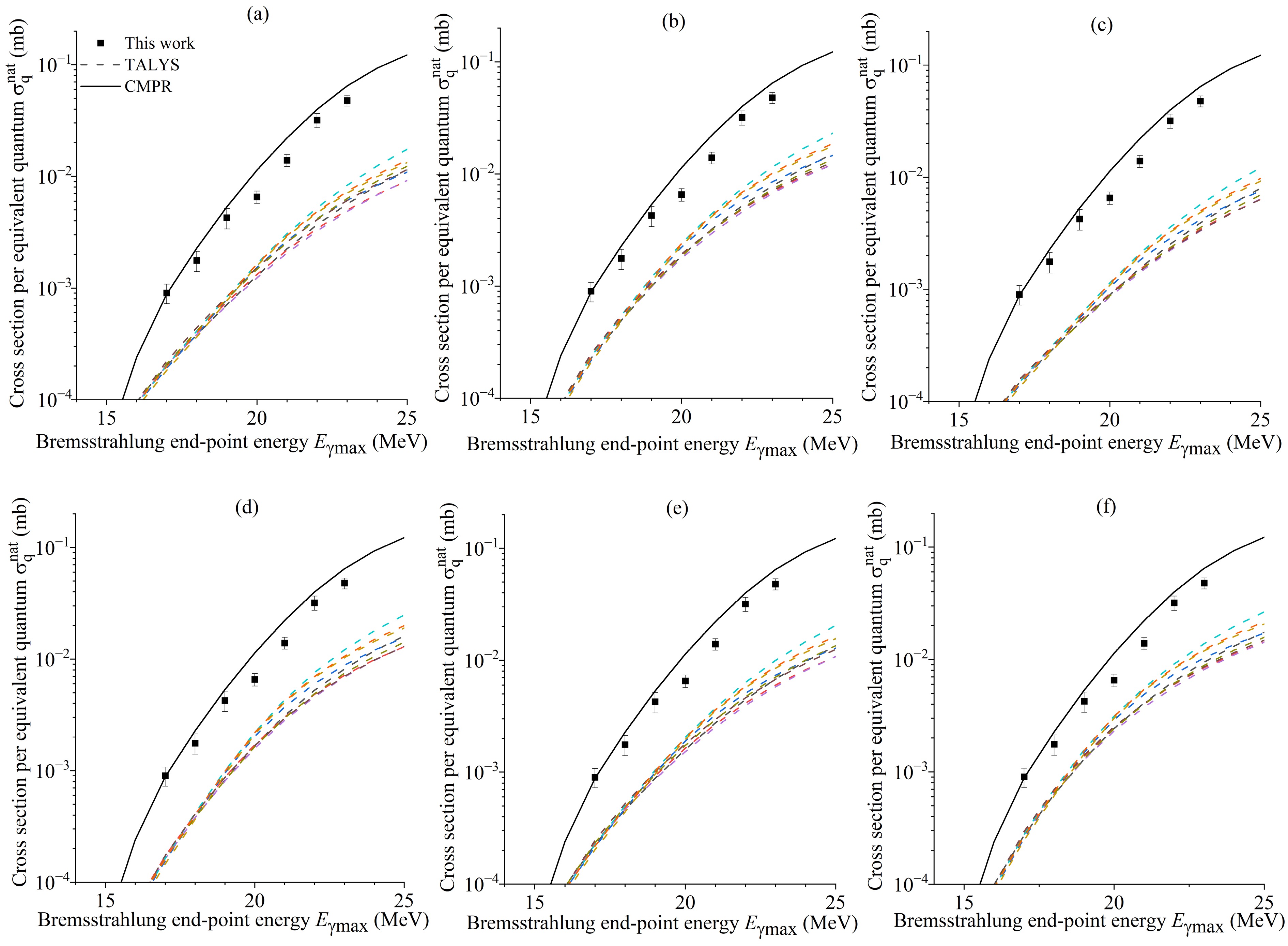
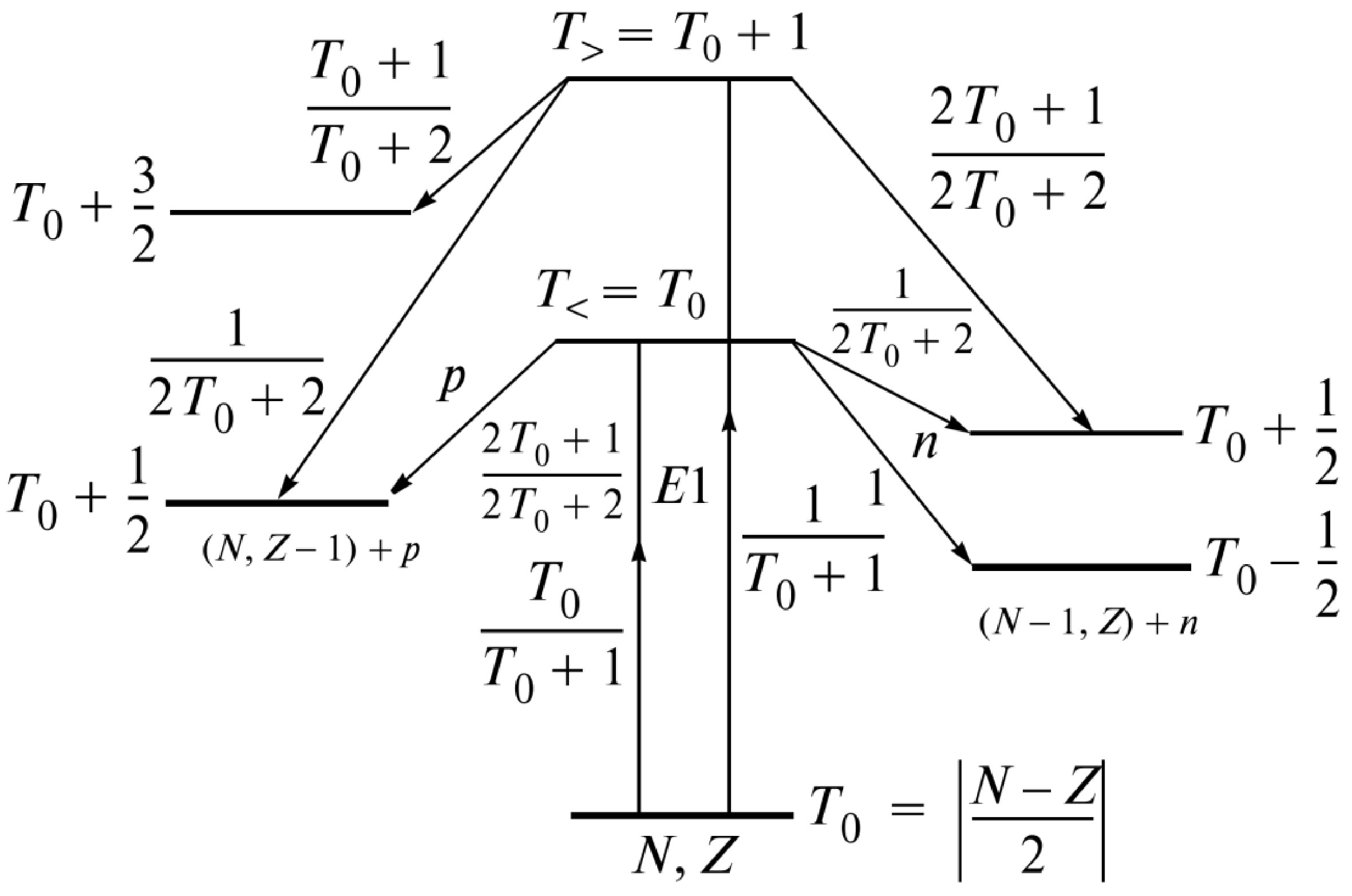
In this study, the γ-activation approach was used to conduct tests at the bremsstrahlung end-point energies of 10−23 MeV by utilizing the MT-25 microtron beam. The experimental values of the relative yields and cross sections per equivalent quantum of photonuclear reactions on the stable isotopes of cadmium and tellurium were compared with the theoretical calculation results obtained from TALYS-2.0 using the default parameters and the combined model of photonucleon reactions (CMPR). The inclusion of isospin splitting in the CMPR allows for the definition of experimental data on the proton escape reactions with energies ranging from 17 to 23 MeV. Therefore, isospin splitting must be considered to accurately describe the decay of the giant dipole resonance. For Cd isotopes, essential discrepancies of yet unclear origin between theory (TALYS 2.0 and CMPR) and experimental data are found in the neutron channel.
In this study, the γ-activation approach was used to conduct tests at the bremsstrahlung end-point energies of 10−23 MeV by utilizing the MT-25 microtron beam. The experimental values of the relative yields and cross sections per equivalent quantum of photonuclear reactions on the stable isotopes of cadmium and tellurium were compared with the theoretical calculation results obtained from TALYS-2.0 using the default parameters and the combined model of photonucleon reactions (CMPR). The inclusion of isospin splitting in the CMPR allows for the definition of experimental data on the proton escape reactions with energies ranging from 17 to 23 MeV. Therefore, isospin splitting must be considered to accurately describe the decay of the giant dipole resonance. For Cd isotopes, essential discrepancies of yet unclear origin between theory (TALYS 2.0 and CMPR) and experimental data are found in the neutron channel.
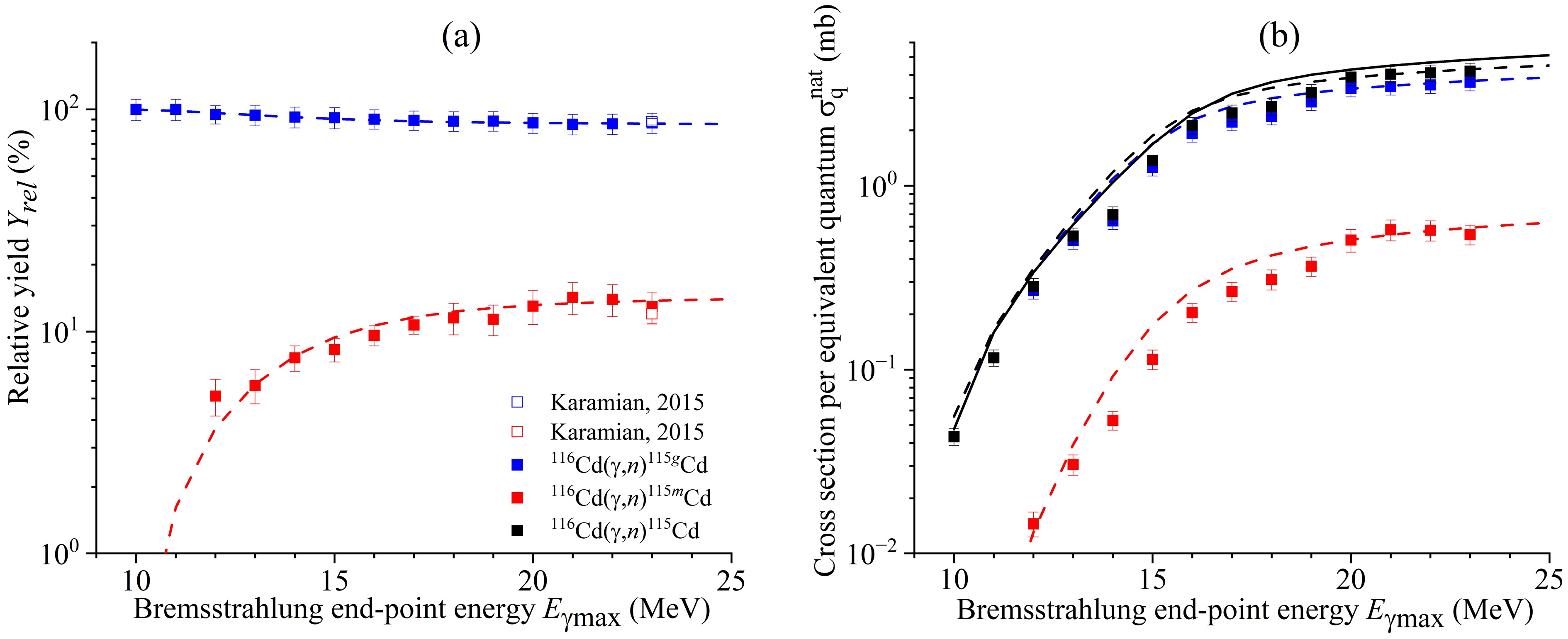
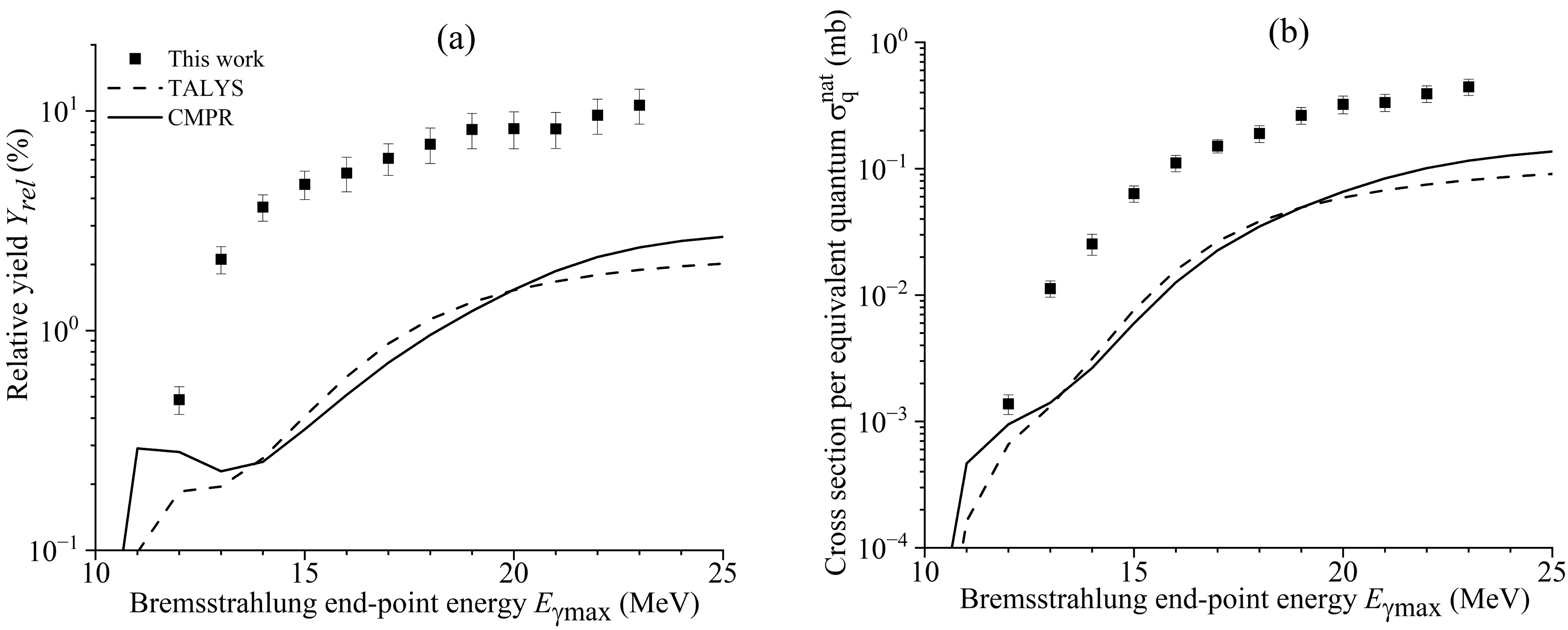
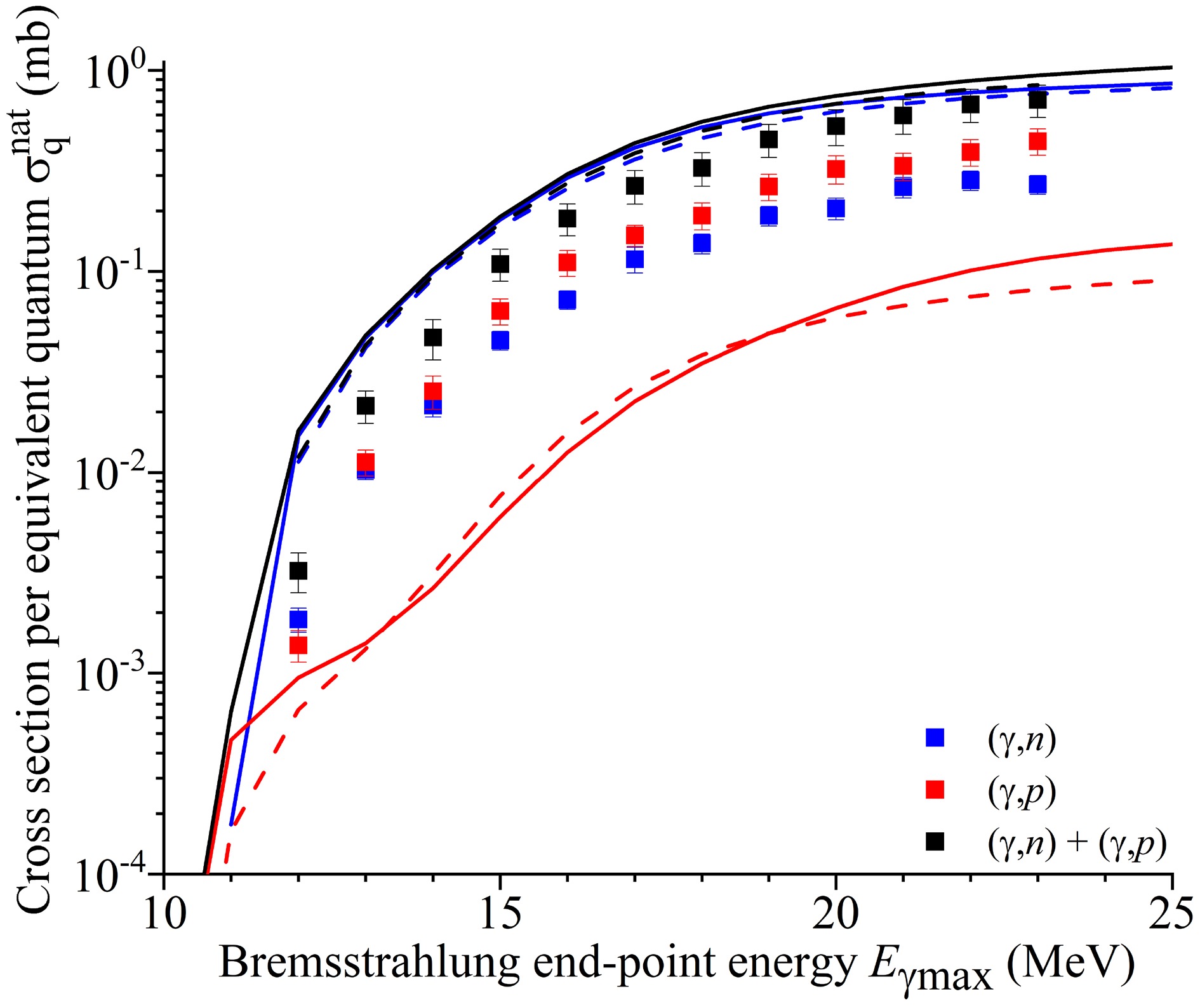
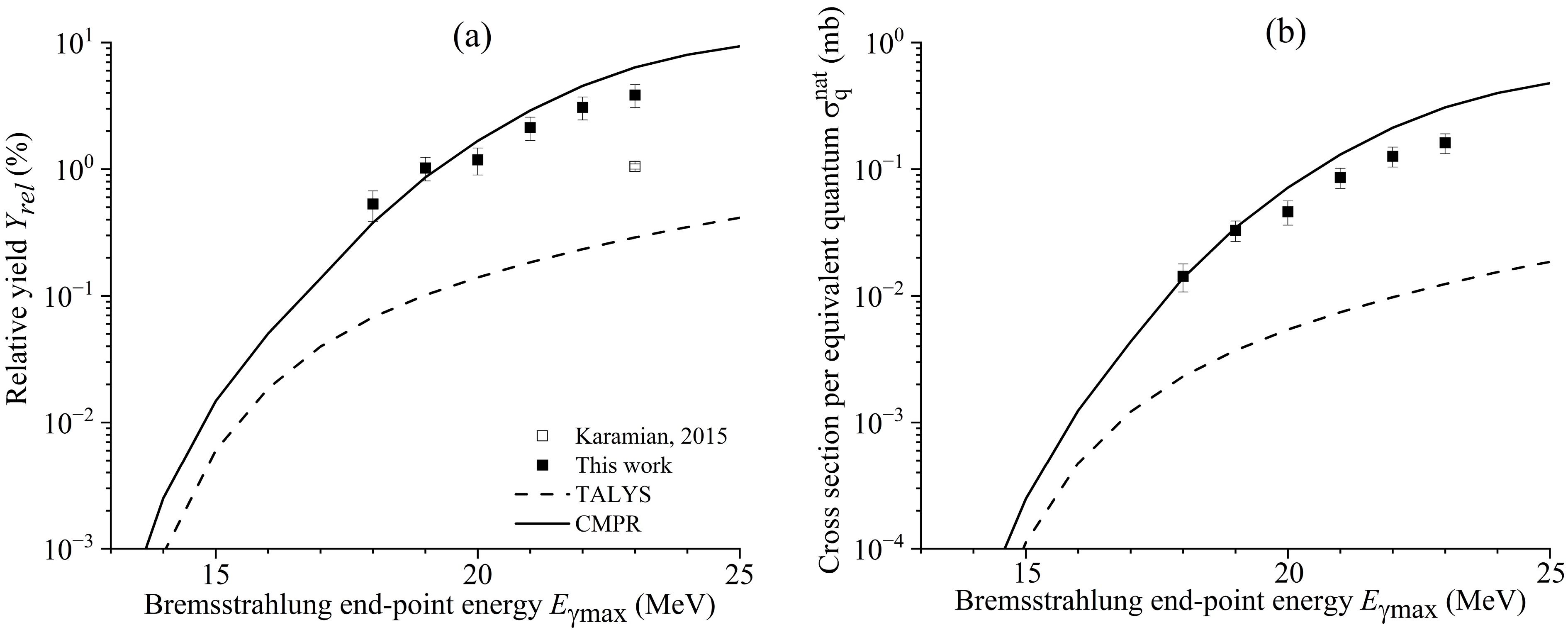
2026, 50(6): 064101. doi: 10.1088/1674-1137/ae4578
Abstract:
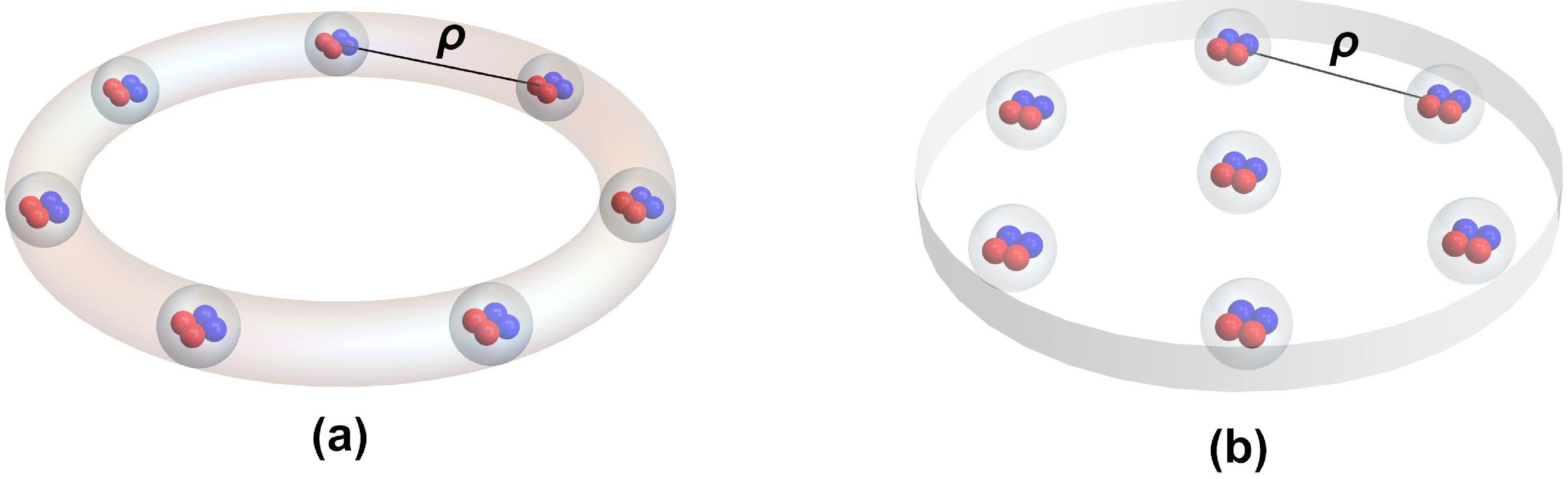
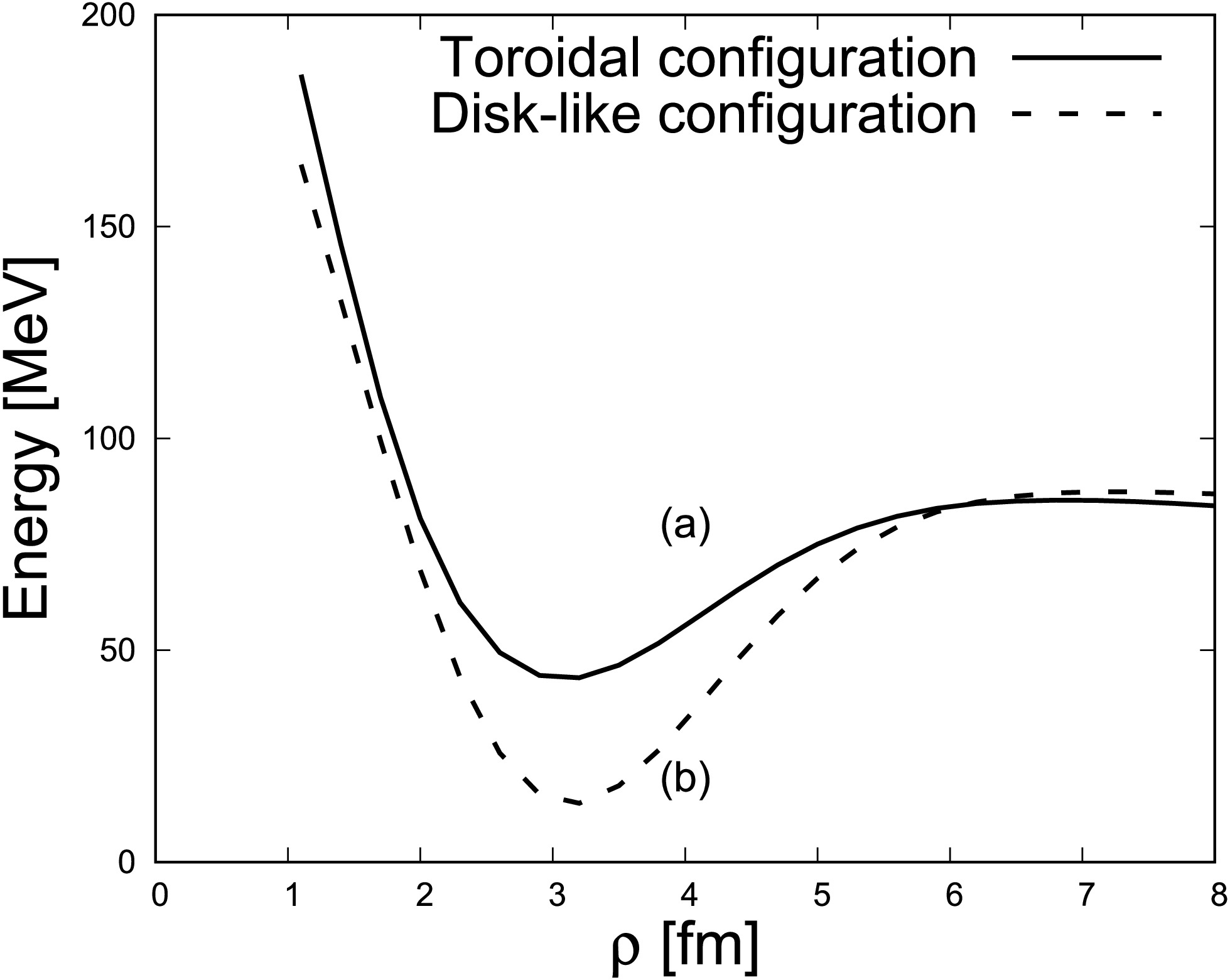
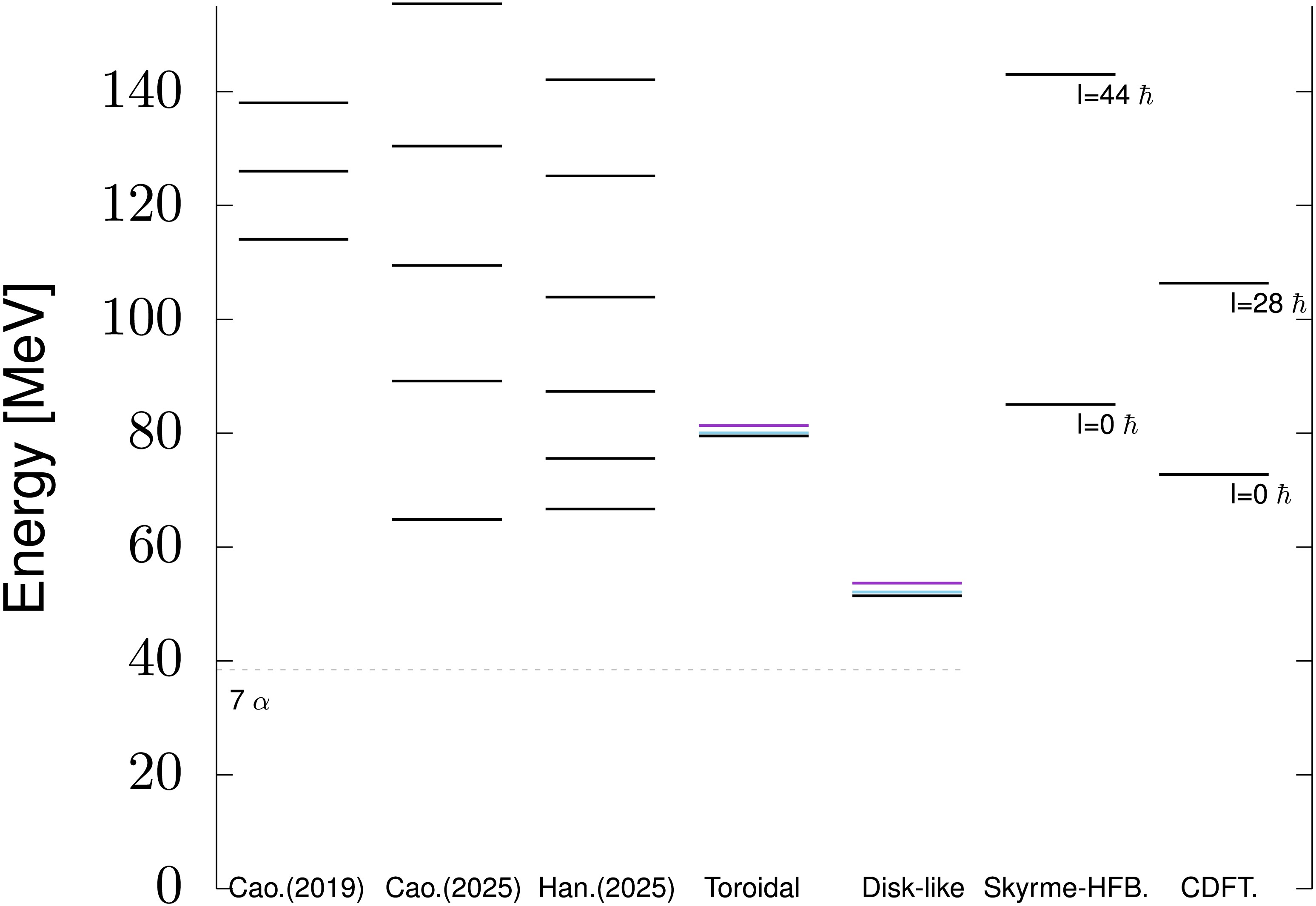
Two 7α cluster configurations in 28Si are investigated within the framework of the generator coordinate method (GCM) with Brink-Bloch 7α wave functions by taking the edge length as the generator coordinate, including a uniform toroidal configuration and a disk-like configuration. Within the framework of the 7α cluster model with imposed geometric symmetry, we observe that a uniform toroidal configuration may emerge at approximately 40 MeV above the 7α threshold. This provides a cluster-model perspective that complements some mean-field descriptions of toroidal structure in 28Si.
Two 7α cluster configurations in 28Si are investigated within the framework of the generator coordinate method (GCM) with Brink-Bloch 7α wave functions by taking the edge length as the generator coordinate, including a uniform toroidal configuration and a disk-like configuration. Within the framework of the 7α cluster model with imposed geometric symmetry, we observe that a uniform toroidal configuration may emerge at approximately 40 MeV above the 7α threshold. This provides a cluster-model perspective that complements some mean-field descriptions of toroidal structure in 28Si.
2026, 50(6): 064102. doi: 10.1088/1674-1137/ae50e6
Abstract:
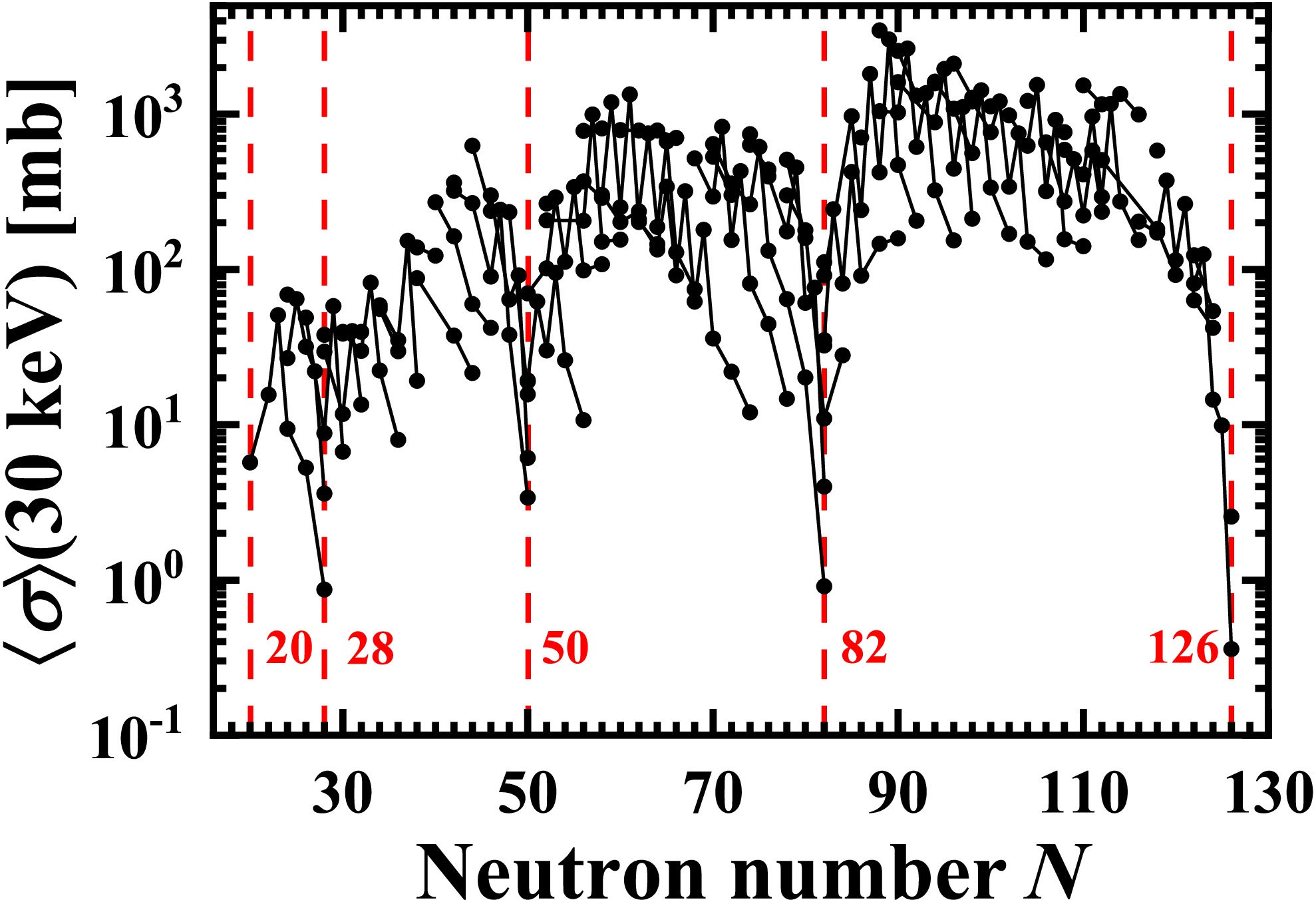
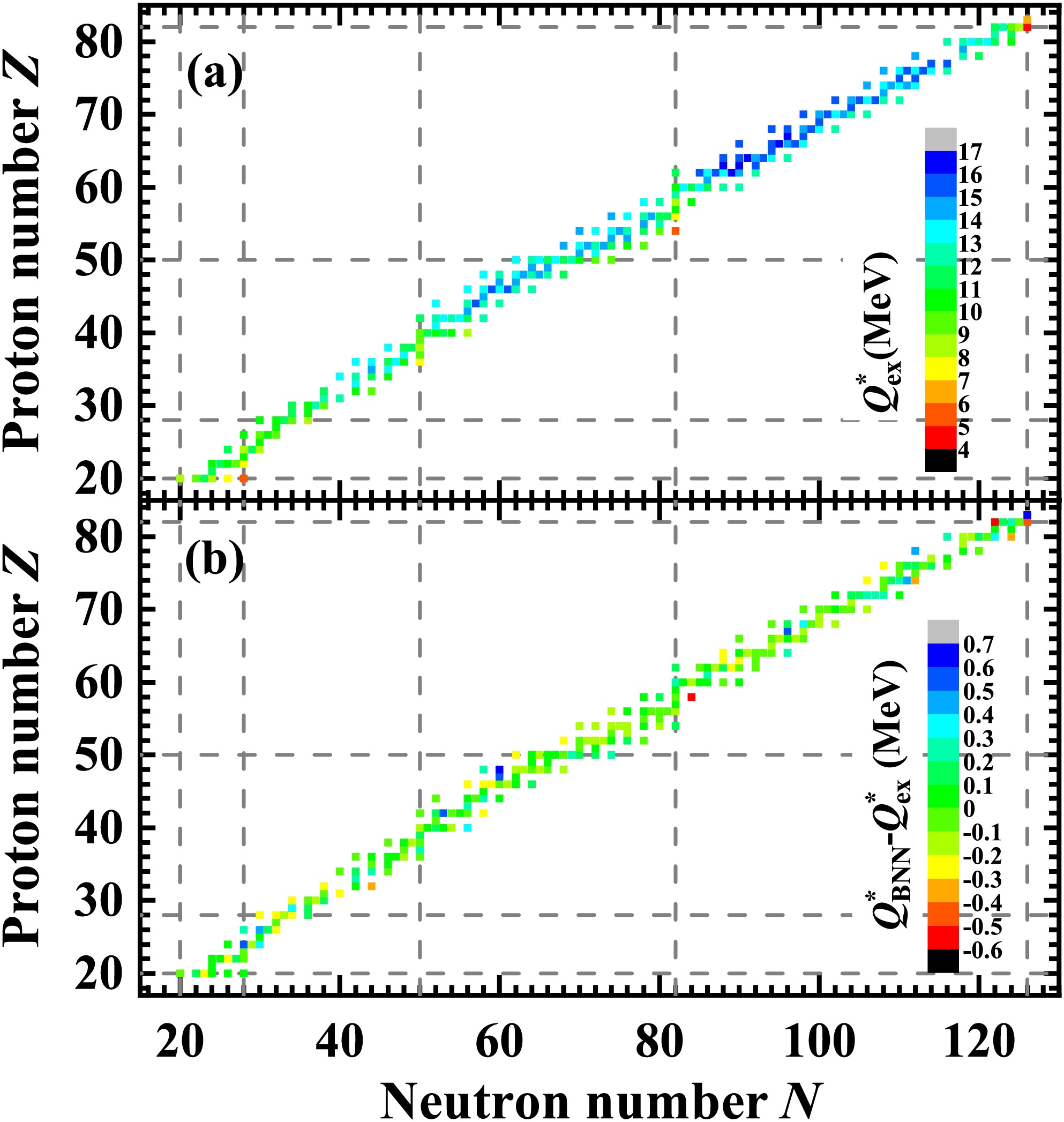
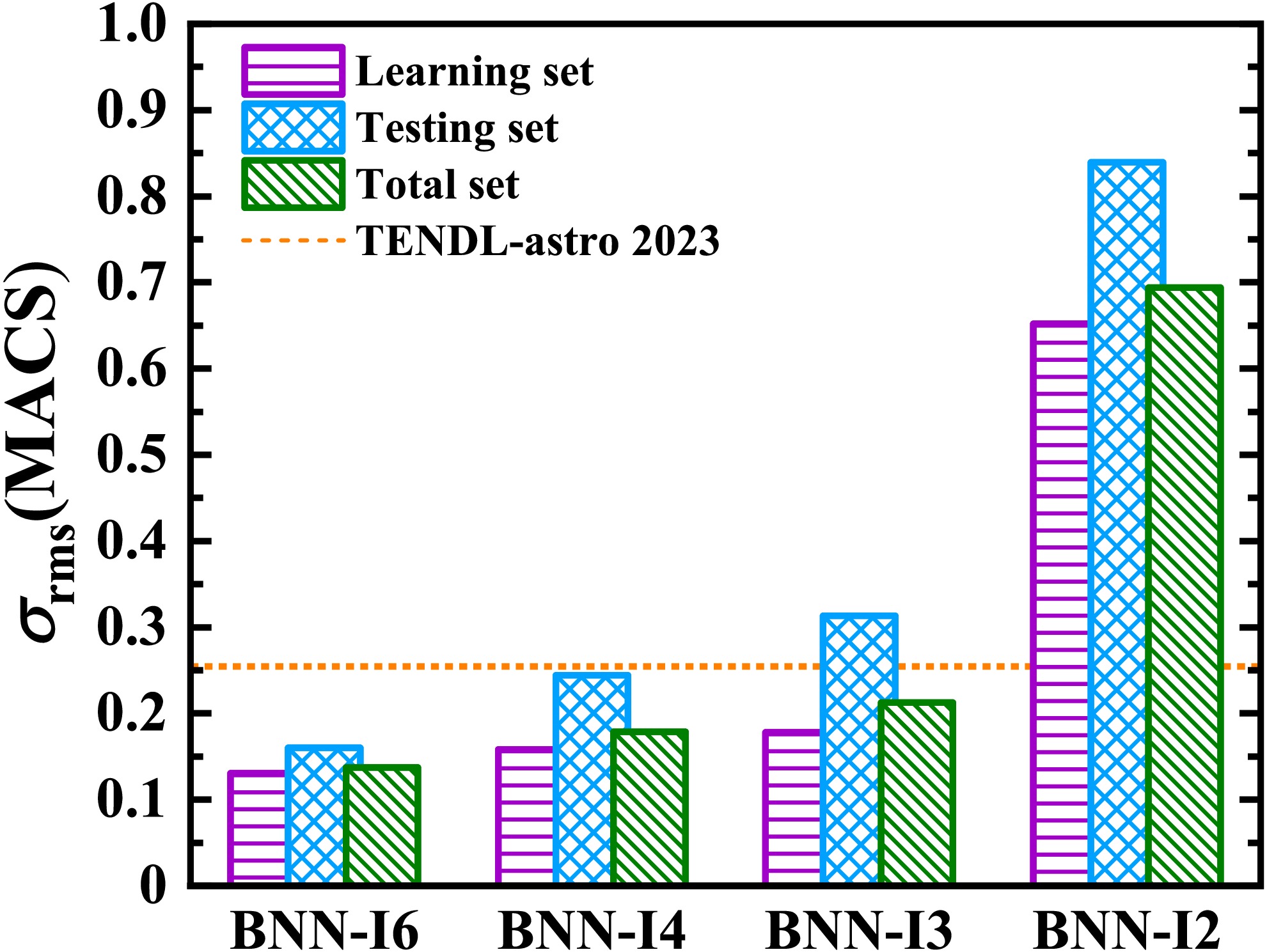
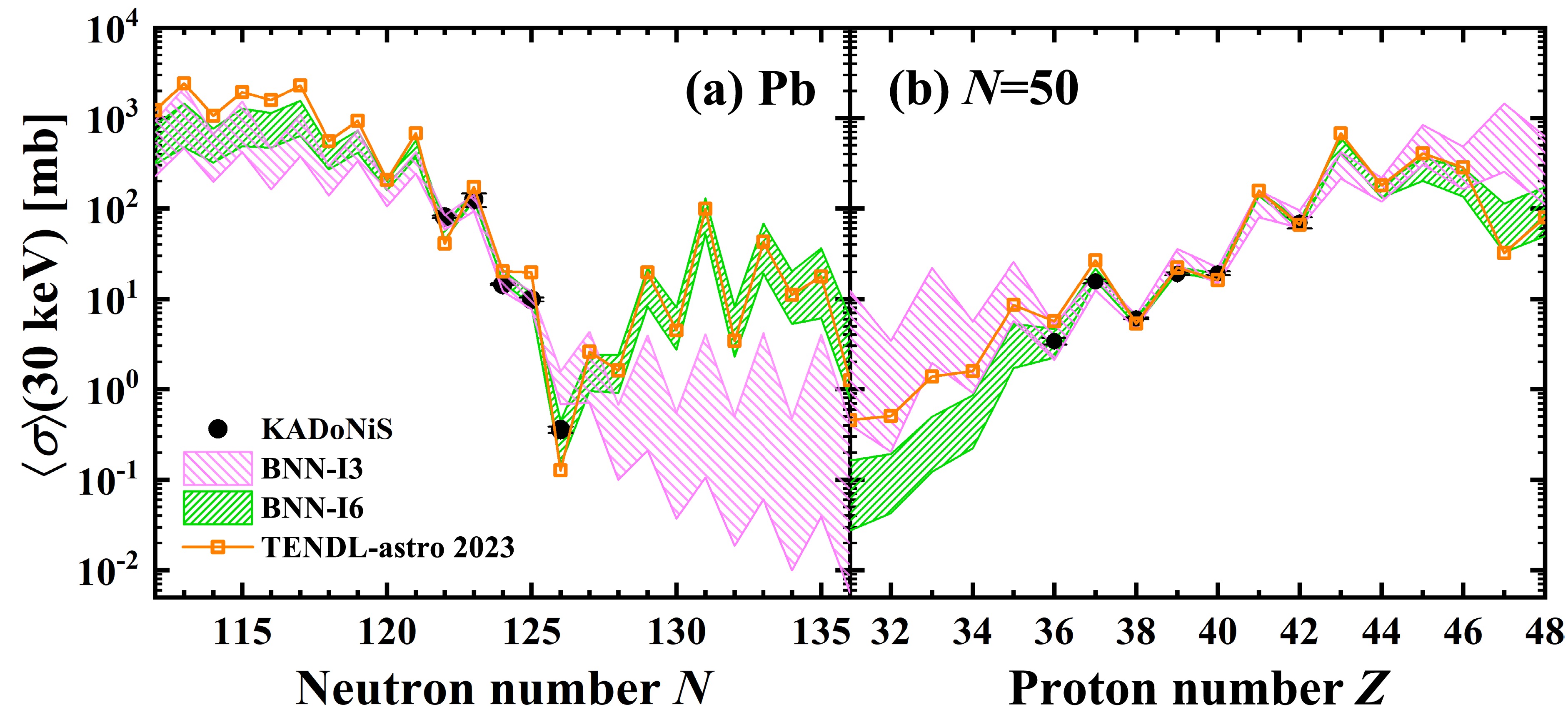
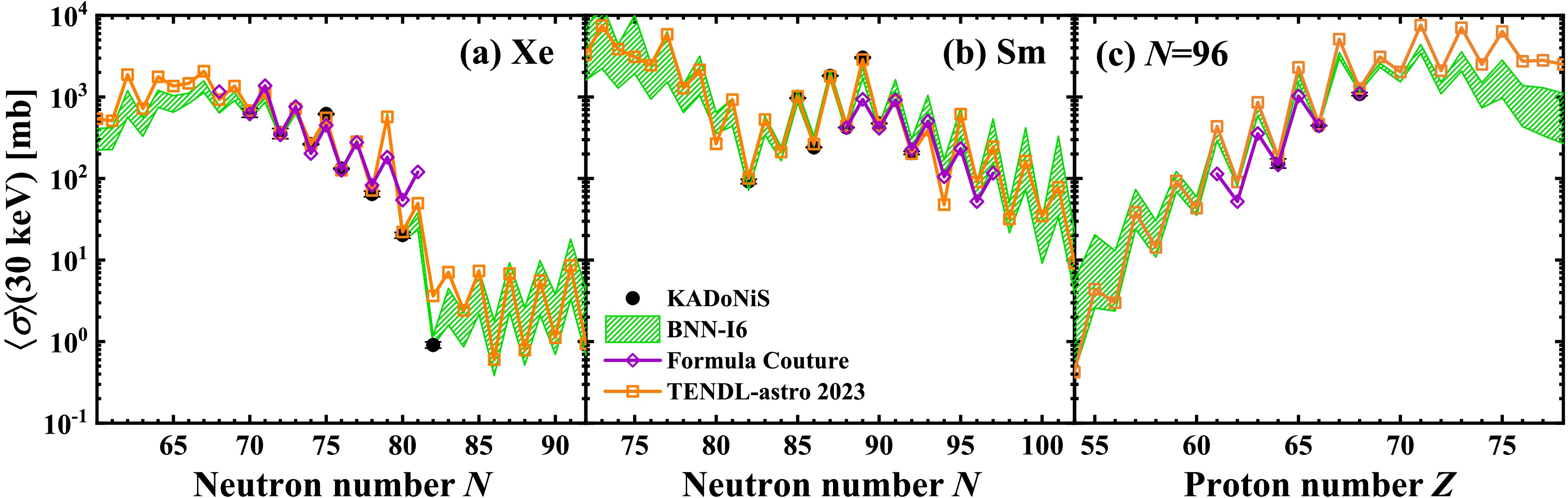
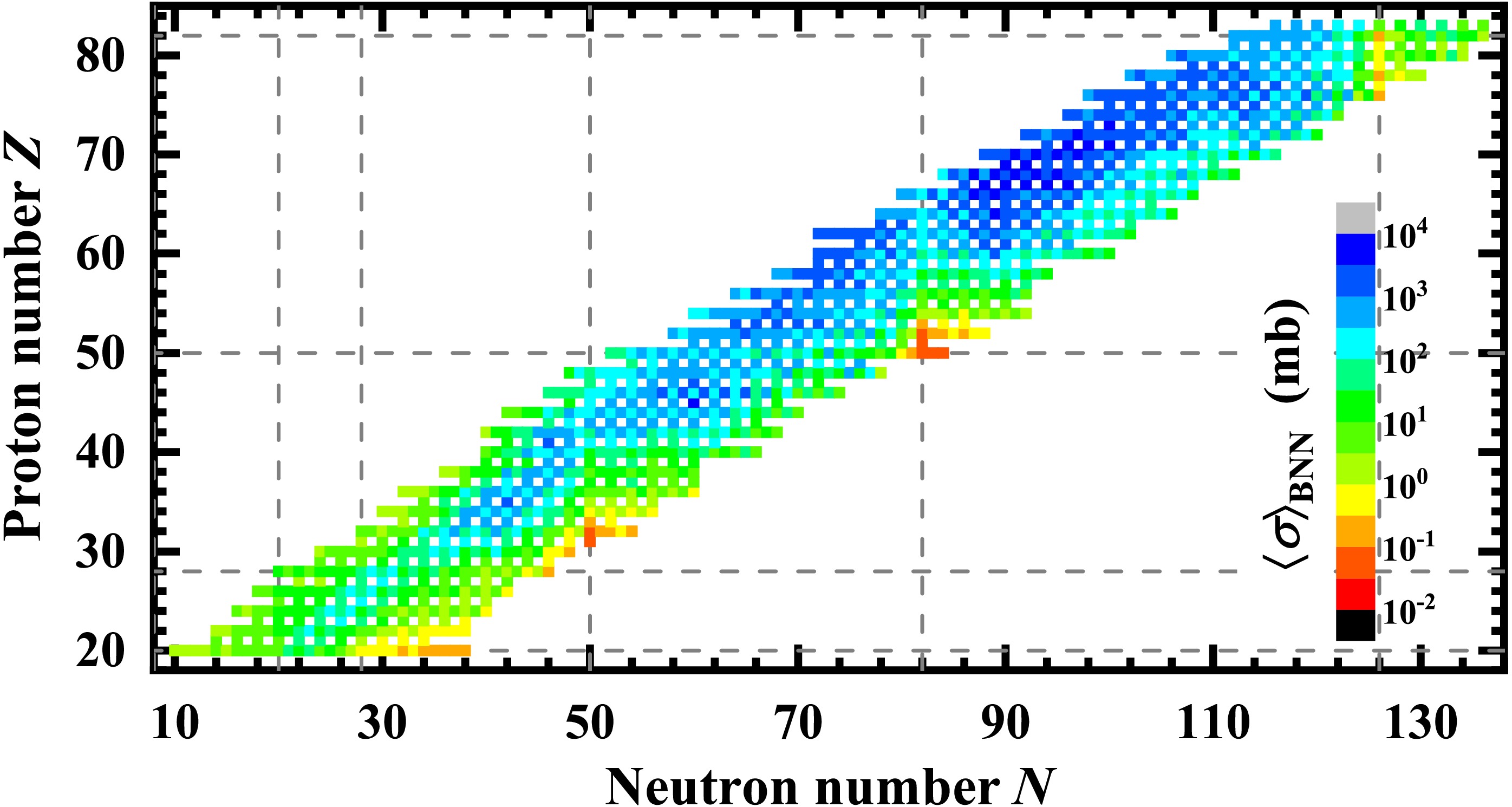
Neutron-capture reaction cross sections are studied using the Bayesian neural network (BNN) approach in combination with a recently proposed empirical formula for the cross sections. In addition to the proton and neutron numbers, four physical quantities are found to be important for improving the predictive performance of the BNN approach: the pairing effect-related variable δ, shell effect-related variables\begin{document}$ \nu_{n} $\end{document} \begin{document}$ \nu_{p} $\end{document} \begin{document}$ n,\gamma $\end{document} \begin{document}$ kT $\end{document}
Neutron-capture reaction cross sections are studied using the Bayesian neural network (BNN) approach in combination with a recently proposed empirical formula for the cross sections. In addition to the proton and neutron numbers, four physical quantities are found to be important for improving the predictive performance of the BNN approach: the pairing effect-related variable δ, shell effect-related variables
2026, 50(6): 064103. doi: 10.1088/1674-1137/ae5efa
Abstract:
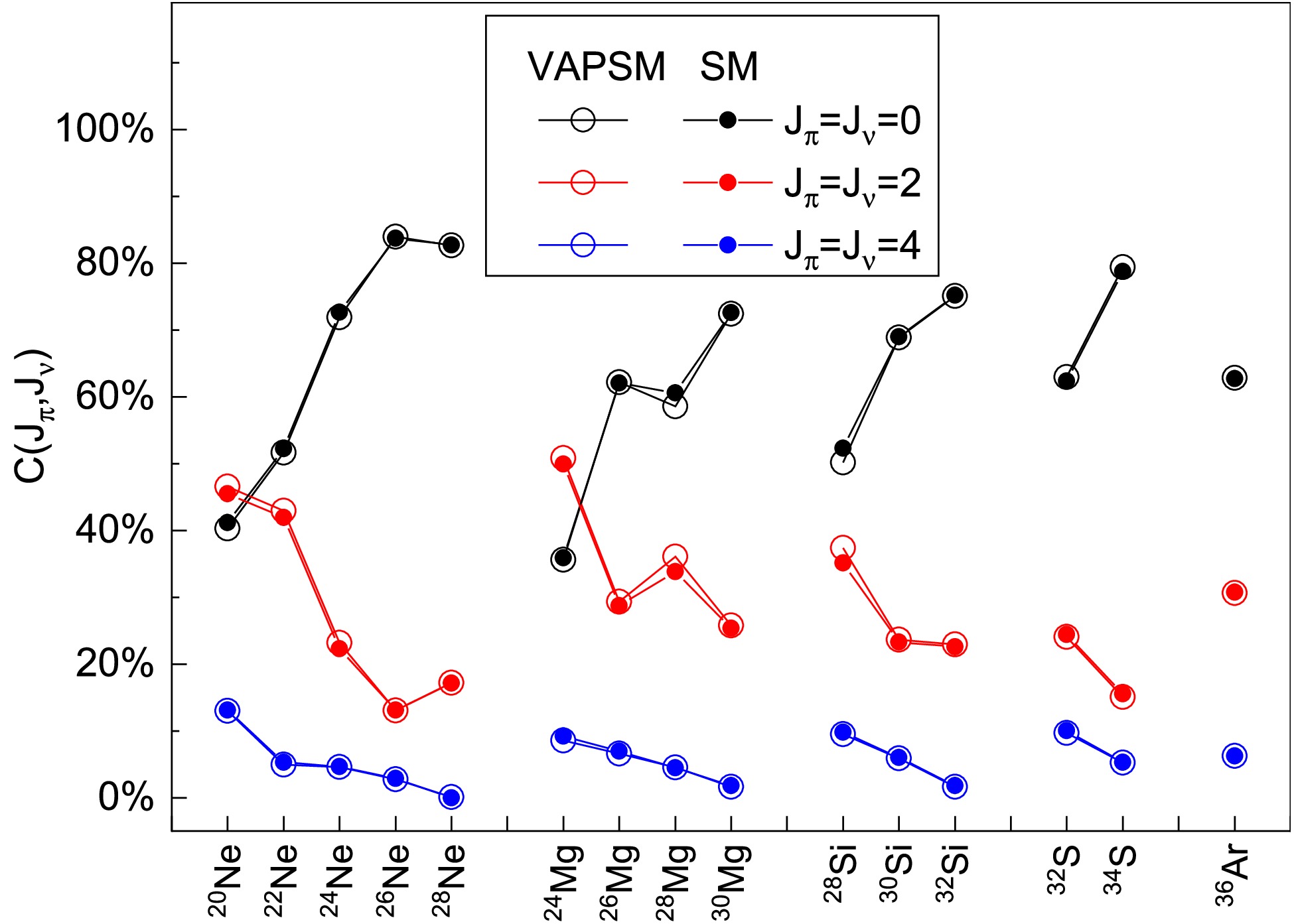
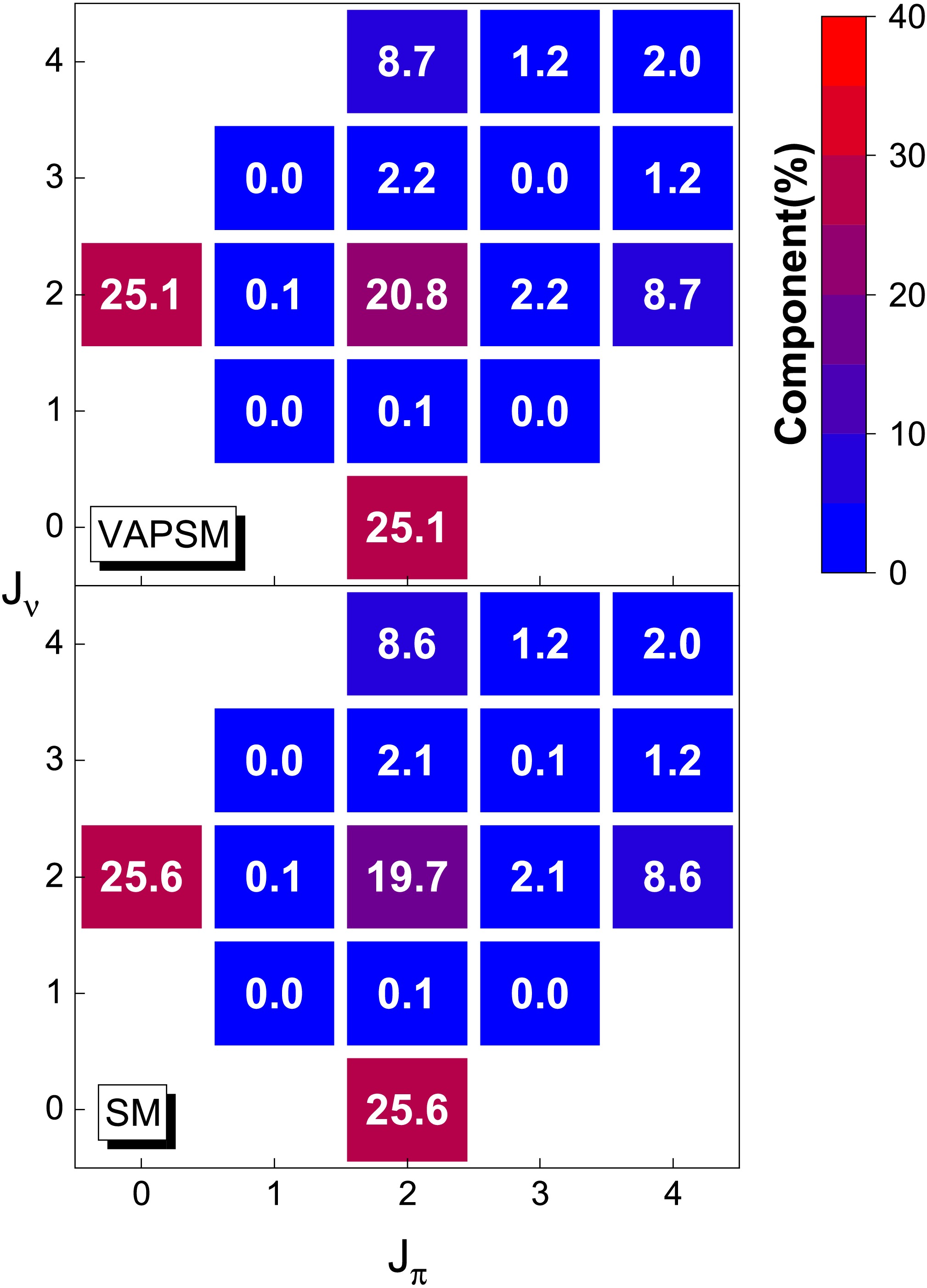
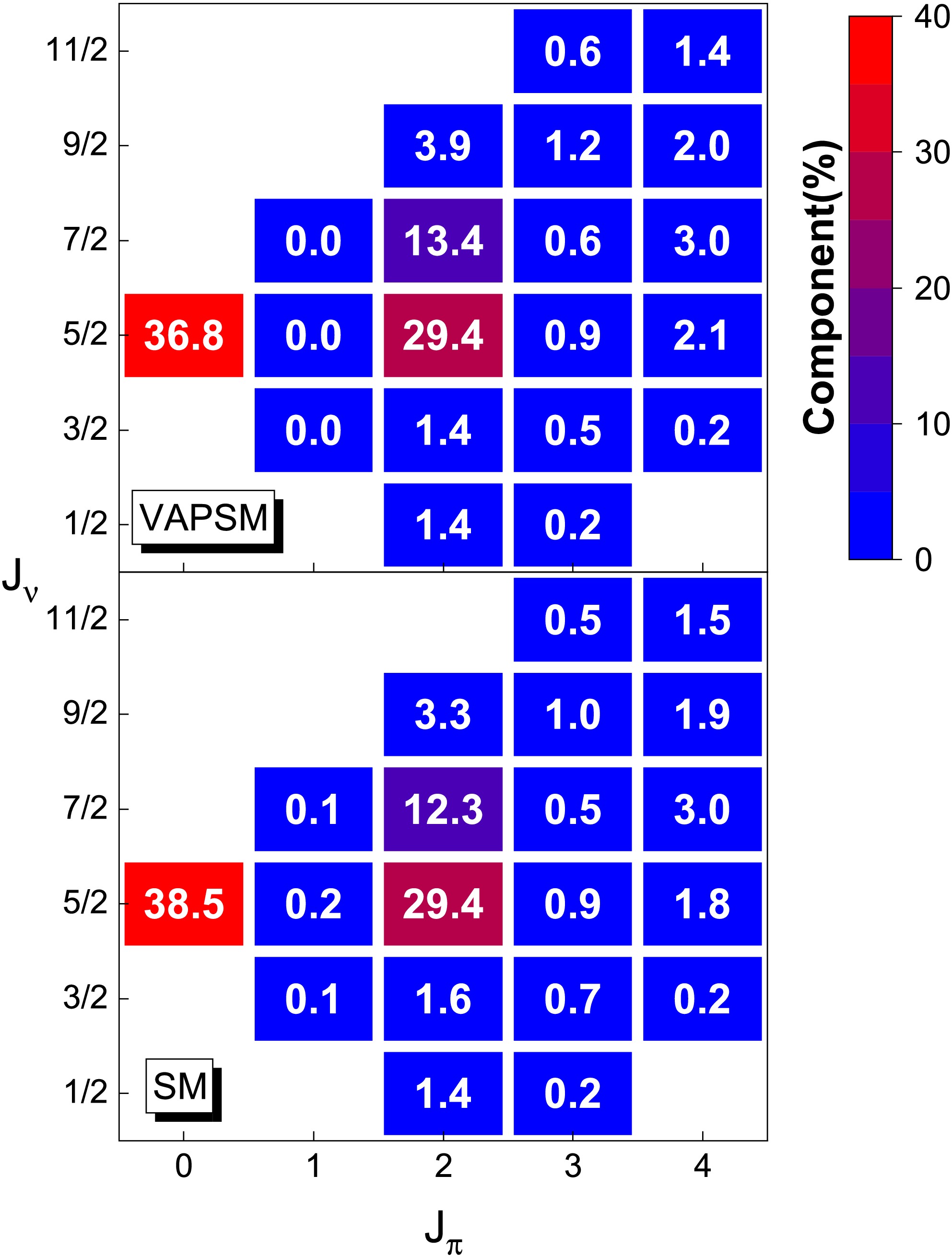
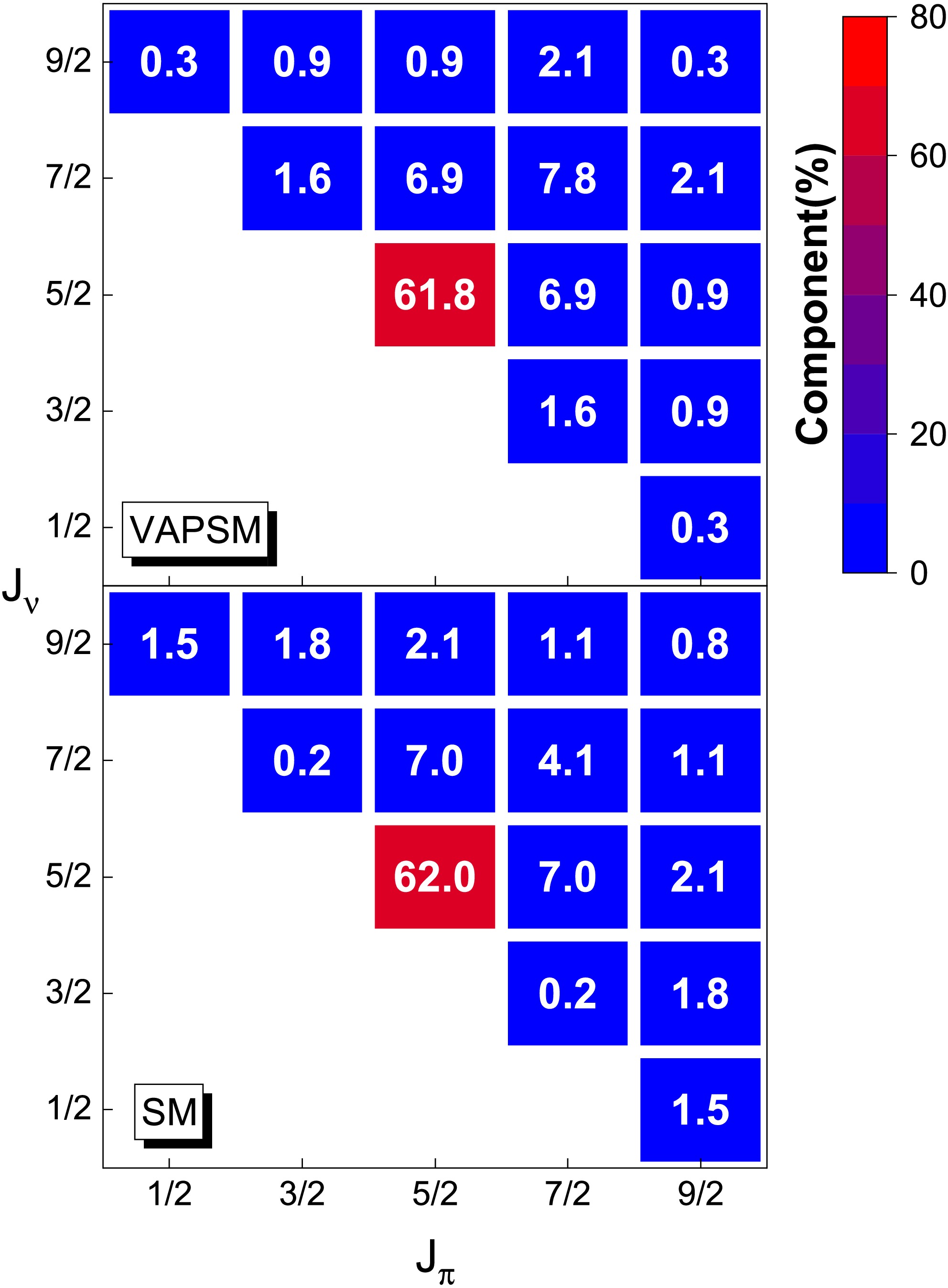
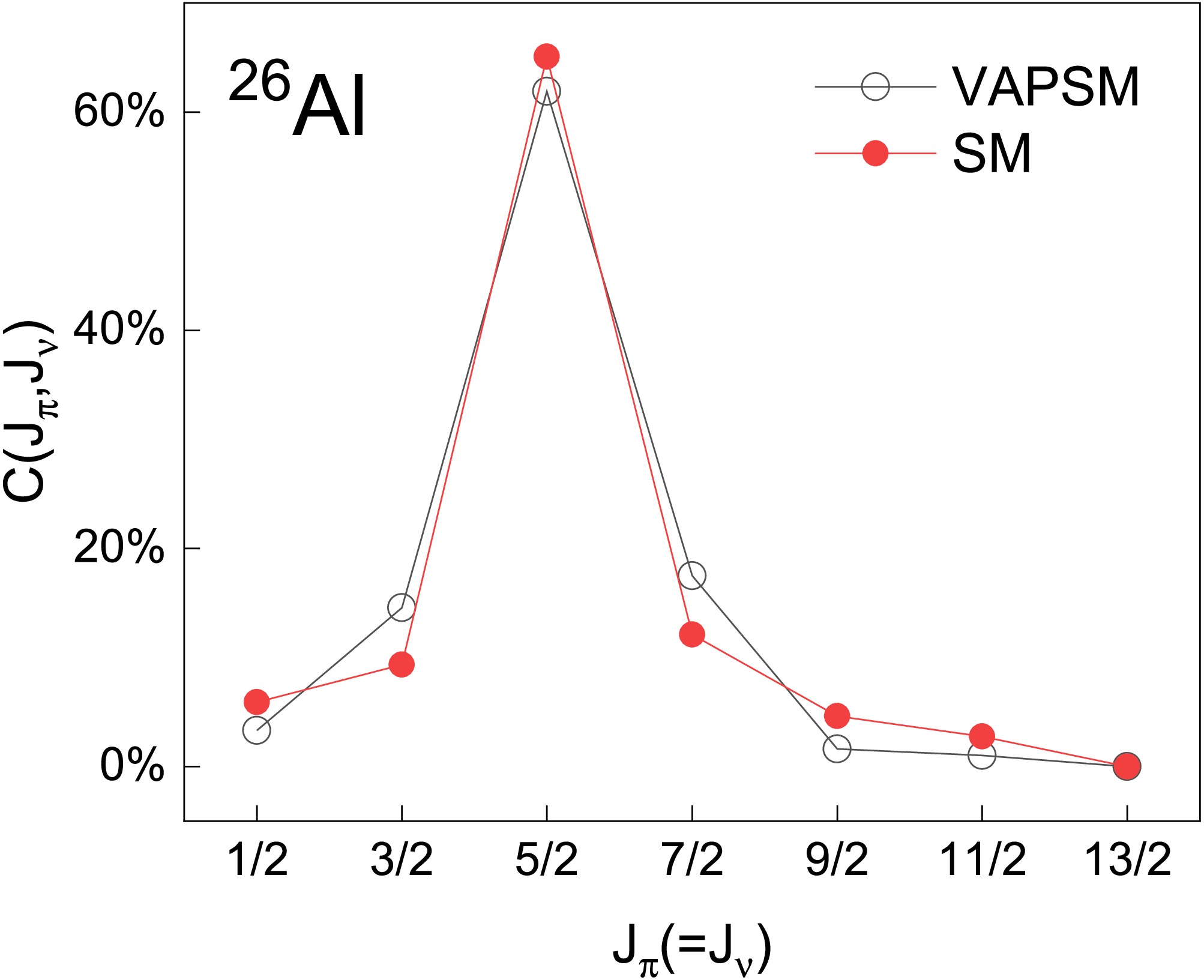
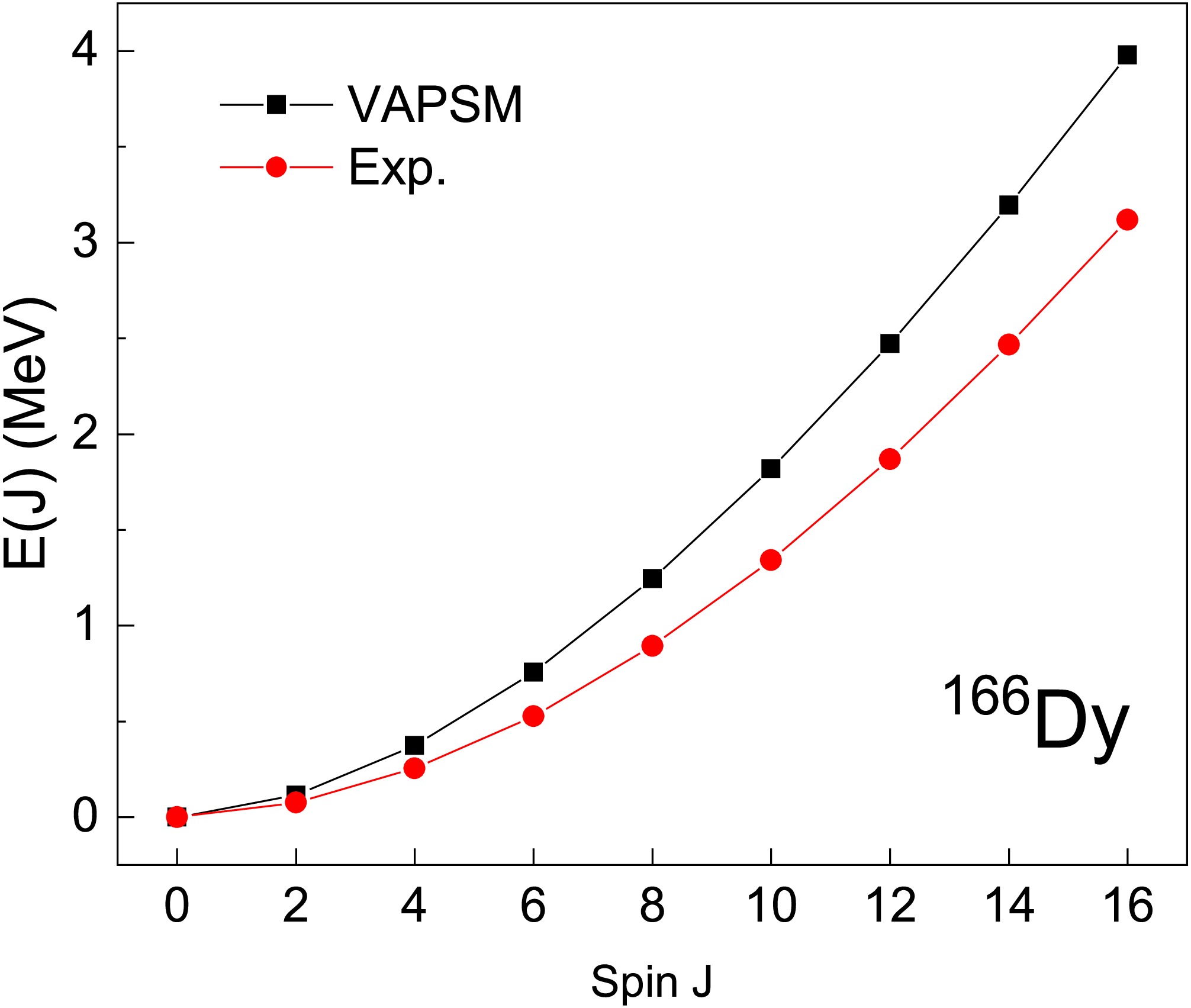
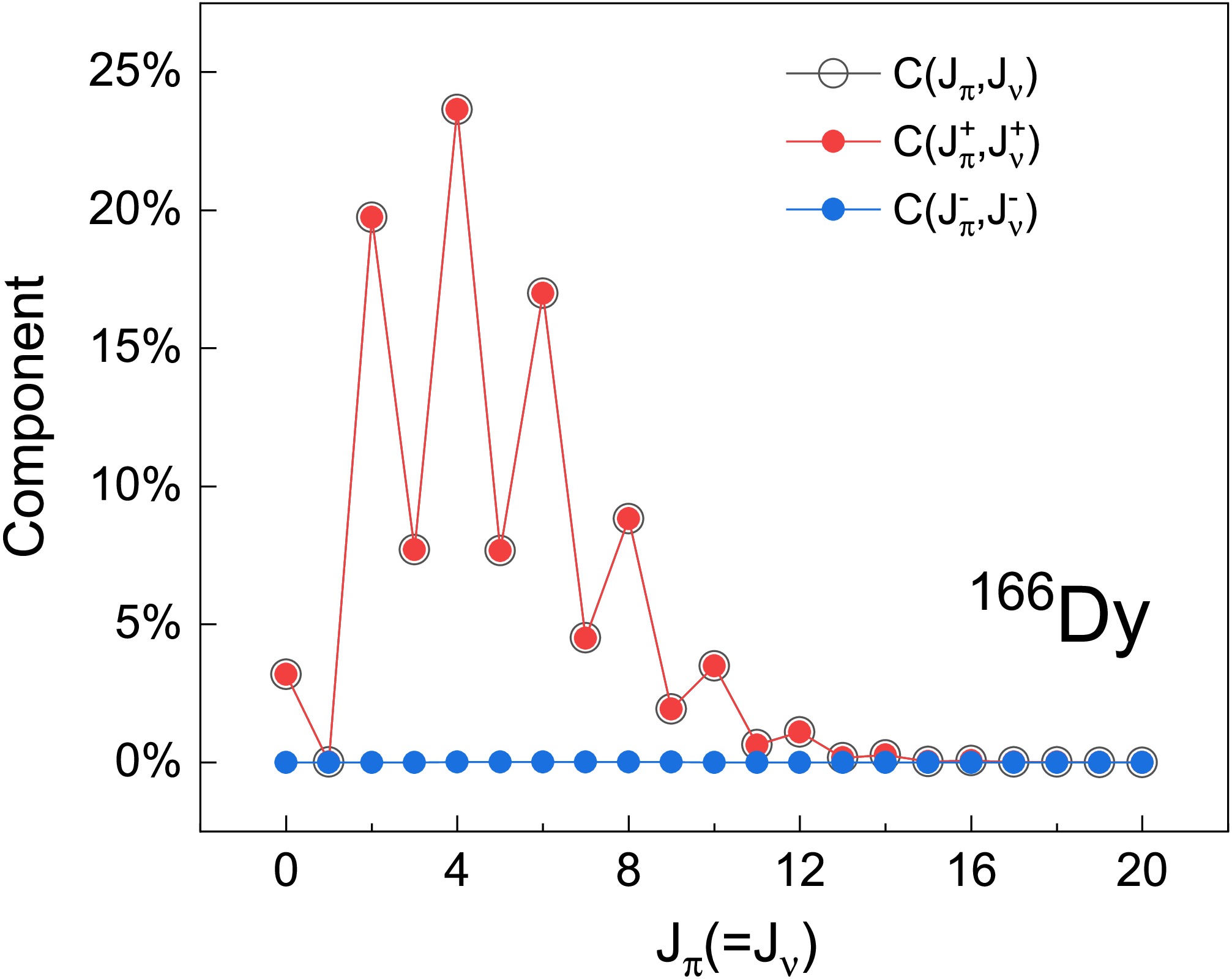
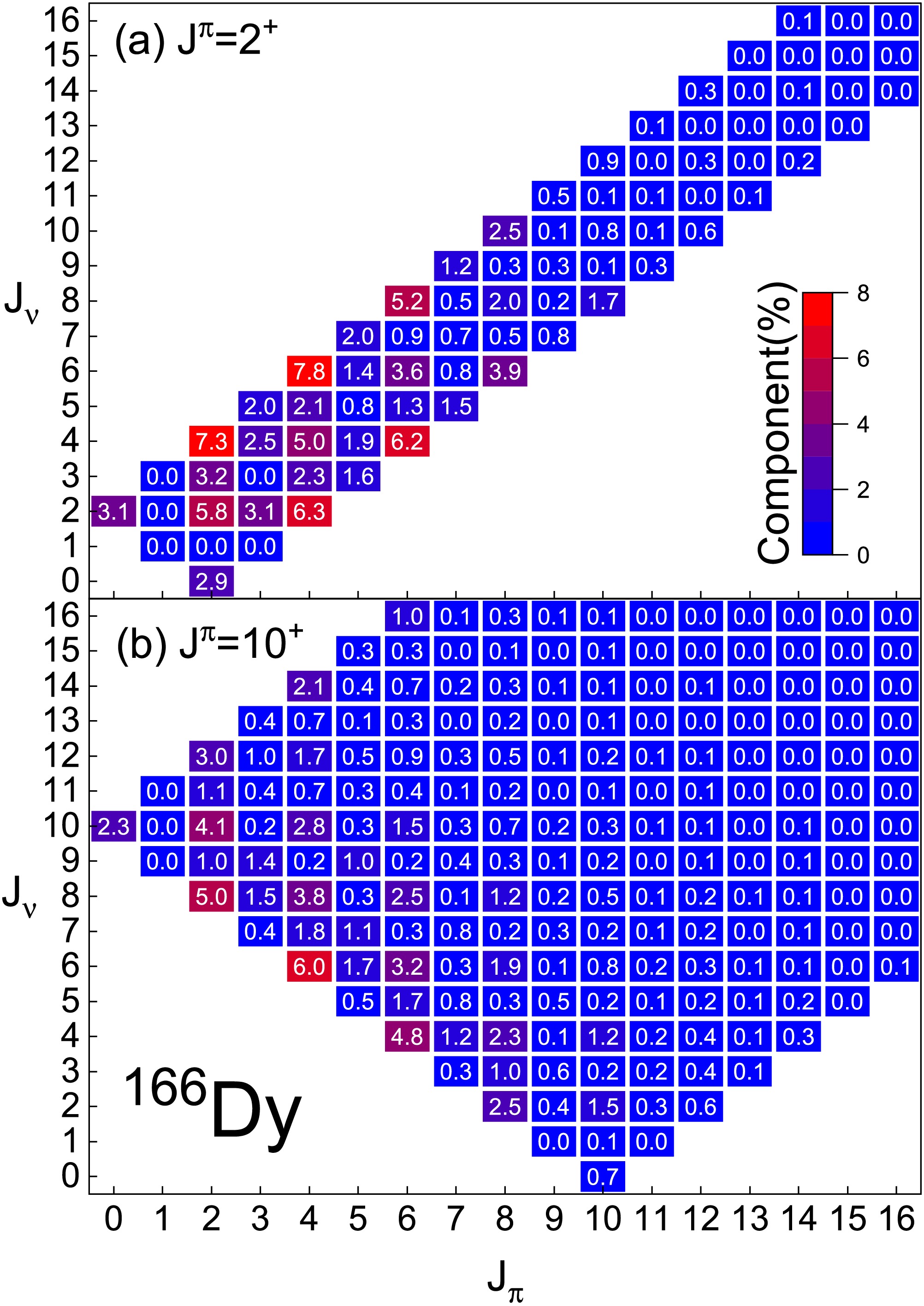
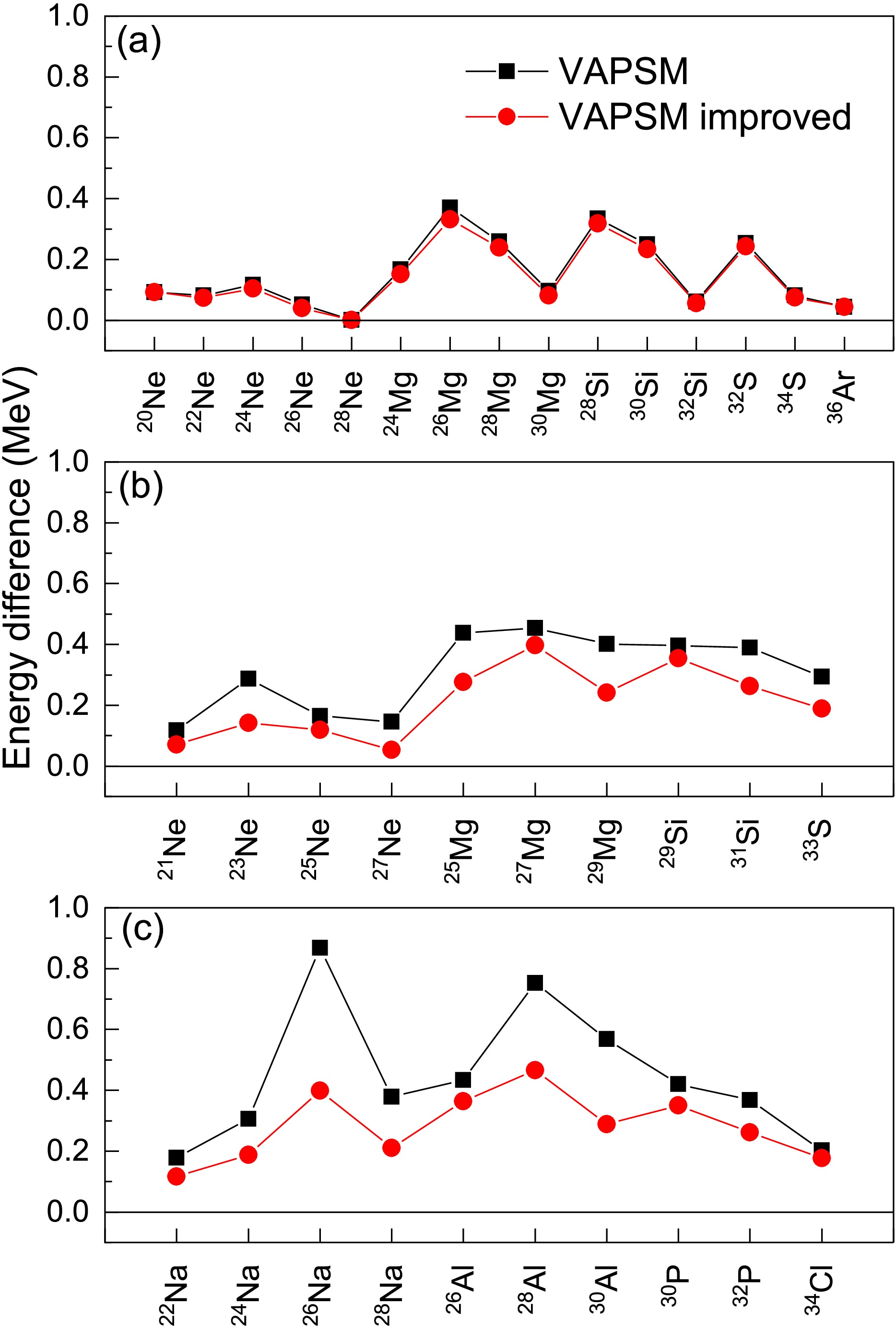
Angular momentum projection is a fundamental technique for constructing nuclear wave functions with definite angular momentum. Traditionally, a projected nuclear wave function is expanded in basis states obtained by performing angular momentum projection directly on reference states of the entire nuclear system. Alternatively, one can construct nuclear wave functions using another kind of projected bases, called the coupled projected bases, which are generated by first performing angular momentum projection on the reference states for neutrons and protons, respectively, and then coupling the projected neutron states with the projected proton ones via Clebsch–Gordon coefficients. In the present work, we derive a new identity that provides a decomposition of the conventional angular-momentum-projected nuclear wave function in terms of the coupled projected bases. This decomposition offers direct insight into the underlying structure of nuclear states. To illustrate this point, we present decompositions of variation-after-projection shell-model (VAPSM) wave functions for the ground states of several sd-shell nuclei. Notably, even for the ground states of even-even nuclei, the nucleons are not fully paired. Finally, we demonstrate that the VAPSM wave function can be further improved by employing the coupled projected bases.
Angular momentum projection is a fundamental technique for constructing nuclear wave functions with definite angular momentum. Traditionally, a projected nuclear wave function is expanded in basis states obtained by performing angular momentum projection directly on reference states of the entire nuclear system. Alternatively, one can construct nuclear wave functions using another kind of projected bases, called the coupled projected bases, which are generated by first performing angular momentum projection on the reference states for neutrons and protons, respectively, and then coupling the projected neutron states with the projected proton ones via Clebsch–Gordon coefficients. In the present work, we derive a new identity that provides a decomposition of the conventional angular-momentum-projected nuclear wave function in terms of the coupled projected bases. This decomposition offers direct insight into the underlying structure of nuclear states. To illustrate this point, we present decompositions of variation-after-projection shell-model (VAPSM) wave functions for the ground states of several sd-shell nuclei. Notably, even for the ground states of even-even nuclei, the nucleons are not fully paired. Finally, we demonstrate that the VAPSM wave function can be further improved by employing the coupled projected bases.
2026, 50(6): 065101. doi: 10.1088/1674-1137/ae457a
Abstract:
In this paper, we investigate the quantum gravitational corrections to the thermodynamical quantities of Reissner-Nordström black holes within the framework of effective field theory. The effective action originates from integrating out massless particles, including gravitons, at the one-loop level. We perform a complete thermodynamic analysis for both non-extremal and extremal black holes and are mainly concerned with the shift in the charge-to-mass ratio\begin{document}$ q/M$\end{document} \begin{document}$ q/M>1$\end{document}
In this paper, we investigate the quantum gravitational corrections to the thermodynamical quantities of Reissner-Nordström black holes within the framework of effective field theory. The effective action originates from integrating out massless particles, including gravitons, at the one-loop level. We perform a complete thermodynamic analysis for both non-extremal and extremal black holes and are mainly concerned with the shift in the charge-to-mass ratio
2026, 50(6): 065102. doi: 10.1088/1674-1137/ae457c
Abstract:
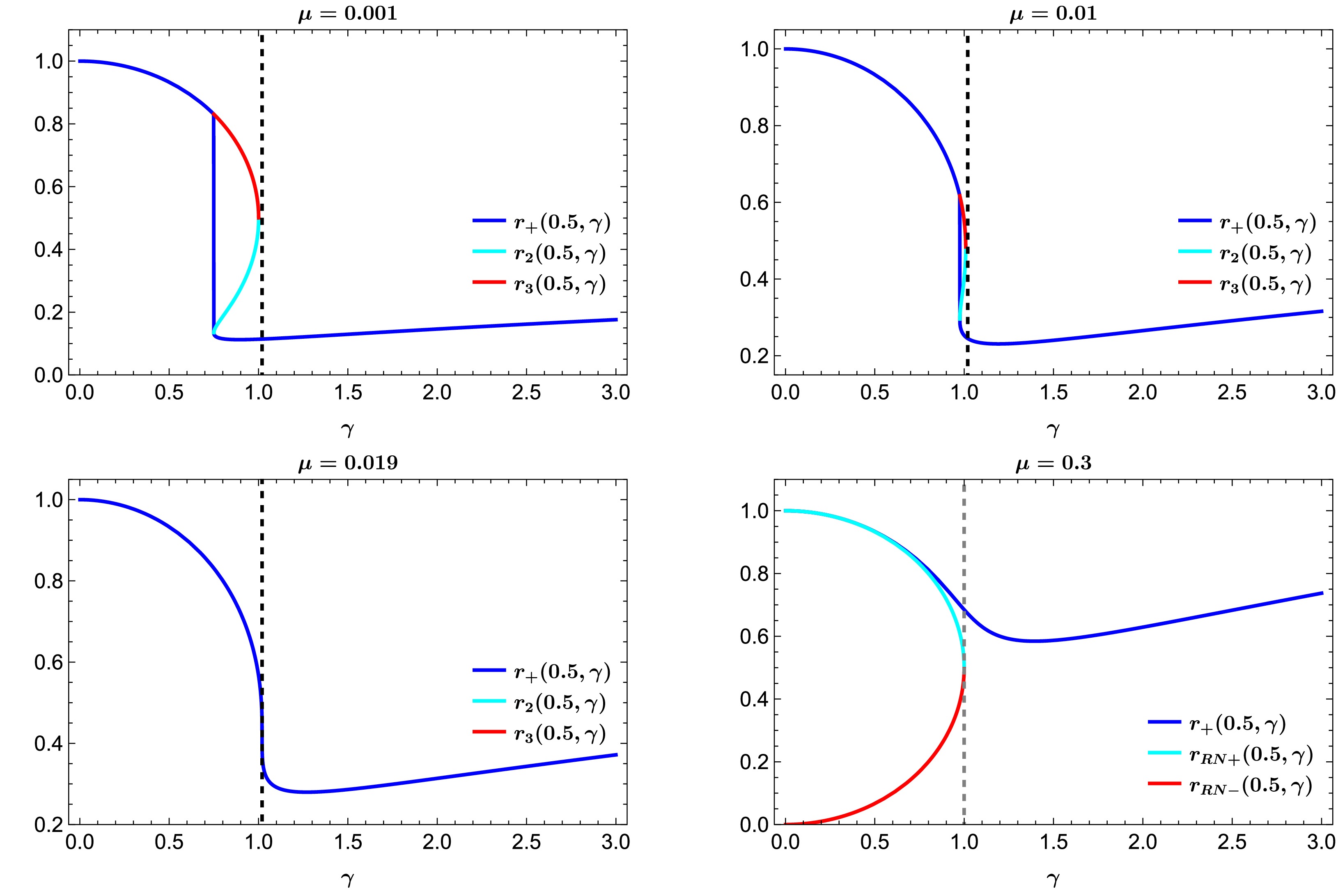
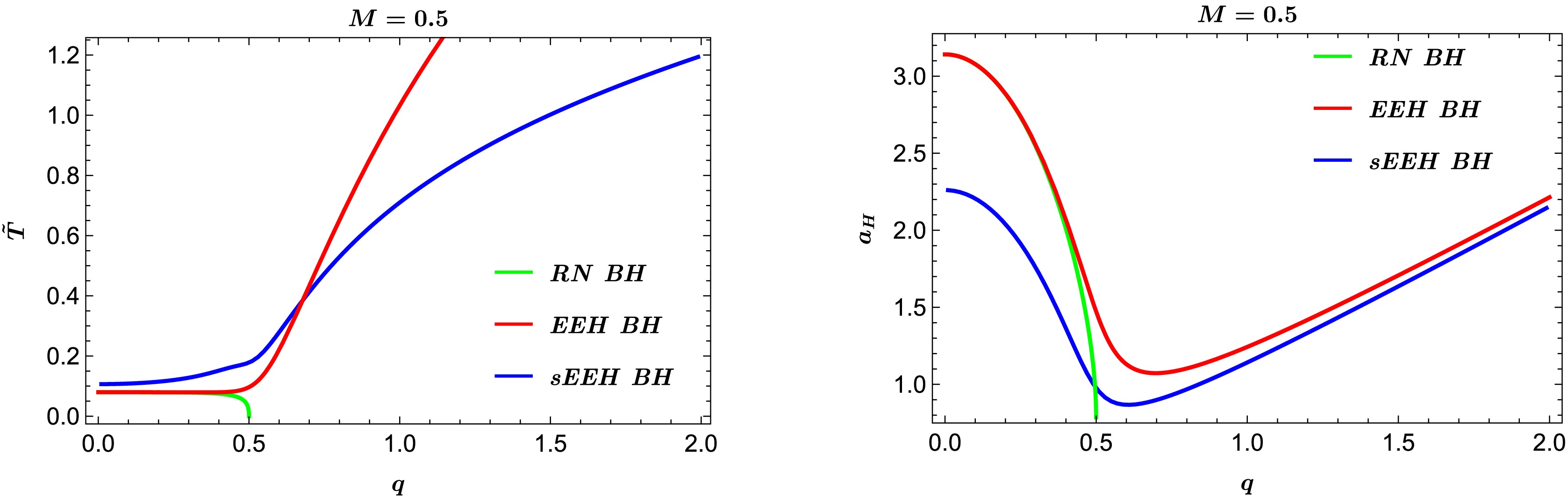
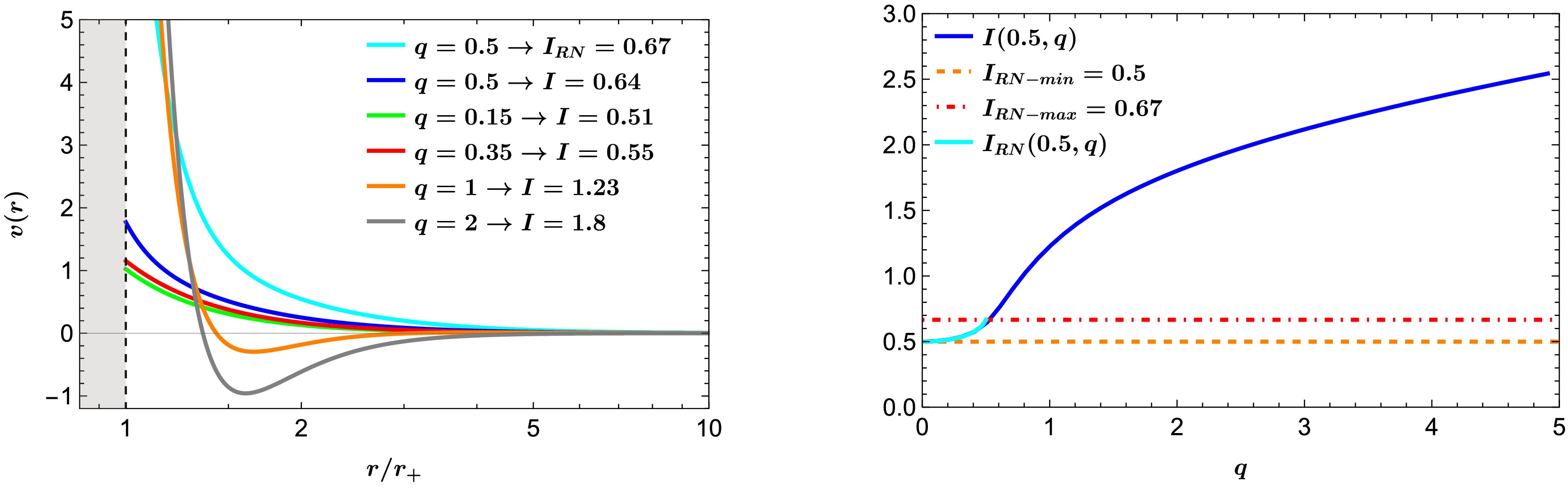
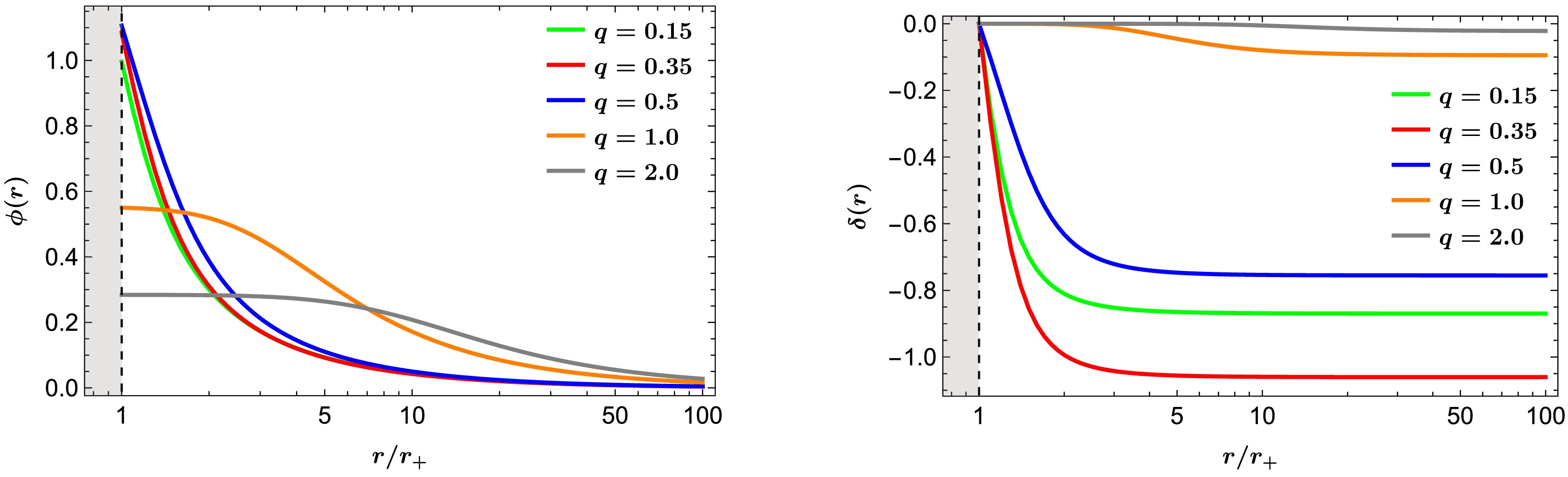
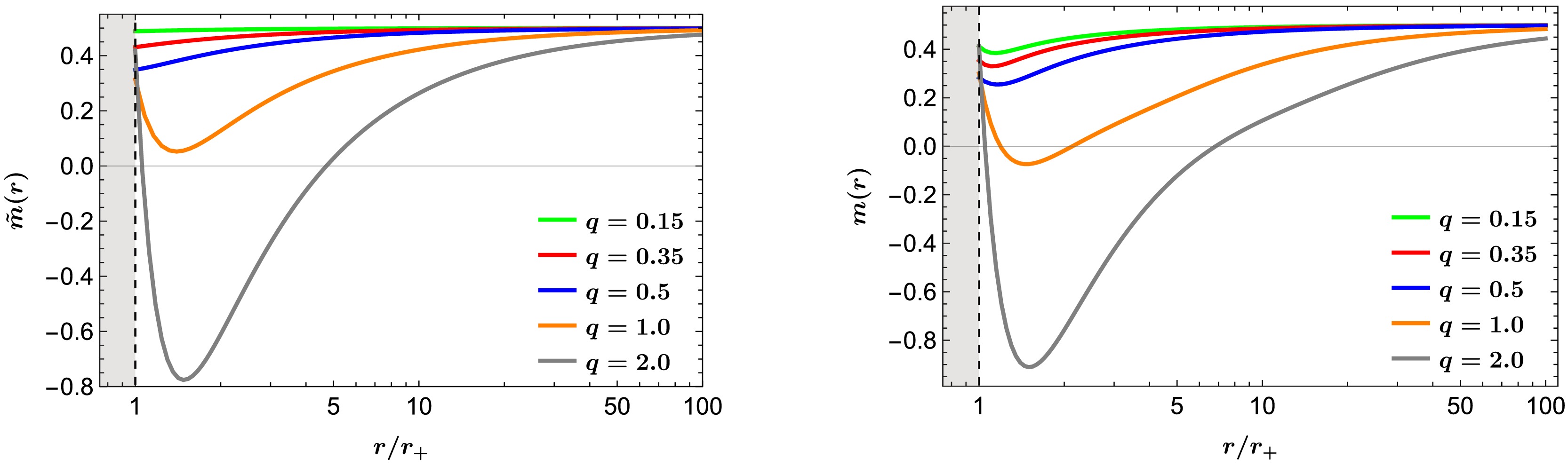
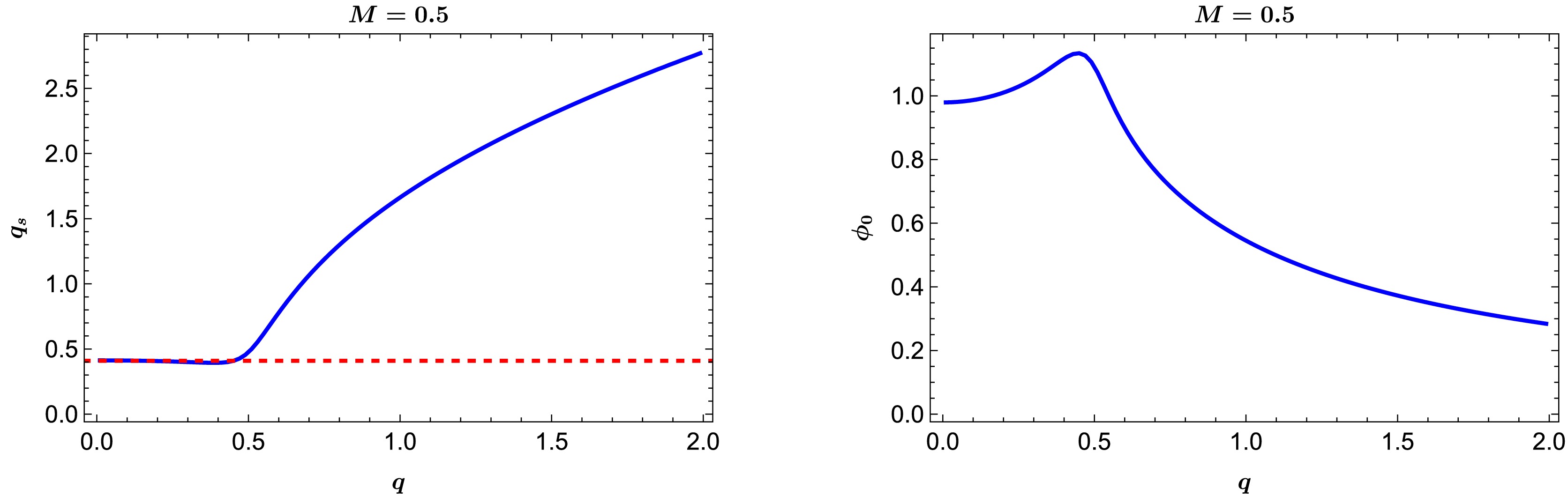
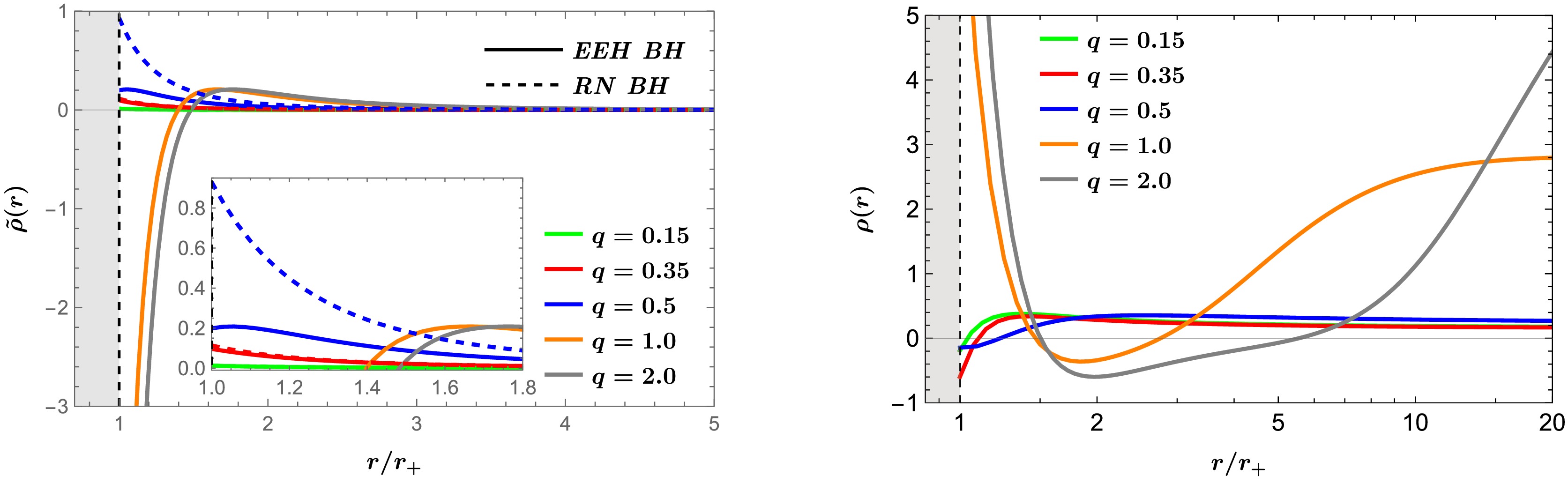
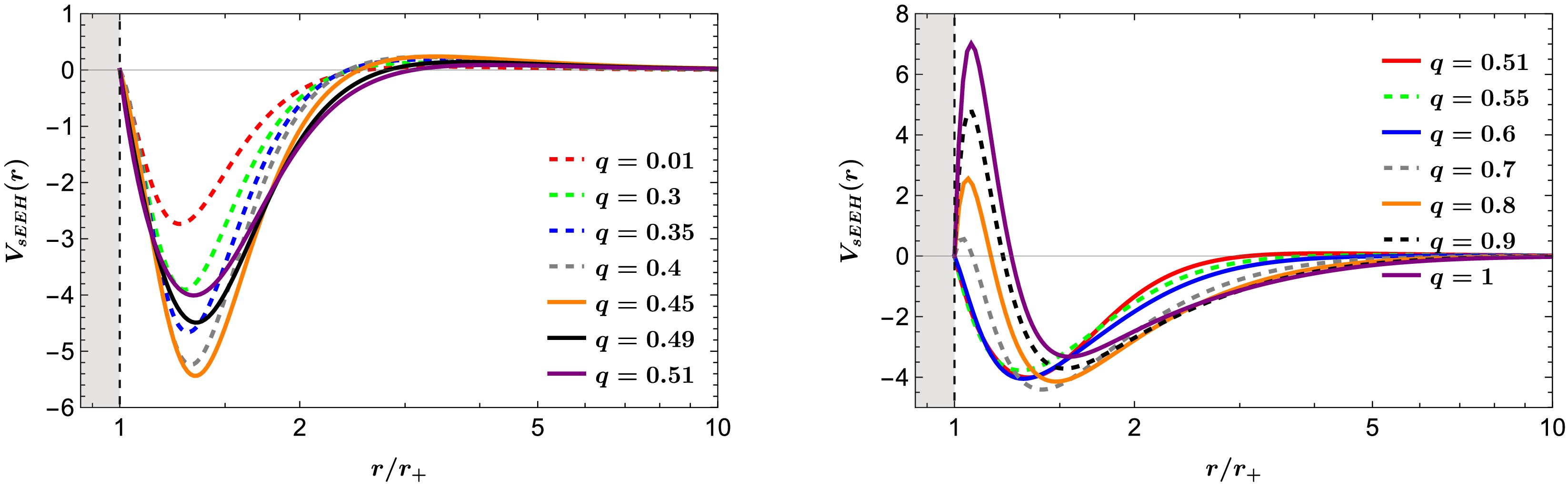
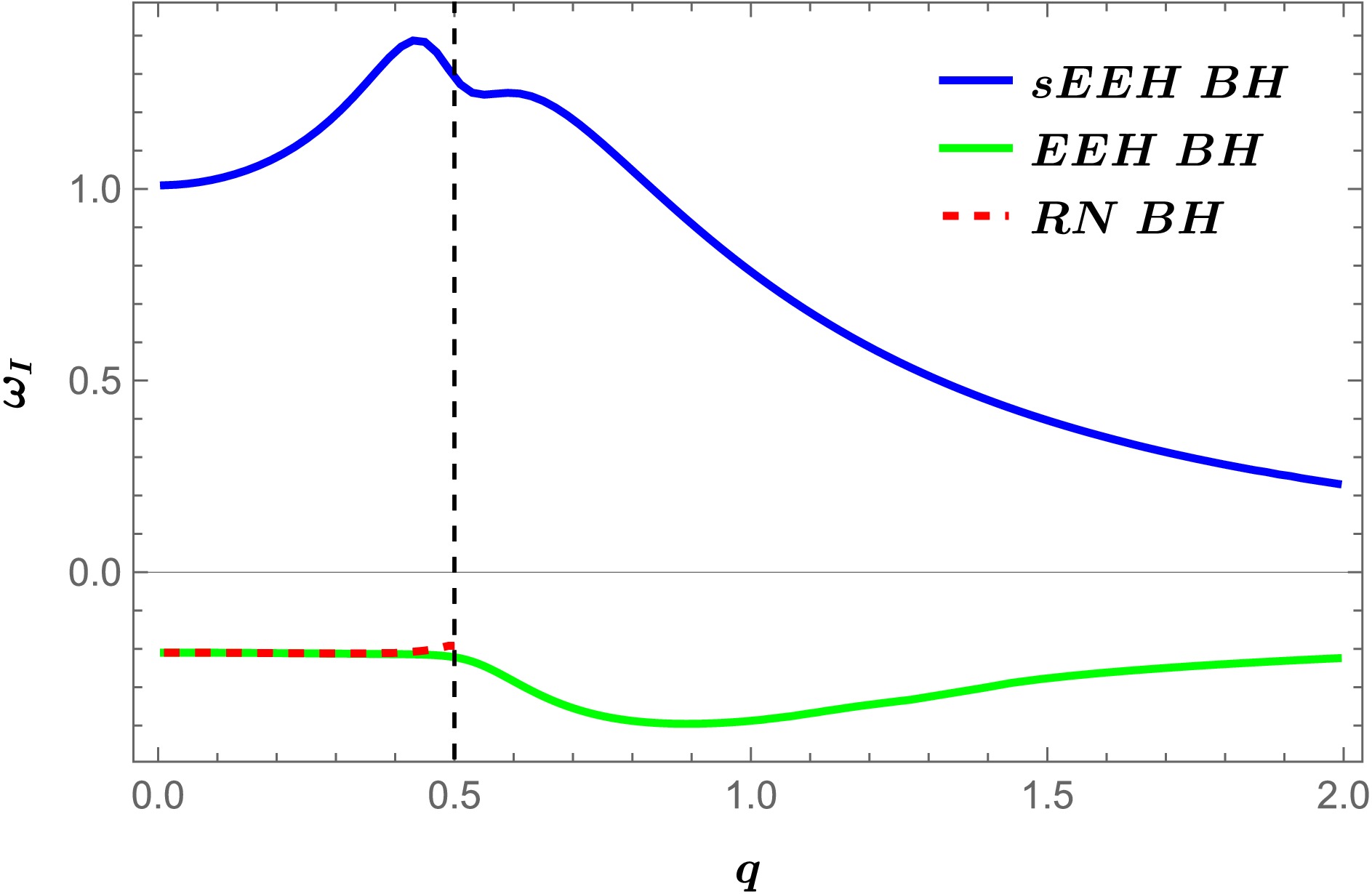
We investigate a negative potential-induced scalarization of the Einstein-Euler-Heisenberg (EEH) black hole in the EEH-scalar theory, characterized by mass M, Euler-Heisenberg parameter μ, and magnetic charge q. In the regime\begin{document}$ \mu>\mu_{{\rm{max}}} = 0.019 $\end{document} \begin{document}$ M=1/2 $\end{document} \begin{document}$ q/M \gt 1 $\end{document} \begin{document}$ q>0 $\end{document} \begin{document}$ q<1/2 $\end{document} \begin{document}$ q>1/2 $\end{document}
We investigate a negative potential-induced scalarization of the Einstein-Euler-Heisenberg (EEH) black hole in the EEH-scalar theory, characterized by mass M, Euler-Heisenberg parameter μ, and magnetic charge q. In the regime
2026, 50(6): 065103. doi: 10.1088/1674-1137/ae4327
Abstract:
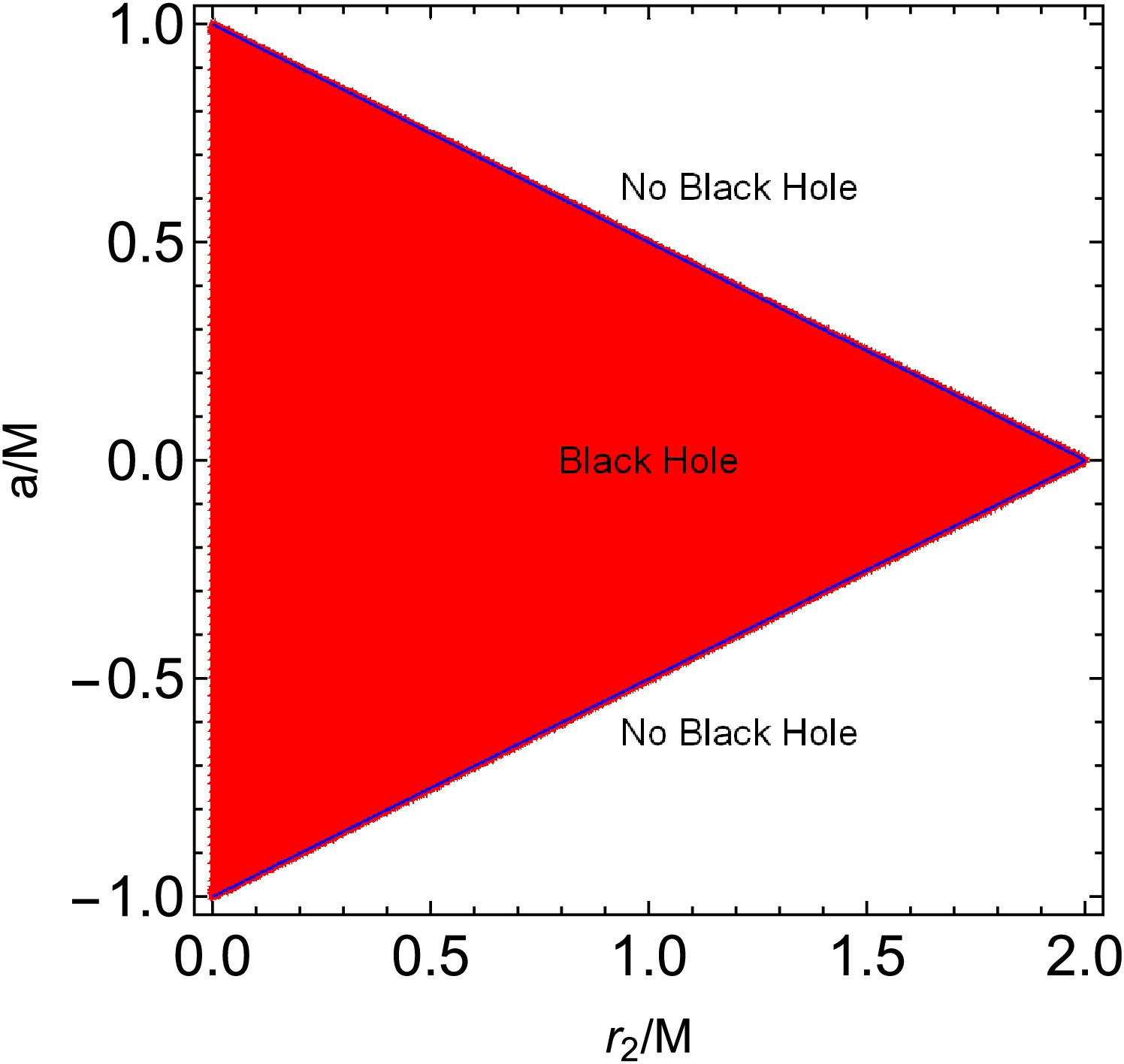
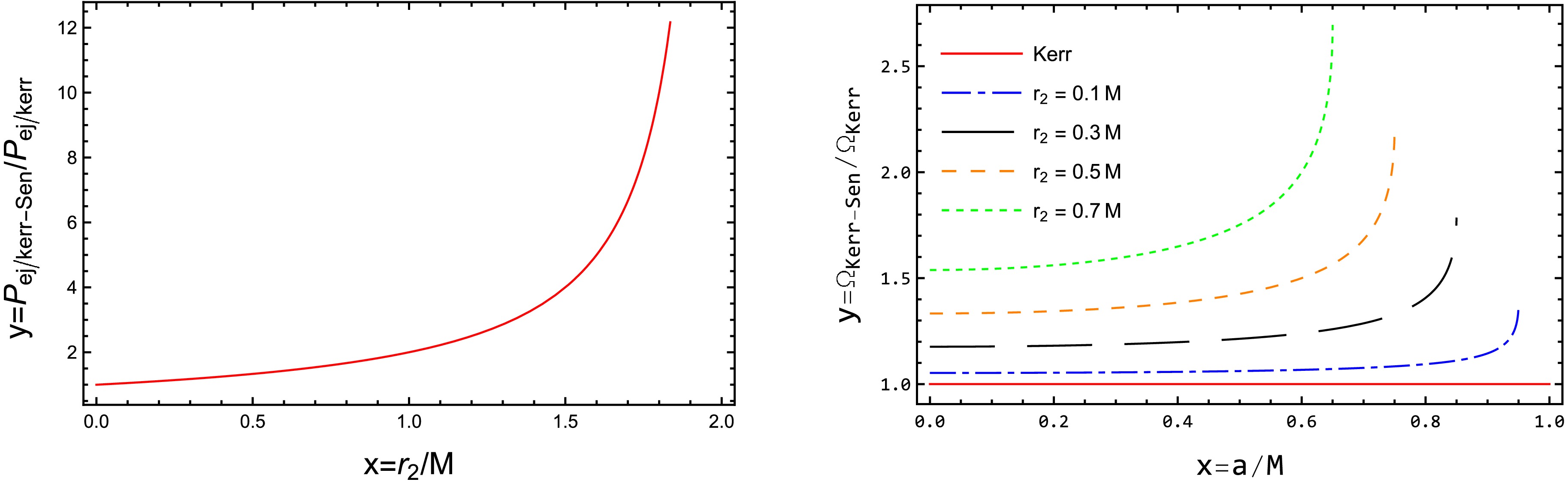
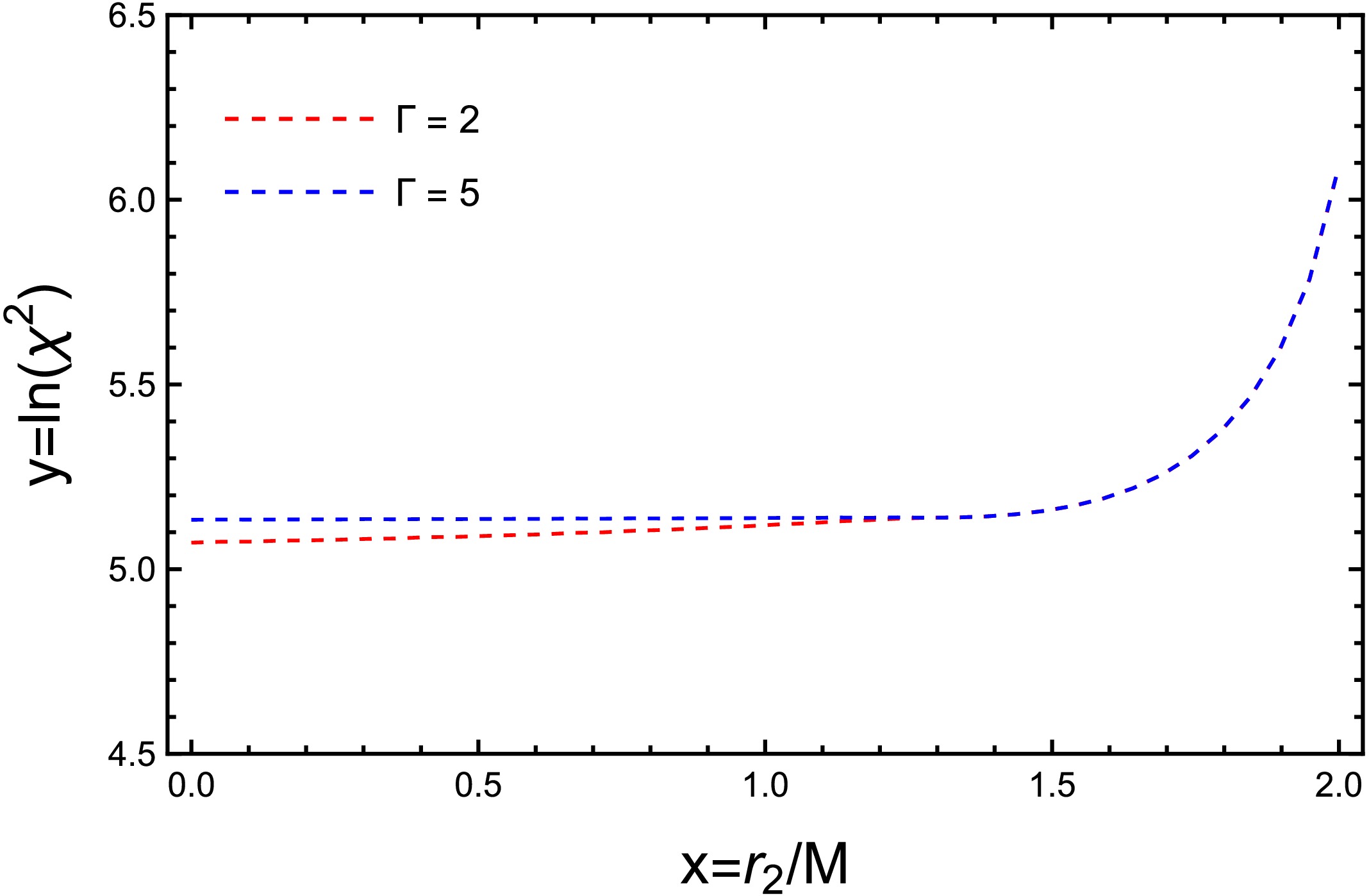
We investigated the steady, axisymmetric, force-free magnetosphere of the Kerr–Sen black hole (BH) within the framework of the Einstein–Maxwell–dilaton–axion (EMDA) theory. By perturbatively solving the nonlinear Grad–Shafranov (GS) equation, we determined the magnetic field configuration and quantified the influence of the dilaton parameter r2 on the energy extraction rate and radiative efficiency. Our results show that both the energy extraction power and radiative efficiency increase with r2, exceeding the values of the standard Kerr BH; meanwhile, the extraction efficiency remains consistent with the Kerr case. In addition, we performed χ2 statistical analysis using observational data from six binary BH systems. The results indicate that the Kerr BH currently provides a better fit for bulk Lorentz factors Γ = 2 and 5.
We investigated the steady, axisymmetric, force-free magnetosphere of the Kerr–Sen black hole (BH) within the framework of the Einstein–Maxwell–dilaton–axion (EMDA) theory. By perturbatively solving the nonlinear Grad–Shafranov (GS) equation, we determined the magnetic field configuration and quantified the influence of the dilaton parameter r2 on the energy extraction rate and radiative efficiency. Our results show that both the energy extraction power and radiative efficiency increase with r2, exceeding the values of the standard Kerr BH; meanwhile, the extraction efficiency remains consistent with the Kerr case. In addition, we performed χ2 statistical analysis using observational data from six binary BH systems. The results indicate that the Kerr BH currently provides a better fit for bulk Lorentz factors Γ = 2 and 5.
2026, 50(6): 065104. doi: 10.1088/1674-1137/ae432c
Abstract:
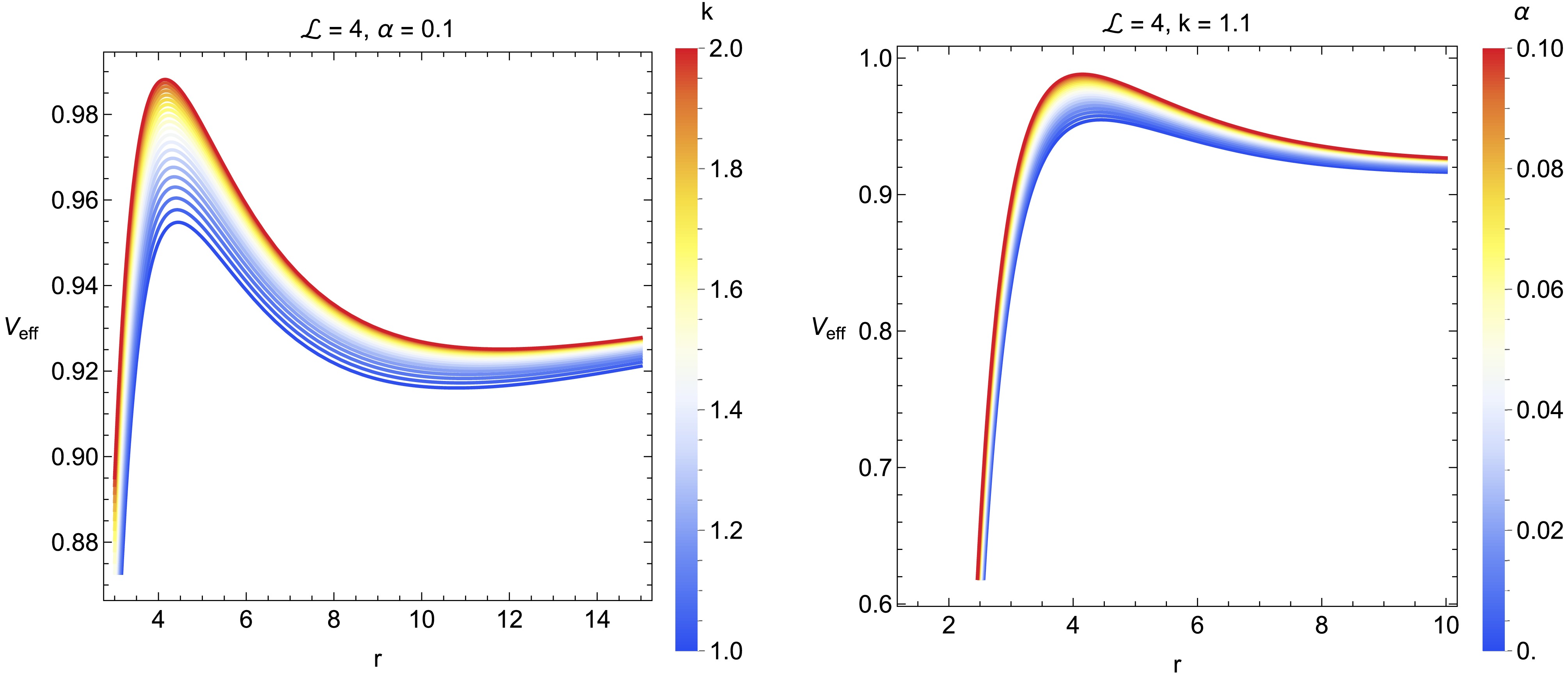
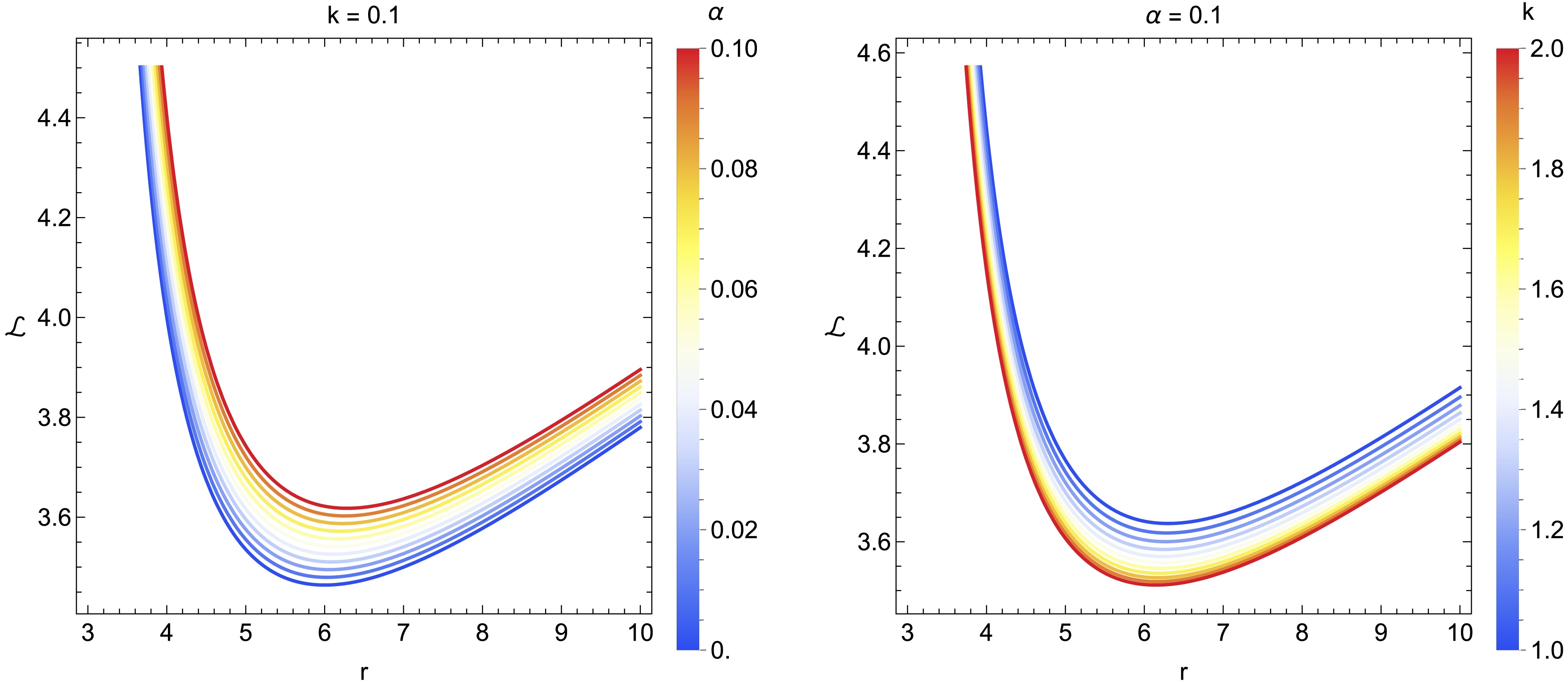
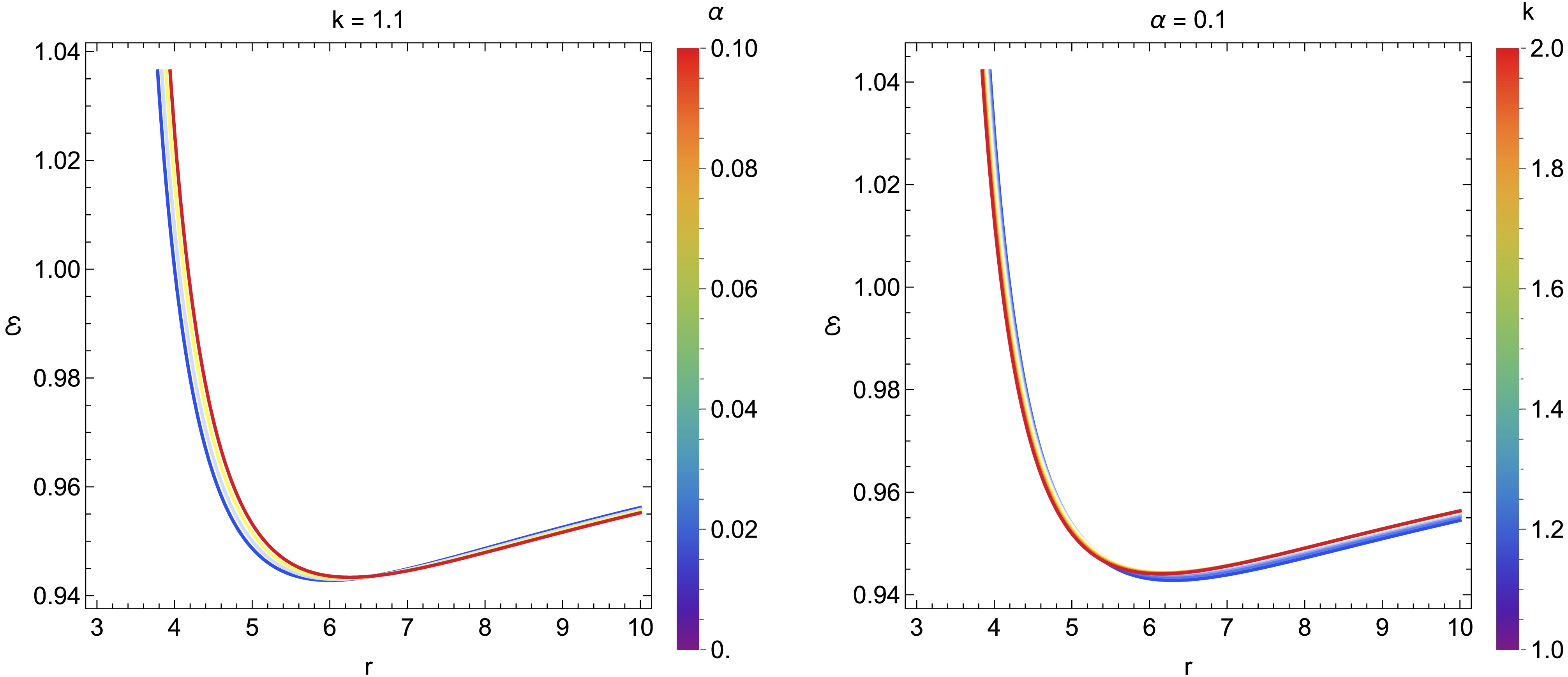
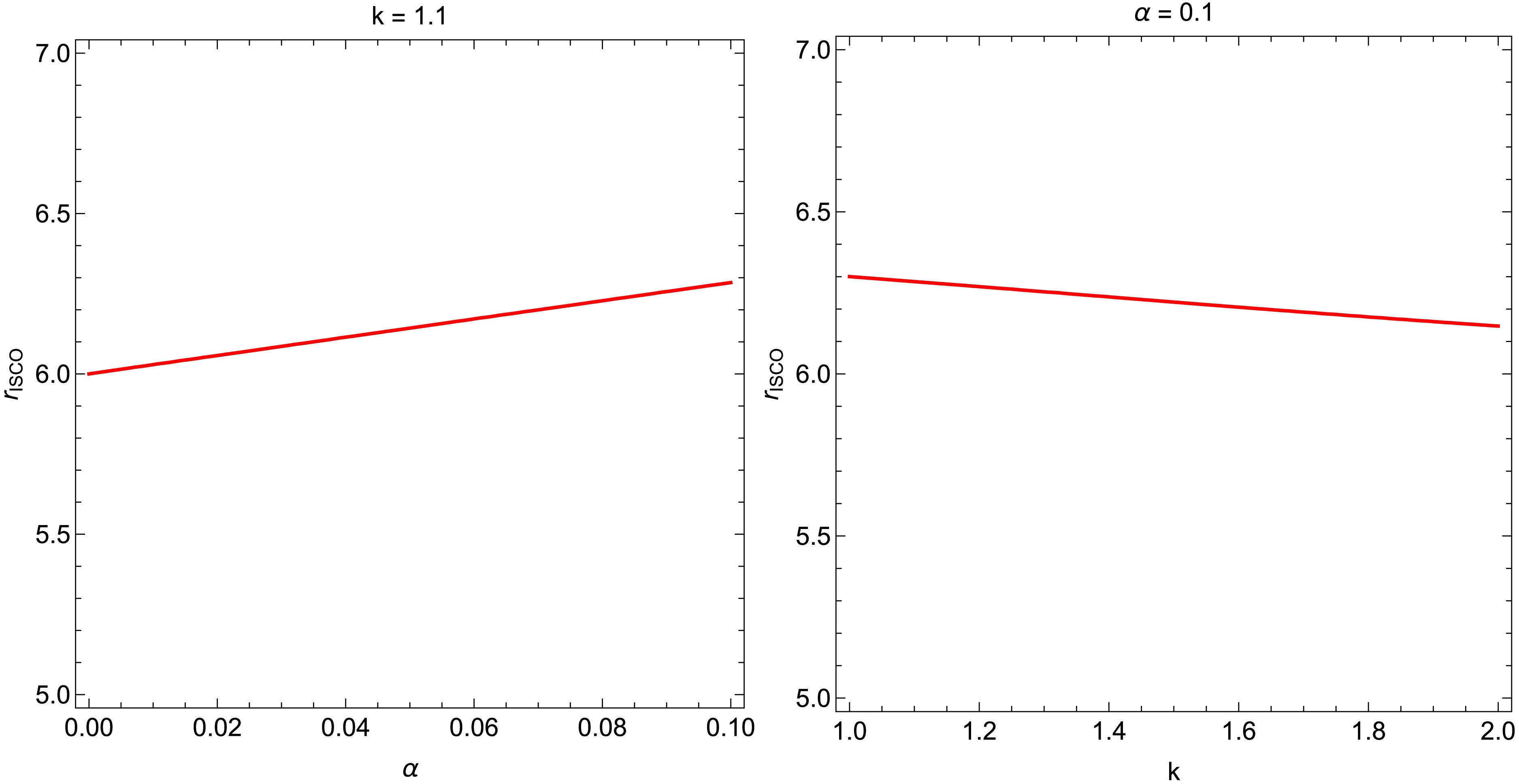
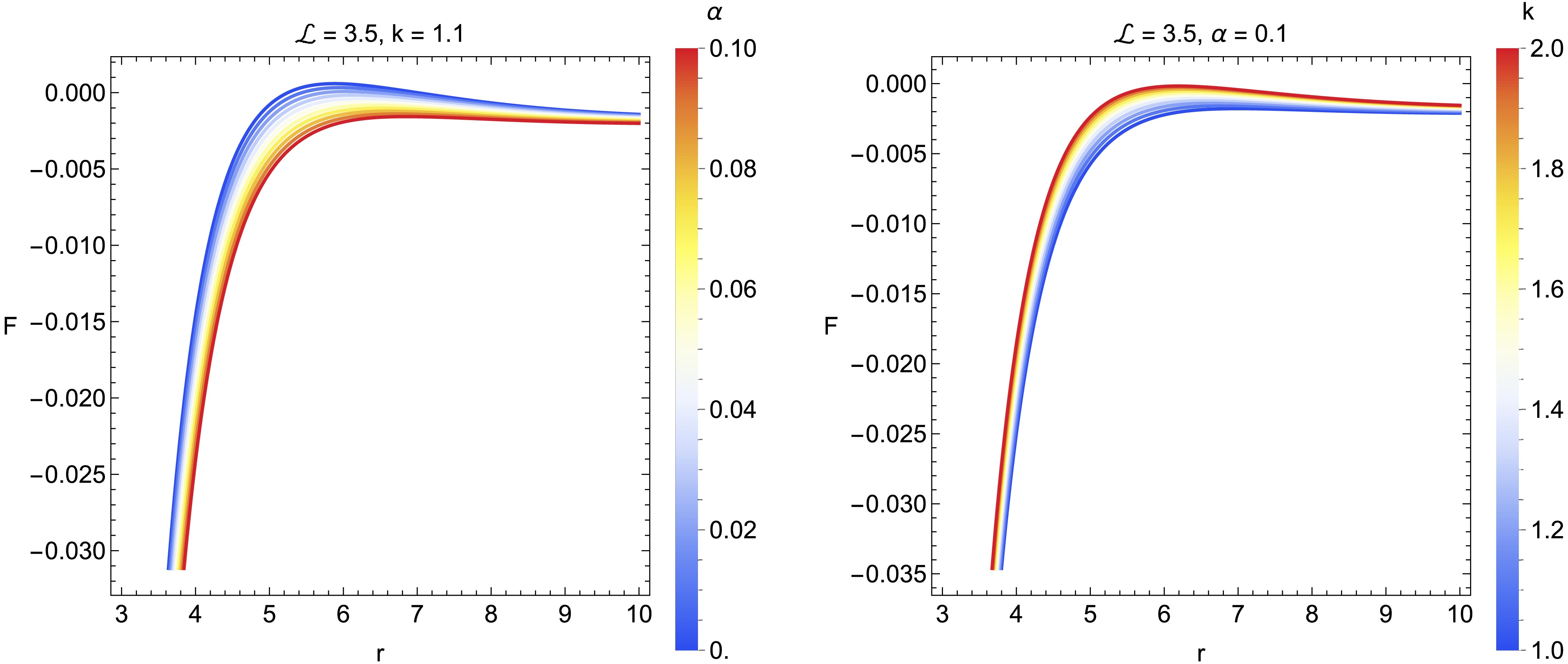
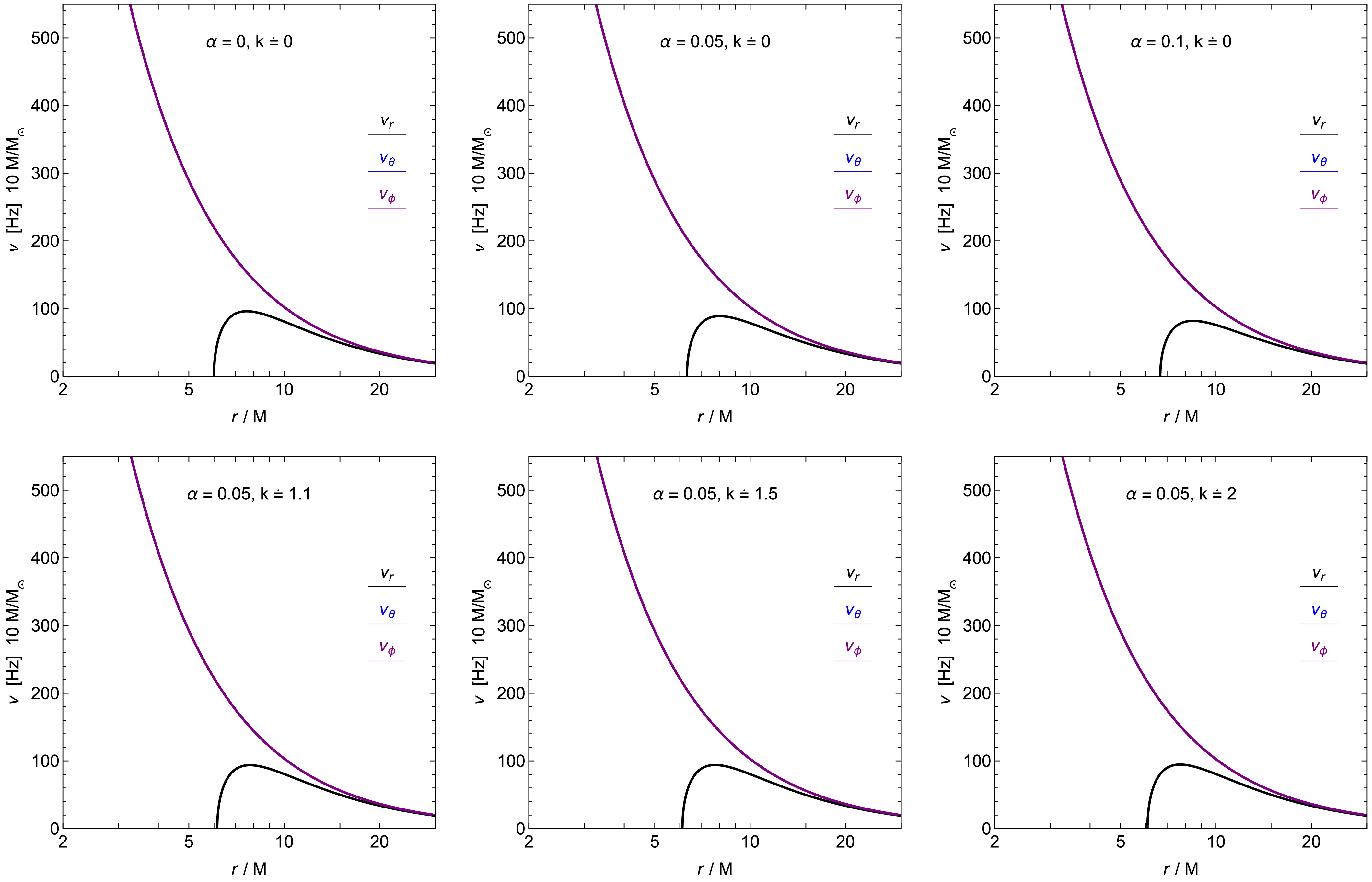
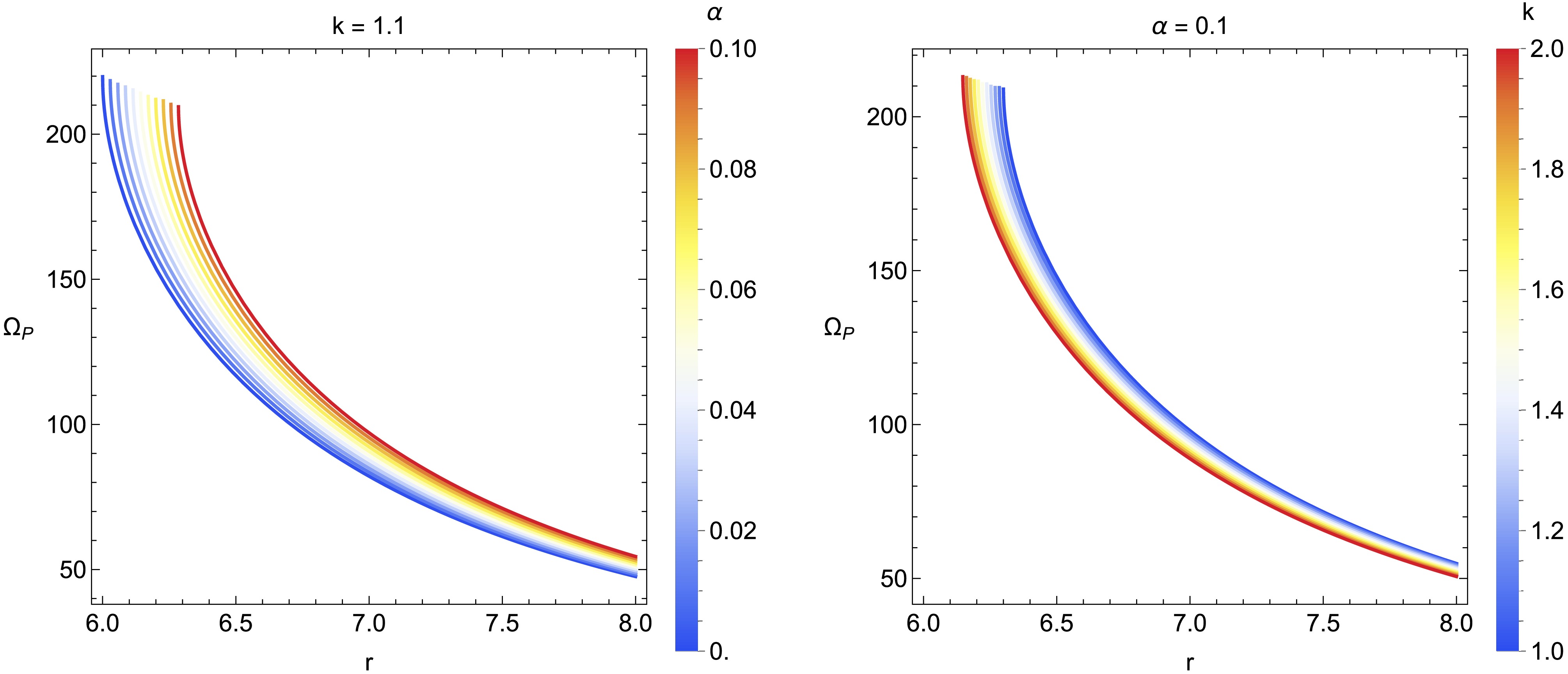
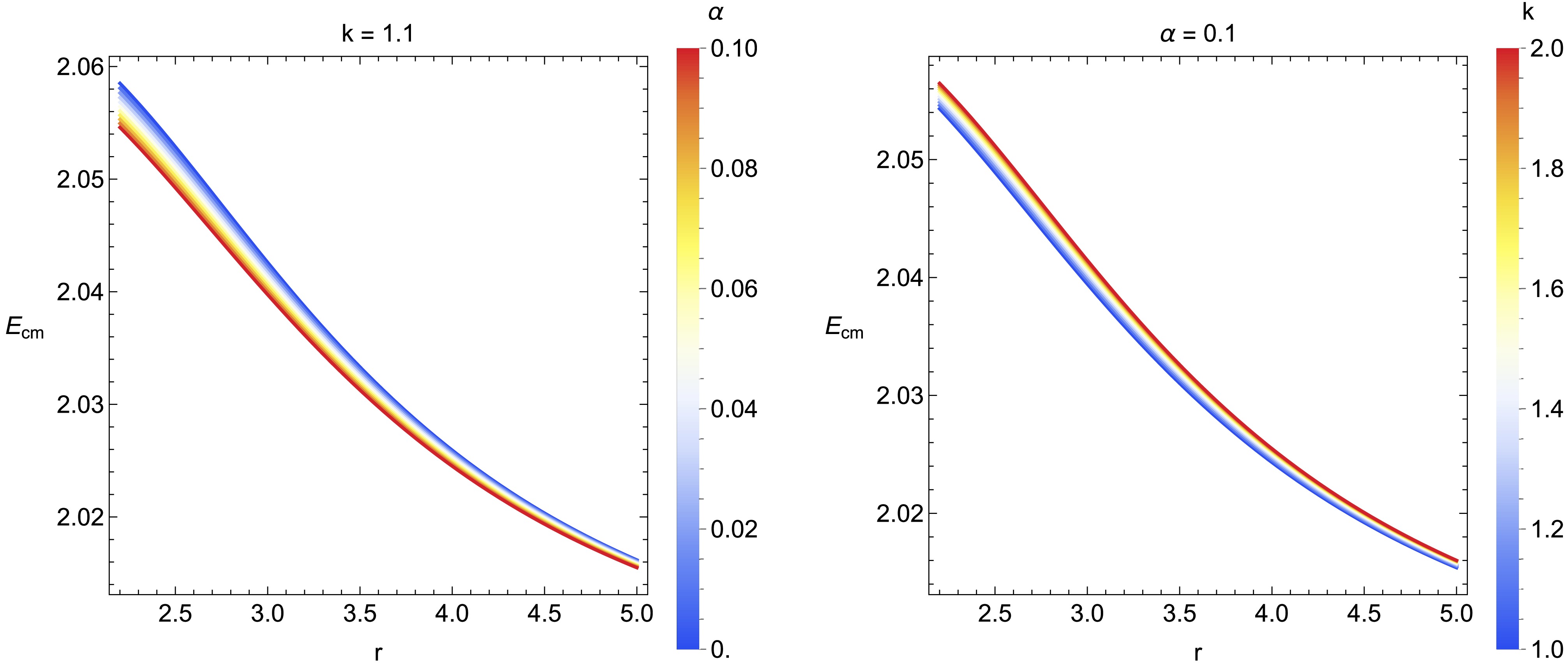
In this study, we investigate the dynamics of test particles in the spacetime of a static, spherically symmetric black hole (BH) illustrated within nonlocal gravity models. After presenting the BH geometries and horizon structures, we examine the motion of particles by analyzing the effective potential, innermost stable circular orbits, and corresponding effective force. We then extend the study to small perturbations of circular orbits, exploring harmonic oscillations characterized by frequencies measured by both local and distant observers, as well as the periastron precession effects. Particular attention is given to the interplay between the nonlocal gravity corrections and the stability properties of geodesics. We analyze the center-of-mass energy of colliding particles near the event horizon and show the influence of BH parameters on energy extraction processes. The results show the mechanism of influnece of nonlocal modifications of gravity on the standard predictions of the BH structure, orbital stability, and high-energy particle dynamics, with possible implications for astrophysical observations and theoretical models of strong gravity. This study examines the differences between the inverse electrodynamics of BHs and the Schwarzschild BH configuration, demonstrating the influnece of additional parameters on the dynamics and stability of test particles.
In this study, we investigate the dynamics of test particles in the spacetime of a static, spherically symmetric black hole (BH) illustrated within nonlocal gravity models. After presenting the BH geometries and horizon structures, we examine the motion of particles by analyzing the effective potential, innermost stable circular orbits, and corresponding effective force. We then extend the study to small perturbations of circular orbits, exploring harmonic oscillations characterized by frequencies measured by both local and distant observers, as well as the periastron precession effects. Particular attention is given to the interplay between the nonlocal gravity corrections and the stability properties of geodesics. We analyze the center-of-mass energy of colliding particles near the event horizon and show the influence of BH parameters on energy extraction processes. The results show the mechanism of influnece of nonlocal modifications of gravity on the standard predictions of the BH structure, orbital stability, and high-energy particle dynamics, with possible implications for astrophysical observations and theoretical models of strong gravity. This study examines the differences between the inverse electrodynamics of BHs and the Schwarzschild BH configuration, demonstrating the influnece of additional parameters on the dynamics and stability of test particles.
2026, 50(6): 065105. doi: 10.1088/1674-1137/ae4dd8
Abstract:
We investigate the propagating modes of New General Relativity (NGR) in second-order linear perturbations in the Lagrangian density (first-order in field equations). Dirac-Bergmann analysis reveals a violation of local Lorentz invariance in NGR. We review the recent status of NGR, considering the results of its Dirac-Bergmann analysis. We then reconsider the vierbein perturbation framework and identify the origin of each perturbation field in the vierbein field components. This identification is necessary to adequately fix gauges while guaranteeing consistency with the invariance ensured by the Dirac-Bergmann analysis. We find that the spatially flat gauge is adequate for analyzing a theory with the violation of local Lorentz invariance. Based on the established vierbein perturbative framework, introducing a real scalar field as matter, we perform a second-order perturbative analysis of NGR with respect to tensor, scalar, pseudo-scalar, vector, and pseudo-vector modes. We reveal the possible propagating modes of each type of NGR. In particular, we find that Type 3 has five stable propagating modes, i.e., tensor, scalar, and vector modes, compared to five non-linear degrees of freedom, which results in its Dirac-Bergmann analysis. The linear perturbation theory of Type 3 is preferable for applications to cosmology. Finally, we discuss our results in comparison to those of previous related work and conclude this paper.
We investigate the propagating modes of New General Relativity (NGR) in second-order linear perturbations in the Lagrangian density (first-order in field equations). Dirac-Bergmann analysis reveals a violation of local Lorentz invariance in NGR. We review the recent status of NGR, considering the results of its Dirac-Bergmann analysis. We then reconsider the vierbein perturbation framework and identify the origin of each perturbation field in the vierbein field components. This identification is necessary to adequately fix gauges while guaranteeing consistency with the invariance ensured by the Dirac-Bergmann analysis. We find that the spatially flat gauge is adequate for analyzing a theory with the violation of local Lorentz invariance. Based on the established vierbein perturbative framework, introducing a real scalar field as matter, we perform a second-order perturbative analysis of NGR with respect to tensor, scalar, pseudo-scalar, vector, and pseudo-vector modes. We reveal the possible propagating modes of each type of NGR. In particular, we find that Type 3 has five stable propagating modes, i.e., tensor, scalar, and vector modes, compared to five non-linear degrees of freedom, which results in its Dirac-Bergmann analysis. The linear perturbation theory of Type 3 is preferable for applications to cosmology. Finally, we discuss our results in comparison to those of previous related work and conclude this paper.
2026, 50(6): 065106. doi: 10.1088/1674-1137/ae5b56
Abstract:
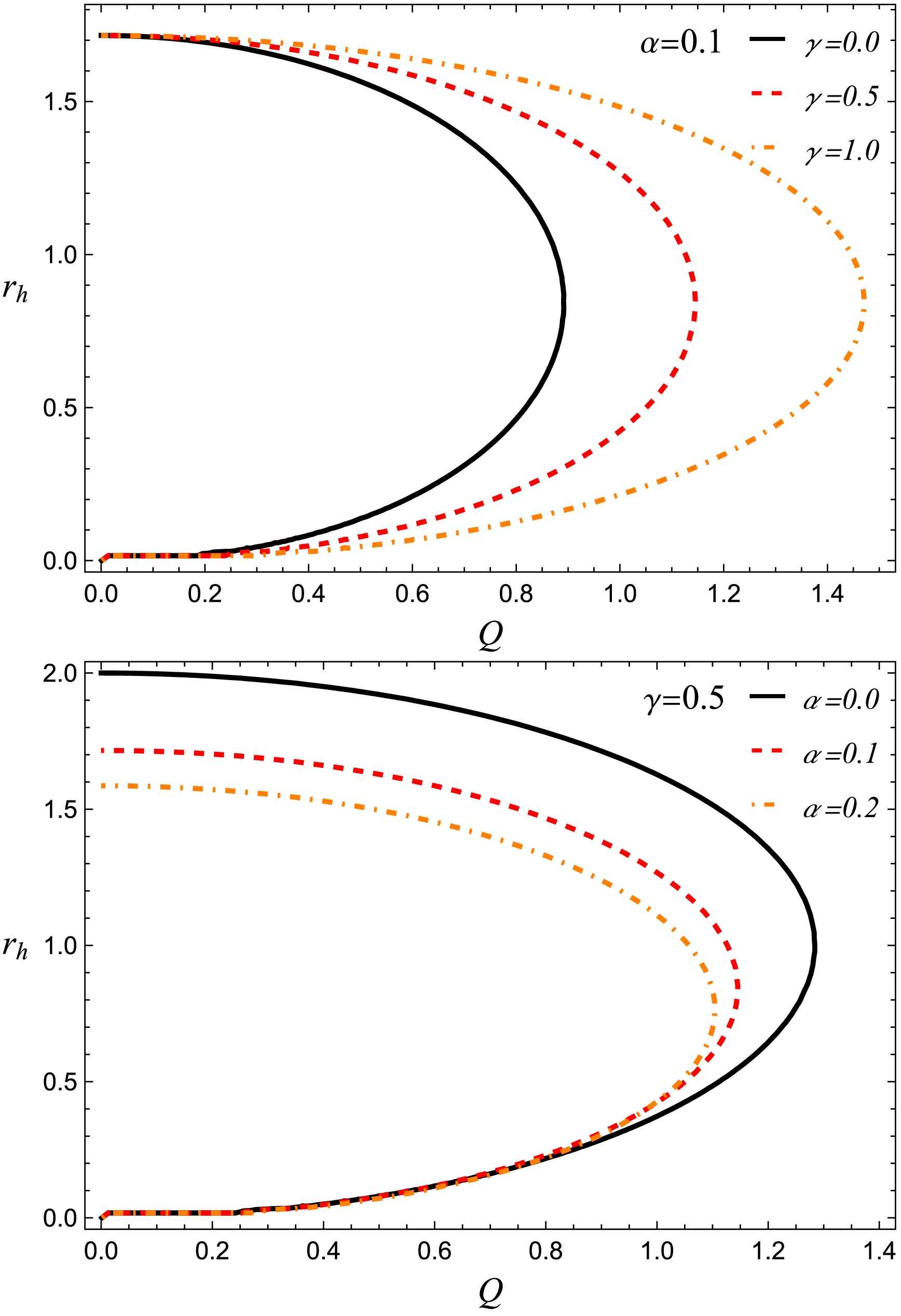
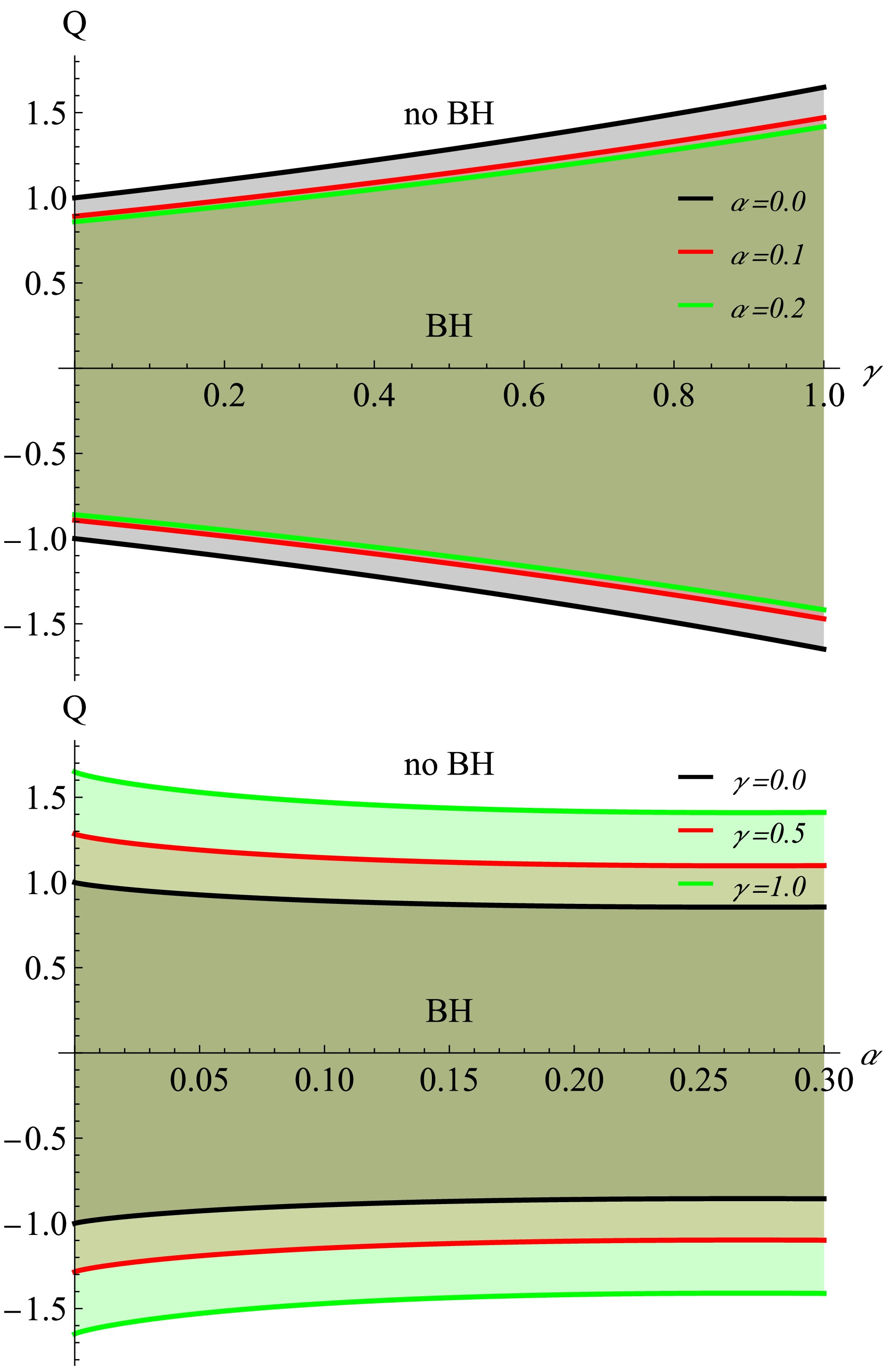
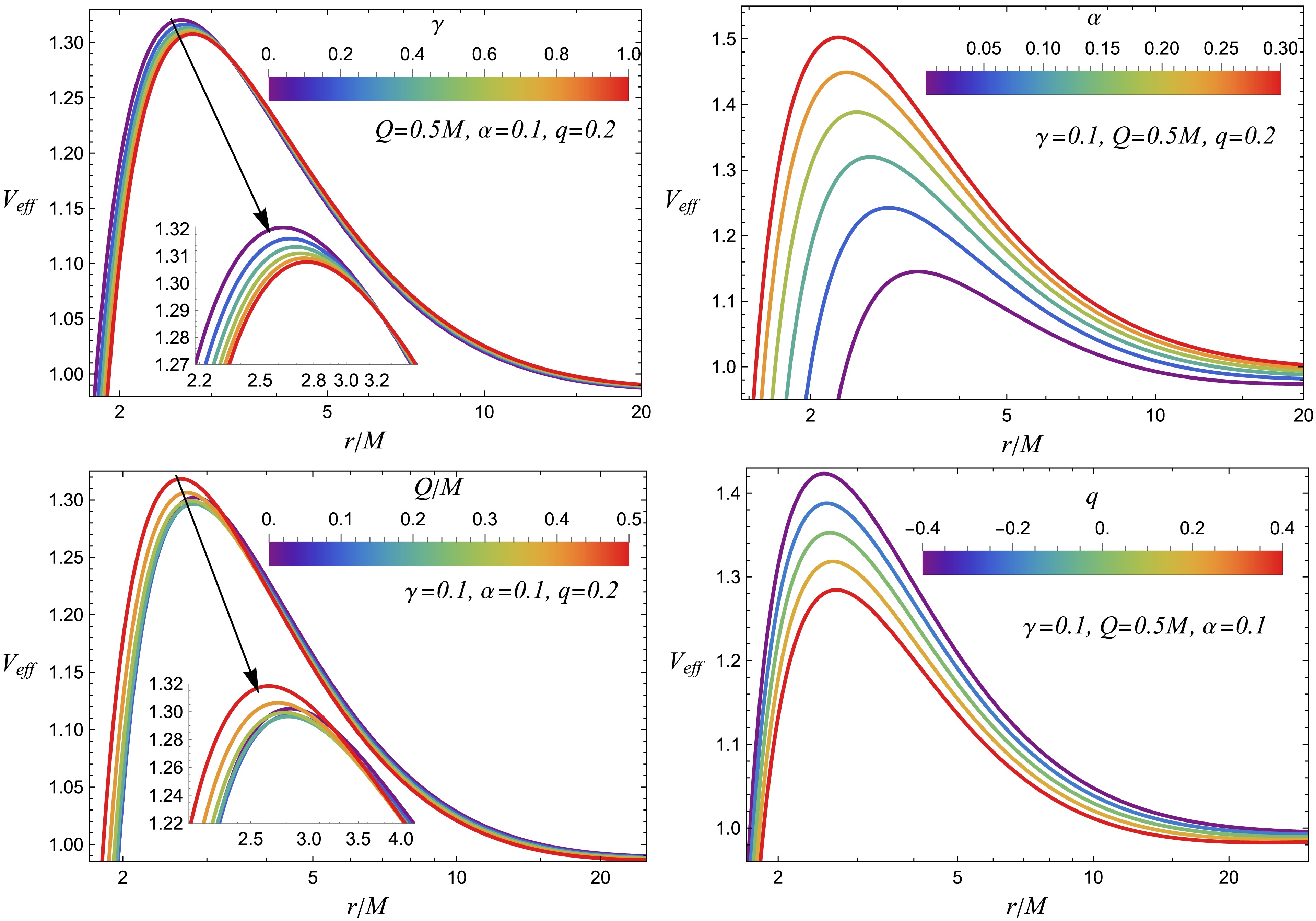
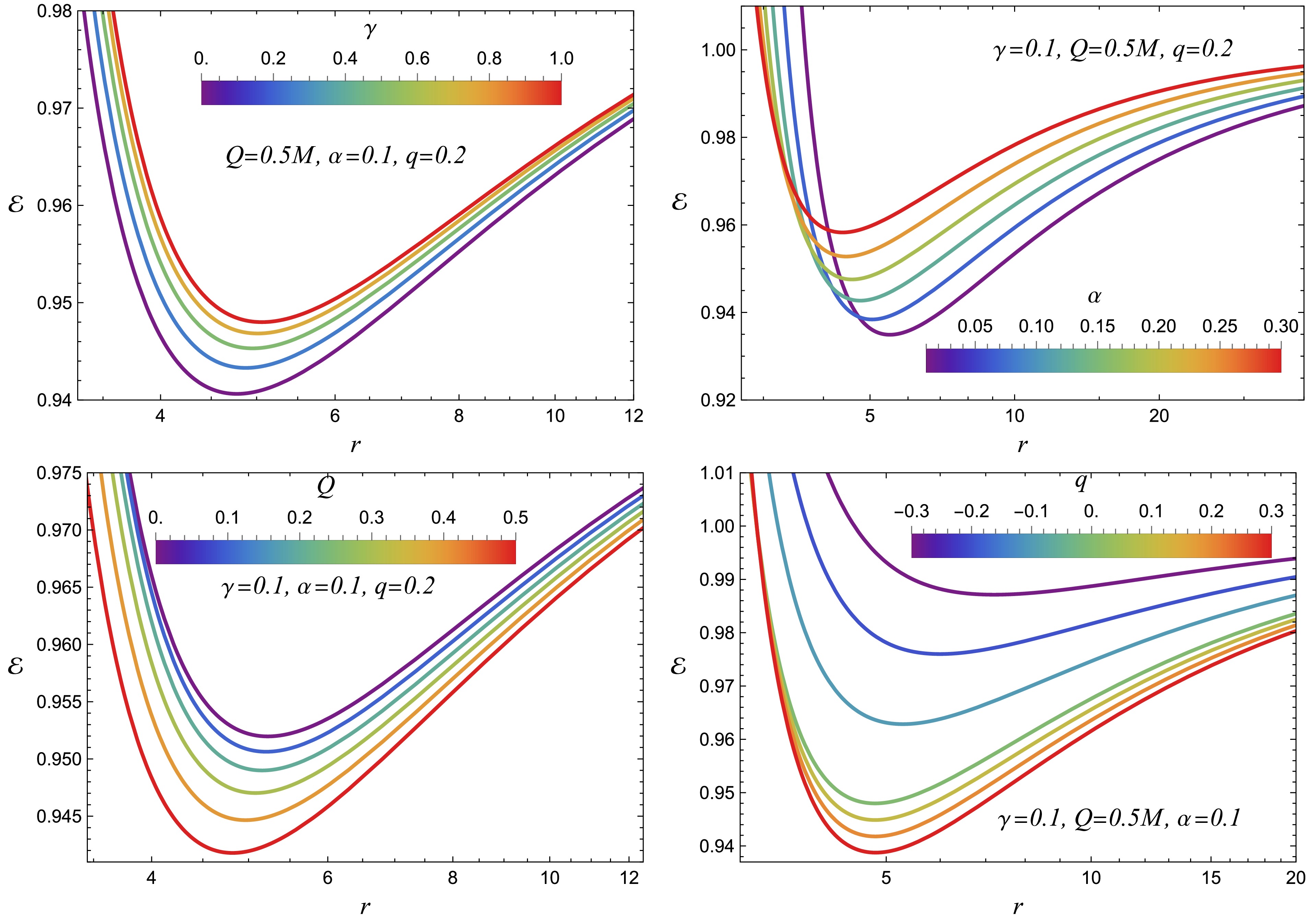
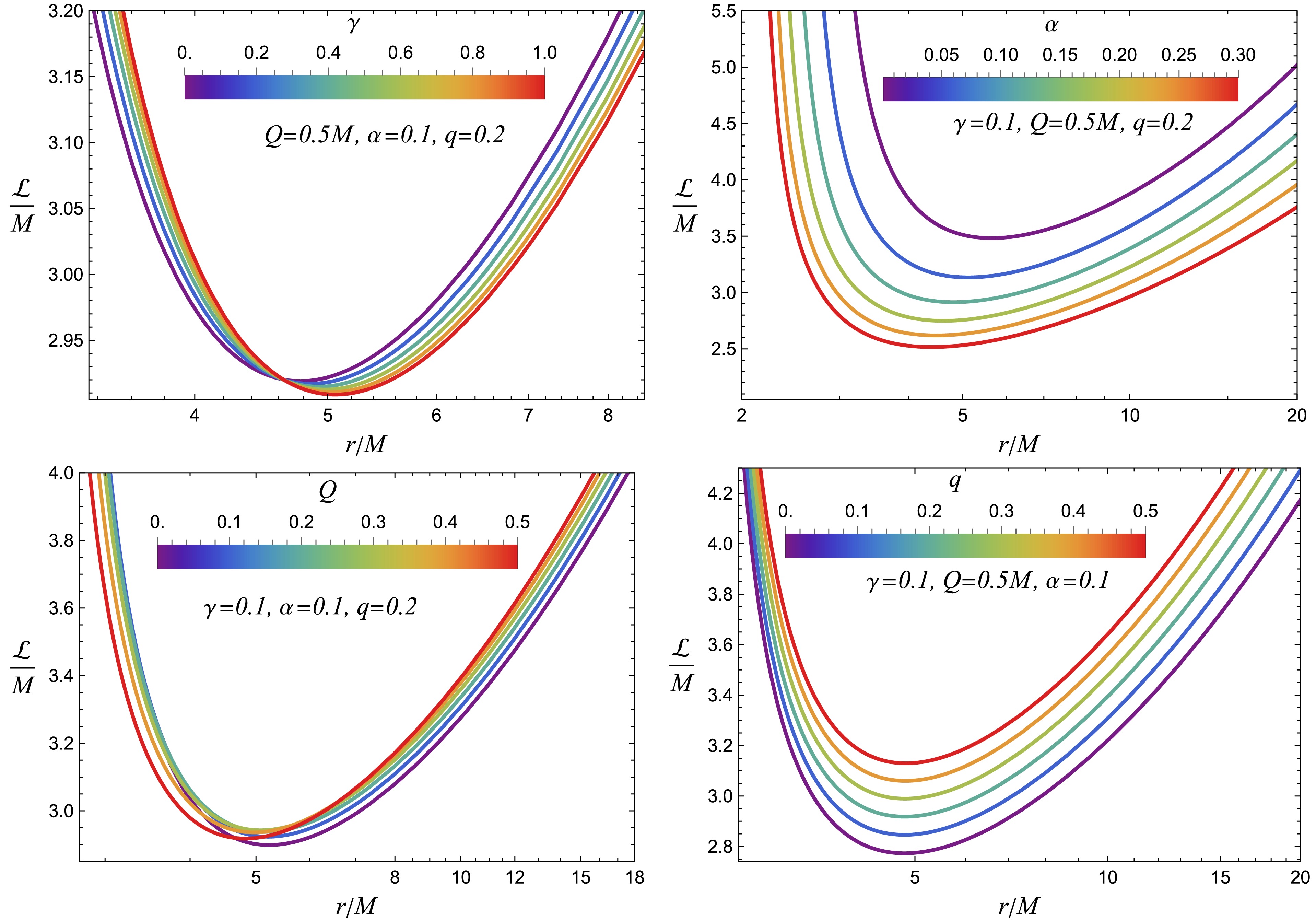
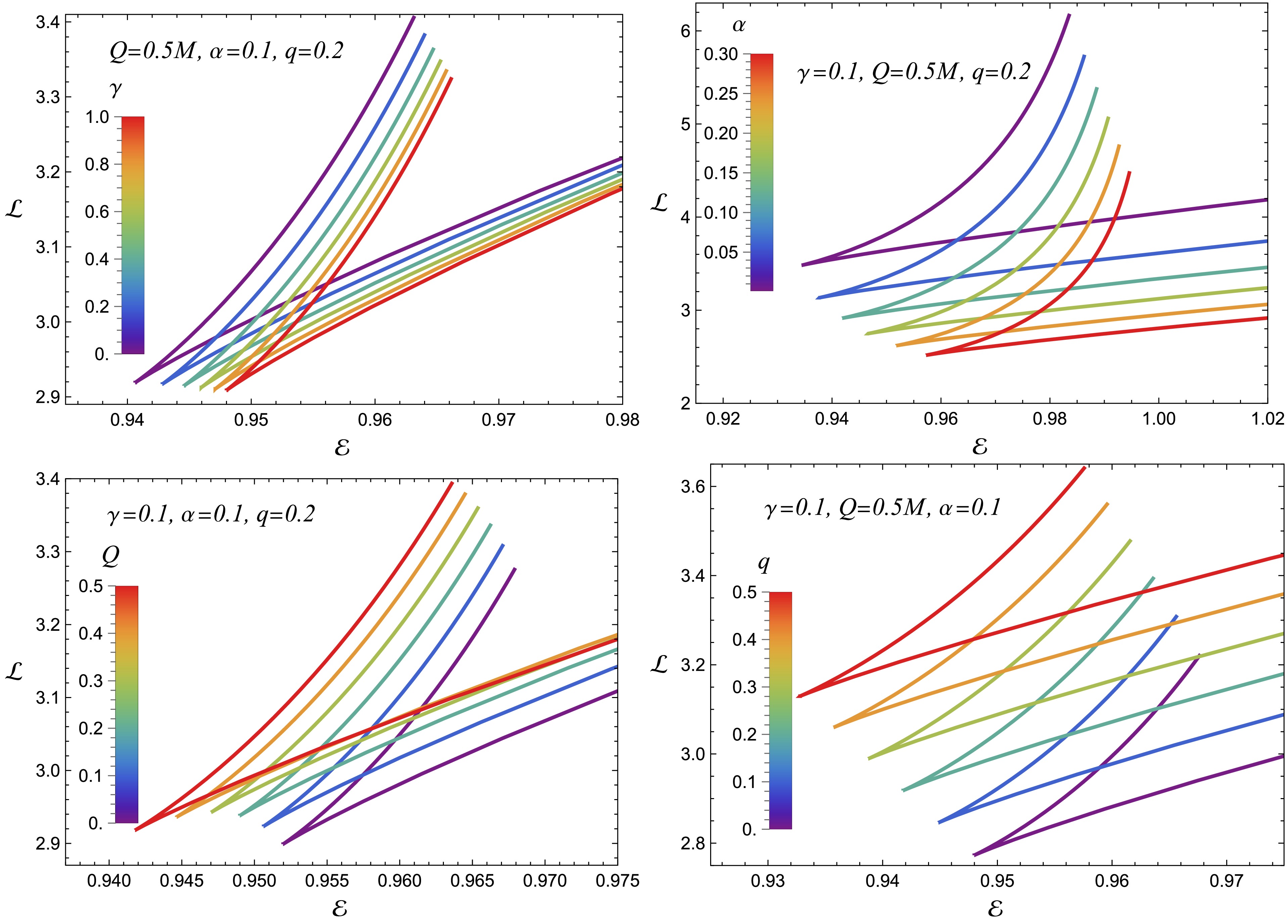
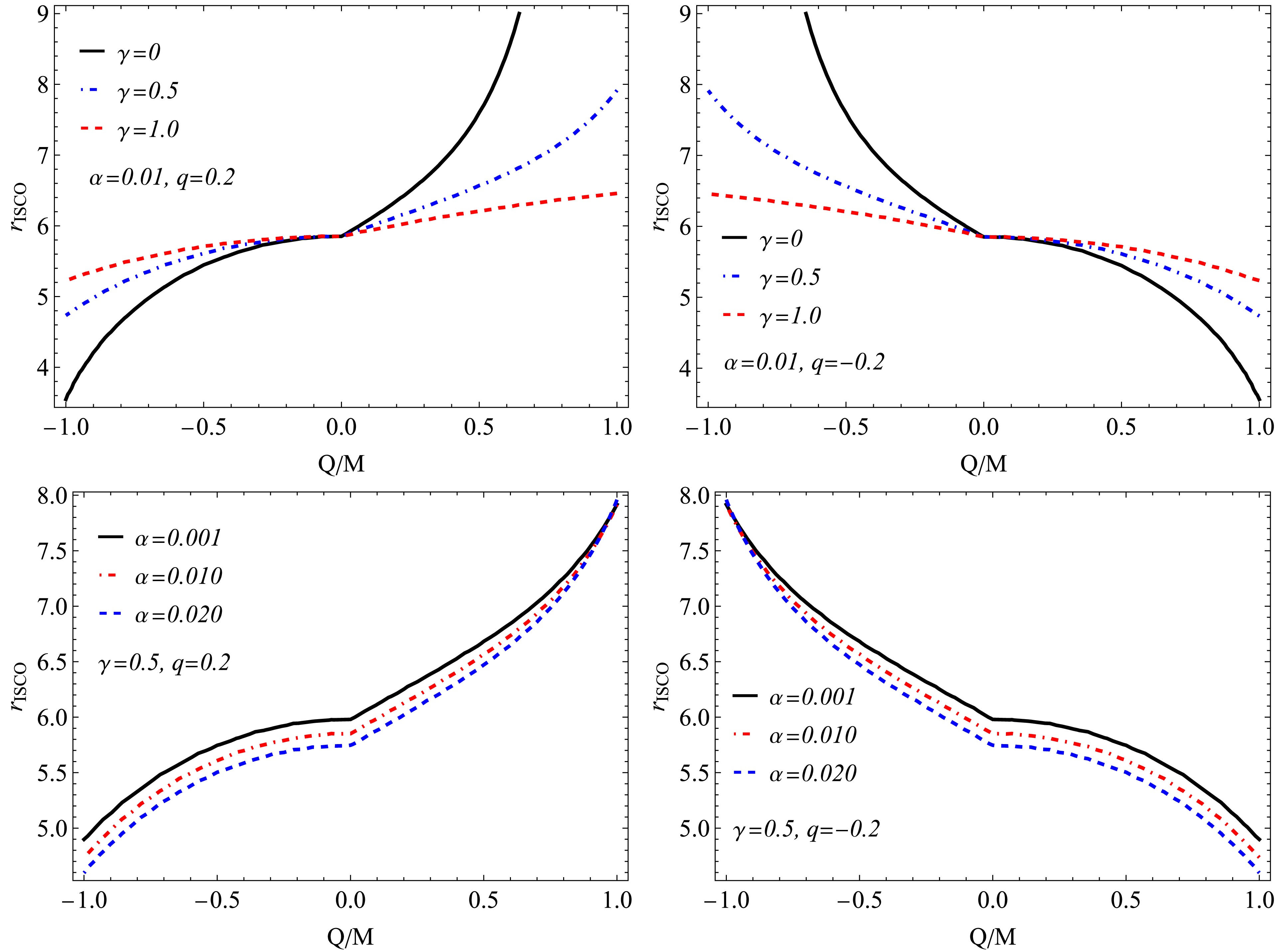
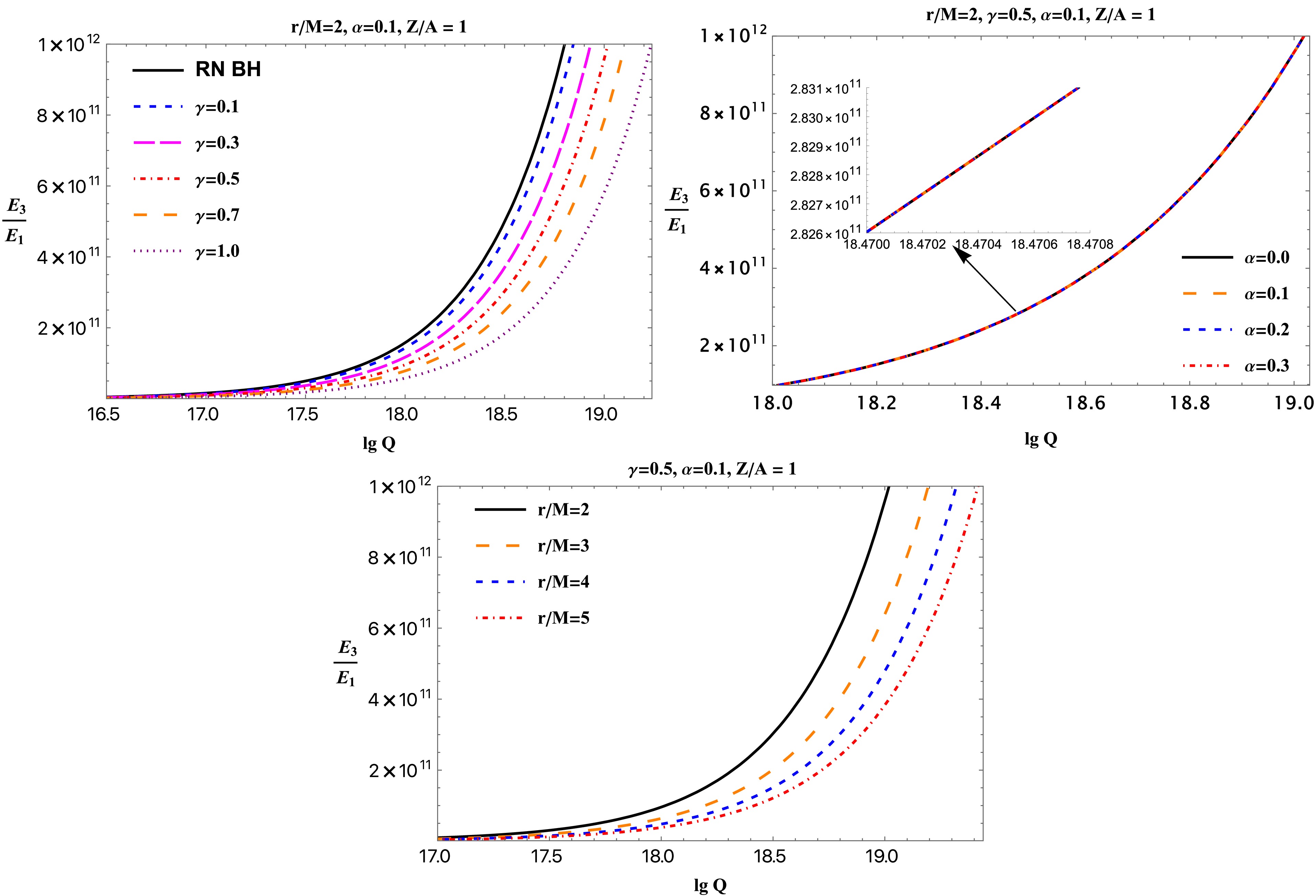
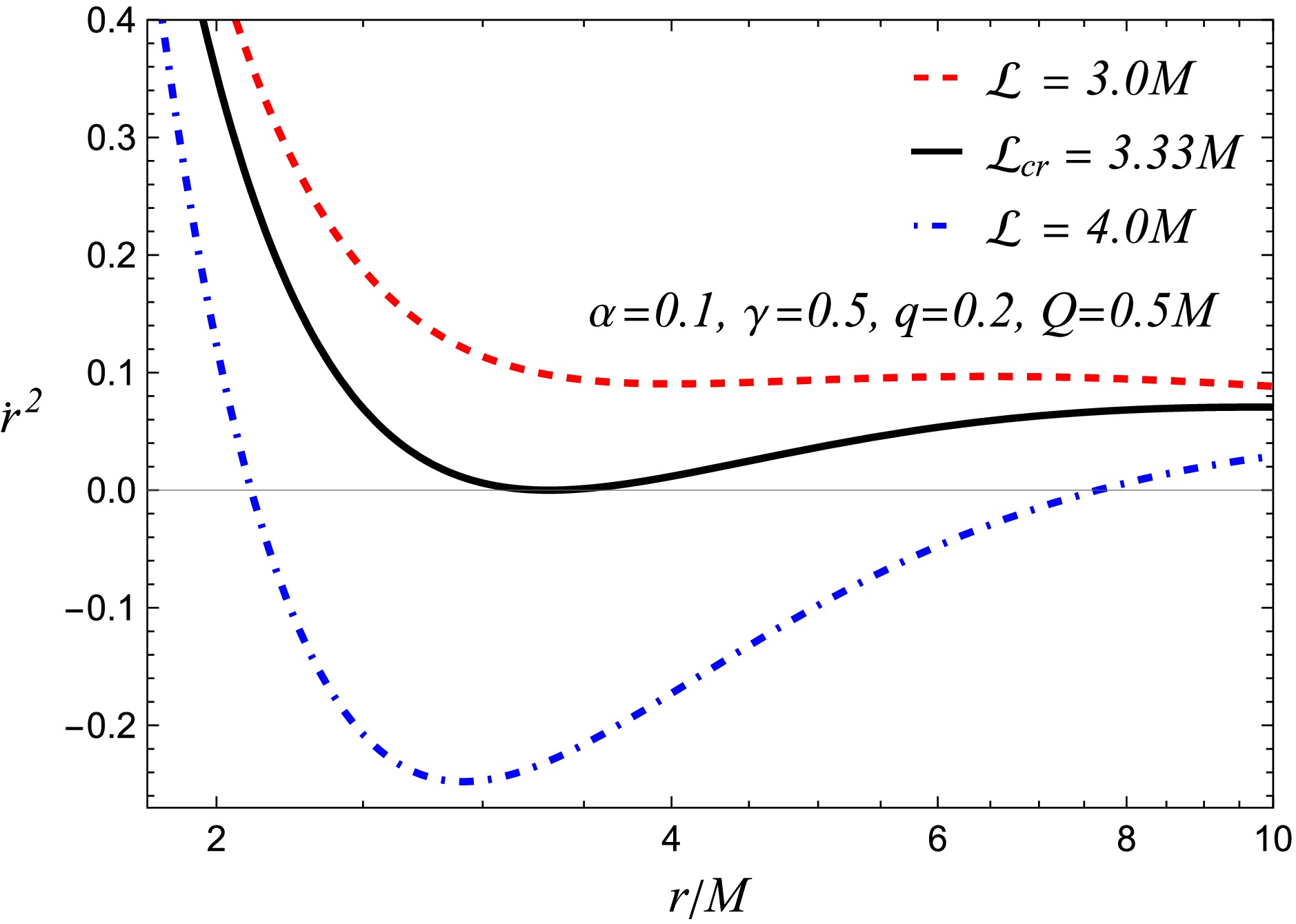
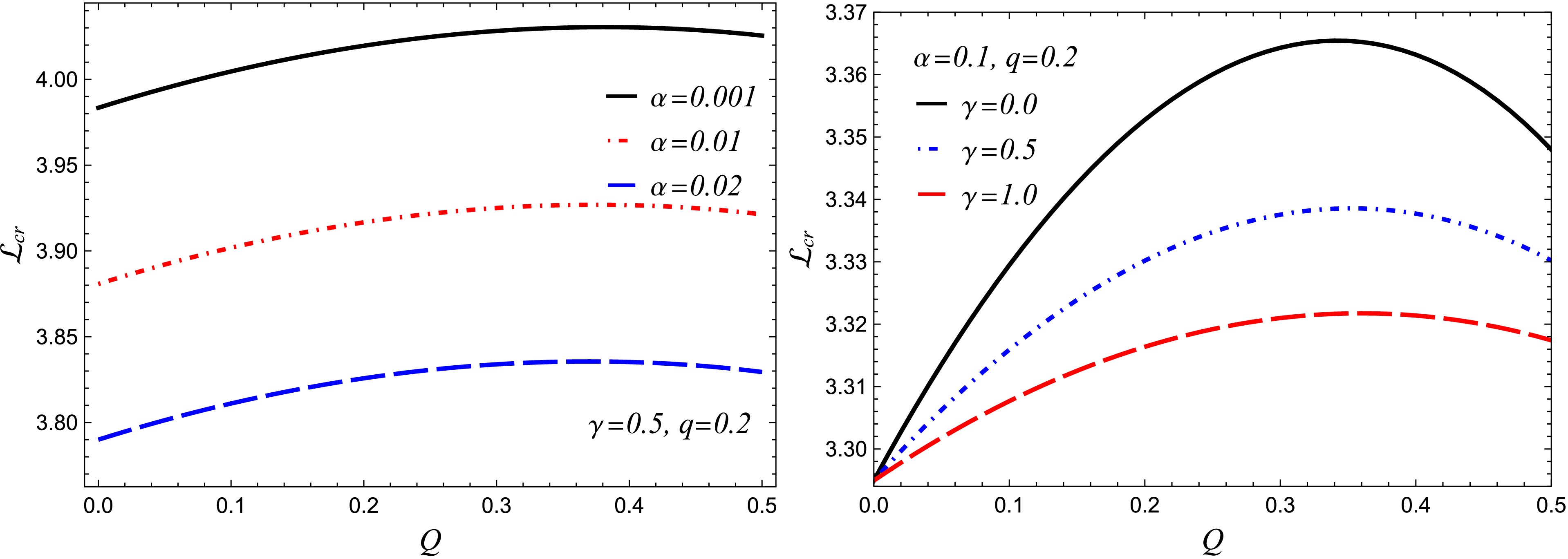
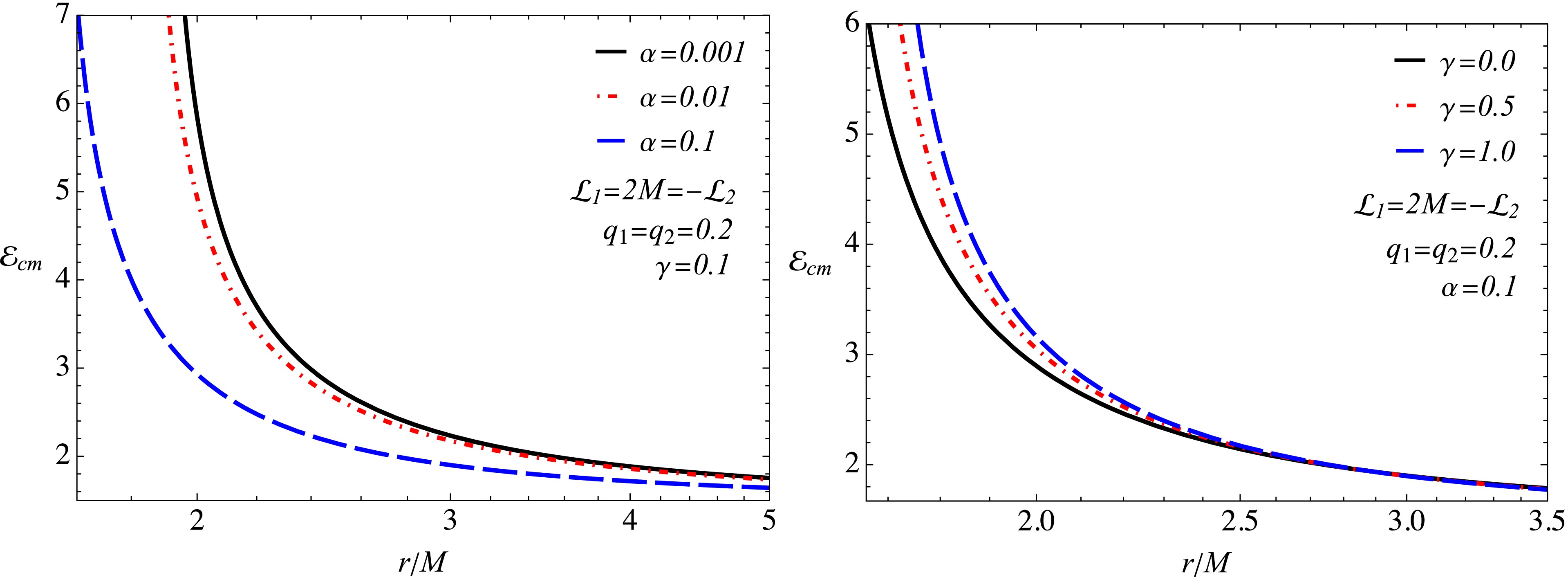
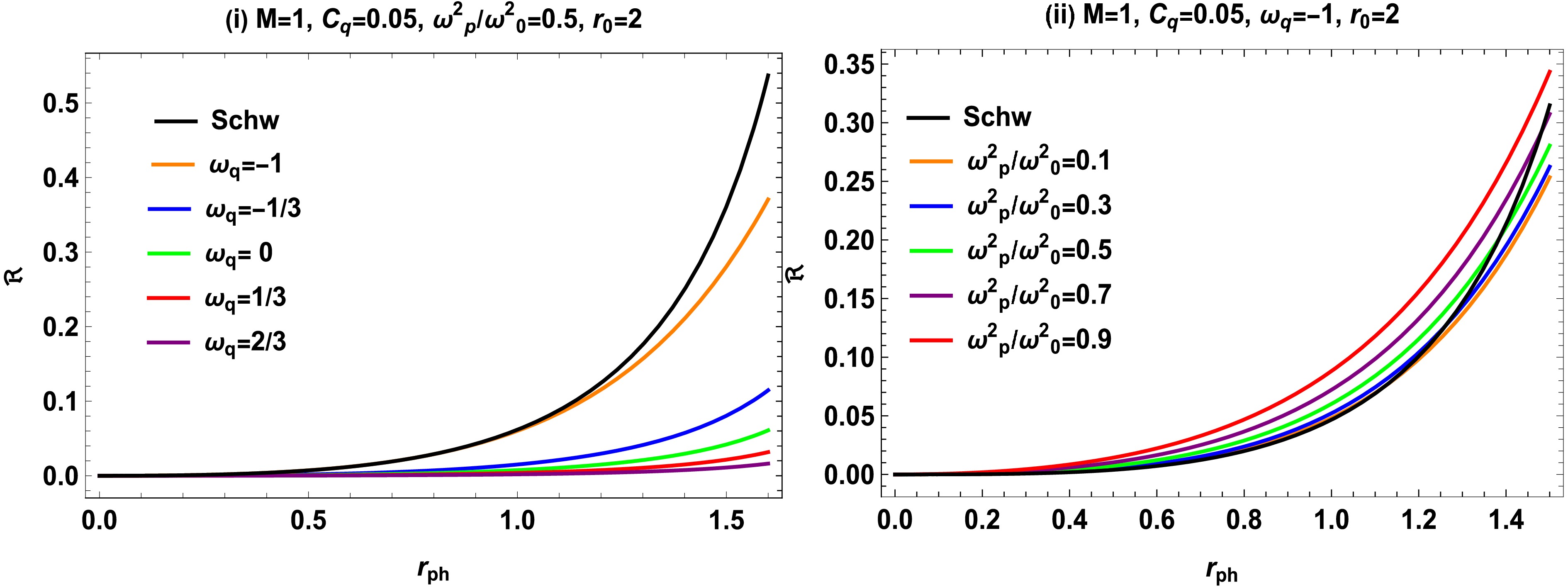
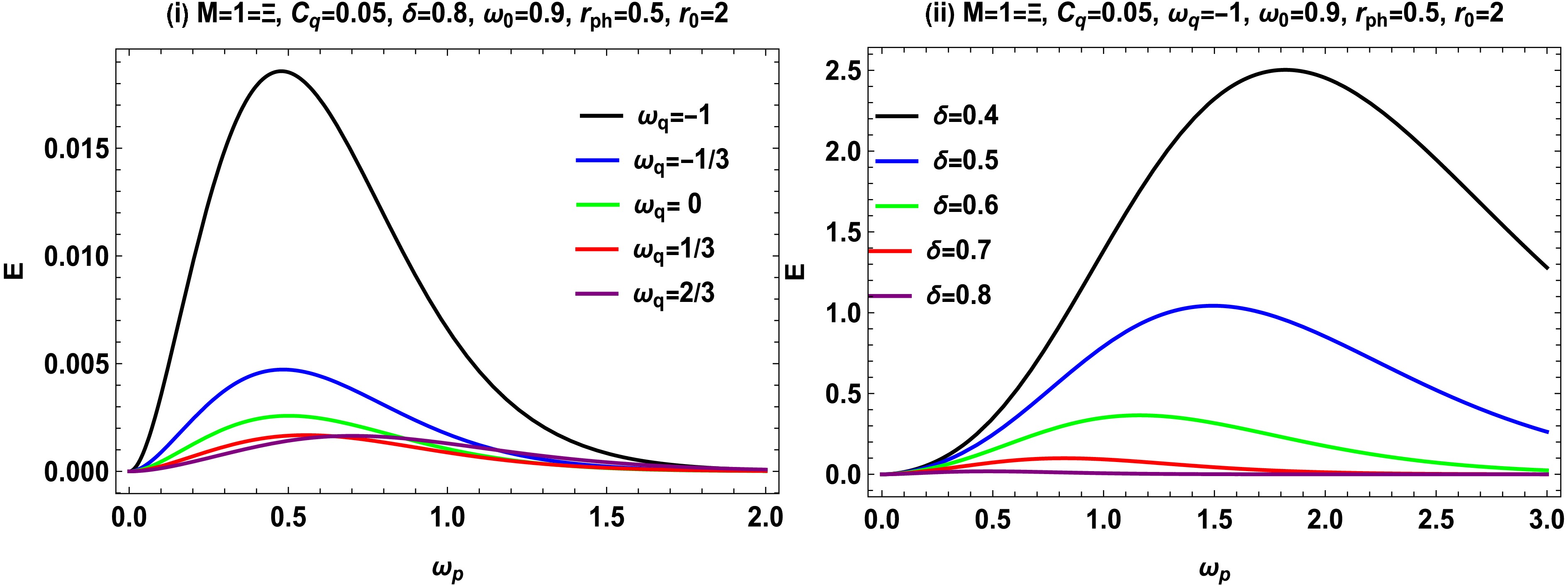
In this study, we investigate the influence of the parameters of ModMax nonlinear electrodynamics and perfect-fluid dark matter (PFDM) on the geometry and physical properties of charged black holes. A static, spherically symmetric solution to the Einstein field equations describing a charged ModMax black hole immersed in a PFDM background is obtained. The motion of charged test particles in this spacetime is analyzed in detail, including the effective potential, the conditions for stable and unstable circular orbits, and the radius of the innermost stable circular orbit (ISCO). It is shown that the ModMax parameter γ shifts the orbits outward for repulsive Coulomb interactions and inward for attractive forces, while increasing PFDM enhances gravitational attraction, shifting the ISCO inward. Furthermore, the interactions and collisions of charged particles near the event horizon are examined. The center-of-mass energy\begin{document}${\cal{E}}_{\rm cm}$\end{document}
In this study, we investigate the influence of the parameters of ModMax nonlinear electrodynamics and perfect-fluid dark matter (PFDM) on the geometry and physical properties of charged black holes. A static, spherically symmetric solution to the Einstein field equations describing a charged ModMax black hole immersed in a PFDM background is obtained. The motion of charged test particles in this spacetime is analyzed in detail, including the effective potential, the conditions for stable and unstable circular orbits, and the radius of the innermost stable circular orbit (ISCO). It is shown that the ModMax parameter γ shifts the orbits outward for repulsive Coulomb interactions and inward for attractive forces, while increasing PFDM enhances gravitational attraction, shifting the ISCO inward. Furthermore, the interactions and collisions of charged particles near the event horizon are examined. The center-of-mass energy
2026, 50(6): 065107. doi: 10.1088/1674-1137/ae5806
Abstract:
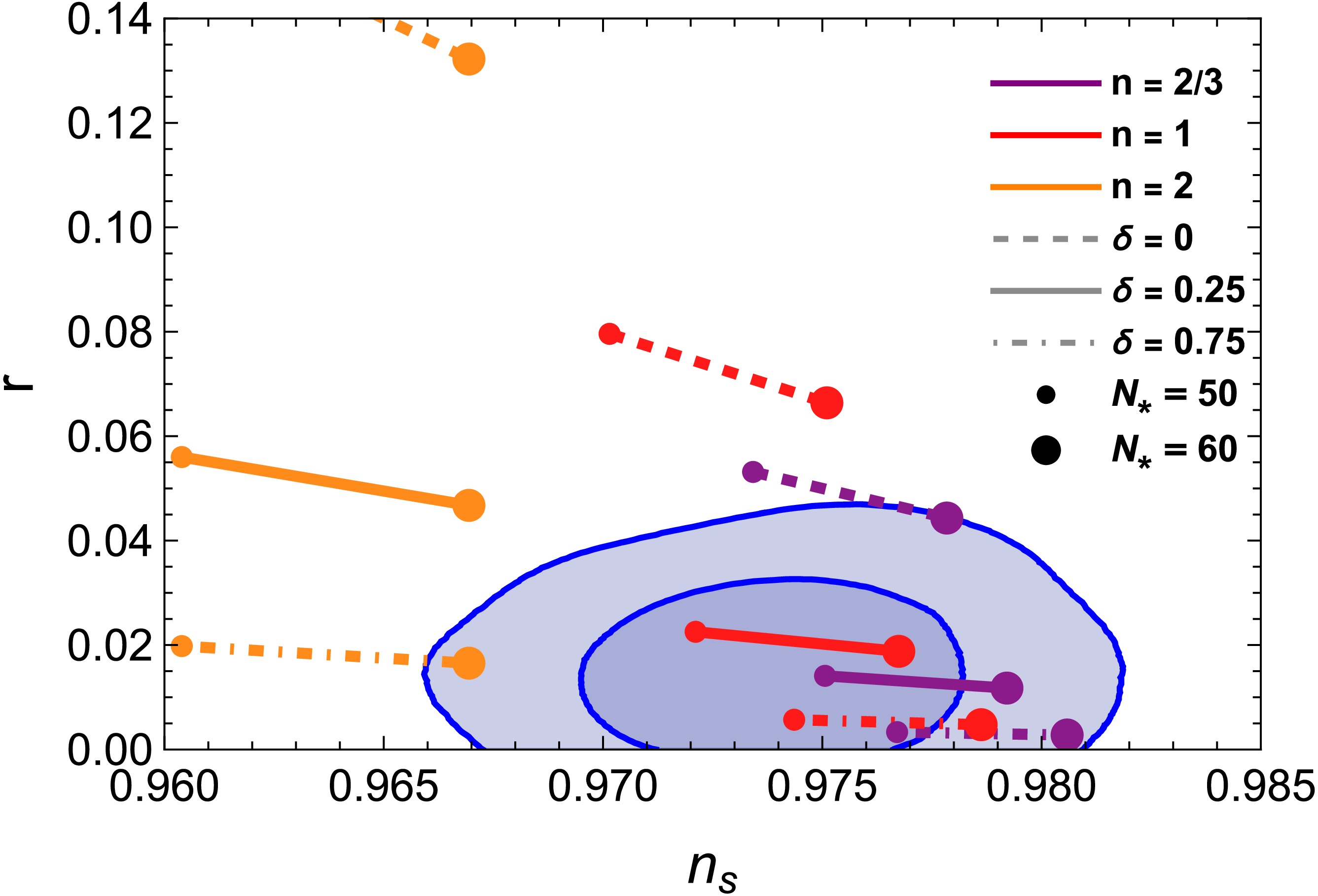
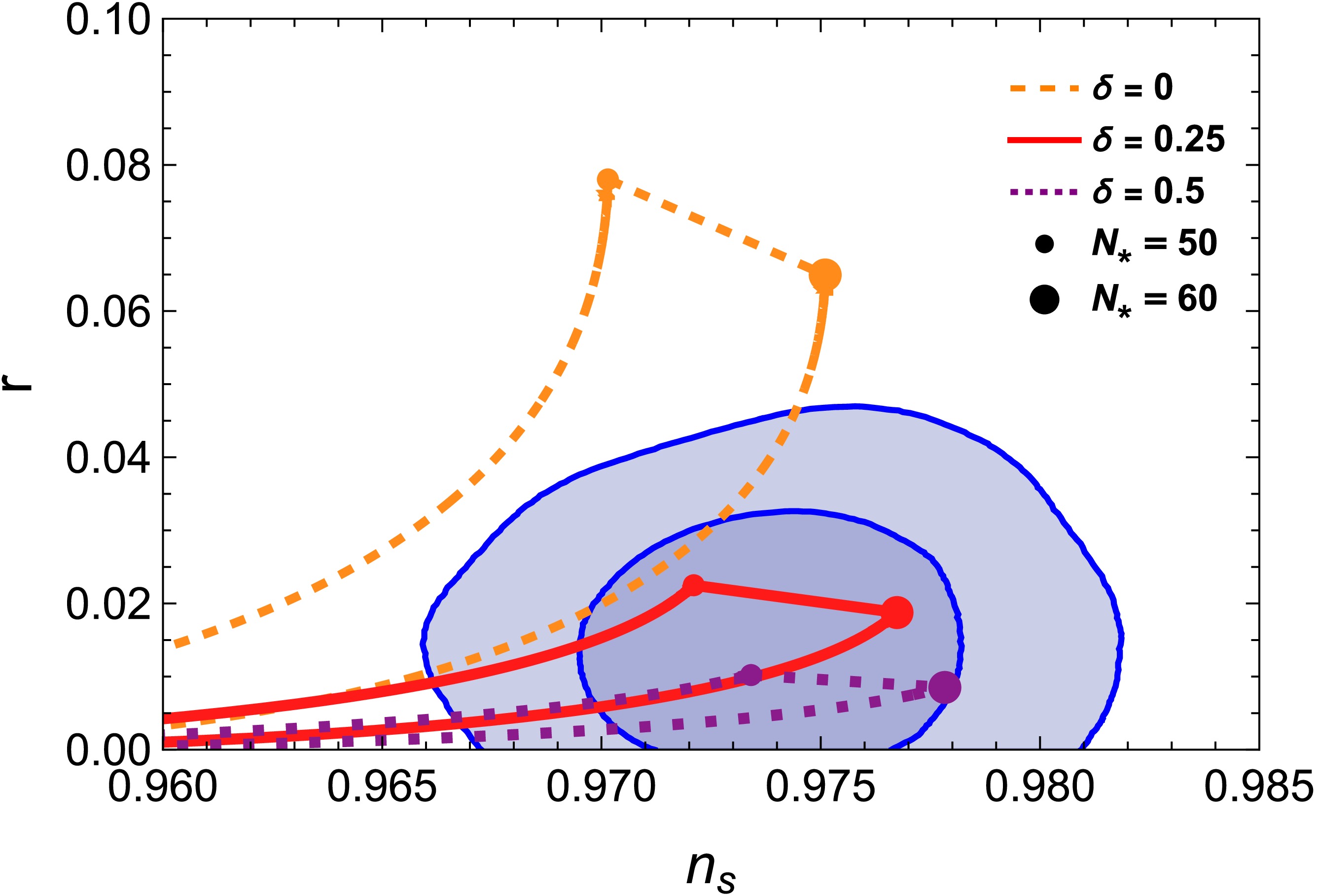
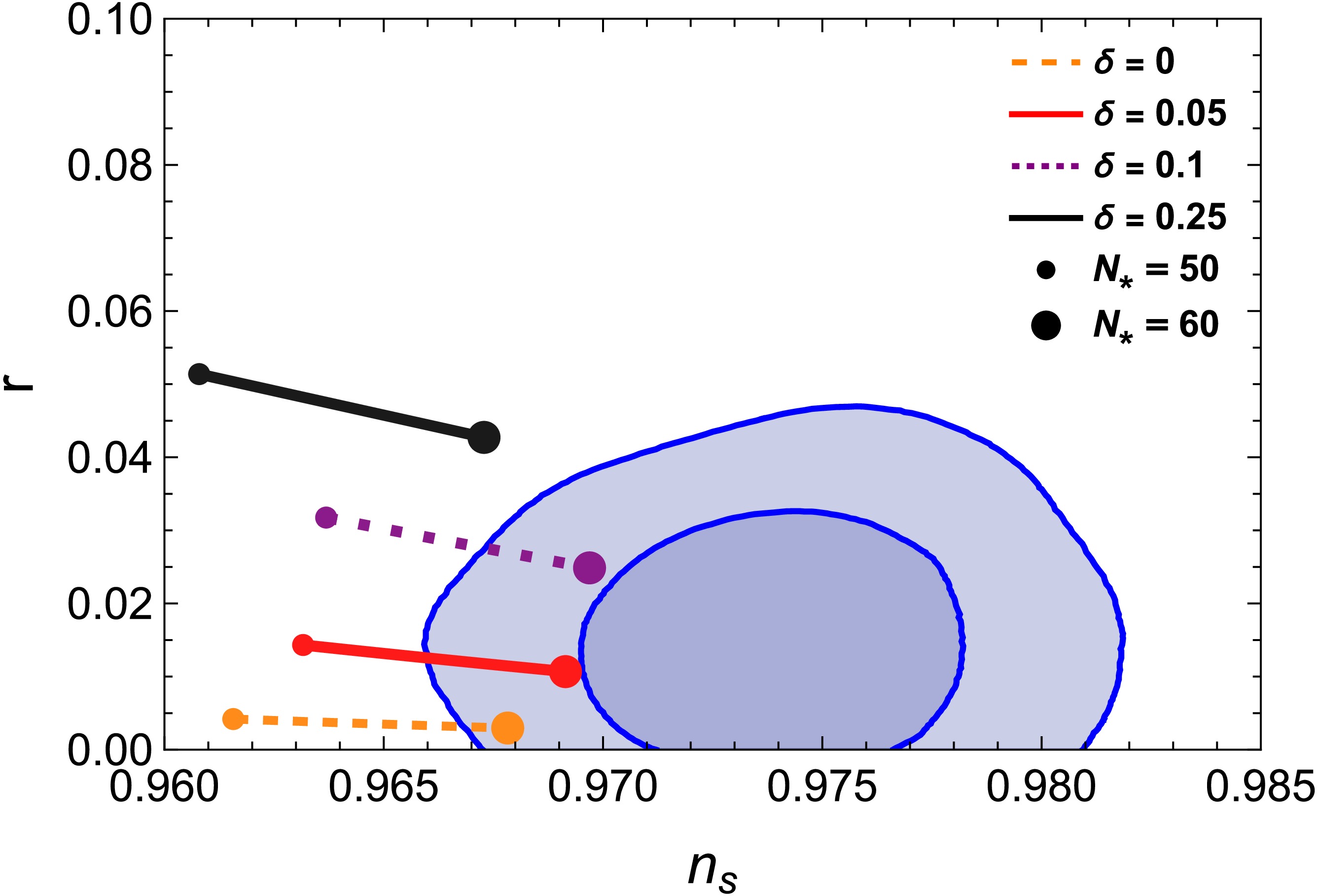
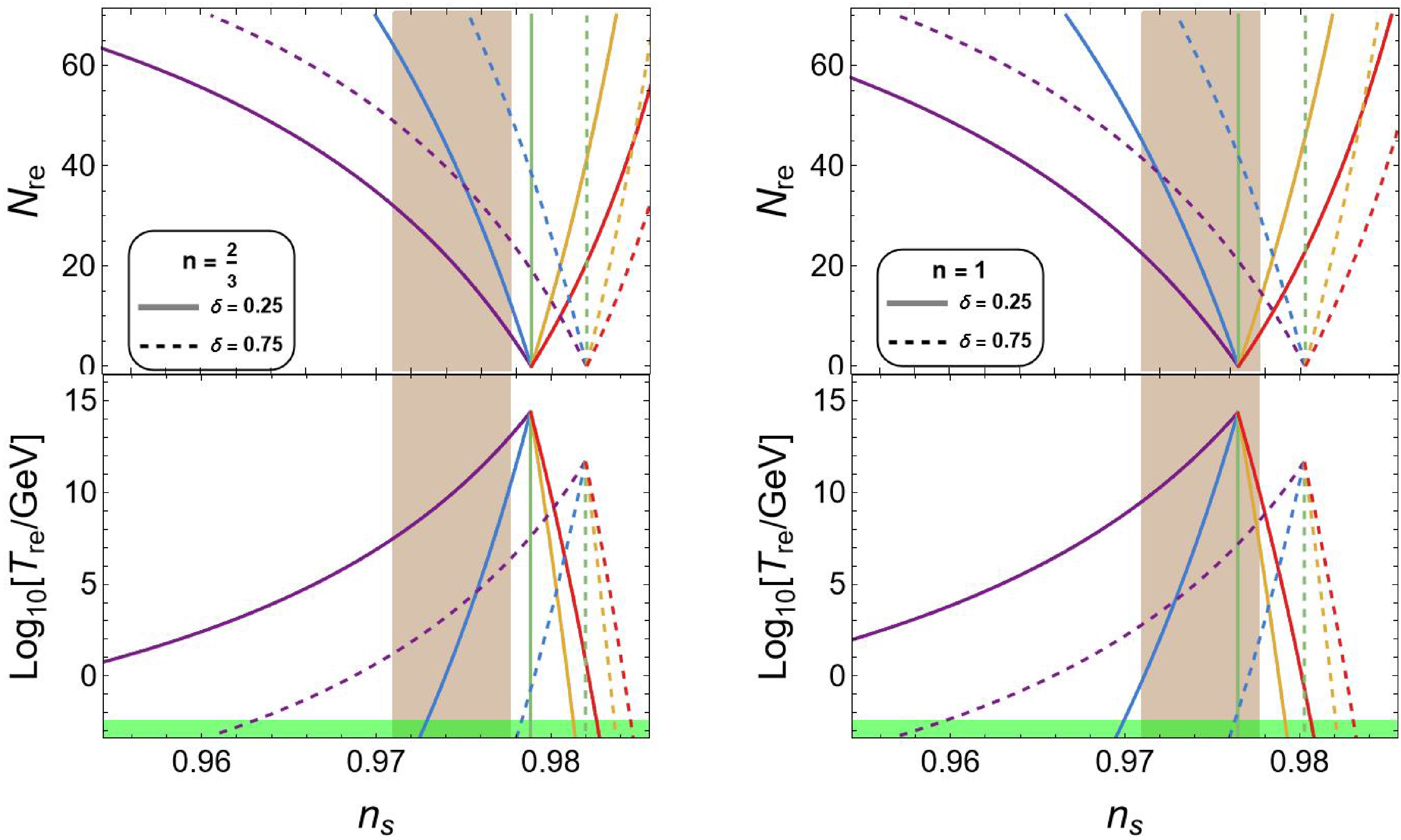
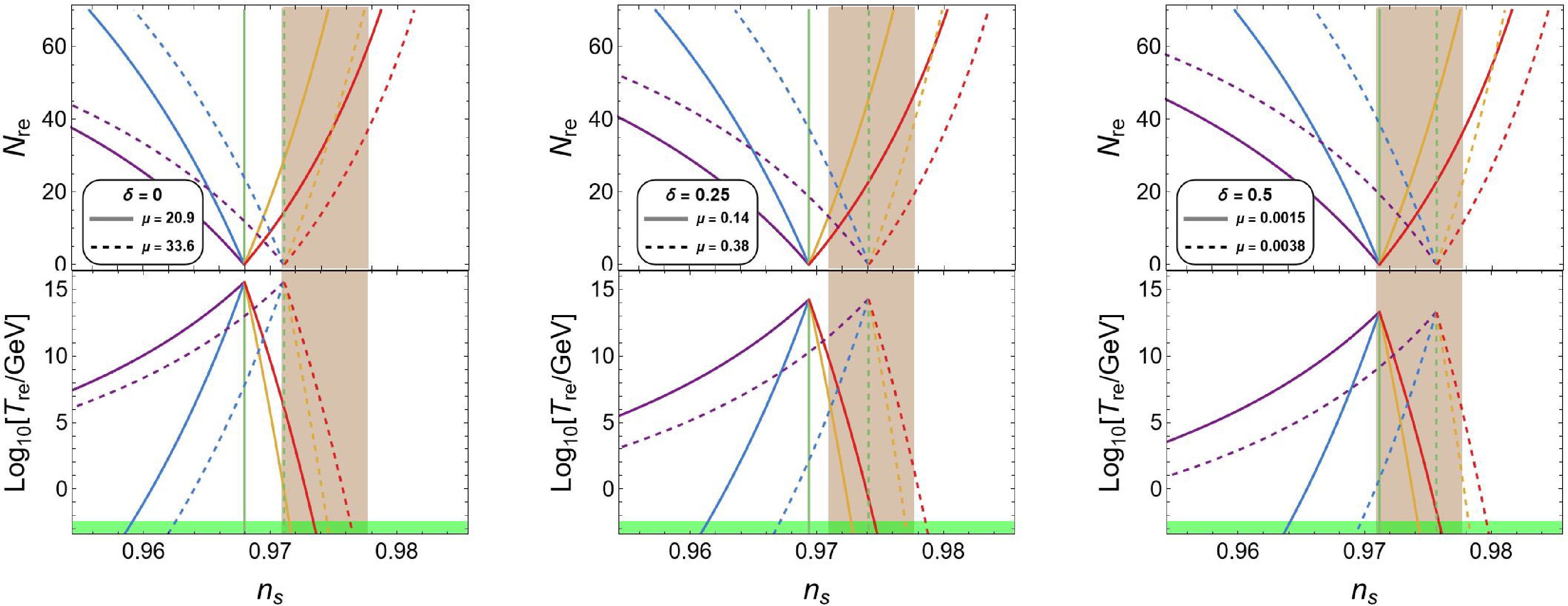
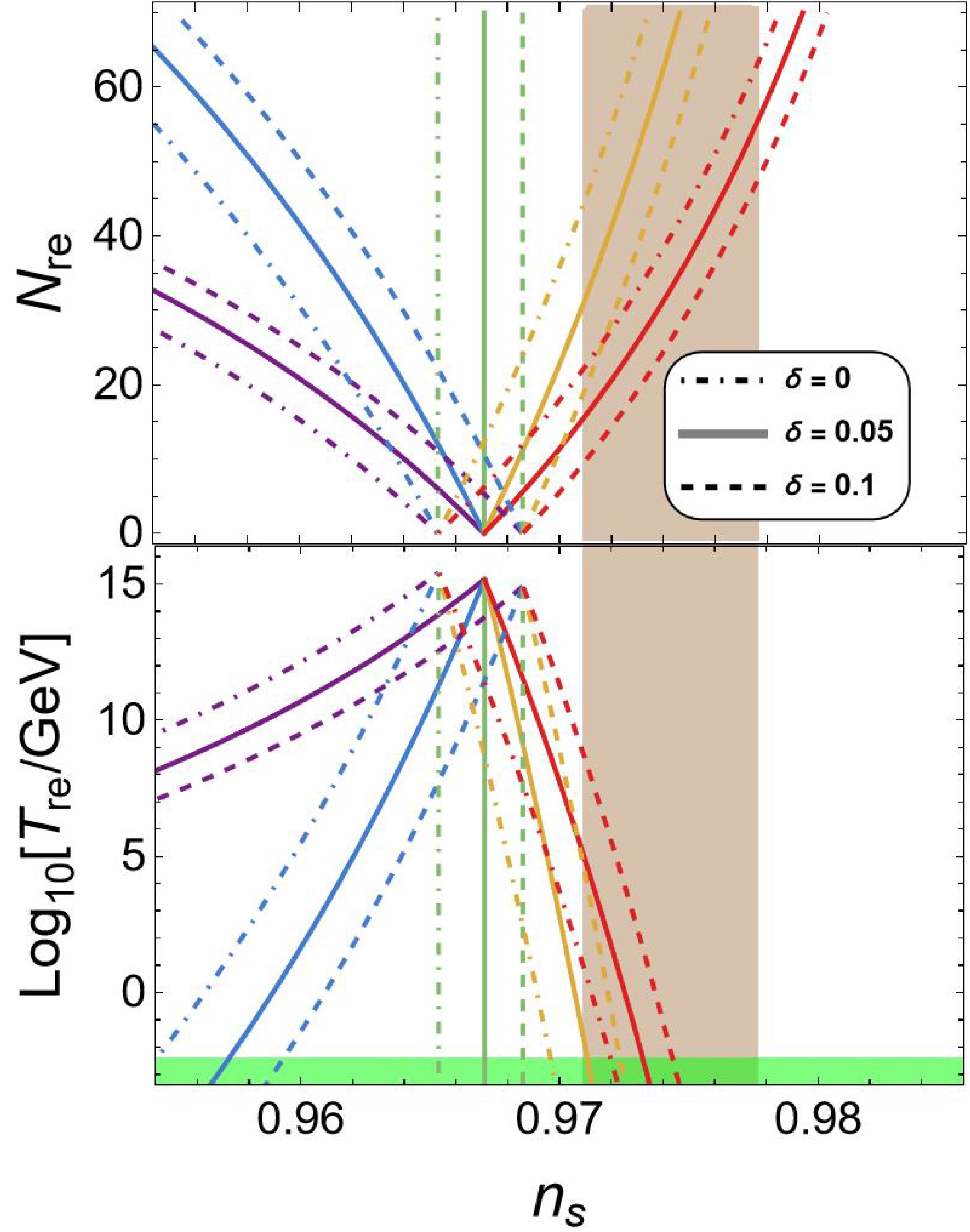
Compared with the results of Planck-only analyses, recent measurements from the Atacama Cosmology Telescope (ACT) indicate a preference for a slightly bluer scalar spectral index, placing canonical inflationary models in General Relativity (GR) under mild pressure. We demonstrate that f(T) gravity systematically accommodates these dataset-dependent preferences by suppressing the tensor-to-scalar ratio in monomial and hilltop potentials and by shifting the spectral index of E-models toward the ACT-favored region. Incorporating Big Bang Nucleosynthesis bounds, we break the degeneracy between the inflationary e-folding number and the post-inflationary thermal history. A direct side-by-side comparison reveals that reconciling models such as the Starobinsky potential with ACT data in GR strictly necessitates a non-standard, stiff (kinetic-dominated) reheating phase. In contrast, torsional corrections in f(T) gravity significantly enlarge the viable parameter space, relaxing these stringent phenomenological requirements and establishing a coherent framework that jointly constrains CMB observables and reheating dynamics.
Compared with the results of Planck-only analyses, recent measurements from the Atacama Cosmology Telescope (ACT) indicate a preference for a slightly bluer scalar spectral index, placing canonical inflationary models in General Relativity (GR) under mild pressure. We demonstrate that f(T) gravity systematically accommodates these dataset-dependent preferences by suppressing the tensor-to-scalar ratio in monomial and hilltop potentials and by shifting the spectral index of E-models toward the ACT-favored region. Incorporating Big Bang Nucleosynthesis bounds, we break the degeneracy between the inflationary e-folding number and the post-inflationary thermal history. A direct side-by-side comparison reveals that reconciling models such as the Starobinsky potential with ACT data in GR strictly necessitates a non-standard, stiff (kinetic-dominated) reheating phase. In contrast, torsional corrections in f(T) gravity significantly enlarge the viable parameter space, relaxing these stringent phenomenological requirements and establishing a coherent framework that jointly constrains CMB observables and reheating dynamics.
2026, 50(6): 065108. doi: 10.1088/1674-1137/ae5c7d
Abstract:
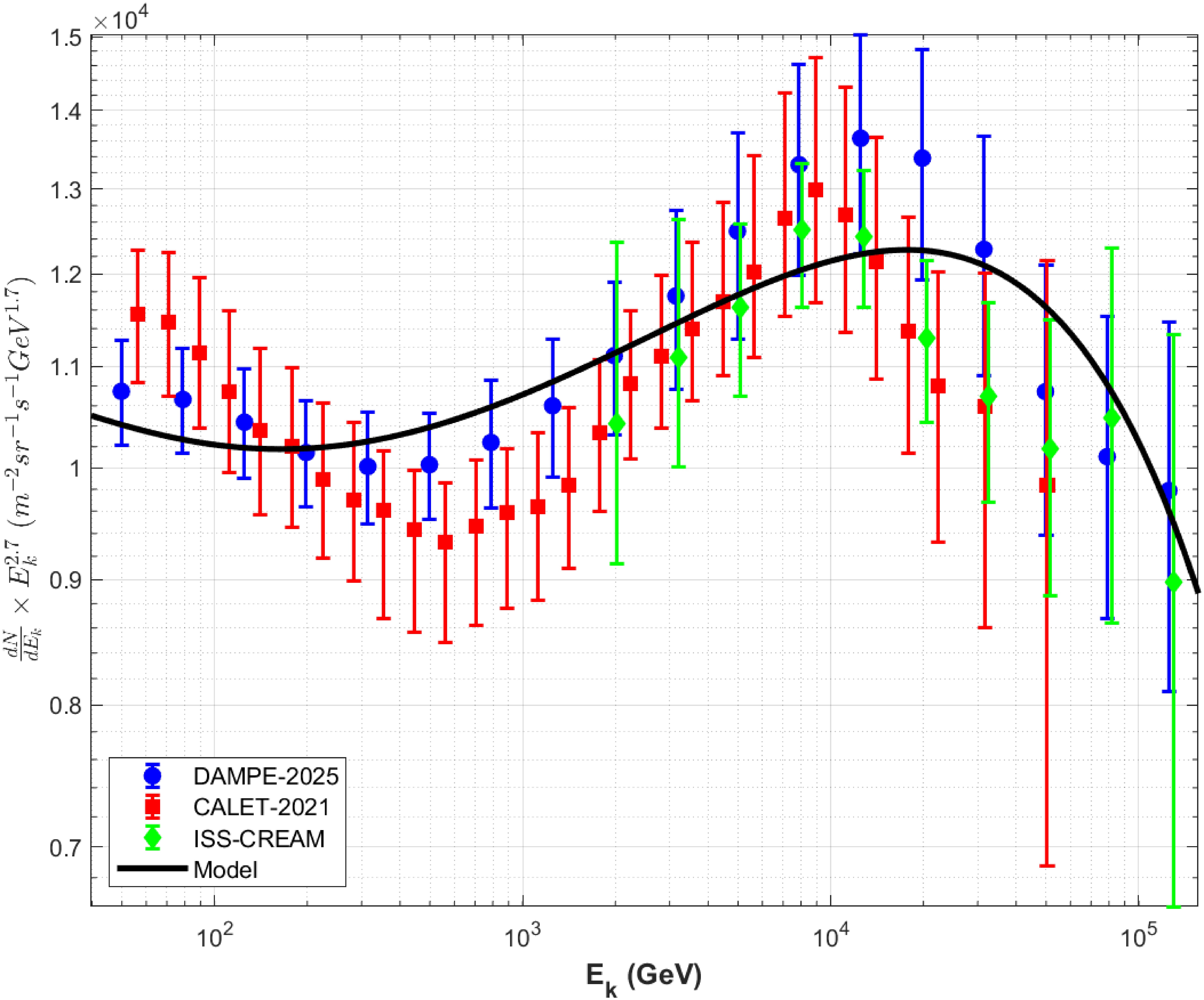
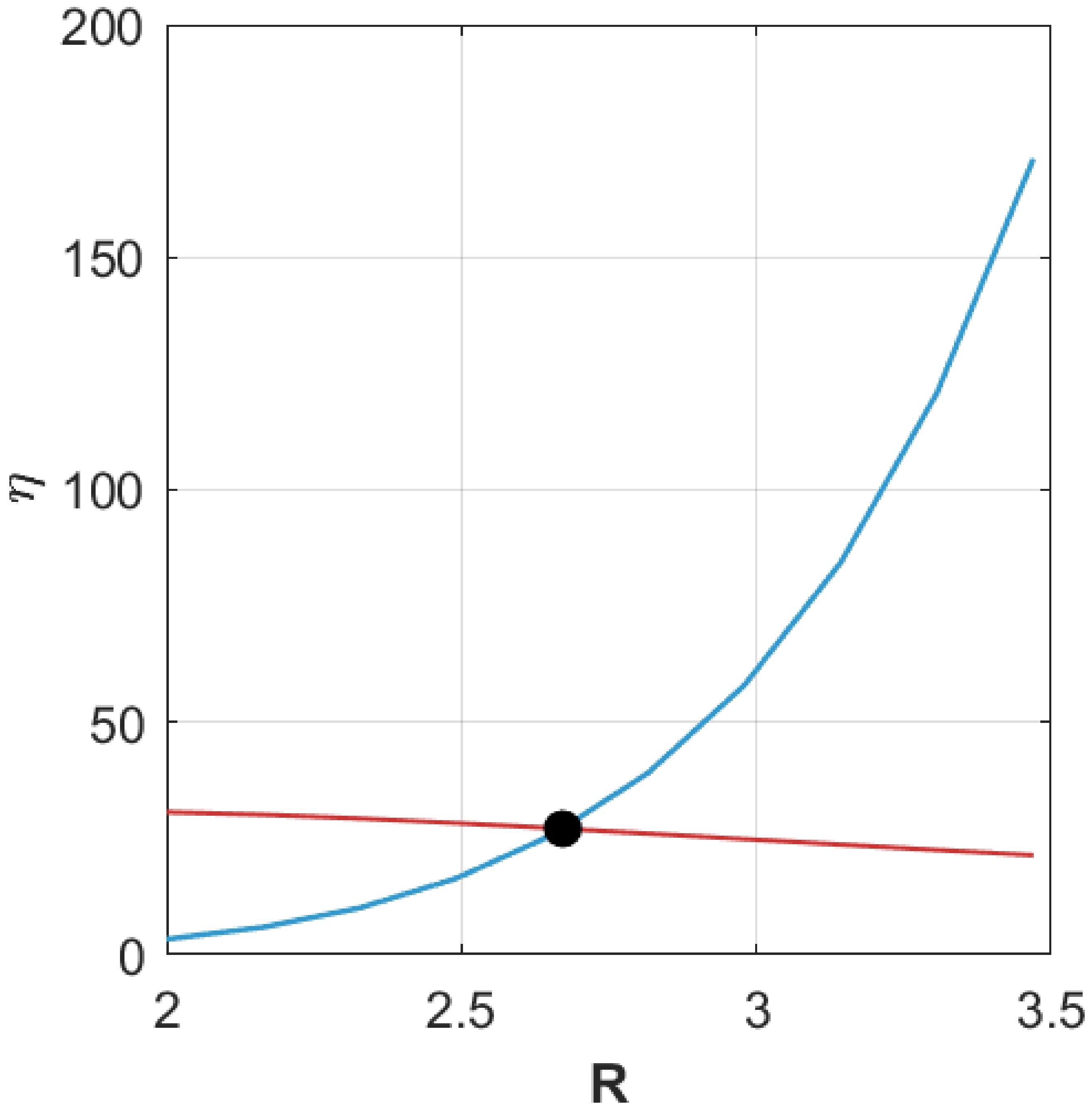
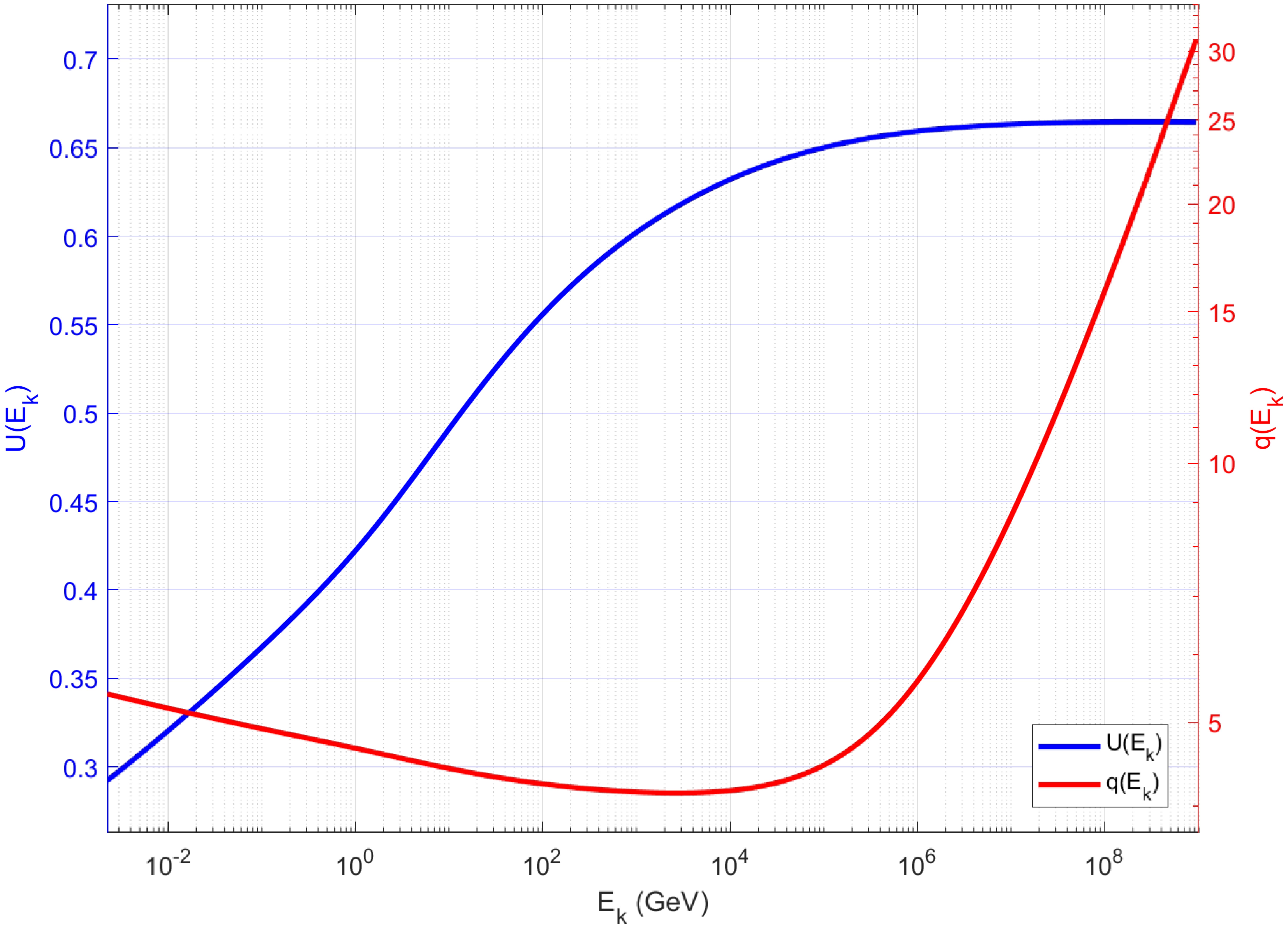
We develop a self-consistent nonlinear extension of diffusive shock acceleration that incorporates cosmic-ray (CR) backreaction on the shock precursor together with a physically motivated upstream escape mechanism that yields an exponential high-energy cutoff. The CR pressure gradient decelerates the upstream flow ahead of the shock, generating an extended precursor in which higher-rigidity particles sample a larger cumulative velocity gradient and thereby acquire a progressively harder spectrum. Finite-size and escape effects are modeled by a momentum-dependent loss term, which naturally terminates acceleration and steepens the spectrum near the cutoff. The precursor compression ratio is not imposed as a closure condition; instead, it is determined dynamically by enforcing consistency between the injection rate inferred from thermal leakage at the subshock and the injection strength required by the nonlinear shock modification, with CR-driven wave heating providing stabilizing negative feedback. Applying the model to young supernova-remnant–like parameters and standard one-zone Galactic diffusion, we reproduce the main features of the latest DAMPE proton spectrum: gradual hardening from hundreds of GeV to multi-TeV energies, followed by an exponential cutoff at tens of TeV. The resulting spectral evolution follows directly from the competition between precursor-mediated nonlinear feedback and upstream escape.
We develop a self-consistent nonlinear extension of diffusive shock acceleration that incorporates cosmic-ray (CR) backreaction on the shock precursor together with a physically motivated upstream escape mechanism that yields an exponential high-energy cutoff. The CR pressure gradient decelerates the upstream flow ahead of the shock, generating an extended precursor in which higher-rigidity particles sample a larger cumulative velocity gradient and thereby acquire a progressively harder spectrum. Finite-size and escape effects are modeled by a momentum-dependent loss term, which naturally terminates acceleration and steepens the spectrum near the cutoff. The precursor compression ratio is not imposed as a closure condition; instead, it is determined dynamically by enforcing consistency between the injection rate inferred from thermal leakage at the subshock and the injection strength required by the nonlinear shock modification, with CR-driven wave heating providing stabilizing negative feedback. Applying the model to young supernova-remnant–like parameters and standard one-zone Galactic diffusion, we reproduce the main features of the latest DAMPE proton spectrum: gradual hardening from hundreds of GeV to multi-TeV energies, followed by an exponential cutoff at tens of TeV. The resulting spectral evolution follows directly from the competition between precursor-mediated nonlinear feedback and upstream escape.
2026, 50(6): 065109. doi: 10.1088/1674-1137/ae5049
Abstract:
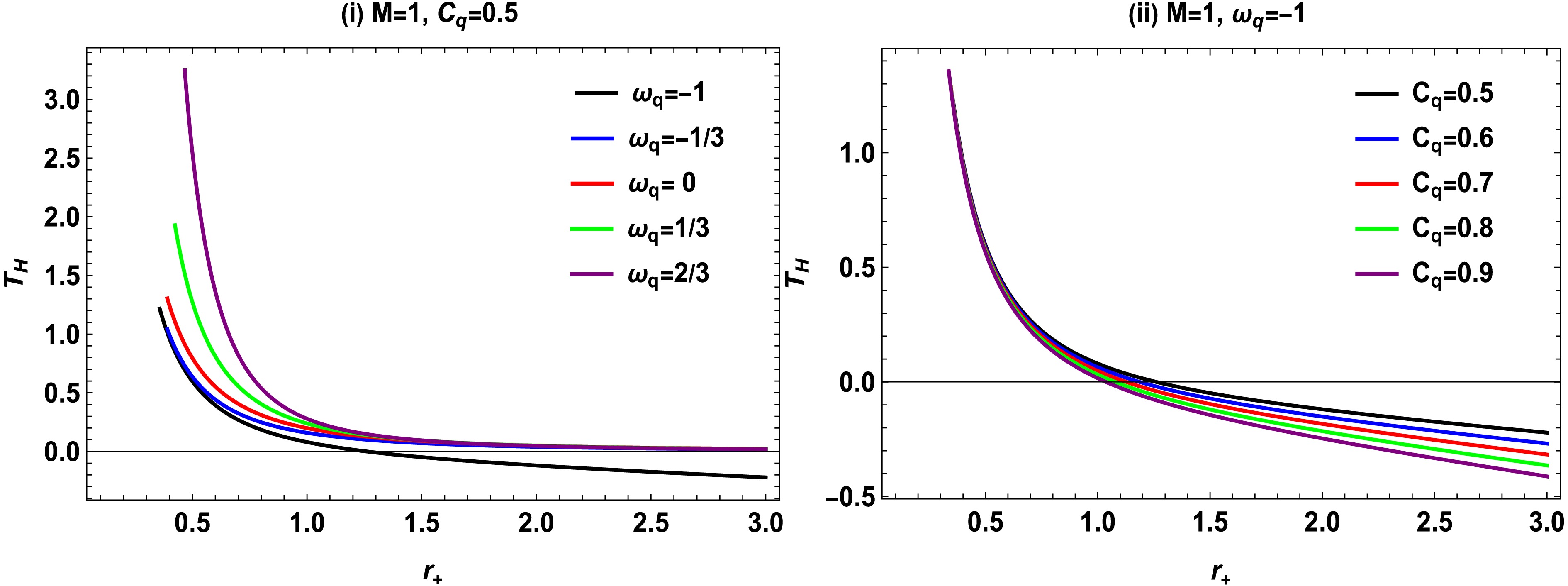
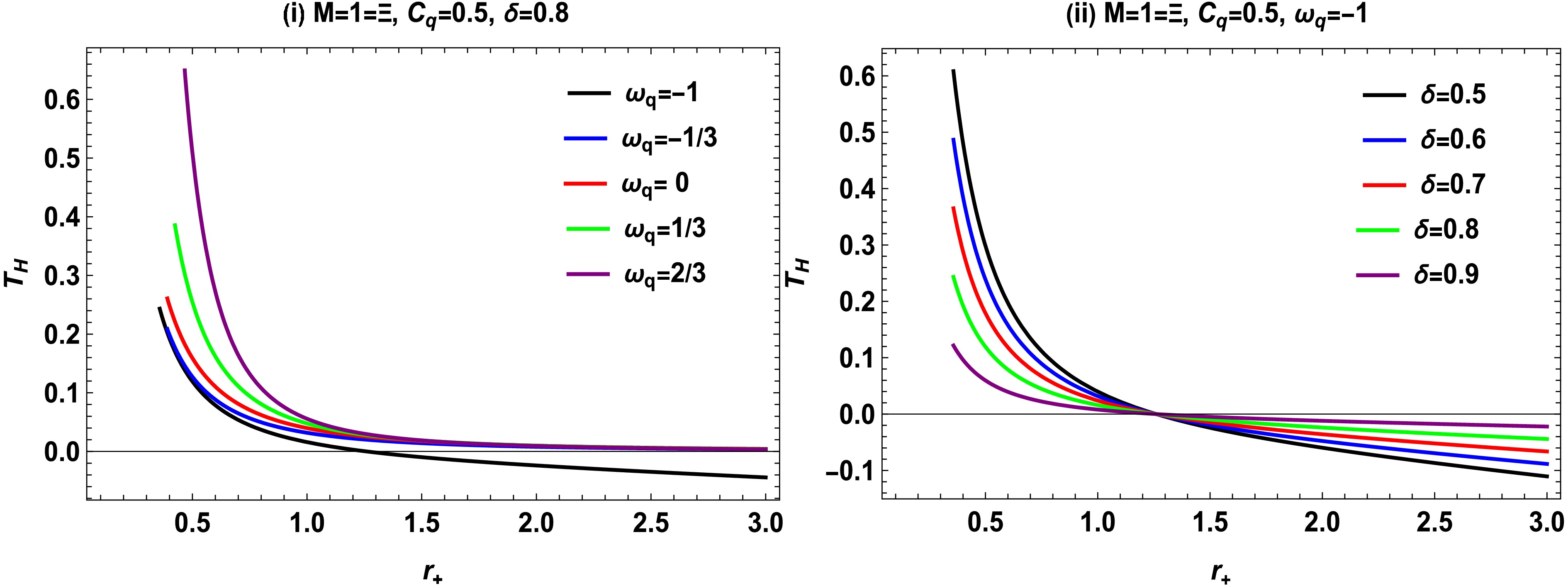
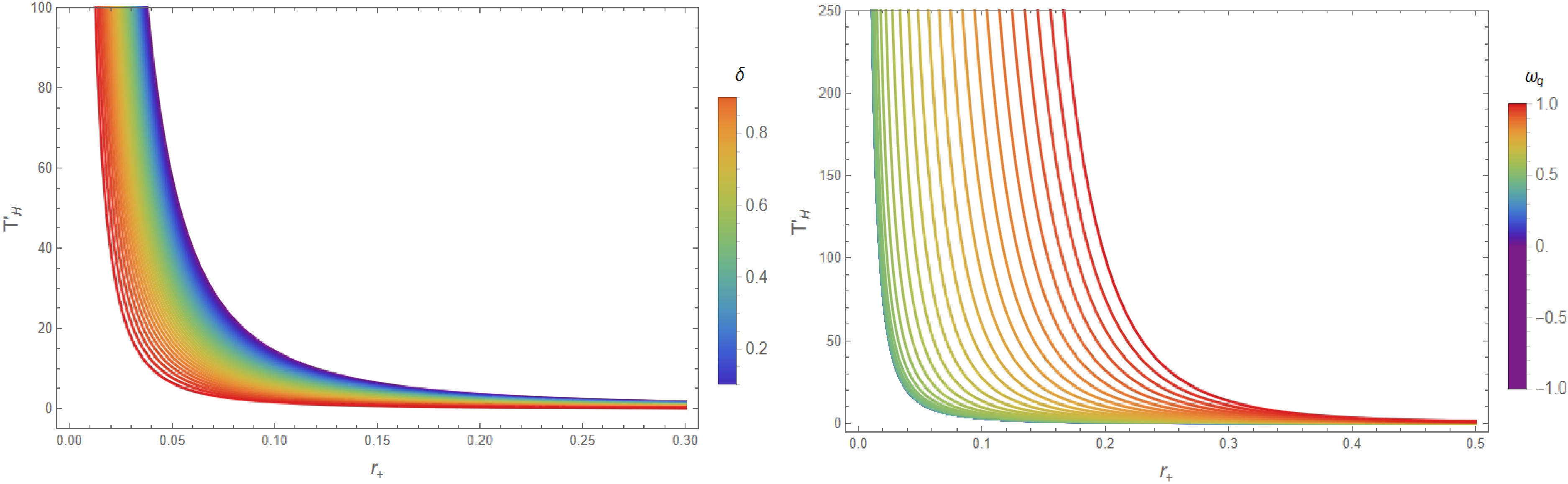
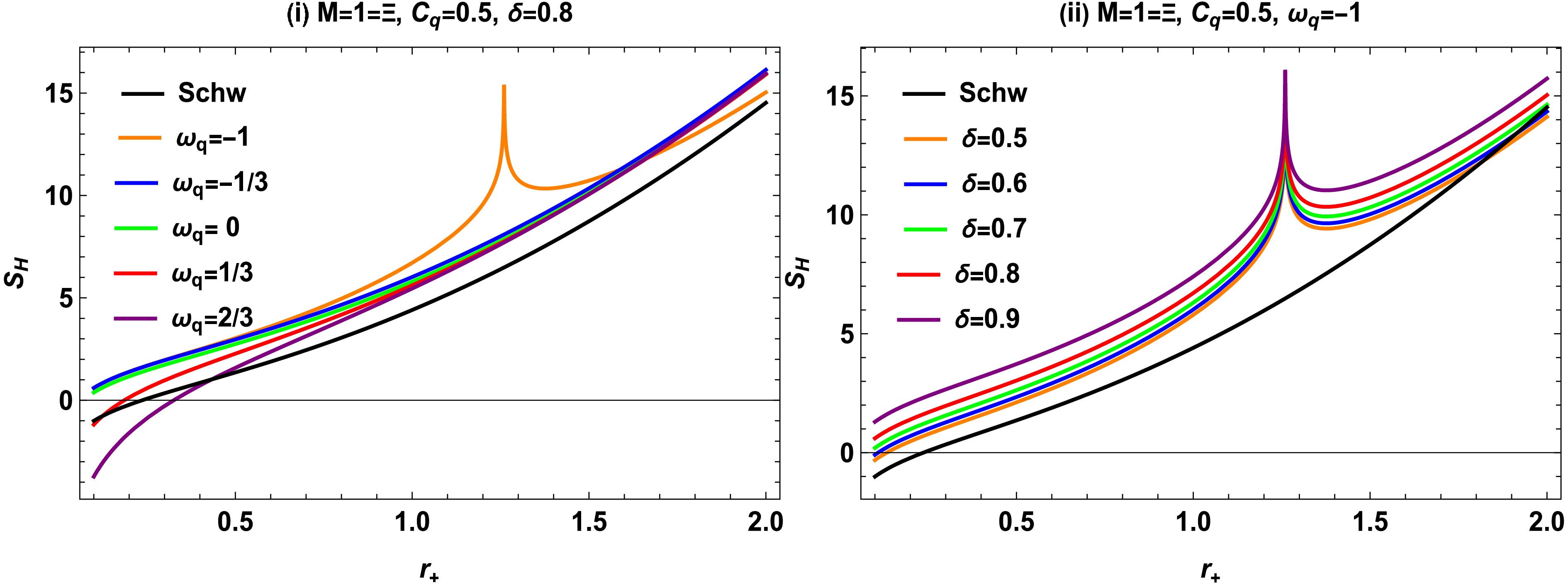
We examine the black hole geometry in general relativity using Einstein's equations to modify the geometry in quintessence matter. In quintessence matter, we incorporate black hole geometry into the standard formula to assess the Hawking temperature. We implement the Hamilton-Jacobi semi-classical technique to examine the Hawking temperature of a four-dimensional black hole spacetime. The boson particles are tunnelled into the horizon under the action of the generalized uncertainty principle (GUP) by implementing the relativistic field equation and WKB strategy. The Hawking temperature is investigated under the influence of the GUP parameter, particle properties, and black hole geometry parameters. Entropy and emission energy corrections are also examined using the Hawking temperature.
We examine the black hole geometry in general relativity using Einstein's equations to modify the geometry in quintessence matter. In quintessence matter, we incorporate black hole geometry into the standard formula to assess the Hawking temperature. We implement the Hamilton-Jacobi semi-classical technique to examine the Hawking temperature of a four-dimensional black hole spacetime. The boson particles are tunnelled into the horizon under the action of the generalized uncertainty principle (GUP) by implementing the relativistic field equation and WKB strategy. The Hawking temperature is investigated under the influence of the GUP parameter, particle properties, and black hole geometry parameters. Entropy and emission energy corrections are also examined using the Hawking temperature.
2026, 50(6): 065110. doi: 10.1088/1674-1137/ae50e5
Abstract:
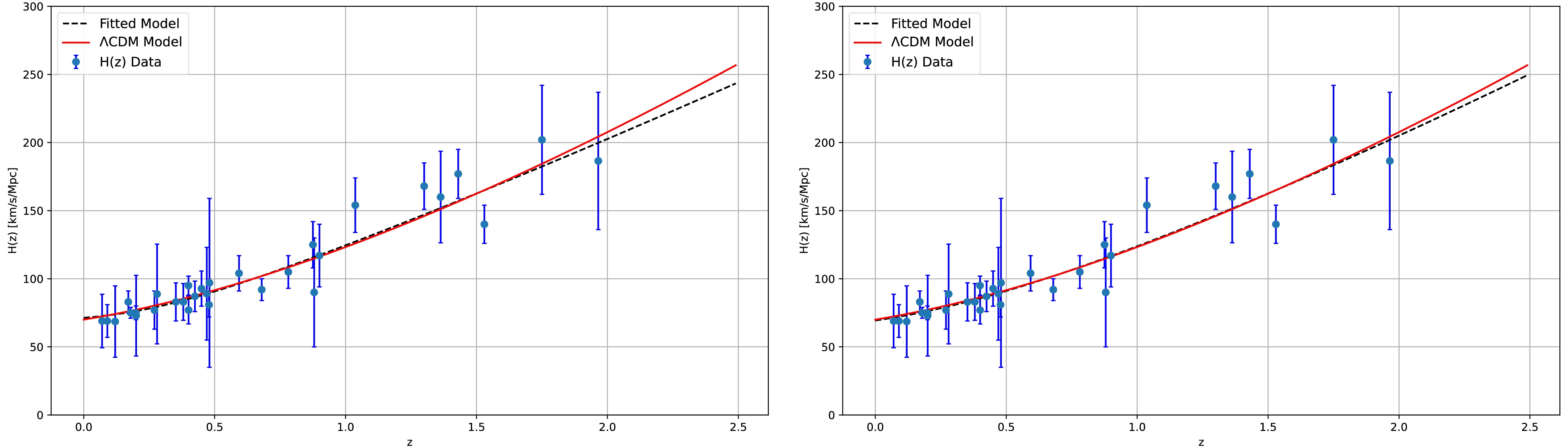
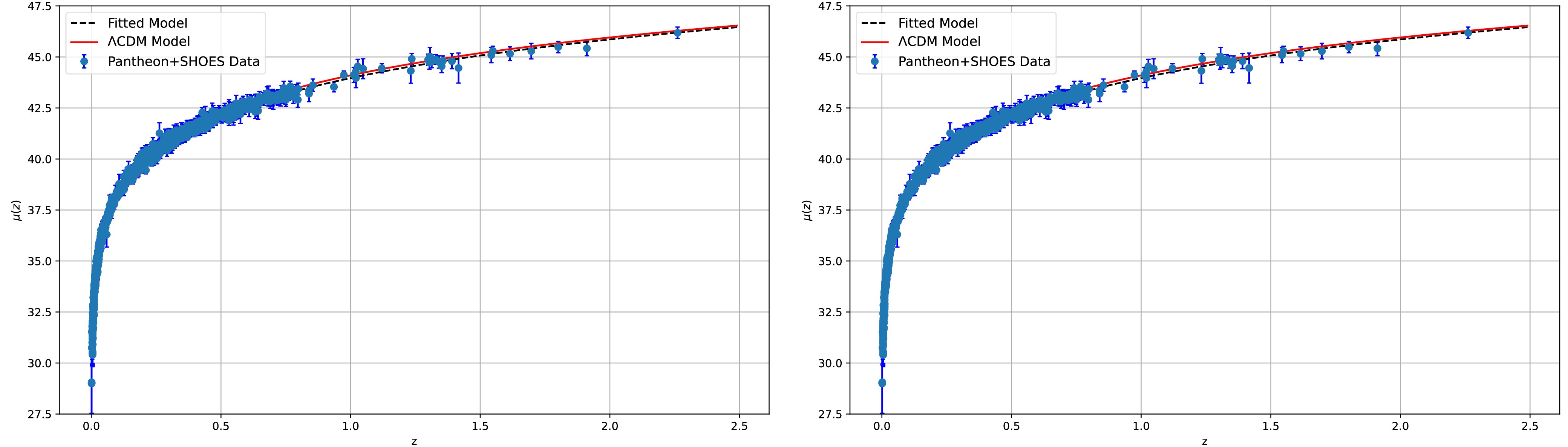
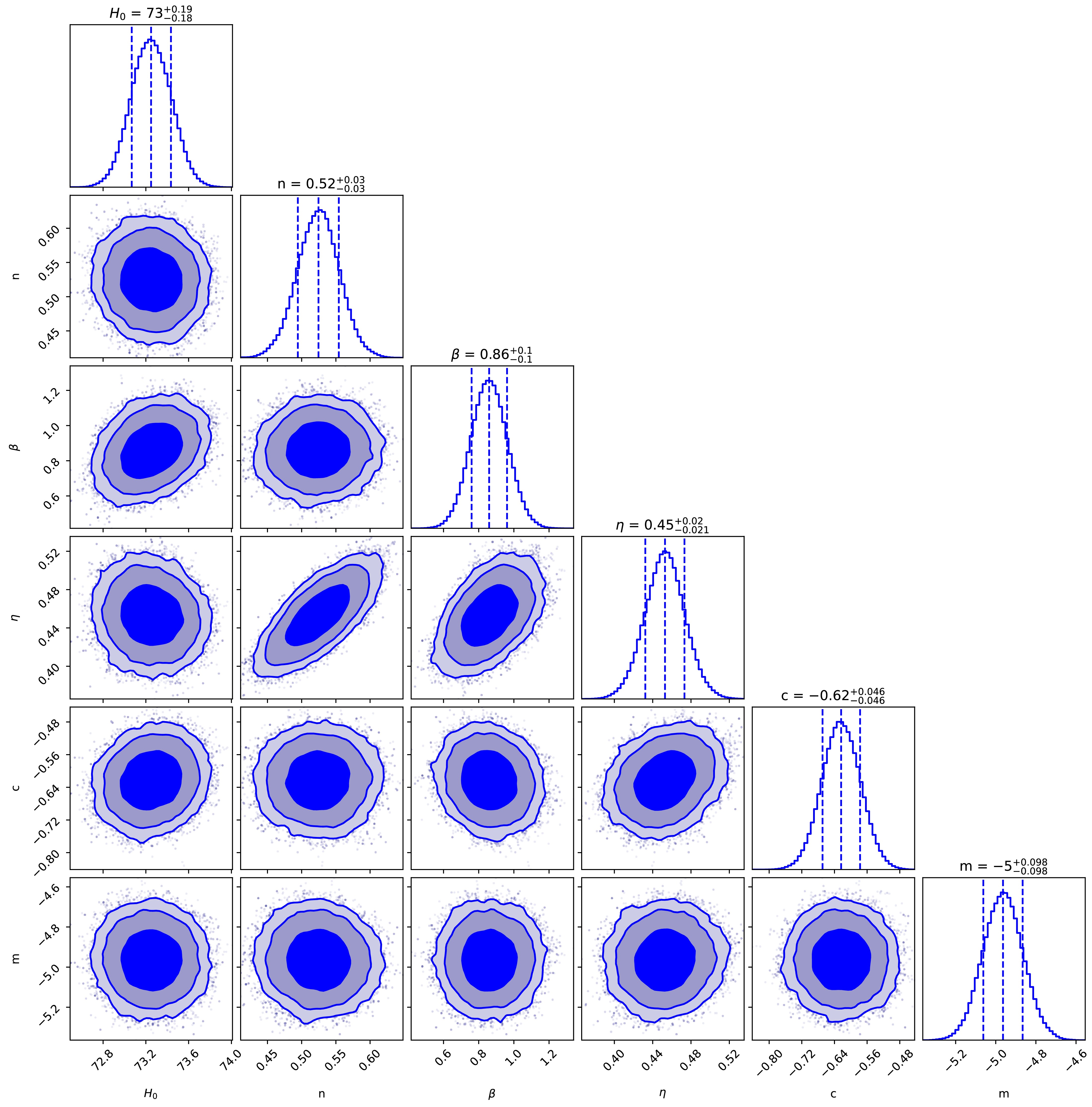
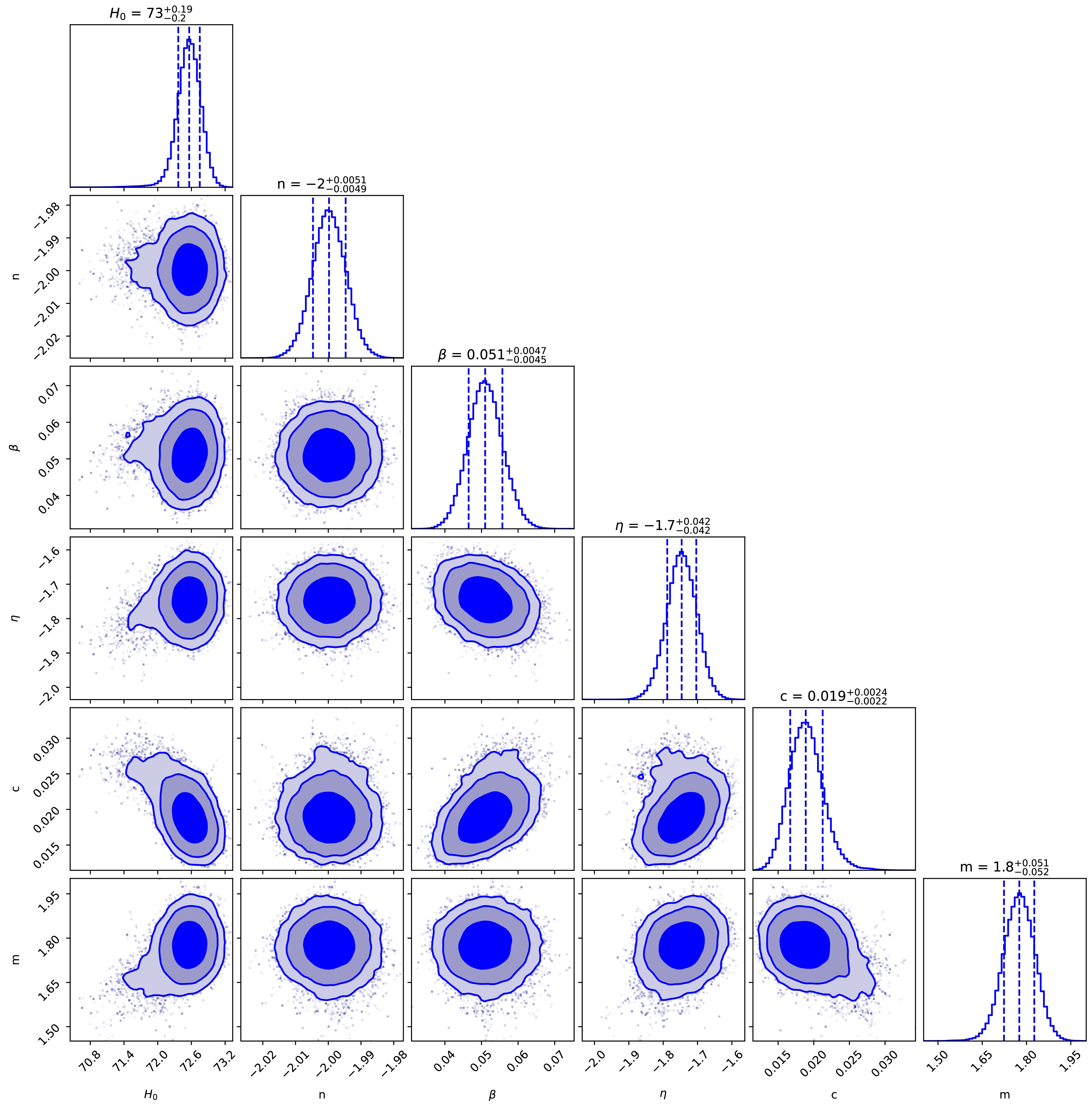
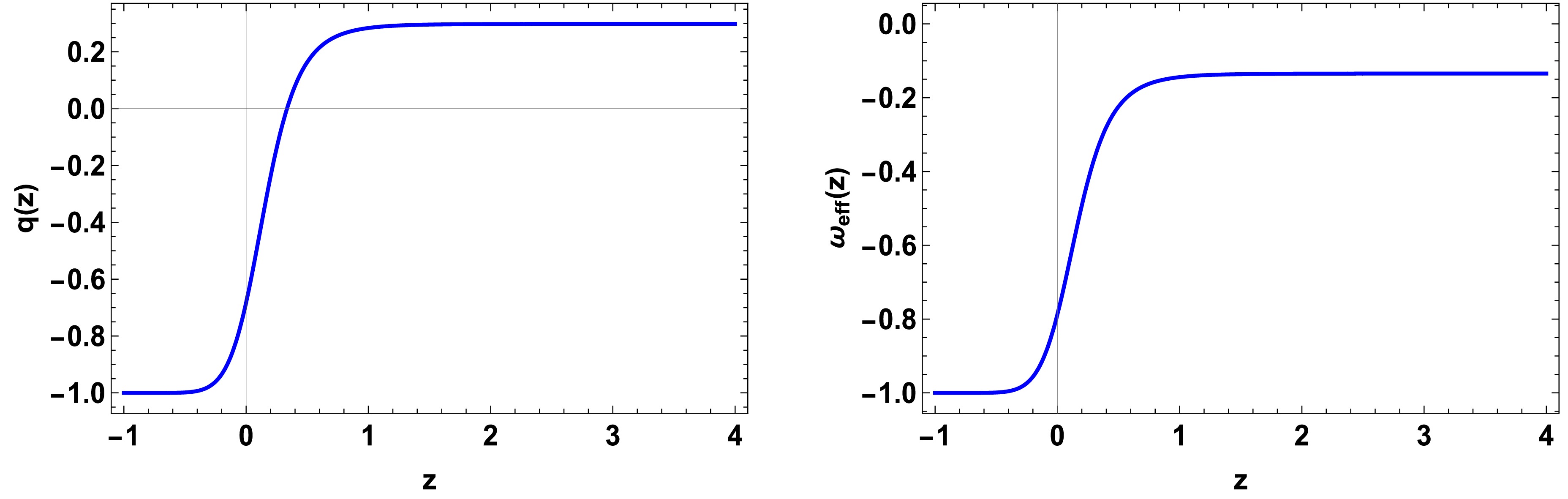
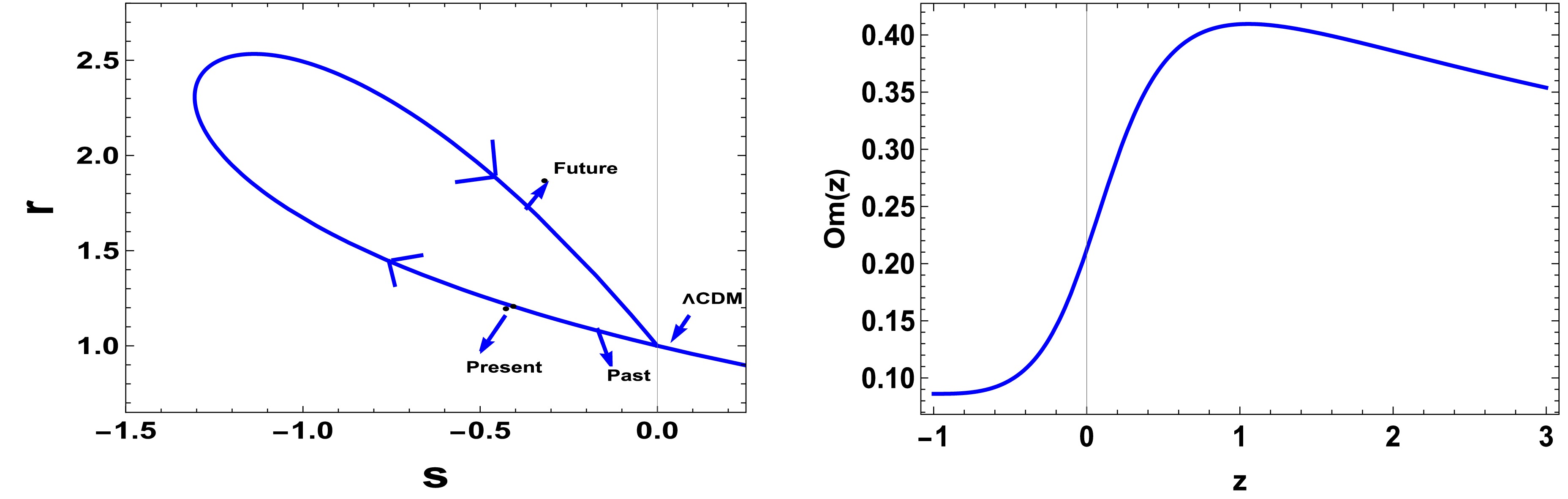
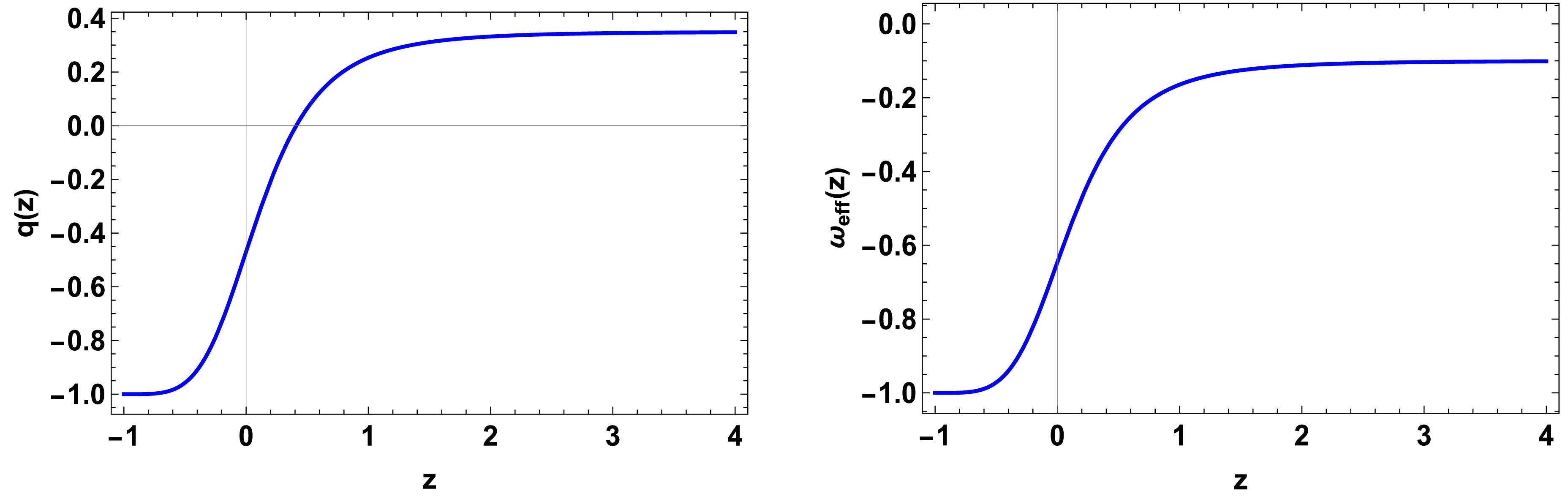
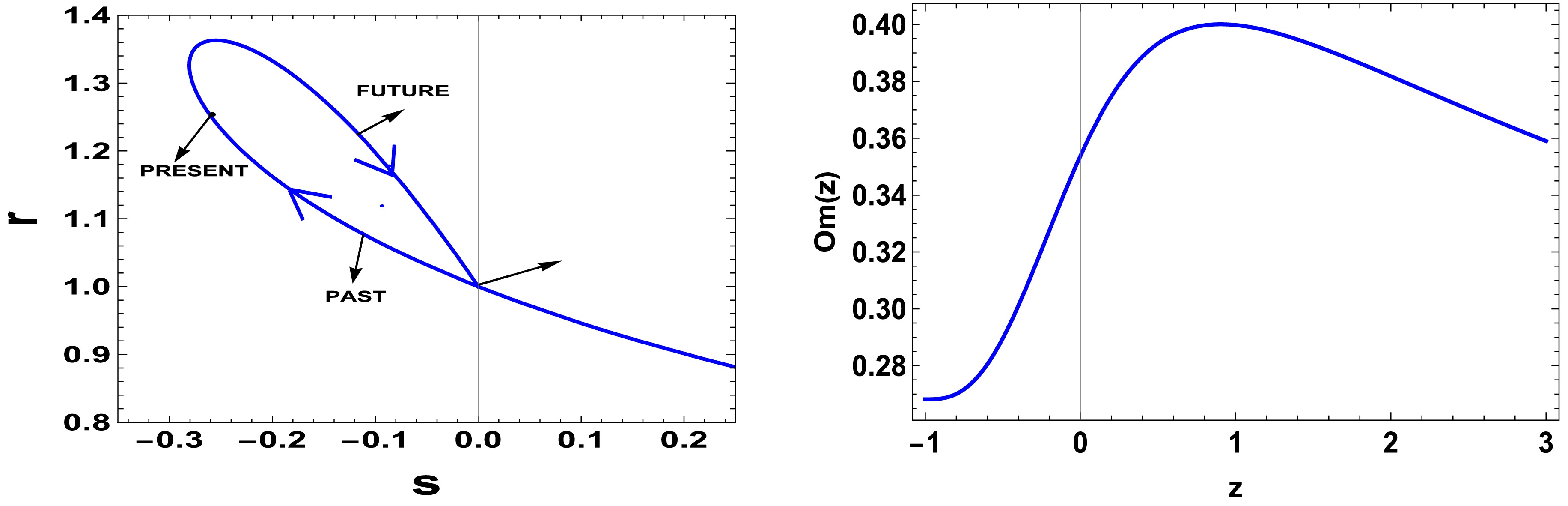
In this study, we shed light on the unified approach to dark energy and dark matter via the generalized Chaplygin gas model in symmetric teleparallel gravity (STGR). We employ the equation of state provided by generalized Chaplygin gas, which naturally arises in string theory, tachyonic field theory, and Randall-Sundrum-type brane world solutions. Such a generalized Chaplygin gas not only provides a viable candidate for dark energy but also for dark matter via Bose-Einstein condensation (BEC). We also consider the interaction between dark matter and dark energy to provide a more realistic perspective. Moreover, we perform Markov Chain Monte Carlo (MCMC) analysis with the combined Hubble and Pantheon datasets, conduct Om diagnostics, and construct\begin{document}$ r-s $\end{document}
In this study, we shed light on the unified approach to dark energy and dark matter via the generalized Chaplygin gas model in symmetric teleparallel gravity (STGR). We employ the equation of state provided by generalized Chaplygin gas, which naturally arises in string theory, tachyonic field theory, and Randall-Sundrum-type brane world solutions. Such a generalized Chaplygin gas not only provides a viable candidate for dark energy but also for dark matter via Bose-Einstein condensation (BEC). We also consider the interaction between dark matter and dark energy to provide a more realistic perspective. Moreover, we perform Markov Chain Monte Carlo (MCMC) analysis with the combined Hubble and Pantheon datasets, conduct Om diagnostics, and construct
IF: 3.0
Monthly issued, founded in 1977
Sponsored by:
ISSN 1674-1137 CN 11-5641/O4
Original research articles, Ietters and reviews Covering theory and experiments in the fieids of
- Particle physics
- Nuclear physics
- Particle and nuclear astrophysics
- Cosmology
Author benefits
- A SCOAP3 participating journal - free Open Access publication for qualifying articles
- Average 24 days to first decision
- Fast-track publication for selected articles
- Subscriptions at over 3000 institutions worldwide
- Free English editing on all accepted articles
News
- Chinese Physics C Best Paper Awards 2026 Announced
- Editorial Office Closed
- CPC Announces 2025 Outstanding Reviewers
- Chinese Physics C Outstanding Reviewer Award 2023
- Impact factor of Chinese Physics C is 3.6 in 2022
Cover Story
- Cover Story (Issue 9, 2026): Charge Separation Measurements in Au+Au collisions at \sqrt{S_{NN}} = 7.7-200 GeV in Search of the Chiral Magnetic Effect
- Cover Story (Issue 5, 2026): Determination of Fragmentation Functions from Charge Asymmetries in Hadron Production
- Cover Story (Issue 4, 2026): Initial performance results of the JUNO detector
- Cover Story (Issue 3, 2026): Comprehensive investigation on baryon number violating nucleon decays involving an axion-like particle
- Cover Story (Issue 2, 2026) |The images of Brans-Dicke-Kerr type naked singularities
Advertising